How we make this list: we compare pricing pages, product documentation and public user reviews. Ratings come from G2, Capterra or Trustpilot, with the date we checked them.
Key takeaways
- AI model orchestration platforms coordinate models, tools, and data, handling routing, failover, state, and observability for AI applications.
- LangChain is the best general orchestration framework, with the largest integration ecosystem and LangGraph for stateful agents.
- LlamaIndex is the best choice for retrieval heavy applications, with an index first design for search and question answering over documents.
- Portkey and LiteLLM are gateway style orchestrators, best for routing provider traffic, failover, and cost control at infrastructure level.
- Haystack suits modular retrieval pipelines, CrewAI suits fast multi agent prototypes, and DSPy suits teams that want compiled prompts instead of hand tuning.
- No single framework fits every workload, and many teams combine a framework with a gateway for production systems.
Quick comparison
| Tool | Best for | Starting price | Free plan |
|---|
 LangChain | General orchestration | Free | Yes |
 LlamaIndex | Retrieval heavy apps | Free | Yes |
 Haystack | Modular retrieval pipelines | Free | Yes |
 CrewAI | Fast multi agent prototypes | Free | Yes |
 DSPy | Compiled prompt programs | Free | Yes |
 Portkey | Provider gateway and routing | Free | Yes |
 LiteLLM | Unified model gateway | Free | Yes |
 Semantic Kernel | Microsoft ecosystem apps | Free | Yes |
Is your product missing or out of date?
We review this list regularly. Vendors can request a listing, send updated pricing or ask about featured placement.
Starting priceFree
Free planYes
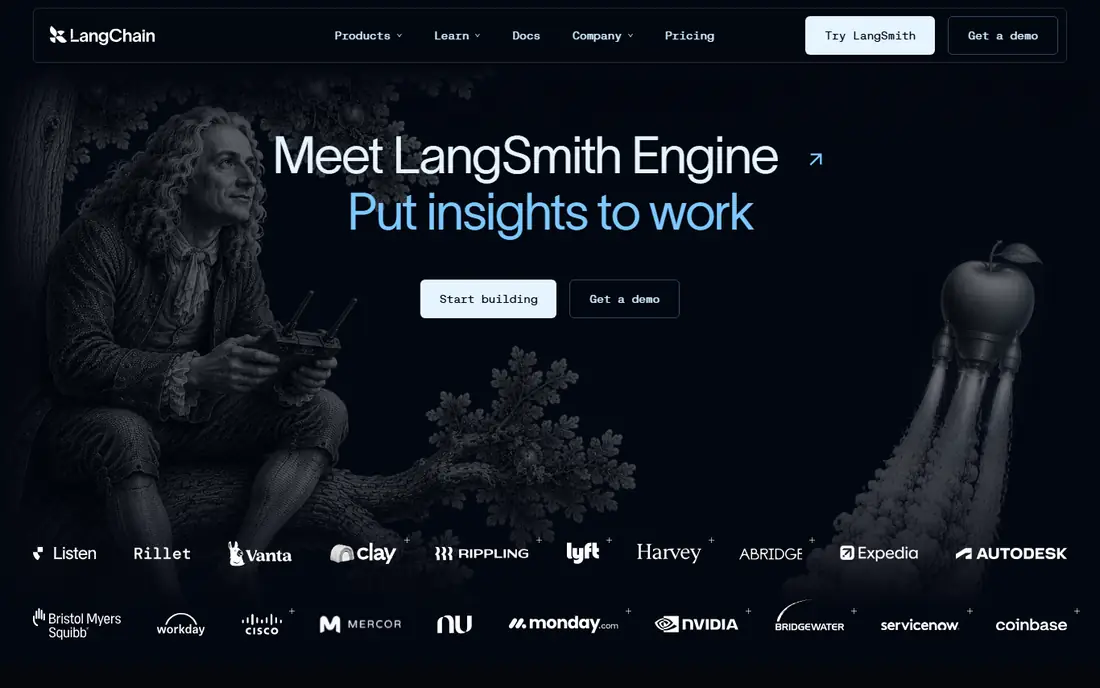
LangChain is the safest default for general purpose orchestration, with the deepest integration ecosystem across model providers, vector stores, tools, and document loaders, plus LCEL pipelines that give streaming, batching, and async behavior, and LangGraph for stateful multi agent workflows with checkpointing and human in the loop support. LangSmith adds first party tracing and evaluation in the same ecosystem.
LangChain carries a learning curve, production grade self hosting of the official agent server runs into commercial licensing limits that catch teams off guard, and complexity exceeds simple apps. For broad agentic applications, LangChain remains the default choice in 2026.
What we like- Largest integration ecosystem
- LangGraph for stateful agents
- LCEL pipelines
- LangSmith observability
Watch out for- Learning curve
- Production self hosting of official agent server has licensing limits
- Complexity for simple apps
Starting priceFree
Free planYes
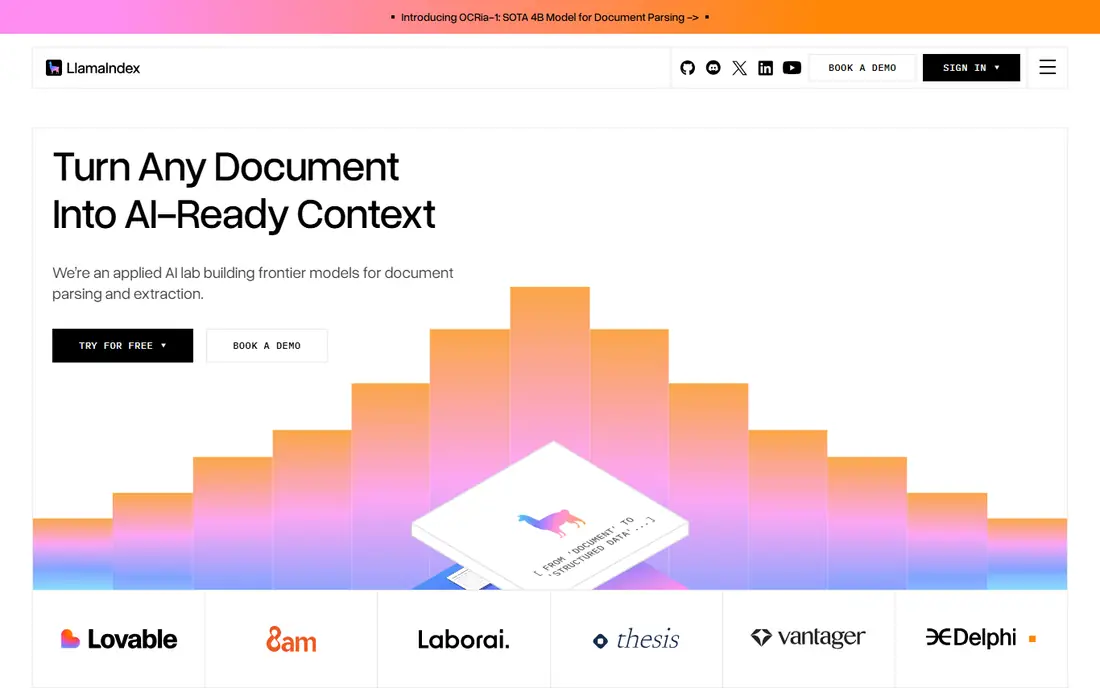
LlamaIndex is built index first for retrieval, with data connectors through LlamaHub, indexing, retrievers, and query engines optimized for ingesting and querying your own data, plus a growing agents and workflows layer. If your workload is mostly retrieval, such as search and question answering over documents, LlamaIndex reaches a working query engine with less orchestration code than LangChain.
Its orchestration layer is less mature, observability trails LangSmith, and agent breadth is narrower. For retrieval heavy data applications, LlamaIndex is the strongest starting point.
What we like- Index first retrieval design
- LlamaHub connectors
- Strong query engines
- LlamaCloud and LlamaParse extras
Watch out for- Orchestration layer less mature
- Observability trails LangSmith
- Less agent breadth
Starting priceFree
Free planYes
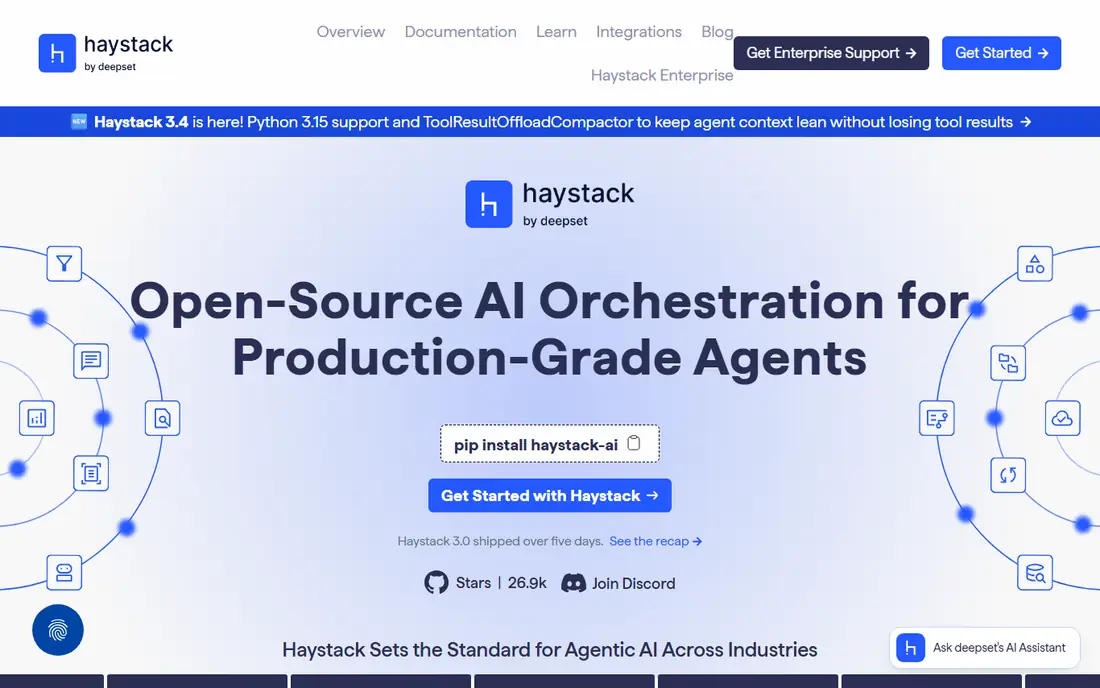
Haystack offers a modular pipeline runtime with typed components, strong retrieval depth, and built in evaluators, suited to teams that already run document and search pipelines and care about tracing discipline and component clarity. Its 2.x runtime is production ready, and its evaluators help teams measure retrieval quality before shipping.
Haystack is Python only, it has no native cluster scheduling, and its ecosystem is smaller than LangChain. For modular retrieval pipelines with disciplined evaluation, Haystack is a strong choice.
What we like- Typed pipeline components
- Strong retrieval and evaluation
- Production ready 2.x runtime
Watch out for- Python only
- No native cluster scheduling
- Smaller ecosystem than LangChain
#4CrewAI
Best for: Fast multi agent prototypes4.5/5 on
G2 (3 reviews, checked Oct 2026)
Visit crewai.com
Starting priceFree
Free planYes
CrewAI uses a declarative role and task pattern, letting small teams define agents with roles, goals, and tasks and get a multi agent prototype running fast, with a lightweight async core suited to low latency work. That simplicity suits demos and small fixed role agent teams, such as research, draft, and review crews.
Its connector library is smaller than LangChain, tracing is limited, and it is less suited to complex stateful graphs than LangGraph. For fast multi agent prototypes, CrewAI is the best choice.
What we like- Declarative role and task pattern
- Fast prototypes
- Lightweight async core
Watch out for- Smaller connector library
- Limited tracing
- Less suited to complex stateful graphs
Starting priceFree
Free planYes
DSPy takes a compiled program approach, letting teams define AI programs that optimize prompts and weights from examples rather than hand tuning prompt strings every time a model changes. That removes a major maintenance burden for teams that swap models often or iterate on quality systematically.
DSPy carries a steeper learning curve, a different mental model from writing prompt strings, and a smaller ecosystem than LangChain. For teams tired of hand tuning prompts, DSPy is the most principled alternative.
What we like- Compiled programs replace hand tuned prompts
- Optimization from examples
- Less prompt maintenance
Watch out for- Steeper learning curve
- Different mental model
- Smaller ecosystem
Starting priceFree
Free planYes
Portkey is a gateway style orchestrator that sits between your app and model providers, offering a unified API across providers, intelligent routing, automatic failover, load balancing, cost tracking, and guardrails. That infrastructure layer suits production systems that call several providers and need reliability and cost control without changing app code.
Portkey is a gateway only, not an application framework, managed features need payment, and setup takes care. For production orchestration at the traffic layer, Portkey pairs well with a framework like LangChain.
What we like- Unified gateway across providers
- Failover and load balancing
- Cost tracking and guardrails
Watch out for- Gateway only, not an app framework
- Managed features need payment
- Setup takes care
Starting priceFree
Free planYes
LiteLLM is an open source unified gateway that lets apps call over 100 model providers through one OpenAI compatible interface, with fallbacks, retries, load balancing, and spend tracking. Its self hosting option suits teams that want gateway control without vendor lock in, and its proxy server centralizes provider access for a whole organization.
Self hosting needs operations effort, managed cloud features need payment, and it offers less application framework depth than LangChain. For an open source gateway that unifies provider access, LiteLLM is the best choice.
What we like- Open source unified gateway
- 100 plus providers
- Fallbacks and spend tracking
- Self hosting
Watch out for- Self hosting needs operations
- Managed cloud features need payment
- Less app framework depth
Starting priceFree
Free planYes
Semantic Kernel is Microsoft enterprise SDK for AI orchestration, offering plugin based skills, memory, and planners that integrate with the Microsoft ecosystem, including Azure OpenAI and .NET enterprise stacks. Its enterprise design suits organizations already committed to Microsoft tooling and Azure services.
Its community is smaller than LangChain, it is Microsoft centric, and managed extras vary by deployment. For Microsoft ecosystem teams building enterprise AI apps, Semantic Kernel is the natural choice.
What we like- Microsoft ecosystem integration
- Plugin based skills
- Enterprise SDK design
- .NET and Python support
Watch out for- Smaller community than LangChain
- Microsoft centric
- Managed extras vary
How we chose
We ranked platforms by ecosystem breadth, agent and state support, retrieval depth, routing and failover quality, cost controls, and observability, favoring platforms with production track records over demo only tools. We gave extra weight to the framework versus gateway distinction, since treating them as substitutes is the most common mistake in this category, and to licensing clarity, since open core licensing surprises affect LangChain, LlamaIndex, Haystack, and CrewAI hosted layers. Prices are Free where open source cores apply, with managed hosting varying.
Buying guide
Start by naming which half you need: application logic or provider traffic. Frameworks like LangChain, LlamaIndex, Haystack, CrewAI, and DSPy orchestrate logic inside your code, while gateways like Portkey and LiteLLM orchestrate provider traffic at infrastructure level. Most production systems need both, with a framework for logic and a gateway for routing, failover, and cost control.
Next, prototype with real workloads, not demos. Build one retrieval flow, one multi step agent flow, and one failure case, such as a provider outage or a malformed tool result, and check tracing, state handling, and cost per request. Pin framework versions and test upgrades in staging, since orchestration frameworks change fast and upgrades can break pipelines. Measure latency at each step too, since a slow retrieval call or an oversized context window can dominate total response time even when model calls themselves are fast, and those bottlenecks only show up under realistic data volumes.
Finally, plan evaluation before shipping. Build a test set of expected outputs, run it on every change, and track latency, cost, and quality together, since a faster cheaper pipeline that answers worse is not an improvement. Add human review for high stakes outputs too, since automated scores miss tone, safety, and factual errors that a person catches quickly, and keep a rollback path ready when a new model version changes behavior unexpectedly. The best AI model orchestration platform is the one whose mental model your team understands, whose tracing shows failures clearly, and whose routing keeps costs predictable at production scale for every workload you ship, from quick prototypes to large enterprise systems in production today and tomorrow alike everywhere worldwide always indeed truly still now today indeed truly still now today indeed truly still now today indeed.
Frequently asked questions
What is AI model orchestration?
AI model orchestration coordinates models, tools, and data sources in an AI application, handling routing between providers, failover, context management, tool calls, state, and observability so multi step workflows run reliably.
Should I use LangChain or LlamaIndex?
Choose LangChain for broad agentic applications with many tools and stateful workflows, and LlamaIndex for retrieval heavy applications where search and question answering over documents dominate. Many teams use both for different parts of a system.
What is the difference between a framework and a gateway?
A framework orchestrates application logic inside your code, such as chains, agents, and retrieval. A gateway orchestrates provider traffic at infrastructure level, such as routing, failover, and cost tracking. Production systems often use both.
Do I need an orchestration platform for a simple chatbot?
No. A single model call through a provider API is enough for simple chatbots. Orchestration matters when workflows involve multiple steps, tools, retrieval, agents, or several providers with failover needs.
How do I control AI costs with orchestration?
Use a gateway like Portkey or LiteLLM for routing to cheaper models, fallbacks, and spend tracking, and use a framework with tracing to find wasteful steps. Set budgets and alerts per project, and evaluate quality alongside cost.
Sources we checked (0)
Is your product missing or out of date?
We review this list regularly. Vendors can request a listing, send updated pricing or ask about featured placement.

Shihab Mia · Founder, Rankite
Shihab has 5+ years in B2B and SaaS SEO. He writes Rankite's software buying guides from pricing pages, documentation and public user reviews. More about Shihab.