How we make this list: we compare pricing pages, product documentation and public user reviews. Ratings come from G2, Capterra or Trustpilot, with the date we checked them.
Key takeaways
- Apollo is the best all-in-one pick for small and mid-size sales teams that want prospect data, sequencing, and calling in one subscription.
- Clay is the strongest choice for RevOps-led teams that want to combine many data providers, first-party data, and AI research in configurable workflows.
- Cognism is the safest option for teams prospecting in the UK and Europe, where mobile number coverage and GDPR compliance matter most.
- 6sense fits B2B companies that want to prioritize accounts by buying intent rather than build lists contact by contact.
- Credit-based pricing is the norm now, so compare what a credit actually buys (an email, a phone number, an AI research run) before you sign.
Quick comparison
| Tool | Best for | Starting price | Free plan |
|---|
 Apollo Apollo | all-in-one prospecting and outbound execution | See website | Yes |
 Clay Clay | RevOps teams building custom enrichment workflows | See website | See website |
 LeadIQ LeadIQ | SDRs who live in LinkedIn Sales Navigator | See website | See website |
 Seamless.AI Seamless.AI | high-volume US contact discovery | See website | See website |
 Cognism Cognism | EMEA prospecting with compliance covered | See website | See website |
 Lusha Lusha | small teams that want simple contact data | See website | See website |
 Kaspr Kaspr | European SDRs prospecting on LinkedIn | See website | See website |
 6sense 6sense | intent-driven account prioritization | See website | See website |
Is your product missing or out of date?
We review this list regularly. Vendors can request a listing, send updated pricing or ask about featured placement.
The best AI lead generation software
#1
Apollo
Best for: all-in-one prospecting and outbound execution
Visit apollo.io
Starting priceSee website
Free planYes
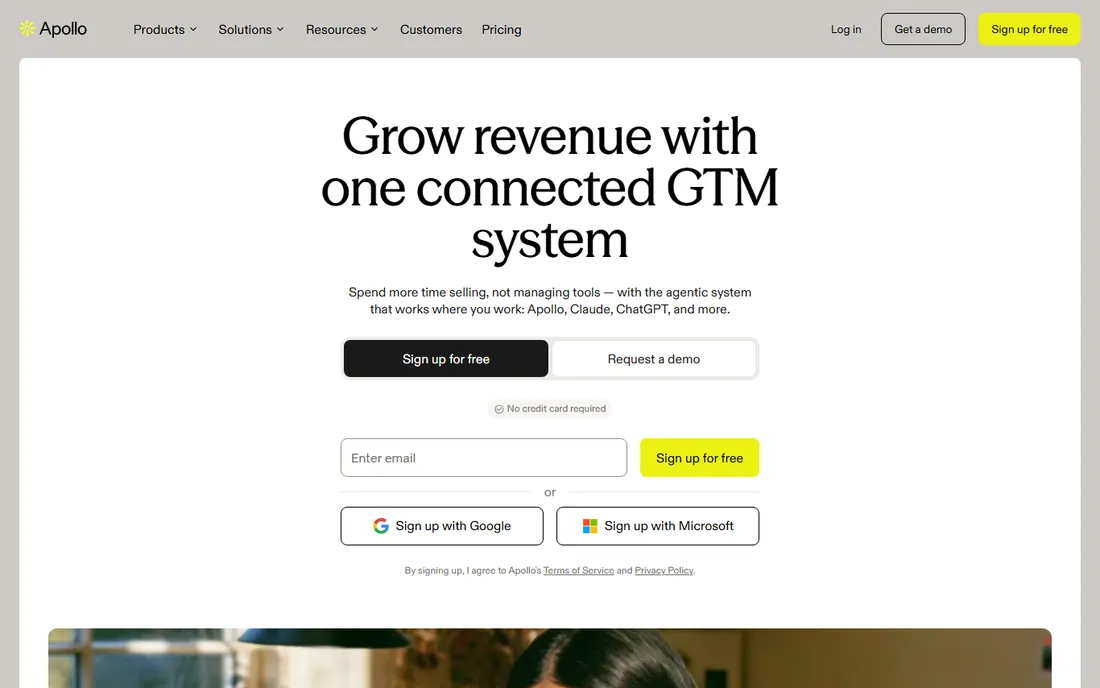
Apollo combines a B2B database, prospecting filters, email sequencing, and calling in one platform, which is why so many small and mid-size sales teams start here. You can build a list, enrich it, write sequences with AI assistance, and dial, all without switching tabs. The free plan is genuinely usable for founders and tiny teams, since it stays free with no time limit according to the vendor's own pricing page.
The trade-off is the credit system. Credits are the currency for revealing emails, phone numbers, and AI-researched data, they are pooled across the team, and unused credits expire each billing cycle. Teams that prospect in bursts can burn through credits fast, while steadier teams get better value. Data quality is strong in the US tech sector and thinner in some international markets, so spot-check a sample of your target accounts before committing to an annual plan.
What we like- Large B2B contact database with buying signals
- Built-in email sequencing and dialer reduce the need for extra tools
- Free plan stays free with no time limit
Watch out for- Credit system can be confusing and credits do not roll over
- Data accuracy varies by region and industry
#2
Clay
Best for: RevOps teams building custom enrichment workflows
Visit clay.com
Starting priceSee website
Free planSee website
Clay is less a database and more a workbench. You start with a list of companies or people, then layer on enrichment steps from dozens of data providers, AI research agents that read websites and job posts, and your own first-party data. RevOps teams use it to build scoring models, trigger-based outbound, and list-building machines that would otherwise need several tools stitched together.
That flexibility comes with complexity. Clay rewards teams that think in workflows and tables; an SDR who just wants a Chrome extension to grab emails will find it heavy. Pricing is credit-based, and running premium data sources across large lists adds up, so start with a narrow use case, measure the match rate lift, and expand from there.
What we like- Combines 100+ data providers and AI research in one table
- Very flexible waterfall enrichment improves match rates
- Strong for combining first-party and third-party data
Watch out for- Steeper learning curve than plug-and-play prospecting tools
- Costs can climb quickly once you run large volumes through premium data sources
Starting priceSee website
Free planSee website
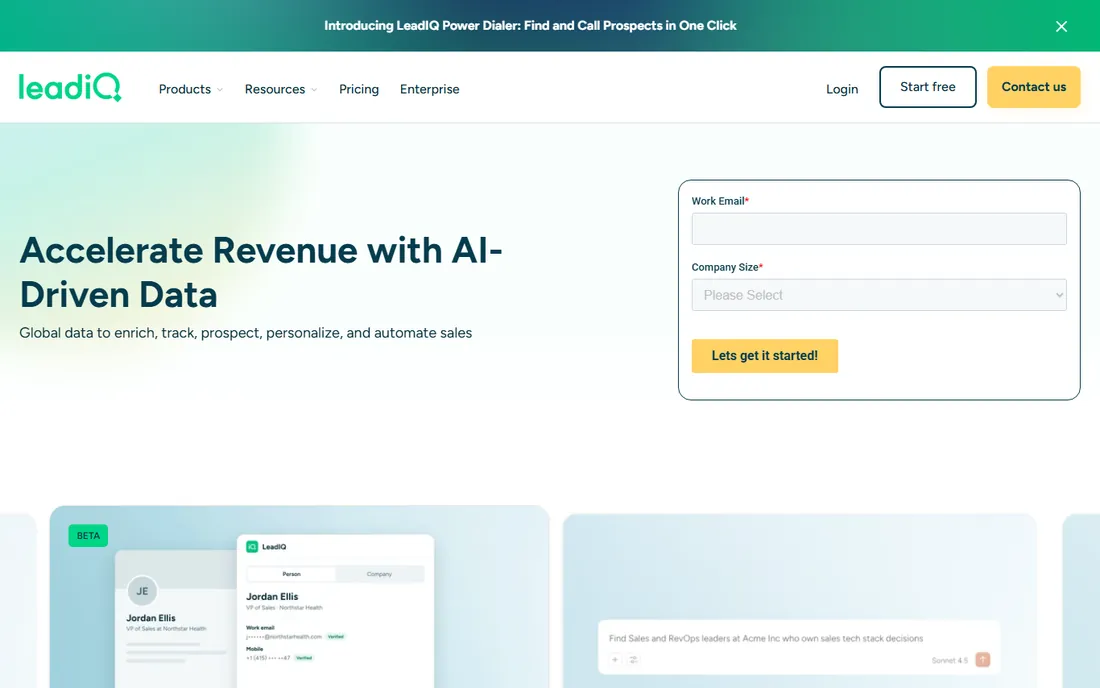
LeadIQ does one job well: it turns LinkedIn profiles into CRM-ready records. An SDR browsing Sales Navigator can capture a prospect, verify the email, and push the contact into a sequence in a few clicks. For teams whose entire motion starts on LinkedIn, that tight loop saves real time every day and keeps data entry out of the rep's day.
The limitation is scope. LeadIQ is a capture and enrichment layer, not a database you browse or an intent platform. If your reps prospect from many sources, or you need deep account research, you will pair it with something else. Evaluate it on capture speed and email verification rates for your specific titles and regions, since those numbers vary.
What we like- Smooth capture workflow from LinkedIn and Sales Navigator
- One-click push to Salesforce, HubSpot, Outreach, and Salesloft
- Simple credit model
Watch out for- Depends on LinkedIn as the starting point, so it is less useful for account-first research
- Phone number coverage lags email coverage
Starting priceSee website
Free planSee website
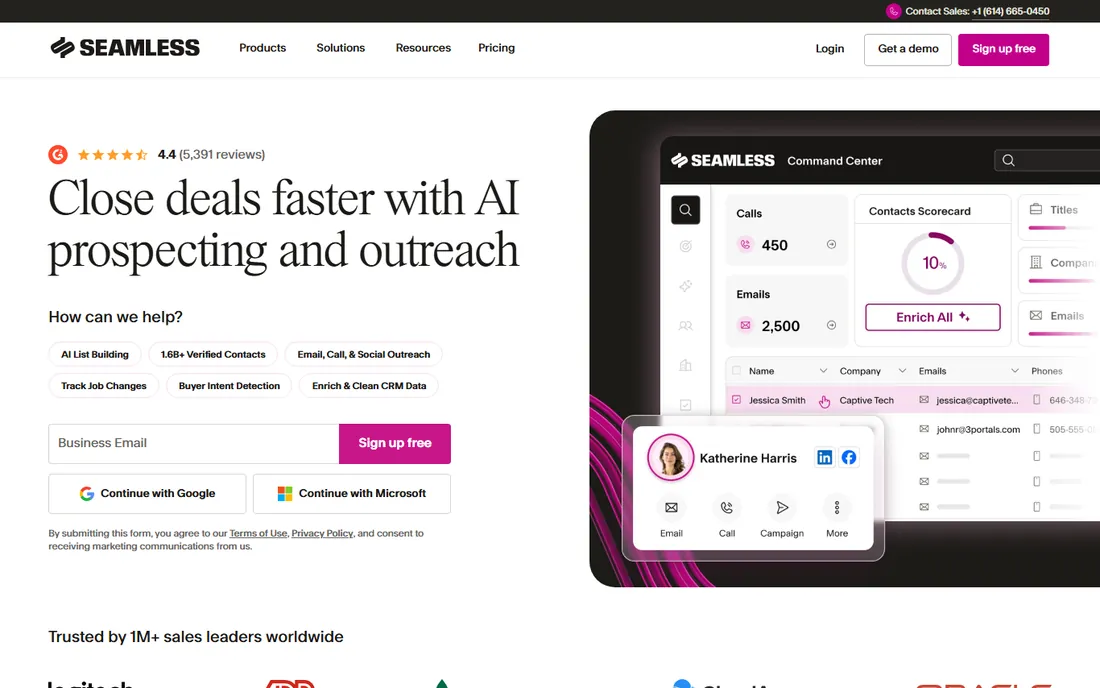
Seamless.AI pitches itself as a real-time search engine for B2B contact data, and its strength is speed. Reps can pull emails and phone numbers for long lists of US prospects fast, which suits high-volume outbound teams and list builders who value quantity and pace. The Chrome extension keeps the workflow inside LinkedIn and the browser.
Public reviews tell a more mixed story on accuracy, with users reporting higher bounce rates than the marketing suggests. That makes email verification a required second step rather than an optional one. Read the contract terms carefully too, since reviewers have flagged aggressive renewal language. Pilot it on a few hundred records, measure bounce and connect rates yourself, and only then scale.
What we like- Fast contact search with a large US database
- Real-time search engine finds emails and direct dials quickly
- Chrome extension fits into existing workflows
Watch out for- Data accuracy complaints are common in public reviews, so verification matters
- Commercial terms and auto-renewal have drawn criticism
Starting priceSee website
Free planSee website
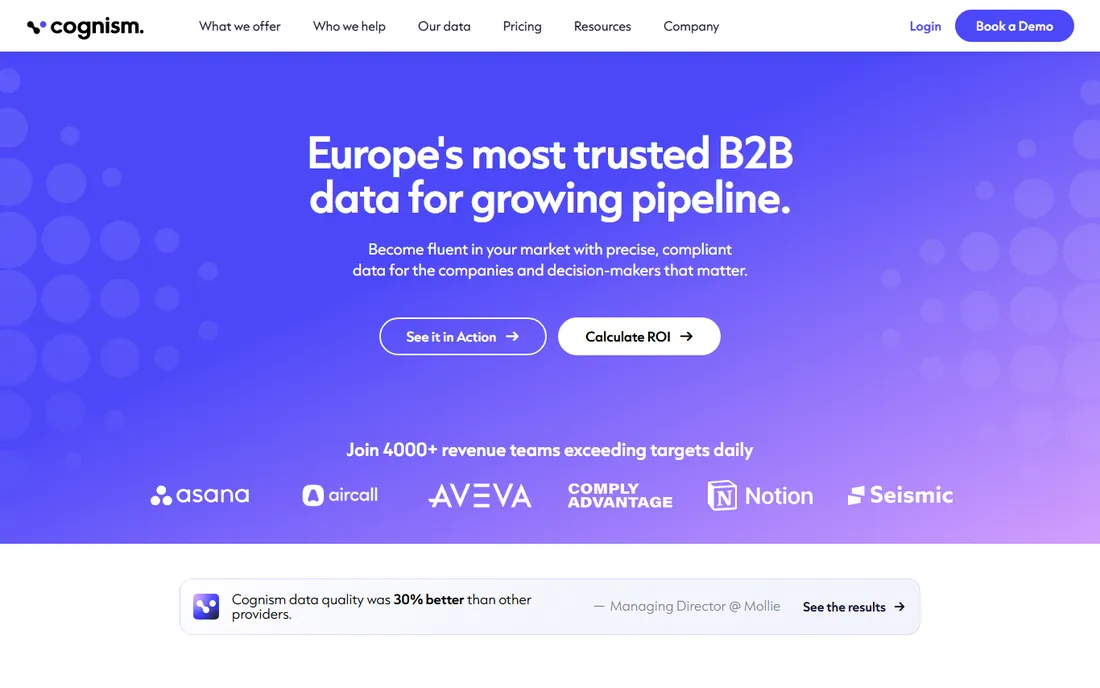
Cognism built its reputation on a hard problem: compliant, accurate mobile numbers for European prospects. For teams selling into the UK, DACH, or the Nordics, its Diamond Data verification and do-not-call screening address the two things that keep sales leaders up at night, connect rates and compliance risk. Intent data from Bombora partnerships adds a prioritization layer for account-based motions.
You pay for that specialization. Cognism sits at the premium end of the market, and teams prospecting mostly in the US may get better value elsewhere. It is also worth confirming coverage for your exact target countries during the trial, since European data depth varies by market. For EMEA-first teams, though, it is often the default shortlist pick.
What we like- Strong mobile number coverage in Europe
- GDPR and CCPA compliance positioning with DNC list screening
- Intent data add-on for prioritization
Watch out for- Premium pricing compared with US-focused tools
- Smaller database outside Europe and North America
#6
Lusha
Best for: small teams that want simple contact data
Visit lusha.com
Starting priceSee website
Free planSee website
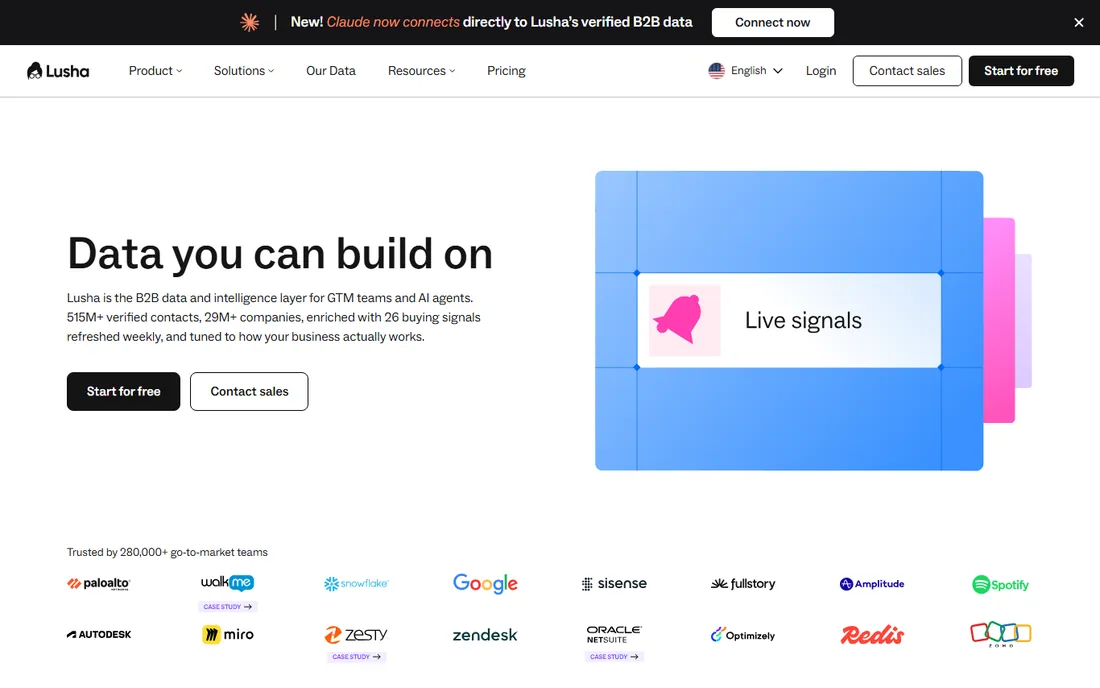
Lusha is the straightforward option. It gives small sales and recruiting teams verified emails and phone numbers through a browser extension and a simple web app, without the enterprise sales process or the RevOps learning curve. Setup takes minutes, and reps generally need no training to start pulling contacts.
The simplicity has edges. Lower-tier plans come with modest credit pools, so a team of five active prospectors can hit limits mid-month. And if you later want intent data, deep technographics, or complex routing, you will outgrow it. For teams of one to twenty that just need reliable contact details fast, that trade is usually worth it.
What we like- Easy to use with a gentle learning curve
- Accurate direct dials for its price tier
- Useful prospecting filters without enterprise complexity
Watch out for- Credit allowances on lower plans run out quickly
- Advanced features like intent and engagement are thinner than enterprise rivals
#7
Kaspr
Best for: European SDRs prospecting on LinkedIn
Visit kaspr.io
Starting priceSee website
Free planSee website
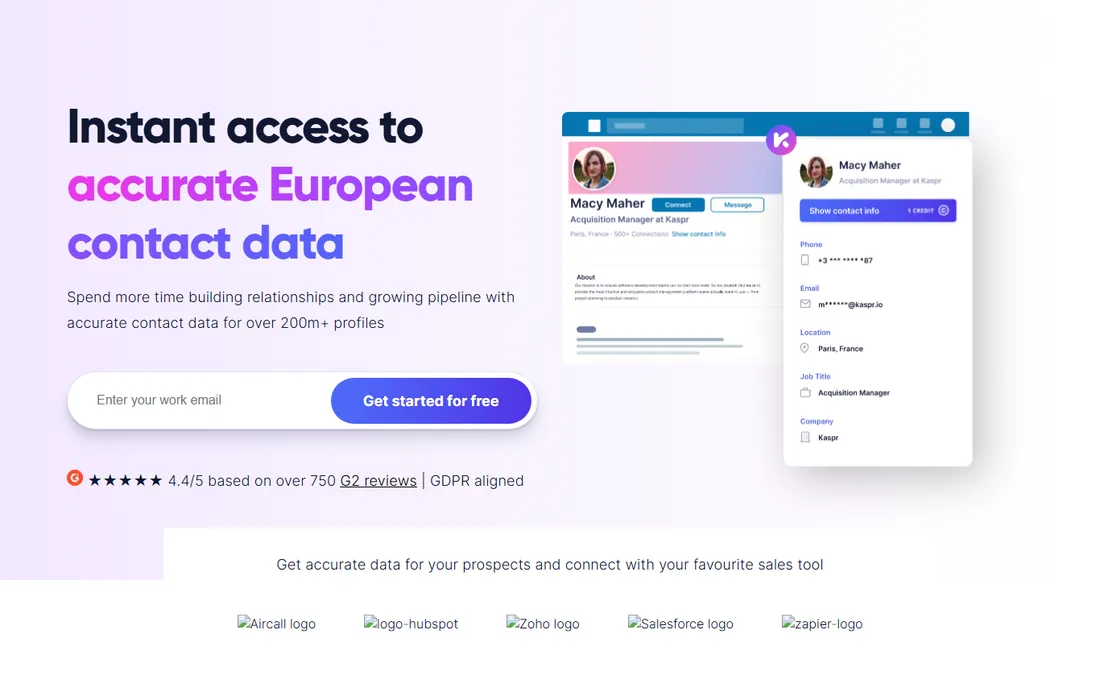
Kaspr is a French-built prospecting tool that found its niche with European SDR teams. Its LinkedIn extension pulls emails and phone numbers as you browse, and it layers in company information and org details that help with account mapping. For individual reps and small teams in France, Spain, and neighboring markets, it is priced to be a personal productivity tool rather than a platform purchase.
The flip side of that regional focus is thinner coverage in the US and APAC. If your total addressable market spans continents, Kaspr works better as a complement to a global database than as the single source. Test it against your actual prospect titles in your actual markets, since LinkedIn-extension accuracy is very title-dependent.
What we like- Strong LinkedIn integration with contact and company data
- GDPR-aligned data sourcing is a stated priority
- Affordable entry pricing for individuals
Watch out for- Database depth outside Europe is limited
- Some advanced enrichment features trail larger competitors
Starting priceSee website
Free planSee website
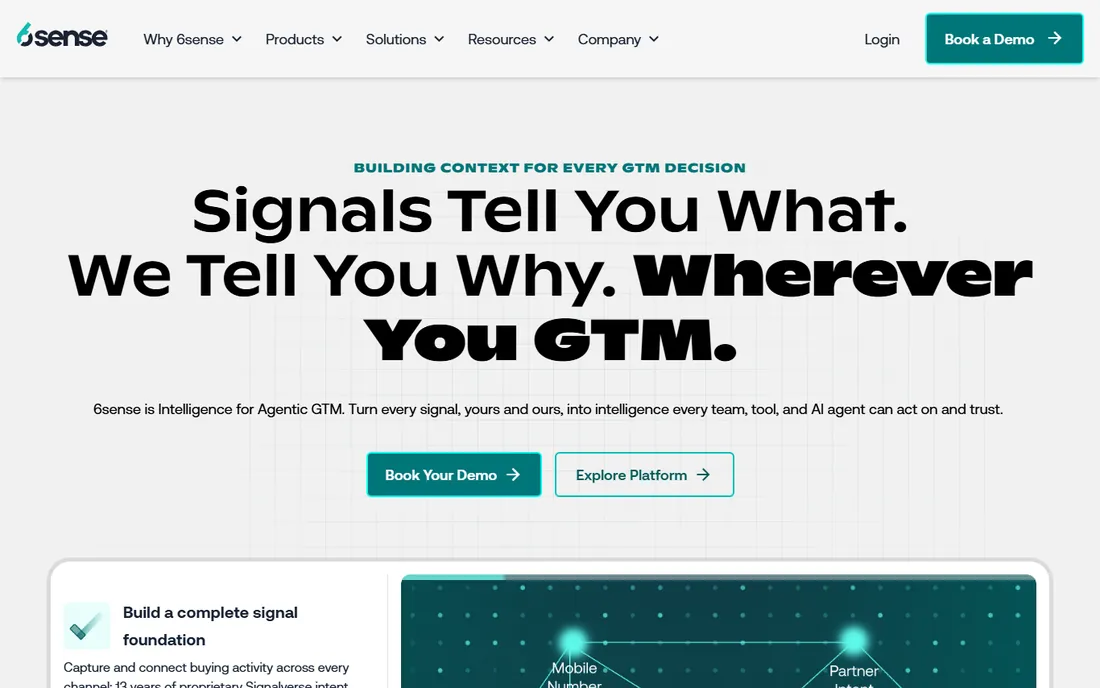
6sense plays a different game from the rest of this list. Instead of helping reps find individual contacts, it identifies which accounts are actively researching solutions like yours, scores them, and orchestrates plays across ads, email, and sales outreach. Marketing teams use it to focus budget; sales teams use it to call the right accounts first.
That power comes with enterprise weight. Pricing is quote-based and typically annual, implementation takes weeks of CRM and data work, and small teams will not use half the platform. But for B2B companies with long sales cycles and a defined target account list, intent-based prioritization consistently beats spraying more emails. Buy it when you have the account list and the sales capacity to work it, not before.
What we like- Strong buyer intent data and predictive scoring
- Deep integrations with Salesforce, HubSpot, and ad platforms
- Built for coordinated sales and marketing plays
Watch out for- Enterprise pricing and implementation effort
- Overkill for teams that just need contact lists
How we chose
We started from tools that appear repeatedly in buyer shortlists on G2, Capterra, and sales community discussions, then checked each vendor's own site to confirm the product still exists and fits AI-assisted lead generation in 2026. We favored tools with distinct strengths rather than near-duplicates, mixing all-in-one platforms with specialists in data quality, compliance, and intent. Pricing and plan details below come from vendor pricing pages where we could verify them; where a vendor keeps pricing behind a sales conversation, we say so instead of guessing. We did not run hands-on trials for this guide.
What to check before you buy
Start with data quality in your market, because it varies more than any feature list suggests. Pull a sample of 200 to 300 records matching your ideal customer profile, run them through the trial, and measure email validity and phone connect rates yourself. A tool that shines for US SaaS titles can disappoint for manufacturing buyers in Germany, and no review site can tell you how it performs on your list.
Next, understand the credit math. Most AI lead generation tools now charge in credits, but a credit means different things everywhere: one email reveal here, one AI research run there, a phone number somewhere else. Model your monthly usage in the vendor's own terms, check whether credits roll over (most do not), and ask what happens when you hit the cap mid-cycle. A cheap per-seat price with expensive credits often costs more than a pricier seat with generous allowances.
Finally, confirm the compliance story. If you prospect in Europe, ask how the vendor sources mobile numbers, whether it screens against do-not-call lists, and what its GDPR documentation looks like. For US teams, check CAN-SPAM and state-level rules for your outreach channels. Get the answers in writing during procurement, not after the first complaint.
Credits, trials, and the real cost of trying
Almost every vendor on this list offers some way to try before you buy, but the trial terms differ in ways that affect your evaluation. Some give a free plan with monthly credits that reset, which is ideal for a slow, careful pilot. Others give a short time-boxed trial with a large credit pool, which pushes you to test fast and decide fast.
Use the trial the way you will use the product. If your team prospects from LinkedIn, test the Chrome extension on real profiles, not the web app demo. If you plan to enrich inbound leads automatically, wire up the integration during the trial and watch the match rates. And track the credit burn per workflow from day one, because the trial rarely warns you how quickly a production workload consumes the allowance. The goal is to leave the trial with two numbers: your verified match rate and your true monthly credit cost.
Frequently asked questions
What is AI lead generation software?
It is software that uses AI to find, enrich, and prioritize sales prospects. Typical capabilities include building lists from large B2B databases, verifying emails and phone numbers, researching accounts automatically, scoring leads by fit or intent, and pushing the results into your CRM or sales engagement tool.
How much does AI lead generation software cost?
Most tools use a mix of per-seat pricing and credits for data. Entry plans for small teams often start in the tens of dollars per user per month, while platforms with large data allowances or intent data can run into the hundreds per seat. Because credit definitions differ, always model your expected monthly usage before comparing prices.
Is the contact data accurate?
Accuracy varies by vendor, region, and job title. Email verification rates are generally higher than phone number accuracy, and US tech contacts tend to have better coverage than international or niche-industry contacts. Always test with your own sample list during a trial rather than trusting published claims.
Do I still need a CRM or sales engagement tool?
In most cases, yes. These tools find and enrich prospects, but you still need somewhere to manage the pipeline and run outreach. Some platforms like Apollo include sequencing and calling, which can replace a separate engagement tool for smaller teams, but they do not replace a CRM.
What is the difference between intent data and contact data?
Contact data tells you who to reach and how to reach them. Intent data tells you which accounts are actively researching a purchase, based on signals like content consumption and hiring patterns. Tools like 6sense specialize in intent, while most others on this list specialize in contact data, and some combine both.
How do credits usually work?
Credits are the unit you spend to reveal or enrich data. Each vendor defines them differently: one credit might buy an email address, a phone number, or an AI research run. Credits are usually pooled across your team, granted monthly, and expire if unused, so understanding the burn rate is essential before you commit.
Sources we checked (13)
- https://www.apollo.io/pricing
- https://www.apollo.io
- https://www.clay.com
- https://leadiq.com
- https://www.seamless.ai
- https://www.cognism.com
- https://www.lusha.com
- https://www.kaspr.io
- https://www.6sense.com
- https://slashdot.org/software/comparison/Apollo.io-vs-Seamless.AI/
- https://slashdot.org/software/comparison/LeadIQ-vs-Lusha-vs-Seamless.AI/
- https://slashdot.org/software/comparison/Cognism-vs-Kaspr/
- https://slashdot.org/software/comparison/6sense-vs-Cognism-vs-ZoomInfo/
Is your product missing or out of date?
We review this list regularly. Vendors can request a listing, send updated pricing or ask about featured placement.

Shihab Mia · Founder, Rankite
Shihab has 5+ years in B2B and SaaS SEO. He writes Rankite's software buying guides from pricing pages, documentation and public user reviews. More about Shihab.