How we make this list: we compare pricing pages, product documentation and public user reviews. Ratings come from G2, Capterra or Trustpilot, with the date we checked them.
Key takeaways
- Demandbase and 6sense suit enterprise teams that need intent data, orchestration and measurement in one platform.
- Terminus and RollWorks suit mid-market teams that want account-based display ads without a full enterprise suite.
- HubSpot ABM suits teams already on HubSpot, because account targeting and reporting live inside the CRM.
- Most enterprise ABM pricing is quoted by sales, and ad spend, onboarding and data costs sit on top of the platform fee.
- Start with a small target account list and clear success metrics, because ABM fails when targeting is broad and measurement is vague.
Quick comparison
| Tool | Best for | Starting price | Free plan |
|---|
 Demandbase | Enterprise ABM orchestration | See website | No |
 6sense | Predictive intent and orchestration | See website | Free trial |
 Terminus | Multi-channel account ads | See website | No |
 RollWorks | Mid-market ABM ads | See website | No |
 HubSpot ABM | HubSpot CRM users | See website | No |
 Bombora | Standalone intent data | See website | No |
 Influ2 | Contact-level advertising | See website | No |
 Madison Logic | Content-led ABM programs | See website | No |
Is your product missing or out of date?
We review this list regularly. Vendors can request a listing, send updated pricing or ask about featured placement.
The best account-based advertising software
#1Demandbase
Best for: Enterprise ABM orchestration4.4/5 on
G2 (2,014 reviews, checked Oct 2026)
Visit demandbase.com
Starting priceSee website
Free planNo
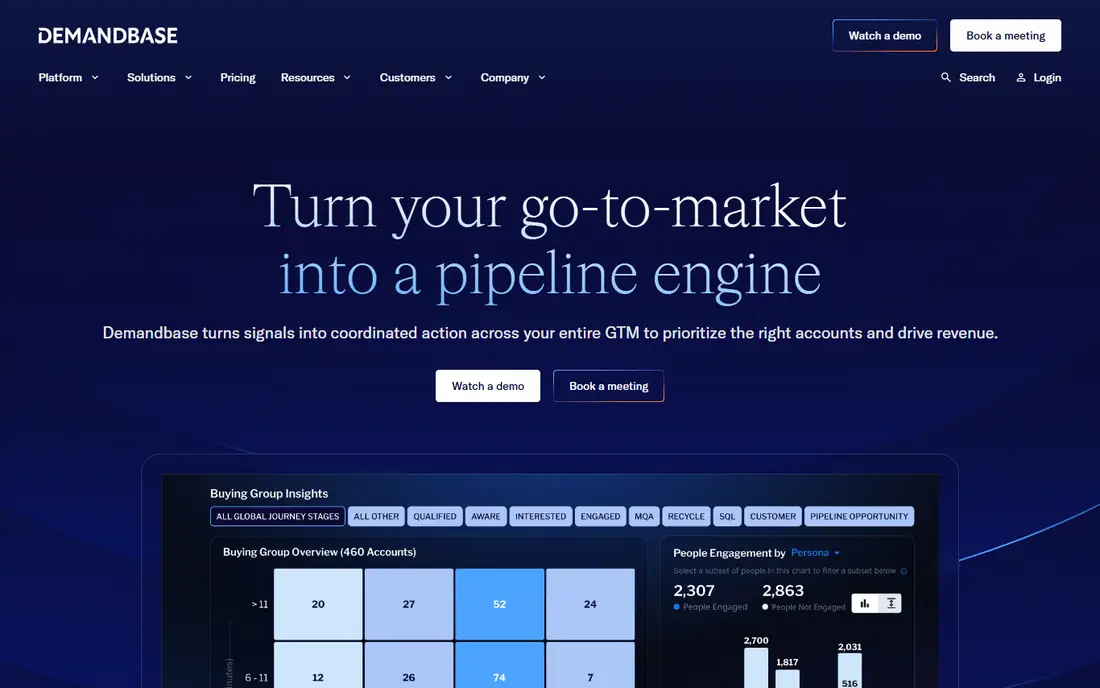
Demandbase combines account identification, intent signals, advertising and sales insights in a single platform. Marketing can build target lists, run display and social ads to those accounts, and pass engagement data to sales in Salesforce. That closed loop helps enterprise teams align marketing spend with pipeline, rather than measuring clicks alone.
The cost and effort are real. Pricing is sales-led, onboarding can be substantial, and ad spend sits on top of the platform fee. Demandbase fits enterprise B2B teams with a defined target account list, a dedicated ABM owner and a sales team ready to act on account signals. Smaller teams will find it heavy and expensive.
What we like- Account identification, intent and advertising in one suite
- Strong Salesforce integration
- Detailed account analytics
Watch out for- Pricing is quoted and often enterprise-level
- Implementation takes time and dedicated staff
#26sense
Best for: Predictive intent and orchestration4.2/5 on
G2 (1,484 reviews, checked Oct 2026)
Visit 6sense.com
Starting priceSee website
Free planFree trial
6sense focuses on predicting which accounts are in market, using intent signals, firmographics and behavioral data. It scores accounts, recommends next actions and orchestrates ads, website personalization and sales outreach around the same account list. That prediction layer helps teams prioritize a large account list instead of treating every target equally.
Like Demandbase, 6sense is priced by sales and works best with dedicated operations support. Teams without a RevOps owner may struggle to maintain data, workflows and reporting. For a B2B company with a high-value sales cycle and a clear ideal customer profile, 6sense offers one of the strongest intent engines available.
What we like- Predictive intent and account scoring
- Orchestration across ads, email and sales
- Large data network
Watch out for- Pricing is quoted
- Needs RevOps support to get full value
Starting priceSee website
Free planNo
Terminus built its name on account-based advertising, and it still suits teams whose main need is reaching target accounts with ads across display, social and email. Its reporting shows account engagement rather than just impressions, which helps marketers prove which accounts actually interacted with campaigns. Setup is faster than a full orchestration suite.
Terminus is less of an all-in-one intent and orchestration platform than Demandbase or 6sense, so teams that need deep predictive scoring may pair it with an intent provider. For mid-market teams that want credible ABM ads with clear account reporting, Terminus is a practical choice.
What we like- Account-based display, LinkedIn and email ads
- Account engagement reporting
- Faster setup than suites
Watch out for- Pricing is quoted
- Some data features depend on third-party intent partners
Starting priceSee website
Free planNo
RollWorks targets mid-market B2B teams that want ABM advertising without enterprise complexity. It connects to HubSpot and Salesforce, lets teams build account lists from CRM data, and runs display and social ads to those accounts. Reporting ties ad engagement back to accounts and pipeline stages, which helps smaller marketing teams justify spend.
RollWorks does not match the intent depth of 6sense or the full orchestration of Demandbase, and ad spend is extra. It fits teams with a focused account list, a modest ad budget and a need for faster time to live. Ask for a clear total that includes platform fees, data and expected media spend.
What we like- ABM ads with CRM and HubSpot integration
- Account-based reporting
- Lower entry cost than suites
Watch out for- Pricing is sales-led
- Advanced features need higher tiers
Starting priceSee website
Free planNo
HubSpot ABM is not a standalone ABM platform, but it is the right choice for many HubSpot users. Target accounts, buying roles, account scoring and ABM reporting live inside the CRM your sales team already uses. That simplicity reduces training and integration work, and it keeps marketing and sales data in one place.
The limits are advertising depth and intent data. HubSpot ABM works well for account targeting, website personalization and sales alignment, but dedicated ad platforms offer stronger display and intent capabilities. If your team already pays for HubSpot Professional or Enterprise, start with its ABM tools before buying a separate suite.
What we like- ABM tools inside HubSpot CRM
- Target account lists and reporting without a new platform
- Familiar interface
Watch out for- ABM features need higher HubSpot tiers
- Advertising depth is lighter than dedicated ABM tools
Starting priceSee website
Free planNo
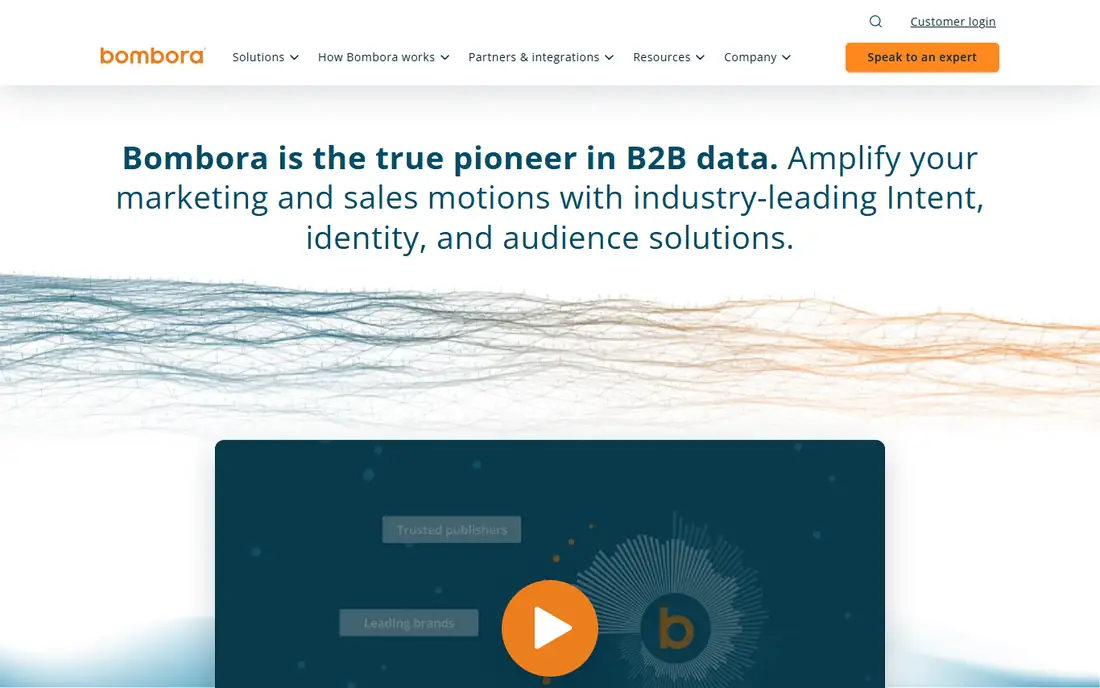
Bombora provides intent data rather than a full advertising platform. Its cooperative tracks which topics companies research across many B2B sites, then surfaces surging accounts by topic. Teams can feed that data into an ABM platform, a CRM or an ad tool to prioritize accounts and tailor messages.
Because Bombora is data, not activation, you still need a tool to run ads or outreach. That pairing can be powerful, but it adds cost and integration work. Bombora suits teams that already have an ad platform or CRM workflow and need better intent signals to decide which accounts to target first.
What we like- Large B2B intent data cooperative
- Topic-level intent signals
- Integrates with many ABM and CRM tools
Watch out for- Data-only product, not an ad platform
- Pricing is quoted and topic-based
Starting priceSee website
Free planNo
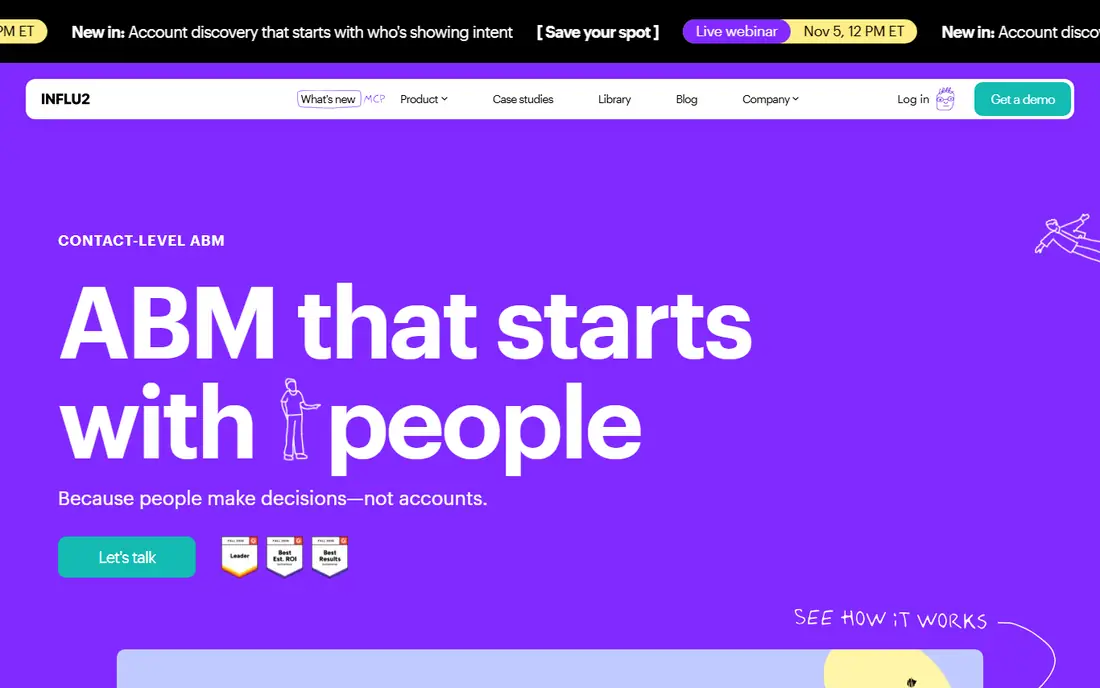
Influ2 takes a different approach from account-level advertising. Instead of serving ads to anyone at a target company, it targets specific decision makers and reports which individuals engaged. That precision helps high-value B2B sales with small buying committees, where knowing that the VP of Engineering clicked matters more than knowing that someone at the company saw an ad.
Contact-level targeting depends on accurate contact data, and pricing is quoted by sales. Influ2 fits teams selling high-priced products to a narrow list of buyers, where person-level insight justifies a premium. For broad awareness campaigns, account-level tools are usually cheaper.
What we like- Ads targeted to specific people, not just accounts
- Person-level reporting for sales
- Useful for small buying committees
Watch out for- Pricing is quoted
- Reach depends on contact data quality
Starting priceSee website
Free planNo
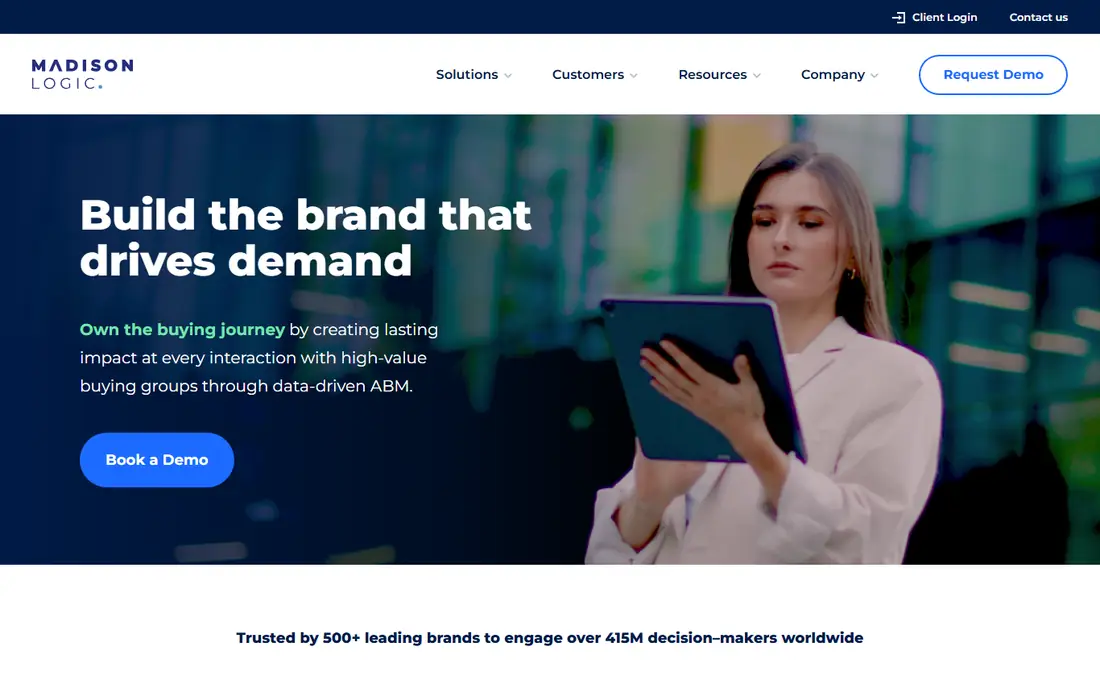
Madison Logic combines content syndication with account-based advertising. Teams can distribute white papers, webinars and research to target accounts, then measure which accounts engaged and how deeply. That content-led model suits B2B companies with long sales cycles, where education and trust matter before a sales conversation.
Costs include both platform fees and media spend, so budget for both. Madison Logic fits teams with strong content and a clear target account list, especially in technology and professional services. Teams that only need display ads may find RollWorks or Terminus simpler and cheaper.
What we like- Content syndication plus account advertising
- Account engagement measurement
- B2B media reach
Watch out for- Pricing is quoted
- Media spend adds to platform cost
How we chose
We compared vendor documentation, pricing models, intent capabilities, ad channels and CRM integrations, along with user reviews on G2, Capterra and Reddit. We treated ABM advertising broadly, covering orchestration suites, ad platforms, intent data and contact-level tools, because buyers often confuse those categories. We favored tools with clear account reporting and real B2B ad delivery, and we noted where pricing is quoted rather than published, because that affects budgeting.
Building an ABM ad program that actually works
Start with a tight account list. Fifty to two hundred well-chosen accounts beat two thousand loosely defined ones, because creative, sales follow-up and measurement all improve with focus. Define what success means before launch, such as meetings booked, pipeline created or account engagement lift, and agree on it with sales. Without that agreement, ABM reporting becomes a debate about clicks.
Match ads to buying stage. Early-stage accounts need educational content and brand awareness, while late-stage accounts need case studies, comparisons and sales outreach. Keep sales in the loop with account alerts and engagement summaries, so an ad click turns into a timely conversation. Finally, budget honestly. Platform fees, intent data, creative production and media spend all count, and the first quarter usually teaches you more than it converts.
Common ABM mistakes to avoid
Avoid targeting accounts your sales team will not pursue, running generic ads to every account, and measuring success by impressions alone. Avoid buying a suite before you have a list, a message and a sales process. A smaller tool with a focused list often outperforms a large platform with vague targeting.
Aligning sales and marketing on the same accounts
ABM advertising only works when sales and marketing agree on the target list, the message and the follow-up. Hold a short joint review each week during the first quarter, and look at account engagement together, not just campaign clicks. Sales should confirm which accounts are real opportunities, which are already in conversation, and which should be removed from paid targeting. Marketing should share which ads and content each account saw, so sales calls can reference that context instead of starting cold. Agree on a handoff rule, such as a meeting request, a pricing page visit by a senior title, or a set engagement score, and track how often engaged accounts actually become meetings. That shared discipline turns advertising from a marketing metric into pipeline.
Frequently asked questions
What is account-based advertising software?
It is software that serves ads to people at specific target companies, rather than to a broad audience. It usually includes account lists, intent data, ad delivery across display and social channels, and reporting that shows engagement by account instead of by click alone.
How much does ABM software cost?
Enterprise suites are typically quoted by sales and can cost tens of thousands of dollars per year, plus ad spend. Mid-market ad platforms cost less, while HubSpot ABM is bundled into higher HubSpot tiers. Always ask for platform, data, onboarding and media costs together.
Do I need intent data for ABM?
Intent data helps prioritize accounts, but it is not required to start. A team with a strong CRM list and sales knowledge can run ABM ads without it. Intent becomes more valuable as your account list grows and you need to decide which accounts deserve attention first.
What is the difference between account-level and contact-level ads?
Account-level ads reach anyone at a target company, which is good for awareness. Contact-level ads, like Influ2, target specific people and report individual engagement, which suits high-value sales with small buying committees. Contact-level targeting usually costs more.
How long does ABM take to show results?
Most teams need at least one quarter to learn which accounts engage and which messages work. Pipeline impact often takes two to three quarters, especially for high-value B2B sales. Set engagement goals for the first quarter and pipeline goals after that.
Sources we checked (8)
- https://www.demandbase.com
- https://www.6sense.com
- https://www.terminus.com
- https://www.rollworks.com
- https://www.hubspot.com/products/marketing/account-based-marketing
- https://bombora.com
- https://www.influ2.com
- https://www.madisonlogic.com
Is your product missing or out of date?
We review this list regularly. Vendors can request a listing, send updated pricing or ask about featured placement.

Shihab Mia · Founder, Rankite
Shihab has 5+ years in B2B and SaaS SEO. He writes Rankite's software buying guides from pricing pages, documentation and public user reviews. More about Shihab.