How we make this list: we compare pricing pages, product documentation and public user reviews. Ratings come from G2, Capterra or Trustpilot, with the date we checked them.
Key takeaways
- Most people leave big social apps for the same reasons: algorithmic feeds, ads, and loss of control over what they see.
- Bluesky offers the closest feel to early Twitter, with custom feeds and portable identity on the AT Protocol.
- Mastodon offers the most community control, with thousands of independent servers and chronological feeds.
- Threads offers the largest ready audience, since it imports the Instagram graph, but it remains a Meta product.
- Pixelfed, Nostr apps, Farcaster, Hive Social, and Minds each serve a niche: photos, protocol-first posting, developer communities, casual feeds, and creator monetization.
Quick comparison
| Tool | Best for | Starting price | Free plan |
|---|
 Bluesky | Custom feeds and open identity | $0 | Yes |
 Mastodon | Community-run servers | $0 | Yes |
 Threads | Large ready audience | $0 | Yes |
 Pixelfed | Decentralized photo sharing | $0 | Yes |
 Damus | Nostr protocol posting | $0 | Yes |
 Farcaster | Developer and crypto communities | $0 | Yes |
 Hive Social | Casual chronological feeds | $0 | Yes |
 Minds | Creator monetization | $0 | Yes |
Is your product missing or out of date?
We review this list regularly. Vendors can request a listing, send updated pricing or ask about featured placement.
Starting price$0
Free planYes
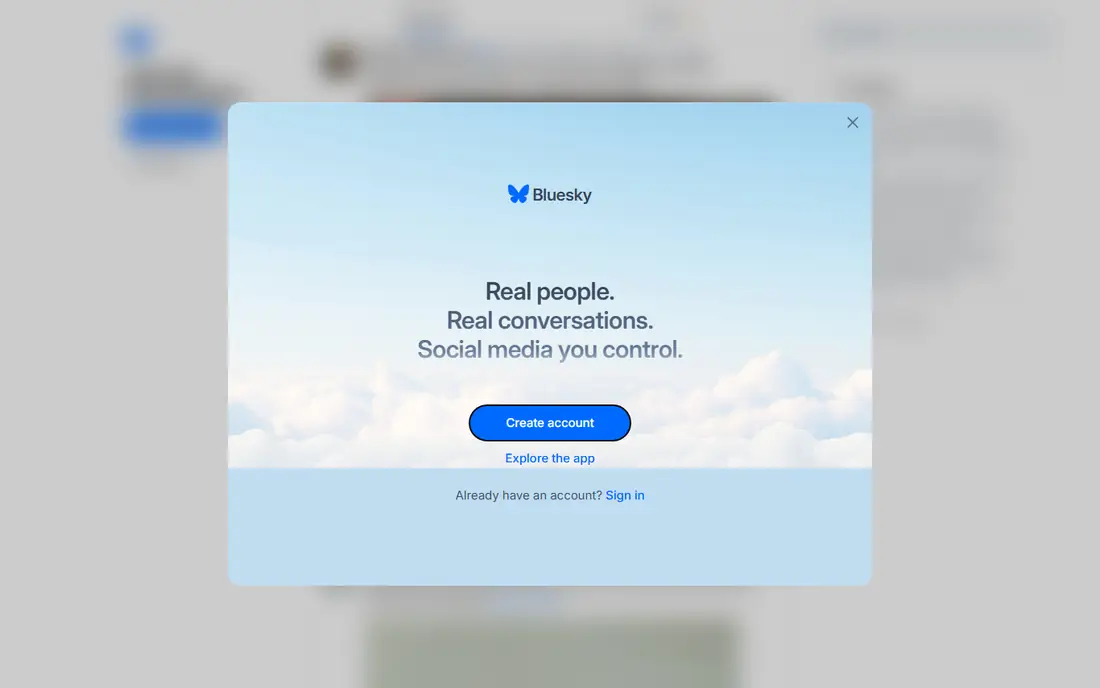
Bluesky is a decentralized social network built on the AT Protocol, designed as a place where users control their feeds. Instead of one company algorithm, users pick custom feeds, mute lists, and moderation services, and starter packs let new users follow curated lists of journalists, scientists, or old mutuals in one tap. The result feels close to early Twitter, with short posts, replies, and reposts in a familiar layout.
The trade-offs are audience size and discovery. Bluesky has tens of millions of registered users but far fewer daily actives than the biggest platforms, and search and discovery are thinner. In practice almost everyone uses the main Bluesky server, so decentralization is more promise than daily reality for most users. Still, for people who want feed control and portable identity without leaving the short-post format, Bluesky is the strongest general alternative.
What we like- Custom feeds you choose
- Portable identity on AT Protocol
- Feels like early Twitter
Watch out for- Smaller audience than Instagram or X
- Finding people takes effort
- Most users still on the main server
Starting price$0
Free planYes
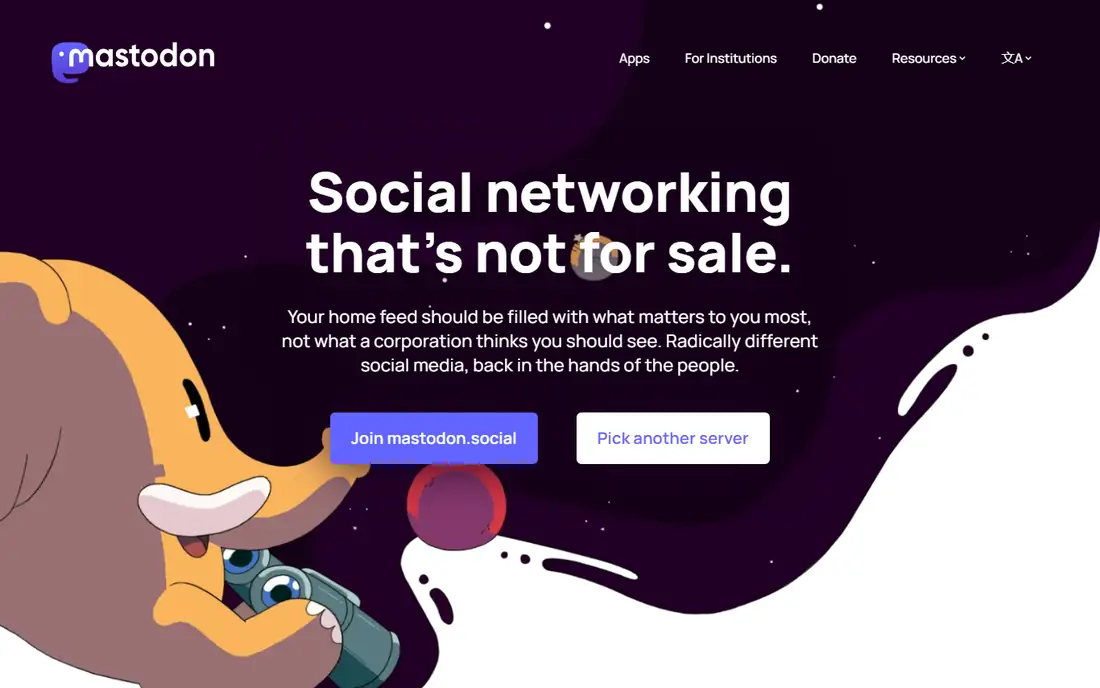
Mastodon is the federated original, built on ActivityPub with thousands of independent servers run by communities, nonprofits, and hobbyists. There is no central company, no advertising business model, and no algorithm deciding what you see. Feeds are chronological, moderation is set by each server, and users can move accounts between servers with their followers.
Onboarding is the price. New users must pick a server, learn federation etiquette, and rebuild their follow graph, which feels harder than signing up for a single app. General servers work fine to start, while topic servers for tech, journalism, or art give better local timelines. For privacy-minded users, journalists, and open source communities, Mastodon offers the most control of any network here, at the cost of reach and convenience.
What we like- No ads and no central algorithm
- Thousands of community servers
- Chronological feeds
Watch out for- Onboarding friction in picking a server
- Smaller and quieter network
- Discovery across servers takes work
Starting price$0
Free planYes
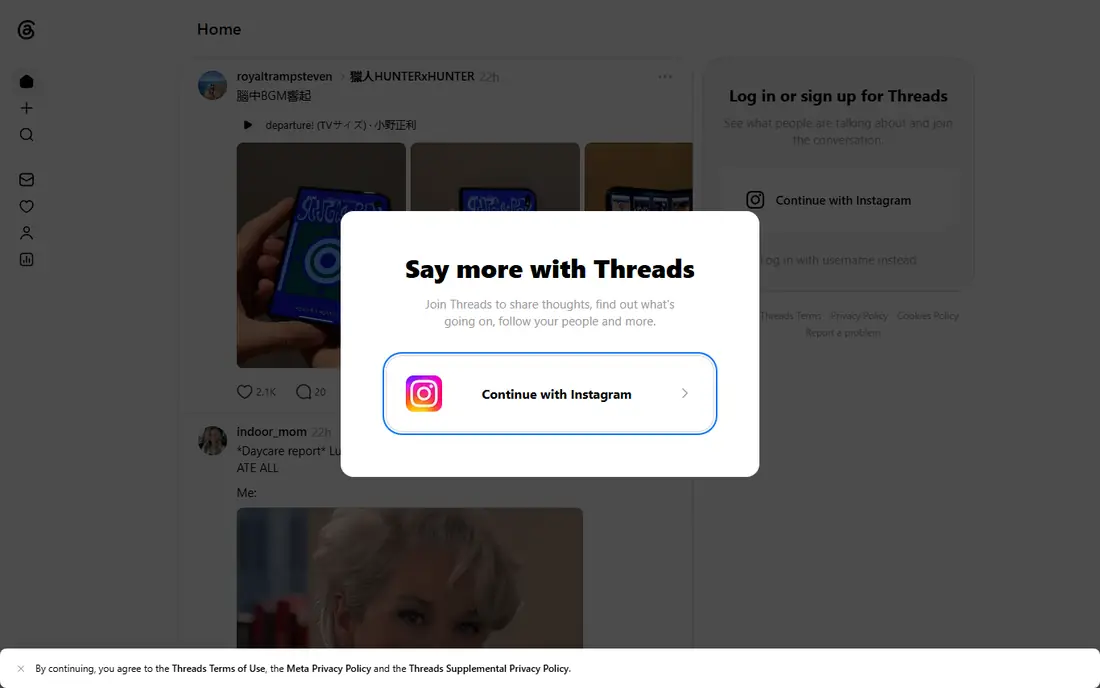
Threads is the text-first social app from Meta, built on Instagram accounts. Its advantage is the ready audience: users can follow the same accounts they follow on Instagram and reach a large public conversation from day one, without rebuilding a network from scratch. Posting rewards consistency, and discovery is stronger than on smaller networks.
The trade-off is the model itself. Threads is a Meta product with algorithmic feeds and advertising-driven data use, which is exactly what many people leaving big social apps want to escape. Federation with the wider Fediverse has been partial and slow. Threads is the right pick when reach matters most and Meta ownership is acceptable. It is the wrong pick when independence is the point.
What we like- Largest ready audience here
- Imports the Instagram graph
- Polished app and discovery
Watch out for- Owned by Meta with algorithmic feeds
- Data feeds advertising
- Limited portability and federation
Starting price$0
Free planYes
Pixelfed is the federated answer to Instagram: photo-first sharing on independent servers that connect through ActivityPub. Users can post photos, follow accounts across the Fediverse, and enjoy an ad-free timeline without algorithmic ranking. For people whose main complaint about Instagram is the feed and ads rather than photos themselves, Pixelfed reproduces the old photo-sharing feel most faithfully.
The audience is far smaller than Instagram, and editing tools, discovery, and Reels-style video are thinner. Server quality and moderation vary, so picking a well-run instance matters. Pixelfed suits photographers and casual photo sharers who value an open, ad-free feed over mass reach. For visual discovery at scale, Pinterest remains a better complement than a replacement.
What we like- Photo-first federated sharing
- No ads
- ActivityPub federation with Mastodon
Watch out for- Much smaller audience than Instagram
- Fewer editing and discovery features
- Server quality varies
Starting price$0
Free planYes
Damus is a leading app for Nostr, a protocol where users hold their own cryptographic keys instead of accounts on a company server. Posts are signed by the user and relayed across independent servers, which makes the network hard to censor or shut down and lets users move between apps without losing identity. The design appeals to tech-savvy users who want protocol-level control.
Key management is the learning curve. Losing a private key can mean losing the account, and clients vary in polish compared with Bluesky or Threads. The network is smaller and more technical in tone. For users who care most about censorship resistance and owning their identity outright, Damus and the wider Nostr ecosystem offer the strongest guarantees here.
What we like- Protocol-first with user-held keys
- Censorship-resistant design
- No central server
Watch out for- Technical setup with keys
- Smaller network
- Clients vary in polish
Starting price$0
Free planYes
Farcaster is a decentralized social protocol with strong developer and crypto-native communities. It supports interactive frames inside posts, such as polls, mints, and mini-apps, and its client apps offer a polished feed experience. Builders, founders, and crypto users form the core audience, and conversation quality in those niches is high.
The audience is narrow. Users outside crypto and developer circles may find little of their existing network here, and the crypto association puts some people off. Onboarding has also involved wallets or invite mechanics at various points. For developers and builders who want a protocol-native network with interactive posts, Farcaster is a strong niche pick. For general social use, Bluesky or Mastodon will feel broader.
What we like- Developer-friendly protocol
- Strong crypto and builder communities
- Frames for interactive posts
Watch out for- Niche audience
- Crypto association puts some users off
- Onboarding needs a wallet or invite history
Starting price$0
Free planYes
Hive Social blends Instagram and X in a casual app with a chronological feed, text and image posts, polls, and Q and A features. It gained attention from users wanting a simpler feed without algorithmic ranking, and its tone is friendlier and less news-driven than X or Threads. Setup is quick, and the interface feels familiar at once.
The team and audience are smaller than the leaders, and the app has faced scaling issues during surges of new users. Features are also fewer than Bluesky or Mastodon. Hive Social suits casual users who want a calm chronological feed with friends and light public conversation, rather than a news or professional network.
What we like- Chronological feed
- Text, image, polls, and Q and A
- Simple and friendly feel
Watch out for- Smaller team and audience
- Fewer features than leaders
- Past scaling issues
Starting price$0
Free planYes
Minds is a social network built around creator monetization, with tokens, tips, and revenue sharing for popular content. Creators earn from engagement rather than relying on brand deals or ad splits, and the platform leans open source with a focus on free expression. Communities around art, video, and independent media use it as an alternative home.
The mainstream audience is smaller, and token mechanics can confuse users who only want to post and follow. The permissive moderation approach also means content quality varies more than on tightly moderated servers. For creators who want built-in earning tools and an alternative audience, Minds offers something the other networks here do not. For general social use, its niche character is the main limit.
What we like- Built-in monetization for creators
- Tokens and tips
- Open source leaning
Watch out for- Smaller mainstream audience
- Crypto and token features confuse some users
- Moderation approach is permissive
How we chose
We compared published feature lists, protocol designs, and recent alternative guides that rank these networks on onboarding, discovery, feed control, and moderation. A tool made this list only if it offers a real social network with public posting and following, not just a messaging app or a single-purpose tool. All eight are free to join, so price does not separate them. What separates them is audience size, feed control, moderation model, and identity portability, which we weighed for a general user leaving big social apps.
What to check before you switch
Start with why you are leaving. If the problem is the algorithm, pick a chronological network like Mastodon, Pixelfed, or Hive Social. If the problem is ads and data use, pick a federated or protocol network rather than Threads. If the problem is reach, accept the trade-off honestly: smaller networks mean fewer friends and followers at first, and no alternative here matches Instagram or X on audience.
Next, plan the move of your follow graph. Bluesky starter packs, Mastodon follow-import tools, and Threads Instagram import each ease rebuilding, but give any new network a month of real posting before judging it. Cross-posting tools exist, yet platforms reward native behavior, so pick one primary home and treat others as outposts. Finally, check moderation and safety tools on your chosen server or app, since federated networks vary widely in how they handle abuse.
Frequently asked questions
What is the best overall alternative to big social media apps?
Bluesky is the best general pick for short posts, with custom feeds and a familiar feel. Mastodon is best for community control and privacy, while Threads is best for reach. The right answer depends on whether you value control, audience, or familiarity most.
Are decentralized social networks really free?
Yes, to join and use. Mastodon, Pixelfed, Bluesky, and Nostr apps are free, with servers funded by donations, nonprofits, or volunteers. Some servers accept donations, and self-hosting costs server time, but joining costs nothing.
Can I keep my followers when I switch?
Partly. Mastodon supports moving accounts between servers with followers. Bluesky offers portable identity on its protocol. Threads imports the Instagram graph. No tool moves followers perfectly across different protocols, so expect to rebuild part of your network.
Is Threads decentralized?
Only partly. Threads has explored federation with the Fediverse, but it remains a Meta product with algorithmic feeds and advertising. For full decentralization, choose Mastodon, Pixelfed, or a Nostr app instead.
Which alternative is best for photographers?
Pixelfed is best for federated photo sharing without ads. For serious photography communities and editing, Glass and VSCO complement it, though they are not full social replacements. Instagram still leads on audience for photographers.
Do these alternatives have ads?
Mastodon, Pixelfed, Bluesky, and Nostr apps are currently ad-free or ad-light by design. Threads carries Meta advertising. Minds uses tokens and boosts rather than traditional ads. Check each app's current model, since policies change.
Sources we checked (8)
- https://bsky.app
- https://joinmastodon.org
- https://www.threads.net
- https://pixelfed.org
- https://damus.io
- https://www.farcaster.xyz
- https://www.hivesocial.app
- https://www.minds.com
Is your product missing or out of date?
We review this list regularly. Vendors can request a listing, send updated pricing or ask about featured placement.

Shihab Mia · Founder, Rankite
Shihab has 5+ years in B2B and SaaS SEO. He writes Rankite's software buying guides from pricing pages, documentation and public user reviews. More about Shihab.