How we make this list: we compare pricing pages, product documentation and public user reviews. Ratings come from G2, Capterra or Trustpilot, with the date we checked them.
Key takeaways
- The best alternatives to Caddy in 2026 are led by Nginx for general web serving, Traefik for containers, and HAProxy for load balancing at scale.
- Caddy is a web server known for automatic HTTPS and a simple config file, and this guide lists alternatives to it, not Caddy itself at all.
- Teams that run Kubernetes or Docker should look at Traefik or Envoy, while teams that run classic sites should look at Nginx or Apache first.
- Automatic HTTPS is Caddy's signature feature, and several alternatives now offer it through cert managers or built in ACME support as well.
- The best server is the one your team can operate safely, since a misconfigured proxy exposes far more risk than a slower server ever will.
Quick comparison
Is your product missing or out of date?
We review this list regularly. Vendors can request a listing, send updated pricing or ask about featured placement.
The best alternatives to Caddy
Starting priceFree
Free planYes
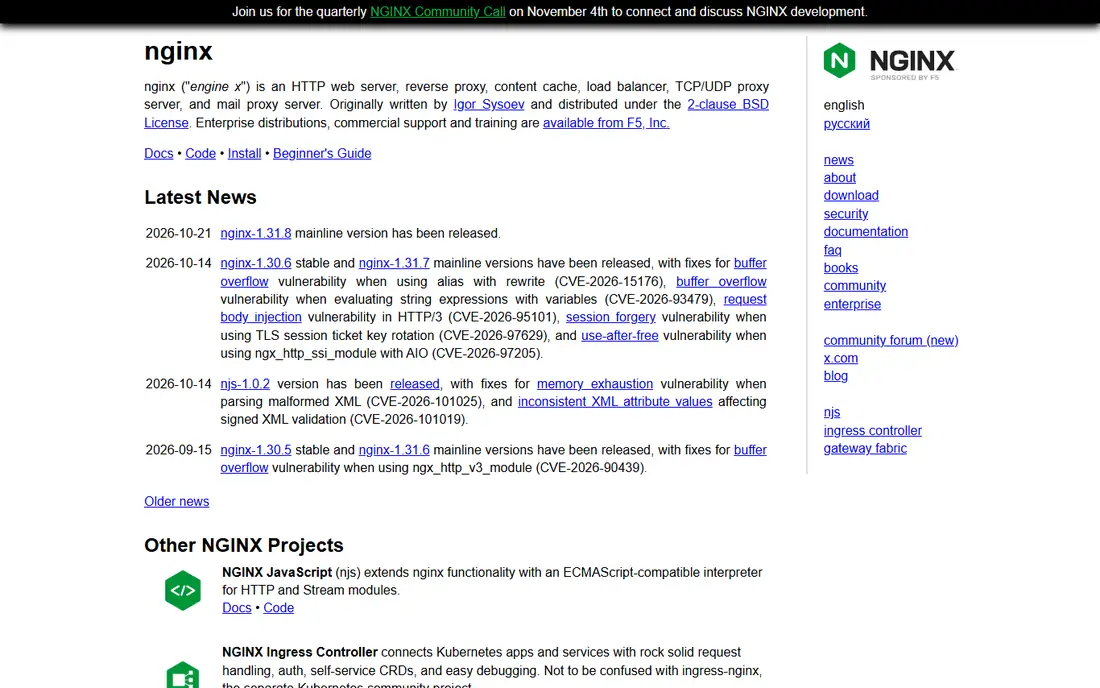
Nginx is the best fit for general web serving, running as a free open source server that powers a very large share of the busiest sites on the web. Its event driven design handles many connections with low memory, its module ecosystem covers caching, compression, and security, and its reverse proxy features are mature and proven.
The limits are config and TLS. Nginx config is more verbose than Caddy, and TLS needs certbot or manual certificate management rather than automatic HTTPS out of the box. For a team that wants a proven, fast, general server, Nginx is the best choice overall.
What we like- Fastest general server
- Huge module ecosystem
- Proven at scale
Watch out for- Config more verbose than Caddy
- TLS needs certbot or manual setup
- Reload workflow
Starting priceFree
Free planYes
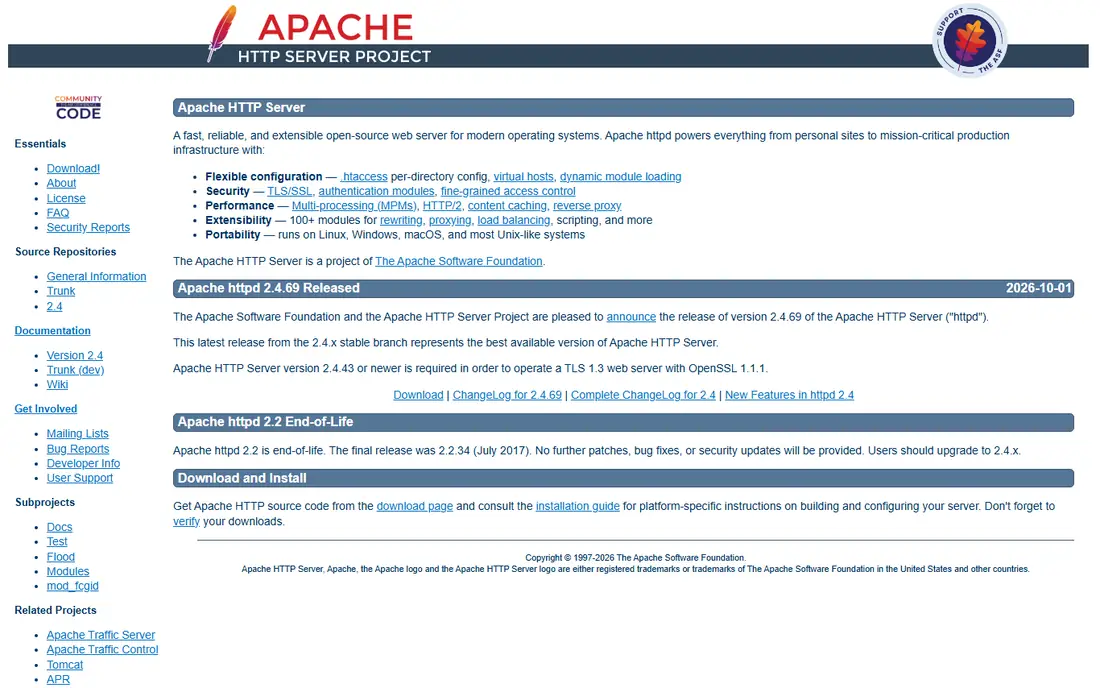
Apache HTTP Server suits classic hosting, with the most documentation of any web server, .htaccess per directory rules that shared hosts love, and a huge module set overall. It is free and open source, and it runs on every major platform today.
The limits are concurrency and speed. Apache is heavier under high concurrency than Nginx, its config is complex, and it is slower for static files overall. For a classic shared hosting or .htaccess workflow, Apache is the best choice today.
What we like- Most widely documented
- .htaccess per directory rules
- Huge module set
Watch out for- Heavier under high concurrency
- Config complex
- Slower than Nginx for static files
Starting priceFree
Free planYes

Traefik is the best fit for container routing, discovering services from Docker, Kubernetes, and other providers automatically, with automatic HTTPS and dynamic config that needs no reloads at all. It is free and open source, with a paid enterprise edition available.
The limits are learning curve and static focus. Traefik takes time to learn, and it is less focused on classic static site serving than Nginx overall. For a team running Docker or Kubernetes, Traefik is the best choice overall.
What we like- Container native discovery
- Automatic HTTPS
- Dynamic config
Watch out for- Learning curve
- Smaller static site focus
- Enterprise features paid
Starting priceFree
Free planYes
HAProxy suits load balancing, with the best health checks, high availability features, and traffic control in this list today. It is free and open source, and it powers load balancing for many large sites worldwide.
The limits are scope and TLS. HAProxy is a proxy and load balancer, not a full web server, and its TLS setup is manual today. For a team that needs serious load balancing in front of app servers, HAProxy is the best choice today.
What we like- Best load balancing
- Health checks
- High availability
Watch out for- Not a full web server
- Config detailed
- TLS setup manual
Starting priceFree
Free planYes
Lighttpd is the best fit for lightweight serving, using very low memory, serving static files fast, and keeping config very simple. It is free and open source, and it suits embedded devices and small VPS servers well.
The limits are ecosystem and modules. Lighttpd has a smaller ecosystem, fewer modules, and less documentation than Nginx or Apache overall. For a small server where memory matters most, Lighttpd is a strong choice.
What we like- Very low memory
- Fast static serving
- Simple config
Watch out for- Smaller ecosystem
- Fewer modules
- Less documentation
Starting priceFree
Free planYes
Envoy suits service mesh proxying, with modern observability, dynamic config via API, and deep traffic control for microservices today. It is free and open source, and it powers many large service meshes worldwide.
The limits are complexity. Envoy is complex to operate, overkill for simple sites, and has a very steep learning curve. For a microservices team that needs a modern proxy, Envoy is the best choice overall.
What we like- Modern service mesh proxy
- Observability
- Dynamic config via API
Watch out for- Complex to operate
- Overkill for simple sites
- Steep learning curve
Starting priceFree
Free planYes
OpenLiteSpeed is the best fit for WordPress hosting, with fast WordPress performance, LiteSpeed cache integration, and Apache compatible rewrite rules included. It is free and open source, with a paid enterprise edition available today.
The limits are community and config. Its community is smaller than Nginx, enterprise features cost money, and its config differs from Nginx quite a bit. For a WordPress host that wants speed without Nginx tuning, OpenLiteSpeed is a strong choice today.
What we like- Fast WordPress performance
- LiteSpeed cache
- Apache compatible rules
Watch out for- Smaller community
- Enterprise features paid
- Config differs from Nginx
Starting priceIncluded with Windows Server
Free planNo
Microsoft IIS suits Windows hosting, with the best Windows and .NET integration, GUI management, and full support for ASP.NET apps. It is included with Windows Server, so its price sits inside the Windows license itself.
The limits are platform and ecosystem. IIS is Windows only, its licensing adds cost, and its open source ecosystem is much smaller than Nginx. For a Windows shop running .NET apps, IIS is the best choice overall.
What we like- Best Windows integration
- .NET support
- GUI management
Watch out for- Windows only
- Licensing cost
- Smaller open source ecosystem
How we chose
We ranked servers by proxying quality, TLS handling, config simplicity, performance, and ecosystem, favoring servers that fit real deployment patterns over servers with the very longest feature lists. We gave extra weight to TLS, since automatic HTTPS is Caddy's signature strength, and to operating effort, since a server your team cannot operate safely is a real liability. We also weighed community, since documentation and modules decide how fast problems get solved in practice. Finally, we checked HTTP/3 and modern protocol support, since a server that lags on new protocols will need replacing much sooner.
Buying guide
Start by naming your deployment clearly. A classic site needs Nginx or Apache, a container platform needs Traefik or Envoy, a load balancer tier needs HAProxy, a WordPress host needs OpenLiteSpeed, and a Windows shop needs IIS today. One deployment beats a server chosen for benchmarks alone, and a server that fits your platform will be easier to staff, document, and debug than a much faster server your team does not know.
Next, check TLS handling carefully before committing. Caddy users expect automatic HTTPS, so confirm whether your alternative offers it natively, through certbot, or through a full cert manager. A server that leaves cert renewals manual will cause an outage sooner or later, and an expired certificate is one of the most common and most embarrassing production failures today.
Finally, test config changes thoroughly in staging. A server with a short config is easier to review, while a server with a very long config hides mistakes. Review every proxy rule, header, and TLS setting before production, and automate reloads so a bad config cannot take down the whole site. Also test config reloads under load, since a reload that drops connections during peak traffic is just as bad as a bad config itself.
Frequently asked questions
What is Caddy?
Caddy is a web server known for automatic HTTPS and a very simple config file. This guide lists alternatives to Caddy, not Caddy itself at all. Teams usually leave Caddy when they need deeper load balancing, container native routing, Windows integration, or a module that Caddy lacks, and the best replacement depends on which of those needs drives the move most.
What is the best free alternative to Caddy?
Nginx is the best free alternative for general serving, while Traefik is the best free alternative for containers overall. Both are open source, though neither offers Caddy's automatic HTTPS out of the box today. Traefik comes closer, since it handles certificates automatically for discovered services, while Nginx needs certbot or a cert manager running alongside it.
Does Nginx offer automatic HTTPS?
Not natively. Nginx needs certbot or a similar ACME client for automatic certificates, while Traefik offers automatic HTTPS for container services natively. Caddy remains the simplest option for automatic HTTPS, and teams that value that simplicity above all else should think twice before leaving Caddy at all.
Should I use HAProxy or Nginx for load balancing?
HAProxy is better for dedicated load balancing with health checks and high availability, while Nginx suits teams that want load balancing plus web serving in one single server. Many teams use HAProxy in front and Nginx behind it, getting the best of both worlds: HAProxy's traffic control and Nginx's serving and caching.
Is Apache still a good choice?
Yes for classic hosting, shared hosting, and .htaccess workflows today. Apache is heavier under high concurrency than Nginx, but its documentation and module set remain unmatched for traditional sites overall. New projects usually pick Nginx or Traefik, while existing Apache sites have little reason to move unless concurrency becomes a very real problem.
Sources we checked (0)
Is your product missing or out of date?
We review this list regularly. Vendors can request a listing, send updated pricing or ask about featured placement.

Shihab Mia · Founder, Rankite
Shihab has 5+ years in B2B and SaaS SEO. He writes Rankite's software buying guides from pricing pages, documentation and public user reviews. More about Shihab.
 Nginx
 Apache HTTP Server
 Traefik
 HAProxy
 Lighttpd
 Envoy
 OpenLiteSpeed
 Microsoft IIS