How we make this list: we compare pricing pages, product documentation and public user reviews. Ratings come from G2, Capterra or Trustpilot, with the date we checked them.
Key takeaways
- Jamf is the established Apple specialist, with Jamf Now from 4 dollars per device per month and the deepest macOS tooling in the category.
- Mosyle undercuts everyone at 1 dollar per device per month with a free tier, and Iru, formerly Kandji, leads on automated compliance for Apple fleets.
- Hexnode and JumpCloud make sense when the fleet stops being Apple only and Windows and Android devices need the same console.
- Addigy's multi tenant design is built for MSPs managing many clients, so check tenant structure first if that is your use case.
Quick comparison
| Tool | Best for | Starting price | Free plan |
|---|
 Jamf | Apple fleets at scale | $4 per device per month | No |
 Mosyle | Apple fleets on a tight budget | $1 per device per month | Yes |
 Iru | Apple first compliance automation | See website | No |
 Hexnode UEM | Mixed fleets in one console | $2.20 per device per month | No |
 JumpCloud | Identity and device management together | $9 per user per month | No |
 SimpleMDM | Simple Apple MDM without the extras | See website | No |
 Rippling IT | Devices joined to HR and IT workflows | See website | No |
Is your product missing or out of date?
We review this list regularly. Vendors can request a listing, send updated pricing or ask about featured placement.
The best Addigy alternatives
#1Jamf
Best for: Apple fleets at scale4.7/5 on
G2 (2,443 reviews, checked Oct 2026)
Visit jamf.com
Starting price$4 per device per month
Free planNo
What we like- Jamf is the platform Apple management is measured against. Jamf Now starts at 4 dollars per device per month for small teams, and the full Jamf platform adds the deepest macOS capabilities available: same day support for new Apple operating system releases, mature app packaging and deployment, smart groups driven by rich inventory data, and security products sharing the same agent. Schools, hospitals and large companies run fleets of tens of thousands on it, and any Apple admin you hire has probably used it. If Addigy feels small for where your fleet is going, Jamf is the established destination.
Watch out for- Depth costs money and complexity: the full platform's per device price climbs well above Jamf Now, and getting value from it takes an admin who knows the system. Jamf does not manage Windows or Android in the way a mixed estate needs. There is no free plan, and the multi tenant experience for MSPs is less natural than Addigy's, since Jamf was designed around one organisation per instance.
#2Mosyle
Best for: Apple fleets on a tight budget4.6/5 on
G2 (57 reviews, checked Oct 2026)
Visit mosyle.com
Starting price$1 per device per month
Free planYes
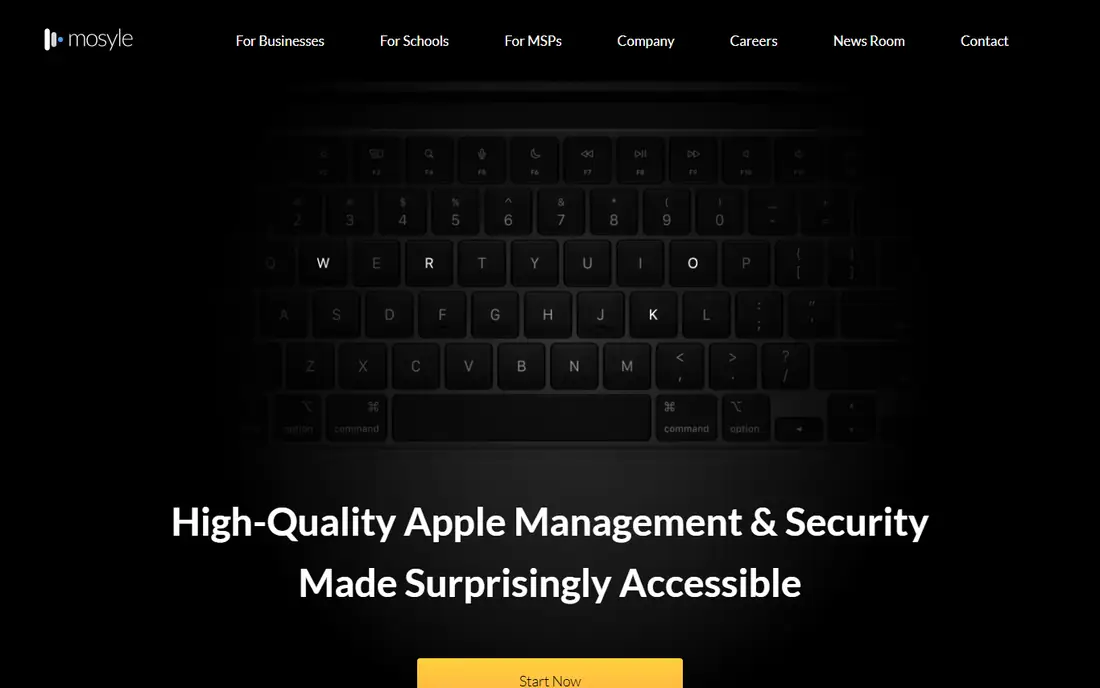
What we like- Mosyle's offer is hard to argue with on price: Business Premium at 1 dollar per device per month and a free tier covering small fleets, with automated enrollment, app deployment, security baselines and update management that reviewers rate well above the price point. It grew out of education, where budgets are public and fleets are huge, and that heritage shows in how much automation is included before the upsell. For a school, a startup or a small company leaving Addigy over cost, Mosyle is usually the spreadsheet winner.
Watch out for- Apple only, in a list where several buyers are shopping precisely because Windows arrived in the fleet. The interface is busy in places, and the advanced Fuse product line moves to quote based pricing, so the one dollar story applies to the standard product. Support resources and community depth are smaller than Jamf's, which matters when an obscure profile problem lands on a Friday.
Starting priceSee website
Free planNo
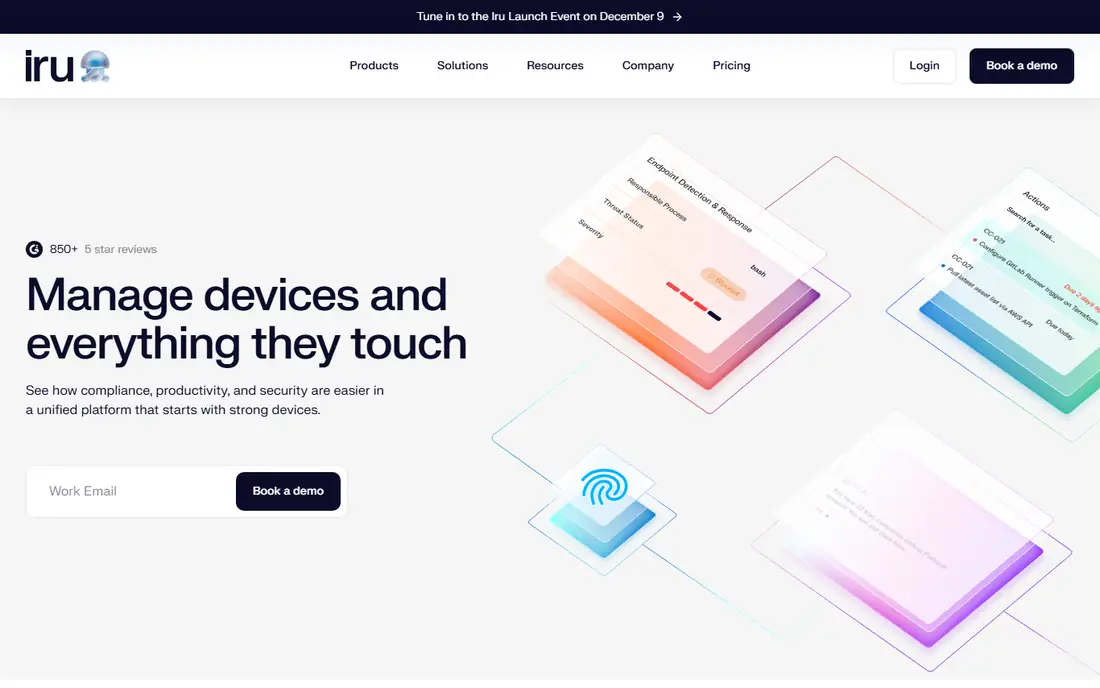
What we like- Iru is the company formerly known as Kandji, rebranded in 2025, and its product centres on automated compliance: a library of prebuilt controls mapped to frameworks such as CIS and SOC 2, automated remediation when a device drifts, and an audit trail that evidence hungry companies use in their own assessments. The interface is the most modern in Apple management, app deployment through its Auto Apps catalogue removes packaging chores, and it has added Windows and Android coverage for estates that are Apple first rather than Apple only. Security teams shortlist it because compliance is the design, not a report.
Watch out for- Pricing is quote only and sits at the premium end, so we list see website. There is no free plan and no self serve route to test it quietly. Its automation is opinionated: teams that want to hand craft every profile sometimes find the guardrails in the way. The rebrand also means older Kandji documentation and community answers now live under a new name, a small but real friction during evaluation.
#4Hexnode UEM
Best for: Mixed fleets in one console4.6/5 on
G2 (283 reviews, checked Oct 2026)
Visit hexnode.com
Starting price$2.20 per device per month
Free planNo
What we like- Hexnode manages iOS, macOS, Android, Windows and tvOS from one console, with the Pro tier listed at 2.20 dollars per device per month on annual billing. For a company whose estate quietly became mixed, one Windows laptop and a shelf of Android scanners per office, Hexnode ends the two console problem that Addigy cannot solve. Kiosk modes, geofencing, app management and remote view cover frontline devices as well as office Macs, and the pricing tiers are published rather than negotiated.
Watch out for- Apple depth is broad rather than leading: Mac specialists will find Jamf and Iru ahead on the newest Apple frameworks and same day OS support. There is a 15 device minimum and no free plan, only a trial. The interface quality varies between sections in user reviews, and MSP style multi tenant separation takes more arranging than it does in Addigy.
#5JumpCloud
Best for: Identity and device management together4.5/5 on
G2 (4,104 reviews, checked Oct 2026)
Visit jumpcloud.com
Starting price$9 per user per month
Free planNo
What we like- JumpCloud starts from identity rather than devices: one directory for user accounts, single sign on, MFA and device management across Mac, Windows and Linux, with its device management package listed at 9 dollars per user per month. For a small company with no directory at all, that bundle replaces several subscriptions at once, and policies, commands and patching ride on the same agent that handles logins. MSPs also use it to run many small clients, which makes it the closest structural alternative to Addigy's multi client world in this list.
Watch out for- Per user pricing is the wrong shape for device heavy estates: shared Macs and loaner laptops cost seats they do not need. Apple specific depth, such as declarative device management features, trails Jamf and Iru. The platform's breadth means the device module gets less development attention than a dedicated MDM's, and buyers should test their exact Apple workflows rather than trust the platform list.
Starting priceSee website
Free planNo
What we like- SimpleMDM, now part of PDQ, does what the name promises: Apple device management with a clean interface, a strong API, fast setup and none of the platform sprawl. Developers like it because nearly everything in the console is scriptable, and small IT teams like it because there is little to learn. It handles enrollment, profiles, app deployment and lost mode properly, and its pricing is per device with a free trial, though current public pricing was not published in a form we could verify, so we list see website.
Watch out for- Simple is the ceiling as well as the pitch: there is less compliance automation than Iru, less security tooling than Jamf, and no Windows or Android management at all. Reporting is basic. It suits teams who know exactly what MDM they need and nothing more, and it will be outgrown by companies whose audits start asking for evidence the tool does not produce.
Starting priceSee website
Free planNo
What we like- Rippling approaches devices from the employee record: when HR hires someone, Rippling can order, configure, ship and enrol their Mac or PC, assign apps by role, and wipe and recover the device when they leave. Its device management rides on that platform, which removes the manual joiner and leaver work that consumes IT teams at growing companies. For a business already buying Rippling for HR or payroll, adding device management consolidates vendors and the device inventory stays accurate because it is driven by the people system.
Watch out for- The device tool is one module in a platform sale, priced by quote and bundle, so we list see website
- Buying Rippling for MDM alone rarely makes sense. Apple depth is competent rather than specialist, and MSPs will find no multi tenant model here. The platform's breadth is also the risk: you are adopting an operating system for the company, and that decision deserves more scrutiny than a device tool swap.
How we chose
We compared Apple device management platforms on enrollment, configuration, app deployment, update control and the features that decide audits: patching automation, compliance reporting and remote actions. Every entry manages Apple fleets as a core product in October 2026. We included two cross platform tools, Hexnode and JumpCloud, because mixed fleets are the most common reason for this search, and flagged Apple only limits plainly in each entry. Pricing that vendors publish is quoted; pricing they negotiate is marked see website rather than repeated from directories.
How to choose the right Apple MDM
Start with the estate question, because it eliminates half the list. If every device is Apple and will stay that way, Jamf, Mosyle, Iru and SimpleMDM are your shortlist, split by budget and compliance needs. If Windows or Android devices exist, or will within the contract term, you need Hexnode, JumpCloud or Rippling, and the Apple only tools are a future migration. MSPs should test tenant separation and per client reporting in the trial, since that structure is painful to retrofit.
Then test the two moments that define device management: day one and the bad day. Enroll a Mac from factory reset to working desktop and time it, including app installs and security settings. Then run the bad day drill: mark the device lost, lock it, wipe it, and read the logs the tool produces, because those logs are what an auditor or an insurer will ask for. The platform that handles both days calmly, at a per device price your fleet size can carry, is the right Addigy replacement for you.
Frequently asked questions
What is the closest alternative to Addigy?
For Apple only fleets, Mosyle matches Addigy's value position and Jamf matches its ambitions, while Iru is the pick when compliance automation drives the decision. For MSPs, the honest answer is that Addigy's multi tenant design is its most distinctive feature, and JumpCloud comes closest to that multi client structure. Most switchers are really leaving for one of three things, price, platform depth or mixed fleets, and each points to a different winner.
How much does Apple device management cost in 2026?
Published prices in this list run from 1 dollar per device per month at Mosyle to 4 dollars at Jamf Now, with full enterprise platforms and quote priced tools such as Iru above that. Per user models such as JumpCloud at 9 dollars price the person instead. The real comparison is the tier containing your required features across your whole fleet for a year, since entry tiers in this category often exclude the automation that made you shop at all.
Can these tools manage Windows PCs as well as Macs?
Hexnode, JumpCloud and Rippling manage Windows beside Apple devices in one system. Jamf, Mosyle, Iru and SimpleMDM are Apple specialists, though Iru has added Windows and Android coverage that buyers should test against their own device mix. If a mixed estate is your reason for leaving Addigy, verify the exact Windows policies you need, patching, encryption and app deployment, during the trial rather than trusting the platform list.
Do I need Apple Business Manager with a new MDM?
For automated enrollment, yes, in practice. Apple Business Manager is free from Apple and links your purchased devices to whichever MDM you choose, so switching platforms does not mean touching every Mac: you reassign devices in the portal and they enrol into the new system at next reset. Devices bought outside the programme can still be enrolled manually. Set the portal up under a company owned Apple account, never a personal one, whoever you choose.
What should an MSP check before leaving Addigy?
Tenant structure above all: how client fleets, admins and billing separate, and how reporting rolls up across clients. Addigy was designed for that shape, and generalist tools often assume one organisation. Also check per client minimums, since a platform priced fairly at 500 devices can be punishing across thirty clients of fifteen. Run two real clients, one Apple only and one mixed, through a trial before signing anything portfolio wide.
Sources we checked (0)
Is your product missing or out of date?
We review this list regularly. Vendors can request a listing, send updated pricing or ask about featured placement.

Shihab Mia · Founder, Rankite
Shihab has 5+ years in B2B and SaaS SEO. He writes Rankite's software buying guides from pricing pages, documentation and public user reviews. More about Shihab.