How we make this list: we compare pricing pages, product documentation and public user reviews. Ratings come from G2, Capterra or Trustpilot, with the date we checked them.
Key takeaways
- Monarch Money at 99.99 dollars a year is where most YNAB leavers land: a household dashboard with flexible budgets, net worth and investments in one place.
- EveryDollar and Goodbudget keep a method: zero based and envelope budgeting respectively, and both have genuinely free tiers for manual entry.
- Rocket Money and PocketGuard answer narrower questions, which subscriptions can go and what is safe to spend, rather than running a full budget.
- None of these apps is financial advice, and the best one is the one whose method you will still be using in six months, not the one with the longest feature list.
Quick comparison
| Tool | Best for | Starting price | Free plan |
|---|
 Monarch Money | Complete household money dashboard | $99.99 per year | No |
 Copilot Money | Apple users who care about design | $95 per year | No |
 EveryDollar | Simple zero based budgeting | Free | Yes |
 Goodbudget | Envelope budgeting without bank links | Free | Yes |
 PocketGuard | Knowing your safe to spend number | $74.99 per year | Yes |
 Rocket Money | Finding and cancelling subscriptions | From $4 per month | Yes |
 Actual Budget | Private envelope budgeting you host | Free | Yes |
 Tiller Money | Budgeting inside your own spreadsheet | $79 per year | No |
Is your product missing or out of date?
We review this list regularly. Vendors can request a listing, send updated pricing or ask about featured placement.
The best YNAB alternatives
#1Monarch Money
Best for: Complete household money dashboard4.7/5 on
G2 (3 reviews, checked Oct 2026)
Visit monarch.com
Starting price$99.99 per year
Free planNo
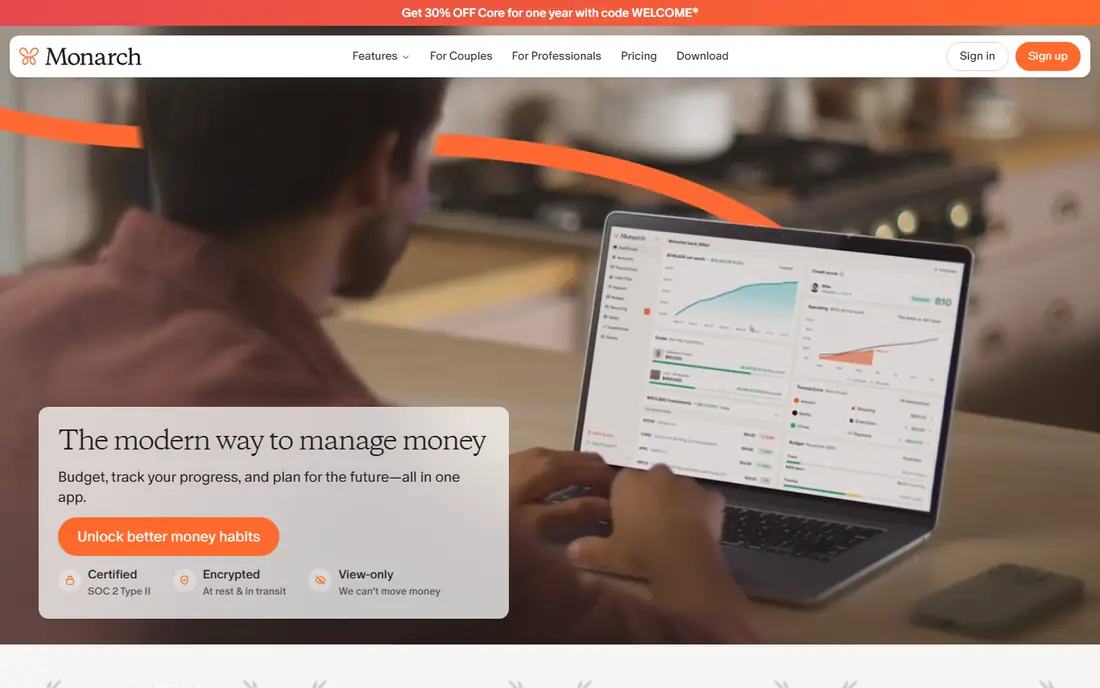
What we like- Monarch is the dashboard YNAB refuses to be: bank accounts, cards, loans, investments and net worth in one polished view, with flexible category budgets and targets rather than strict zero based rules. It costs 99.99 dollars a year for the Core plan or 14.99 a month, and both partners get their own login on one household subscription, which ends the screenshot sharing couples put up with elsewhere. Sync is fast, custom dashboards and reports are strong, and a newer Plus tier adds power features for households that want them.
Watch out for- If YNAB's discipline is what finally worked for you, Monarch's looseness is a step back: it shows you the month beautifully but pushes less hard on planning it. There is no free plan, only a short trial. Investment tracking is a view, not a planning tool, and the Plus tier's price means the household should price both tiers before the first renewal surprises them.
Starting price$95 per year
Free planNo
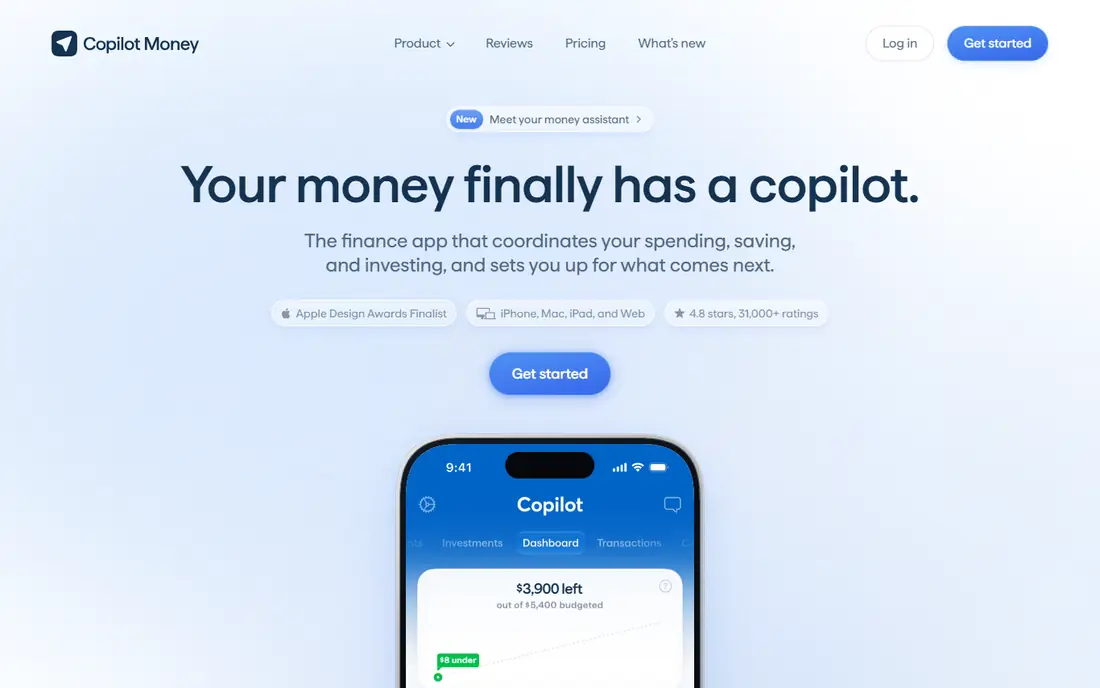
What we like- Copilot is the design led pick for iPhone and Mac households: fast sync, automatic categorisation you can correct with a swipe, budgets, subscriptions, investments and a cash flow view, all in an interface reviewers consistently rate the best in the category. It costs 95 dollars a year or 13 dollars a month, and the one month trial is long enough to run a full pay cycle, which is the honest test of any budgeting app. Apple households sharing one budget get a calm, quick tool that respects the platform.
Watch out for- Android and Windows users are second class citizens here, since Copilot's heart is Apple platforms and the web app carries less of the polish. There is no free tier. The budgeting model is tracking with targets rather than a method, so a household that needs rules imposed on it should look at EveryDollar or Goodbudget instead.
Starting priceFree
Free planYes
What we like- EveryDollar is the closest free relative of YNAB's method: a zero based budget where income minus planned spending equals zero, built around Dave Ramsey's baby steps. The free version covers manual budgeting in full, and Premium at 79.99 dollars a year adds bank connection, paycheck planning and reports. Setup is the fastest in this list, the language is plain, and for a household whose real problem is that no plan exists at all, the simplicity is the feature.
Watch out for- The free tier is manual entry only, and manual entry is where budgets go to die for most people, so the realistic price is the Premium tier. The Ramsey framing and upsells toward the wider Ramsey programme will not suit everyone. Investment and net worth tracking are thin next to Monarch, and monthly billing at 17.99 dollars is terrible value next to the annual plan, a pattern worth noticing across this whole category.
Starting priceFree
Free planYes
What we like- Goodbudget digitises the cash envelope system: fill envelopes at payday, spend from them, and stop when one runs dry. The free tier runs a real budget with a limited number of envelopes and syncs between partners' phones, and Plus at 80 dollars a year or 10 dollars a month removes the limits and adds history. There is no bank linking at all in the classic workflow, which privacy minded users and cash heavy households count as the main attraction, and the manual entry builds an awareness that automatic apps quietly remove.
Watch out for- No bank sync means every transaction is typed by hand, forever, and most households stop within a quarter. The reports and account tracking are basic beside Monarch or Copilot, and investments do not exist here. Goodbudget is a single method done honestly, so if envelopes are not your method, there is nothing else to fall back on inside the app.
Starting price$74.99 per year
Free planYes
What we like- PocketGuard answers one question well: after bills, goals and necessities, what is left that is safe to spend? Its In My Pocket figure updates as linked accounts move, and that single number suits people who found category budgets fussy and abandoned them. It costs 74.99 dollars a year after a limited free tier, tracks bills and subscriptions, and flags spending patterns without demanding a Sunday reconciliation session. For a spender who needs a guardrail rather than a system, this is the kindest design here.
Watch out for- The single number is only as good as its bill detection, and irregular income confuses it more than it confuses the method apps. Budgeting depth is shallow: you will not run a serious debt payoff plan or a sinking fund system here. Some pricing and lifetime offers in directories conflict with the subscription price, so confirm the current terms in the app before paying.
Starting priceFrom $4 per month
Free planYes
What we like- Rocket Money, the former Truebill, hunts the leaks: it lists every recurring charge across linked accounts, cancels subscriptions on request, tracks bills and credit scores, and offers a negotiation service for bills like cable and internet, taking a share of what it saves. The free tier covers basic tracking, and Premium is pay what you want, reported between 4 and 12 dollars a month billed annually, which is an unusually honest pricing model. For many households the first subscription sweep alone pays for a year.
Watch out for- Budgeting is a side feature, limited in the free tier and basic in Premium, so this complements a budget rather than replacing YNAB. The bill negotiation share, 30 to 60 percent of savings in its terms, means a successful negotiation still sends a real cheque's worth of money to Rocket Money, and the service earns from data linked financial products, which privacy focused users should read about before linking every account.
Starting priceFree
Free planYes
What we like- Actual Budget is open source envelope budgeting in the spirit of the old desktop YNAB: the software is free, your data lives on your own machine or a small server you control, and bank sync is available through optional third party services. It runs in a browser, supports multiple budgets and goal templates, and has an active community improving it in the open. For the privacy minded and the technically comfortable, it removes both the subscription and the question of who else can see your finances.
Watch out for- You are the IT department: installing, updating and backing up are your jobs, and hosted options through community providers add a small monthly cost and a setup hour. There is no company to call, and mobile access takes more arranging than an app store download. If setting up a server sounds like a chore rather than a Saturday, Monarch or Copilot will serve you better.
#8Tiller Money
Best for: Budgeting inside your own spreadsheet4.0/5 on
G2 (2 reviews, checked Oct 2026)
Visit tillerhq.com
Starting price$79 per year
Free planNo
What we like- Tiller pours your bank, card and balance data into Google Sheets or Excel daily and gives you templates to budget, track net worth and report however you like, for 79 dollars a year after a trial. The spreadsheet is the interface, which means any question the app vendors did not think of, you can answer yourself with a formula. Couples and freelancers with irregular income often end up here after every app's categories fail to match their real life, because the model bends instead of breaking.
Watch out for- A spreadsheet is the interface, with everything that implies for mobile use and for anyone who dislikes formulas. There is no free plan. Tiller feeds data and provides templates, but the budget itself is your construction, and a blank sheet defeats beginners just as surely as a rigid app defeats the irregular. It is the most flexible tool here and the least guided, in equal measure.
How we chose
We compared budgeting apps on method, price and data handling: whether the app imposes a system like zero based or envelopes, merely tracks, or answers one narrow question well. Every entry is in active sale or active open source development in October 2026, with pricing we could check against vendor pages or consistent current comparisons. We excluded banks' built in trackers, since they see only one institution's accounts, and we excluded YNAB itself. Apps that appear in directories mainly as lead generators for financial products were left out unless their budgeting tool stands on its own.
How to choose the right budgeting app
Be honest about which failure you are fixing. If YNAB's method worked and the price is the problem, EveryDollar and Goodbudget keep a method and cut the bill, and Actual Budget keeps the envelope model at zero software cost. If the method never stuck, a tracker will not fix it either, but Monarch or Copilot will at least keep one clear household picture with less weekly effort. If the problem is leaks rather than planning, Rocket Money pays for itself once and PocketGuard keeps the guardrail up after.
Then run the trial across a full pay cycle, link the real accounts, and see whether you are still opening the app in week three. Every paid app here costs far less paid annually than monthly, but the annual discount is a trap if the habit dies in February. One more check that matters: read how the app connects to your bank and what it does with the data. You are handing a company the keys to your financial life for a 100 dollar subscription, so the privacy policy deserves the same ten minutes as the feature list.
Frequently asked questions
What is the cheapest real alternative to YNAB?
EveryDollar and Goodbudget both budget properly for free with manual entry, and Actual Budget is free in full if you can host it. With automatic bank sync included, the cheapest credible paid options are PocketGuard at 74.99 dollars a year and EveryDollar Premium at 79.99. Under about 75 dollars a year with sync, something always gives: history limits, envelope caps or a dashboard that cannot plan, only report.
Is Monarch Money better than YNAB?
For households that want one dashboard for spending, savings and investments with both partners logged in, most switchers say yes. For people whose spending changed because YNAB made them plan every dollar before the month began, Monarch's flexible budgets are weaker medicine. The apps are answers to different questions: YNAB asks what your money should do, Monarch asks what it did. Pick by which question your household actually needs answered.
Do any of these apps work without linking bank accounts?
Goodbudget is built for manual entry and never asks for bank credentials, and EveryDollar's free tier is manual too. Actual Budget can run fully manual if you skip the optional sync services. Manual entry is slower and depends on your honesty in the moment, which is precisely why envelope veterans defend it: the friction is the point, and the privacy is real.
Why do budgeting apps charge so much more per month than per year?
Because monthly billing in this category is priced as a penalty for not committing, and the gaps are large: EveryDollar costs about 216 dollars over a year paid monthly against 79.99 annually, and YNAB itself charges about 180 against 109. Vendors know most churn happens in the first months. Use the free trial across a whole pay cycle, then buy the annual plan only if the habit survived.
Are budgeting apps safe to connect to my bank?
The established apps here connect through aggregators such as Plaid or MX with read only access and do not store your bank password themselves. That is a reasonable model, not a risk free one: you are still granting a third party ongoing visibility into your transactions. Reduce the risk by using a unique password and two factor authentication on both the bank and the app, and by removing connections for accounts you no longer use.
Sources we checked (0)
Is your product missing or out of date?
We review this list regularly. Vendors can request a listing, send updated pricing or ask about featured placement.

Shihab Mia · Founder, Rankite
Shihab has 5+ years in B2B and SaaS SEO. He writes Rankite's software buying guides from pricing pages, documentation and public user reviews. More about Shihab.