How we make this list: we compare pricing pages, product documentation and public user reviews. Ratings come from G2, Capterra or Trustpilot, with the date we checked them.
Key takeaways
- Studios leave Xsolla for one reason above all: selling direct avoids the roughly 30 percent store cut, but the studio inherits tax, fraud, and chargeback work.
- Merchant of record platforms take that liability back, becoming the legal seller so tax registration, filing, and remittance sit with the provider.
- Tebex and Aghanim are built for game web shops, while Paddle, FastSpring, and Dodo Payments suit direct sales of keys, DLC, and subscriptions.
- Xsolla terms are quote-based and negotiated per publisher, so small studios often cannot compare it against published-rate rivals before signing.
Quick comparison
| Tool | Best for | Starting price | Free plan |
|---|
 Dodo Payments | Transparent MoR rates | See website | No |
 Paddle | SaaS and game direct sales | See website | No |
 FastSpring | Long-running MoR for games | See website | No |
 Tebex | Game web shops | 5% per sale | No |
 Aghanim | Game commerce and live ops | See website | No |
 Appcharge | Direct-to-consumer game stores | See website | No |
 Coda Payments | Game payments in Asia | See website | No |
 Stripe | Full control of the stack | Pay as you go | No |
Is your product missing or out of date?
We review this list regularly. Vendors can request a listing, send updated pricing or ask about featured placement.
The best xsolla alternatives
Starting priceSee website
Free planNo
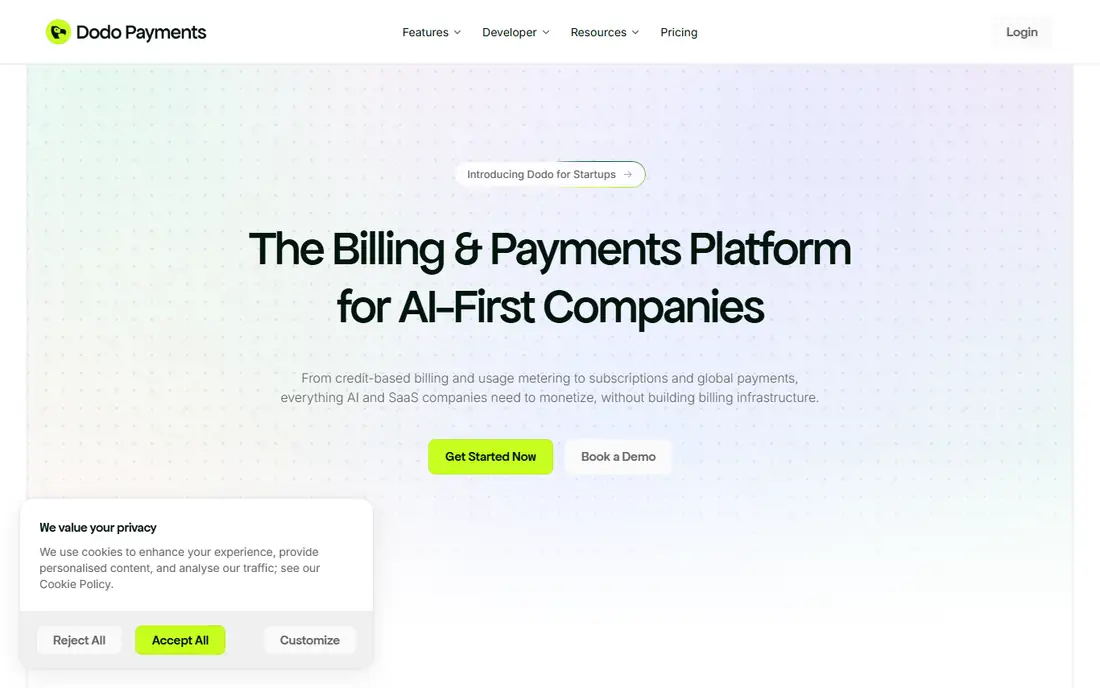
Dodo Payments is a merchant of record platform that comparison guides recommend for studios that want openly published rates. As merchant of record it becomes the legal seller, handling tax registration, filing, and remittance across jurisdictions, plus fraud and chargebacks. That matters most for studios selling keys, DLC, and subscriptions direct.
Dodo Payments is newer than Xsolla and its game-specific track record is shorter, so large publishers should ask for game references before switching. It fits small and mid-size studios that want transparent MoR pricing without a negotiated Xsolla quote, and that sell digital goods rather than running a full live-ops store.
What we like- Publishes rates openly
- Merchant of record tax handling
- Built for digital goods
Watch out for- Newer vendor than Xsolla
- Smaller game-specific track record
- Quote details vary
#2Paddle
Best for: SaaS and game direct sales4.5/5 on
G2 (240 reviews, checked Oct 2026)
Visit paddle.com
Starting priceSee website
Free planNo
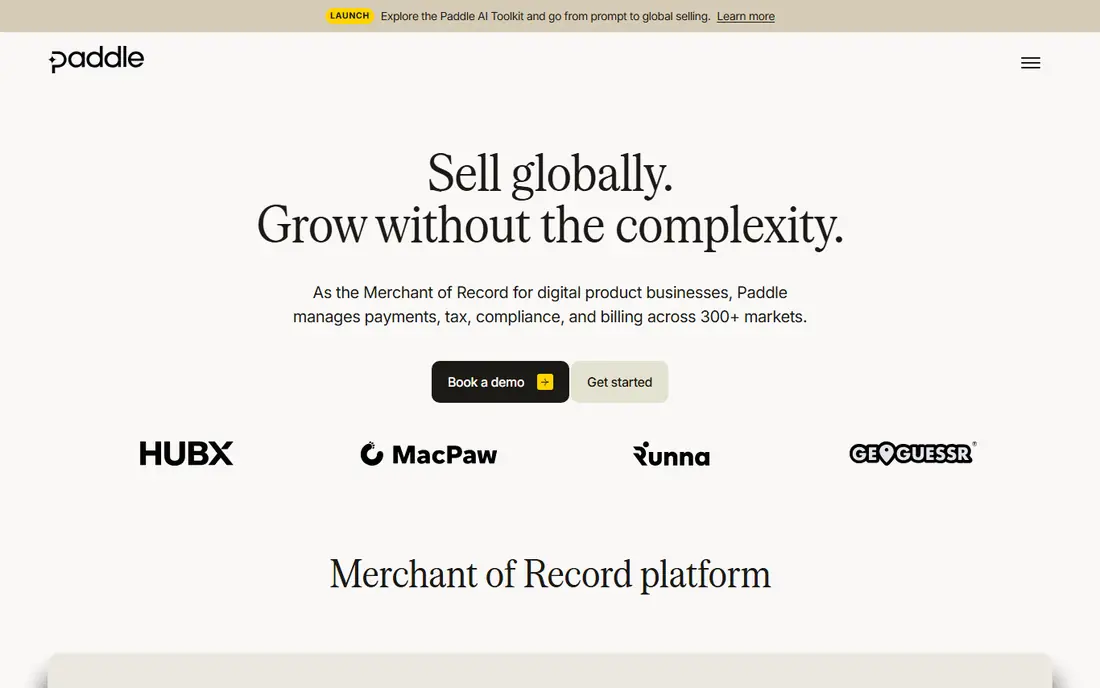
Paddle is a merchant of record platform for software and digital goods, handling payments, tax compliance, and subscription billing in one checkout. Studios use it for direct sales of game keys, DLC, and subscriptions, with localized checkout across currencies and payment methods. Paddle takes the tax liability that direct selling otherwise creates.
Game-specific features are thinner than Tebex or Aghanim, since Paddle serves software broadly rather than games only. Pricing is percentage-based and varies by product type, so studios should model the take rate against their average order value. Paddle fits studios that want a proven MoR with subscription depth, without game-only tooling.
What we like- Merchant of record tax handling
- Subscription billing
- Global checkout
Watch out for- Game-specific features are thinner
- Pricing is percentage-based
- Support varies by plan
#3FastSpring
Best for: Long-running MoR for games4.5/5 on
G2 (187 reviews, checked Oct 2026)
Visit fastspring.com
Starting priceSee website
Free planNo
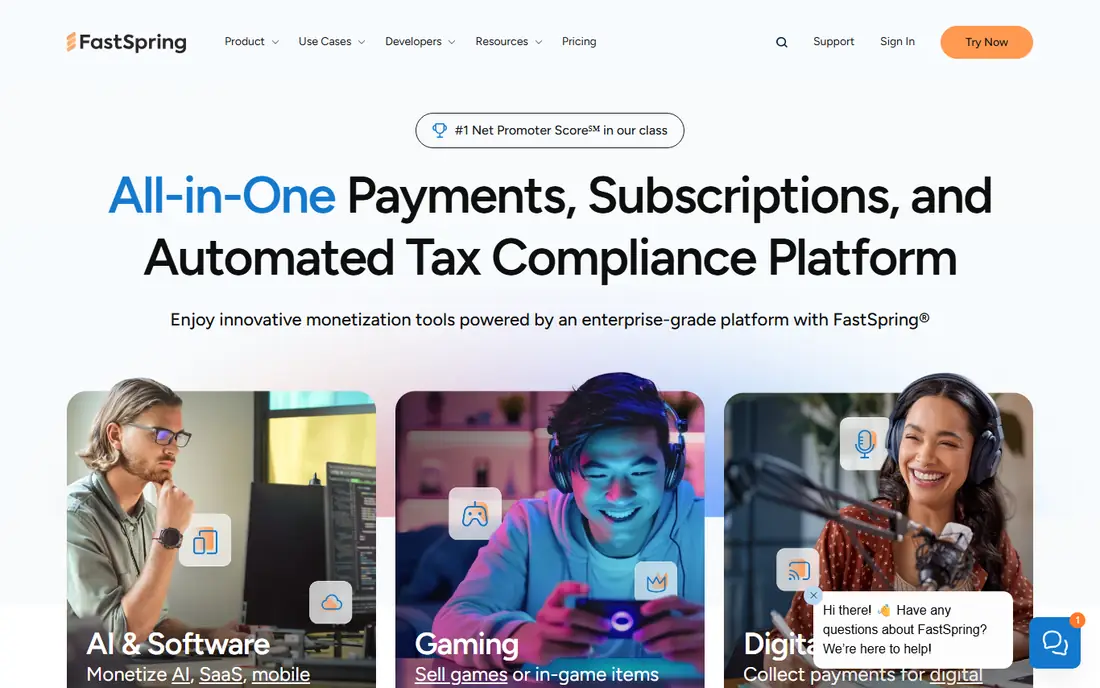
FastSpring is a merchant of record and direct-to-consumer payment system with a dedicated games offering at fastspring.gg. It handles localized payments, gaming-specific fraud protection, and tax calculation, collection, and remittance across jurisdictions, in more than 20 languages. Publishers embed checkout in game or on their web store.
The costs are quote-based, so studios cannot compare a FastSpring rate against published rivals until that conversation. Cash flow needs planning: live processing starts with a 45-day monitoring hold on initial payouts, and transactions then carry a standard 14-day settlement delay, plus a 2.5 percent conversion charge when store and payout currencies differ. FastSpring fits established publishers that can absorb the hold and value long MoR experience.
What we like- More than two decades as MoR
- Gaming fraud protection
- 20-plus languages
Watch out for- Quote-only rates
- 45-day initial payout hold
- 14-day settlement delay
Starting price5% per sale
Free planNo
Tebex, by Overwolf, is built specifically for game web shops, with a branded checkout, a mobile-friendly storefront builder, and support for more than 125 payment methods in guides. It collects, files, and calculates global tax, ensures PCI and GDPR compliance, and automates disputes during chargebacks and fraud claims. Recurring billing and a self-service customer portal round out the package.
Tebex charges 5 percent on every sale in guides, which is simple to model but adds up at volume. Review complaints mention refund policy dissatisfaction and occasional bugs and outages, so studios should test support responsiveness before migrating. Tebex fits Minecraft servers, indie studios, and live-service games that need a game store fast.
What we like- Built for game stores
- 125-plus payment methods
- Branded checkout and storefront builder
Watch out for- 5 percent fee on every sale
- Refund policy complaints
- Occasional outages reported
Starting priceSee website
Free planNo
Aghanim is a game commerce platform built for direct-to-consumer sales and live operations, positioned as an Xsolla rival on FastSpring own competitor list. It targets studios that want a game web shop tied to live-ops events, offers, and player segmentation, rather than a generic checkout. Direct sales keep more revenue than store cuts, while Aghanim handles payments and commerce tooling.
Pricing is quote-only and the vendor is newer than Xsolla, so studios should ask for references from games at similar scale. Aghanim fits mid-size studios with live-service games that want commerce features built for game events, not adapted from SaaS billing.
What we like- Game-focused commerce
- Live-ops tooling
- Direct-to-consumer store features
Watch out for- Quote-only pricing
- Newer vendor
- Smaller ecosystem than Xsolla
Starting priceSee website
Free planNo
Appcharge builds direct-to-consumer game stores for publishers, with branded checkout and tooling aimed at moving players from app stores to web shops. It appears on FastSpring competitor list as an Xsolla alternative, and its pitch centers on keeping more revenue from each sale while keeping the player experience consistent with the game brand.
Public pricing detail is limited and terms are quote-based, so studios should request a full fee schedule including payment method costs and payout terms. Appcharge fits publishers with strong mobile audiences that want a dedicated web shop, and that can evaluate a newer vendor on trial results rather than track record alone.
What we like- Game-focused DTC stores
- Branded checkout
- Publisher-friendly tooling
Watch out for- Quote-only pricing
- Newer vendor
- Limited public pricing detail
Starting priceSee website
Free planNo
Coda Payments focuses on game payments, with strong coverage of Asian payment methods including carrier billing, e-wallets, and local bank options that Western checkouts often miss. It serves game publishers selling in Southeast Asia and other Asian markets, where local payment methods drive conversion far more than cards alone.
Regional strength is also its limit, since global studios still need a separate provider for Western markets. Pricing is quote-based and DTC store depth is thinner than Tebex or Aghanim. Coda Payments fits publishers with a large Asian player base, or studios expanding into Asia that need local payment methods from day one.
What we like- Strong Asian payment method coverage
- Game publisher focus
- Carrier billing reach
Watch out for- Regional strength limits global use
- Quote-only
- Less DTC store depth
#8Stripe
Best for: Full control of the stack4.2/5 on
G2 (462 reviews, checked Oct 2026)
Visit stripe.com
Starting pricePay as you go
Free planNo
Stripe is the control option. It offers the best developer tooling, a huge payment method range, and transparent published rates, and it lets studios build exactly the checkout and store they want. Teams with strong engineering resources and existing finance systems often prefer Stripe control over an MoR bundle.
The trade-off is that Stripe is not a merchant of record, so the studio keeps tax registration, filing, fraud, and chargeback work that MoR platforms absorb. The game store itself must also be built, since Stripe provides payments, not a storefront. Stripe fits studios that want full control and can staff tax and compliance, rather than outsourcing them.
What we like- Best developer tooling
- Huge payment method range
- Transparent published rates
Watch out for- Not a merchant of record
- Studio keeps tax and compliance work
- Game store must be built
How we chose
We compared these tools on merchant of record status, tax handling, game-specific features, payment method coverage, pricing transparency, and payout terms. Guides from 2026 shaped the shortlist, and we flagged every case where pricing is quote-only, since game payment vendors rarely publish full rates. We favored MoR platforms for most studios, since tax liability is the biggest hidden cost of direct selling.
We also separated two buyer types. Studios that want a game web shop should shortlist Tebex, Aghanim, and Appcharge, while studios that want direct sales of keys and DLC should shortlist Dodo Payments, Paddle, and FastSpring. Stripe suits only teams that want to keep compliance in-house.
What to check before you switch game payment providers
Confirm who is the legal seller
Ask each vendor in writing whether it acts as merchant of record for your sales. If it does, tax registration, filing, and remittance sit with the provider. If it does not, your studio inherits VAT, US sales tax nexus, and GST obligations in every jurisdiction you sell into, which is a finance project, not a checkout change.
Model the full take rate, not just the headline fee
Add payment method costs, currency conversion, chargeback fees, and payout terms to the headline percentage. A 5 percent Tebex fee is easy to model, while a quote-only MoR rate needs the full schedule before comparison. Include settlement delays in cash flow planning, since a 14-day delay plus an initial hold changes working capital.
Test the player checkout in your top markets
Run test purchases with the payment methods your players actually use, especially in Asia and Latin America where cards are less dominant. Check mobile checkout, refund flows, and customer support response. A checkout that works in the US but fails on local wallets abroad will cost more in lost sales than any fee difference.
Frequently asked questions
Why do studios look for Xsolla alternatives?
Studios build web shops to avoid the roughly 30 percent console and mobile store cut, but Xsolla terms are quote-based and negotiated per publisher, which makes comparison hard for small studios. Alternatives with published rates, game-specific stores, or regional payment coverage can be easier to evaluate and cheaper at a given scale.
What is a merchant of record, and why does it matter?
A merchant of record becomes the legal seller of a transaction, so tax registration, filing, and remittance sit with the provider rather than the studio. It also absorbs fraud and chargeback handling. For direct game sales, MoR status is the single most important feature, ahead of raw percentage rates.
Is Tebex really 5 percent on every sale?
Guides report Tebex charges 5 percent on every sale. That simplicity helps modeling, but studios should confirm whether payment method costs, chargebacks, or currency conversion sit outside that figure before signing. Always request the full fee schedule in writing.
Can Stripe replace Xsolla?
Yes, when the studio wants full control and can staff tax, fraud, and compliance work itself. Stripe provides payments, not a game store or MoR tax handling, so the studio must build the storefront and handle tax obligations. Most small studios are better served by an MoR platform.
How long does a payment provider switch take?
Small web shop switches take weeks, while large publisher migrations with tax, fraud, and payout changes take months. The longest parts are tax setup, fraud tuning, and player communication, not checkout integration. Run the new provider alongside the old one for a subset of sales before full cutover.
Sources we checked (12)
- https://dodopayments.com
- https://paddle.com
- https://fastspring.com
- https://tebex.io
- https://aghanim.com
- https://appcharge.com
- https://codapayments.com
- https://stripe.com
- https://dodopayments.com/blogs/xsolla-alternatives
- https://fastspring.com/blog/xsolla-competitors/
- https://fungies.io/xsolla-alternatives/
- https://www.creem.io/blog/saas-payment-solutions
Is your product missing or out of date?
We review this list regularly. Vendors can request a listing, send updated pricing or ask about featured placement.

Shihab Mia · Founder, Rankite
Shihab has 5+ years in B2B and SaaS SEO. He writes Rankite's software buying guides from pricing pages, documentation and public user reviews. More about Shihab.