How we make this list: we compare pricing pages, product documentation and public user reviews. Ratings come from G2, Capterra or Trustpilot, with the date we checked them.
Key takeaways
- NFC tags suit tap-to-open actions at close range, such as product details, menus, and contact sharing, without a camera scan.
- Bluetooth beacons suit location-based messages in stores, museums, and events, where a phone nearby should receive a prompt.
- Short links suit print, packaging, and ads where a readable link matters, and they give click data that a printed code cannot.
- AR tools suit product demos and interactive packaging, but they need more content work and a stronger reason for a customer to open them.
Quick comparison
| Tool | Best for | Starting price | Free plan |
|---|
 GoToTags | NFC tags and encoding | See website | No |
 Estimote | Bluetooth beacons | See website | Free trial |
 Kontakt.io | Beacon infrastructure | See website | Free trial |
 Bitly | Short links and tracking | See website | Yes |
 Rebrandly | Branded short links | See website | Yes |
 Zappar | Web AR experiences | See website | Free trial |
 Blippar | AR product experiences | See website | Free trial |
 Beaconstac | NFC and beacon campaigns | See website | Free trial |
Is your product missing or out of date?
We review this list regularly. Vendors can request a listing, send updated pricing or ask about featured placement.
The best QR code alternatives for linking physical to digital
A QR code asks a customer to open a camera, aim, and tap. That works in many cases, but it fails when light is poor, when the code is damaged, when the customer cannot scan from a distance, or when the action should happen without a scan at all. The tools below replace that step in different ways. NFC uses a tap. Beacons use proximity. Short links use typed or spoken addresses. Image recognition and AR use the camera to recognize an object or a package, not a code. Pick the method that matches how close the customer stands, what phone they carry, and what action you want.
Starting priceSee website
Free planNo
GoToTags sells NFC tags in many forms, including stickers, cards, key fobs, and on-metal tags for equipment and signs. A business can encode a tag with a web link, a Wi-Fi setup, a contact card, or a product page, then stick it on a product, a table, or a display. A customer taps a phone to the tag, and the phone opens the linked content without opening a camera app. That tap feels faster than a scan for repeat actions, such as reordering, checking in, or opening a menu.
The cost model is different from a printed code. Each tag has a unit cost, and tags must be shipped, placed, and sometimes replaced. GoToTags offers encoding, printing, and bulk options that help larger runs, but small tests still need a real tag order. GoToTags fits retail displays, product packaging, and venues where a tap is natural. It fits less well for one-time print ads, where a short link costs nothing to print.
What we like- Wide range of NFC tag shapes and materials
- Encoding and printing services
- Tags work with most modern phones
Watch out for- Tags cost money per unit and need physical distribution
- IPhone and Android support varies by tag type
Starting priceSee website
Free planFree trial
Estimote makes Bluetooth beacons that broadcast a signal to nearby phones running a compatible app. A store can send a welcome message when a shopper enters, a museum can show details for the exhibit a visitor stands near, and an event can guide attendees to a session room. Beacons work at a distance, unlike NFC, and they can trigger content based on proximity zones rather than a single tap point. That makes them useful for spaces where people move through rooms and displays.
The catch is the app requirement. A beacon cannot reliably reach a stranger phone with no app installed, because modern phones limit background Bluetooth access. Estimote therefore suits venues with their own app, loyalty members, or staff devices, rather than open public advertising. Setup also needs testing for signal range, battery life, and placement. For app-based venues, Estimote offers a proven beacon path. For broad public reach, short links or NFC may work better.
What we like- Established beacon hardware and software
- Location and proximity features for apps
- Cloud tools for managing fleets
Watch out for- Needs a compatible app on the visitor phone
- Setup and testing take more work than printing a code
Starting priceSee website
Free planFree trial

Kontakt.io provides Bluetooth beacons and a cloud platform for managing them at scale. Beyond simple proximity messages, it supports asset tracking, staff and patient location in healthcare settings, and equipment location in warehouses and factories. A manager can see beacon health, battery levels, and placement from a dashboard, rather than checking each device by hand. That management layer matters when a deployment grows from ten beacons to hundreds.
Small projects may not need that depth. A single store that wants one welcome message can use a simpler beacon or an NFC tag with less setup. Kontakt.io fits hospitals, warehouses, large stores, and venues that treat location as infrastructure, not as a one-time campaign. Pricing is listed on the vendor site and varies by hardware and platform plan, so check current terms for your deployment size.
What we like- Beacon hardware plus cloud management
- Asset tracking and location features
- Options for healthcare, logistics, and retail
Watch out for- Platform depth suits larger deployments
- Small single-store projects may find it heavy
#4Bitly
Best for: Short links and tracking4.5/5 on
G2 (923 reviews, checked Oct 2026)
Visit bitly.com
Starting priceSee website
Free planYes
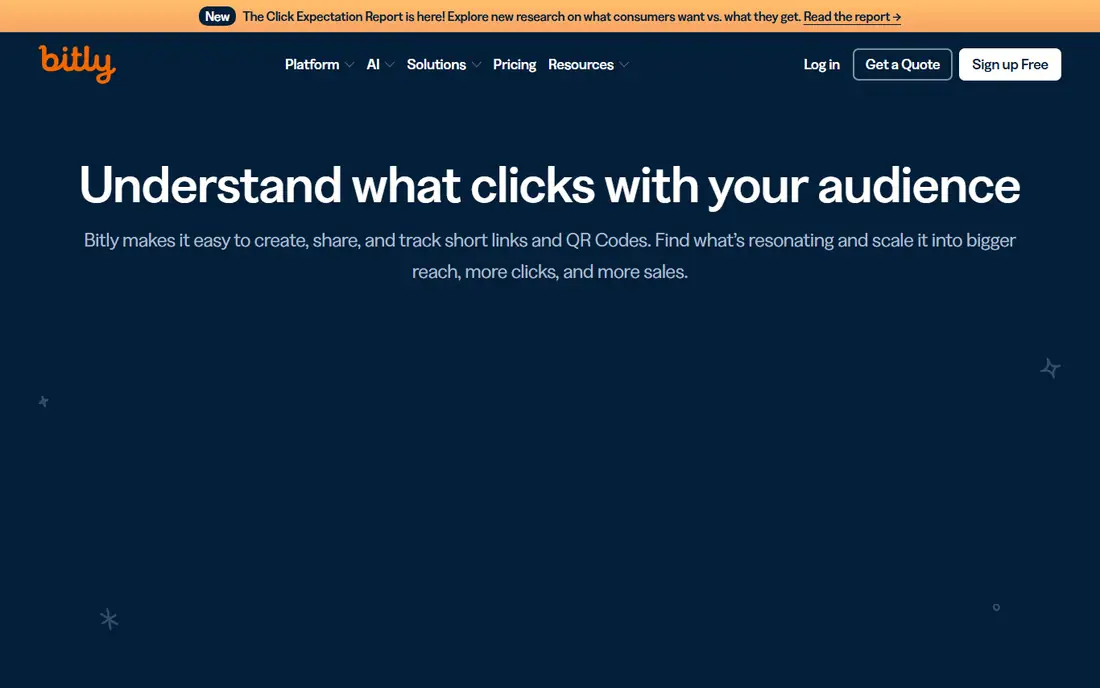
Bitly turns a long web address into a short link that fits on packaging, a poster, a radio ad, or a business card. A customer types the link or taps it from a digital message, and Bitly records clicks, locations, devices, and referrers. That data helps a marketer compare a poster in one store with a flyer in another, which a static printed code cannot do without extra setup. Paid plans add branded domains, so links can carry a company name instead of a generic short domain.
Typing is the trade-off. A short link is easy to read aloud, but it still asks the customer to type or copy it, which adds friction compared with a tap. Bitly therefore works best where the link appears in digital messages, email, social posts, or print that people read at a desk. For a shelf display or a table, NFC often converts better. For tracking across channels, Bitly remains a practical, low-cost replacement.
What we like- Short, readable links for print and speech
- Click data by location, device, and referrer
- Custom back-halves on paid plans
Watch out for- A typed link is slower than a tap or scan for some users
- Free plan limits link volume and features
Starting priceSee website
Free planYes
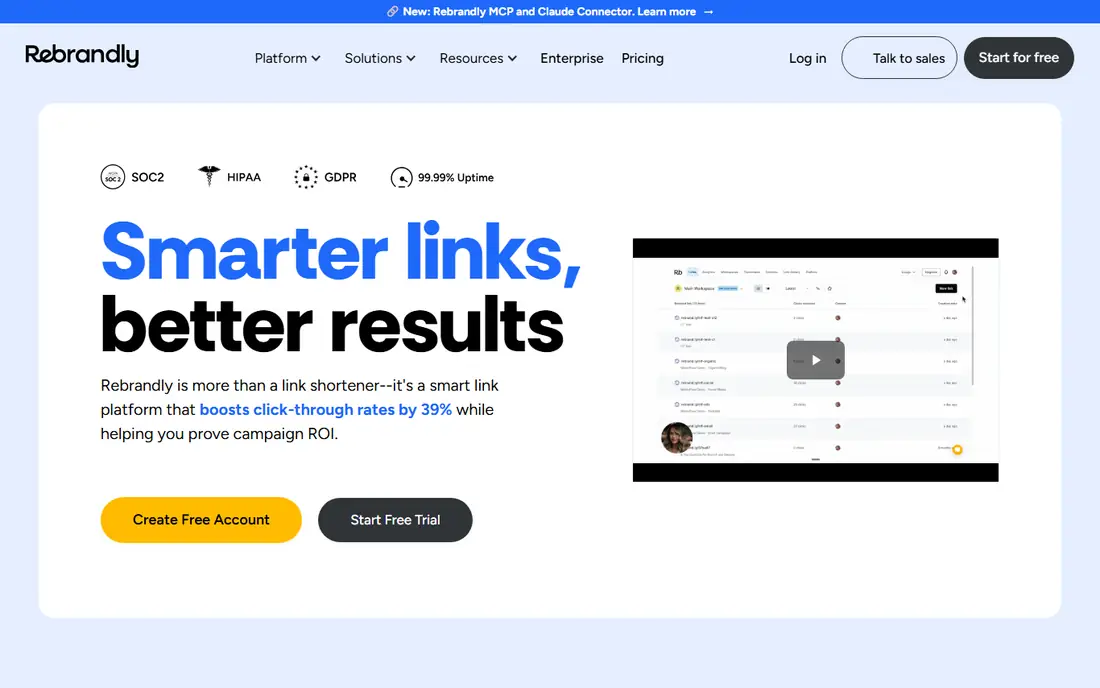
Rebrandly focuses on branded short links, where the link itself carries a company or product name. A link such as a brand domain plus a short word looks more trustworthy in print than a generic shortener, and it keeps brand visibility when a link is shared. Teams can manage links in one place, update a destination without reprinting, add UTM parameters for campaign tracking, and control redirects. That control matters for packaging and long-life print, where reprinting is expensive.
Setup needs a domain and a few DNS records, which takes more work than a generic short link. The free plan covers a limited number of branded links, so larger campaigns need a paid plan. Rebrandly fits brands that print links on packaging, vehicles, or ads and want the link to look owned, not rented. For a quick internal link, a generic shortener is faster and cheaper.
What we like- Branded domains build trust in print and ads
- Link management and team features
- Click tracking and redirect control
Watch out for- Branded setup needs a domain and DNS steps
- Free plan limits branded links and volume
Starting priceSee website
Free planFree trial
Zappar lets brands build augmented reality experiences that open in a phone browser. A customer points a phone at a package, a poster, or a product, and sees a 3D model, a video, an animation, or an interactive demo layered on the real item. Because the experience runs on the web, the customer does not need to install a separate AR app, which removes a major barrier. Zappar provides creation tools, hosting, and analytics, so a team can track how many people opened an experience and what they did inside it.
AR still needs a reason to open it. A plain product page in AR will disappoint, while a demo that shows how a product works, how furniture fits a room, or how a toy moves will earn attention. Content production also costs more than a link or a tag. Zappar fits product launches, packaging, retail displays, and education where a visual demo adds real value. For simple directions to a web page, a link or NFC tag is faster and cheaper.
What we like- AR experiences that run in a browser without an app install
- Tools for packaging, retail, and education
- Analytics for scans and interactions
Watch out for- AR content takes design and testing time
- Customer motivation to open AR must be clear
#7Blippar
Best for: AR product experiences3.6/5 on
G2 (4 reviews, checked Oct 2026)
Visit blippar.com
Starting priceSee website
Free planFree trial
Blippar offers web-based AR and image recognition, so a phone camera can recognize a product, a label, or an image and trigger digital content. A food brand can show nutrition and sourcing details when a customer points a phone at a package. A retailer can show a product in 3D, with color options and size details, without a code on the box. Agencies use Blippar for campaigns where the package itself becomes the trigger, which keeps packaging clean and avoids a printed code.
The platform is aimed at brands and agencies, and pricing reflects that focus, so small teams should check the current plans before planning a campaign. AR also needs content that justifies the effort: a 3D model, a demo, or a story that a static page cannot tell. Blippar fits brands that want packaging or print to trigger rich digital content. For a simple link to a menu or a form, NFC or a short link will serve better.
What we like- Web AR and image recognition for products
- No app install for web experiences
- Tools for brands and agencies
Watch out for- Enterprise pricing can be high for small teams
- AR projects need clear goals and content budgets
Starting priceSee website
Free planFree trial
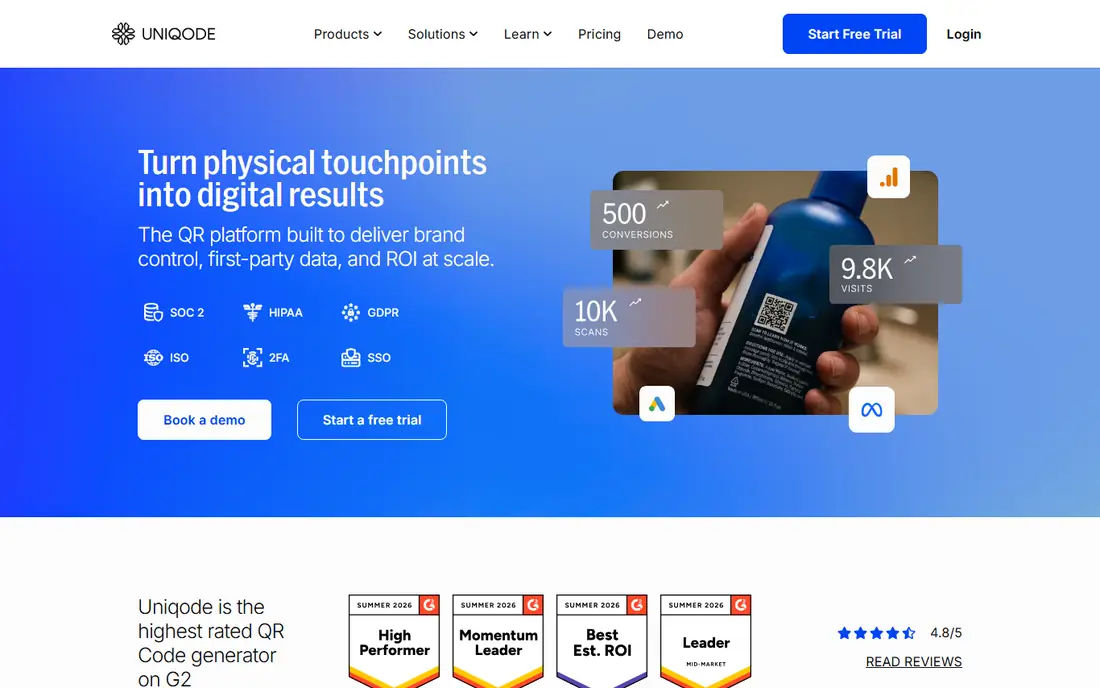
Beaconstac combines several physical-to-digital methods in one platform. A team can run NFC tag campaigns, beacon proximity campaigns, and short link campaigns from the same dashboard, with tracking for taps, visits, and conversions. That mix helps a retailer test which method works best in a store: NFC at a shelf, a beacon at an entrance, and a short link on a receipt. Templates for retail, events, and product packaging speed up the first campaign.
Breadth also adds complexity. A team that only needs ten NFC tags may find a simple tag vendor faster. Beaconstac fits marketers and retailers who run repeated campaigns across stores and want one place for hardware, links, and reporting. Pricing is listed on the vendor site, with hardware sold separately from platform plans in many cases, so check the full cost for your campaign size.
What we like- NFC tags, beacons, and short links in one platform
- Campaign tracking and retargeting options
- Templates for retail and events
Watch out for- Platform breadth can feel complex for a single tag test
- Hardware costs apply for NFC and beacons
How we chose
We compared vendor documentation, pricing pages, and public reviews on G2, Capterra, and Reddit, focusing on how each method works in the real world, what phone support it needs, and what it costs to run at a small scale. Each tool here exists today and offers a real product a US reader can buy or trial, in NFC, beacons, short links, or AR. Where a price could not be confirmed at the time of writing, the entry reads See website. We did not run hands-on tests, and the order reflects fit for common physical-to-digital jobs, from a simple tap to a full AR demo, rather than a lab score.
Choosing the right method for your setting
Start with the customer moment, not the technology. Where is the customer standing, what phone do they hold, and what do they need to do next. A tap works when the customer is close to a tag. A beacon works when the customer already uses your app. A short link works when the customer reads print at leisure. AR works when a visual demo will change a buying decision. Matching the method to the moment matters more than picking the newest tool.
Test in the real place, not only at a desk
NFC range, beacon signal, lighting, and phone settings all change in a store, a museum, or outdoors. Place tags and beacons where customers actually stand, test with both iPhone and Android phones, and check that content loads fast on a normal mobile connection. A method that works in an office can fail in a crowded hall with weak signal.
Count the full cost, not just the platform fee
NFC and beacons add hardware, shipping, placement, and replacement costs. AR adds content design and testing. Short links add little hardware cost but need print space and tracking setup. Add those costs to the platform price before comparing options, because the cheapest platform can become the most expensive campaign once hardware is included.
Give customers a clear reason to act
A tap, a scan, or an AR open all ask for effort. Tell the customer what they will get: a menu, a discount, a demo, or a manual. Put that benefit in words next to the tag, beacon zone, or link, rather than assuming curiosity alone will drive action. Clear benefit wording usually lifts response more than a larger tag or a louder display.
Frequently asked questions
What is the simplest QR code alternative?
A short link is the simplest, because it needs no hardware and works in print, email, and speech. NFC is the simplest tap method, but it needs tags and placement. For most small businesses, start with a short link, then add NFC where customers stand close to a display or product.
Do NFC tags work on iPhones?
Most modern iPhones support NFC tag reading, and many open a link automatically when tapped to a tag. Support varies by tag type and iPhone model, so test your exact tag with the phones your customers use. Android support is broad, but settings and tag types still vary, so a real-device test matters.
Can beacons reach customers without an app?
In practice, beacons work best with a compatible app, because phones limit background Bluetooth access. A venue with its own app, a loyalty program, or staff devices can use beacons well. For reaching the general public without an app, NFC, short links, or web AR are usually better choices.
Are QR code alternatives more expensive than QR codes?
Short links cost little or nothing to print, while NFC and beacons add hardware costs per unit or per location. AR adds content costs. A printed QR code is nearly free, so alternatives must earn their cost through better conversion, tracking, or experience. Test a small run and compare response before a large rollout.
Which alternative is best for product packaging?
NFC suits premium packaging where a tap can open authenticity, manual, or reorder content. Web AR suits packaging where a 3D demo or story adds value. A branded short link suits packaging where cost matters and the content is a simple web page. The right pick depends on product price, margin, and how much content the customer needs.
How do I track results without a QR code?
Short link platforms track clicks, locations, and devices. NFC and beacon platforms track taps, visits, and campaign actions. AR platforms track opens and interactions inside the experience. Use UTM parameters and a consistent campaign naming system, so results from different methods can be compared in analytics.
Sources we checked (8)
- https://gototags.com
- https://estimote.com
- https://kontakt.io
- https://bitly.com/pages/pricing
- https://www.rebrandly.com/pricing
- https://www.zappar.com/pricing/
- https://www.blippar.com
- https://www.beaconstac.com/pricing
Is your product missing or out of date?
We review this list regularly. Vendors can request a listing, send updated pricing or ask about featured placement.

Shihab Mia · Founder, Rankite
Shihab has 5+ years in B2B and SaaS SEO. He writes Rankite's software buying guides from pricing pages, documentation and public user reviews. More about Shihab.