How we make this list: we compare pricing pages, product documentation and public user reviews. Ratings come from G2, Capterra or Trustpilot, with the date we checked them.
Key takeaways
- Heroku ended its free tier in 2022, so hobby projects need a new home, and the tools below fill that gap at different prices.
- Render leads on Heroku-like simplicity, with git-push deploys, managed databases, and a free tier for web services.
- Railway leads on developer experience, with fast deploys, templates, and usage-based pricing that suits small projects.
- Fly.io leads on global edge deployment, running apps close to users in many regions from one config.
- DigitalOcean App Platform suits teams that want predictable pricing plus the wider DigitalOcean ecosystem.
- Vercel and Netlify lead on frontend and static hosting, while Coolify suits developers who self-host on their own servers.
Quick comparison
Is your product missing or out of date?
We review this list regularly. Vendors can request a listing, send updated pricing or ask about featured placement.
The best heroku alternatives
Heroku made deployment simple: push code from git, and the platform handled servers, databases, and scaling. When Heroku ended its free tier in 2022, hobby developers and small teams lost the easiest free hosting path, and a wave of alternatives grew to replace it. The eight platforms below cover the range from Heroku-like simplicity to self-hosted control, and the right pick depends on your stack, your budget, and whether you run backends, frontends, or both.
How we chose
We started from the platforms developers actually use as Heroku replacements in 2026, drawing on vendor pricing pages, developer guides, and community comparisons. We favored platforms with git-based deploys, managed databases, and clear free or low-cost tiers, and we excluded raw VPS providers with no platform layer, since this list is about Heroku-style platforms. Prices vary by usage and region, so where a figure is not confirmed on a vendor page, we use "See website" and flag the gap.
Buying guide
Start with your stack. Node, Python, Go, and Ruby apps run well on Render, Railway, and Fly.io, while frontend frameworks shine on Vercel and Netlify. If your app needs background workers, cron jobs, or persistent disks, check those features specifically, since free tiers often exclude them.
Next, compare free tier limits honestly. Render's free web services sleep after inactivity, Railway's trial credits expire, and Fly.io's free allowance covers small apps only. A hobby project that sleeps is fine; a small production app that must stay awake needs a paid tier, usually a few dollars a month.
Then check databases and add-ons. Managed Postgres is the most common need, and pricing varies widely: some platforms include a small free database, others charge from the first byte. Finally, test deployment before migrating fully: push a copy of your app, check build times, logs, and environment variable handling, and confirm the platform supports your buildpacks or Dockerfiles.
One more factor matters for teams: preview environments. Railway, Render, Vercel, and Netlify all offer preview deploys for pull requests, which speeds up review and testing. If your team reviews work through previews, weigh that feature heavily, since it changes daily workflow more than small price differences. Databases deserve the same care as app hosting. A free database tier often caps storage, connections, or backups, and losing production data hurts more than any hosting outage. Check whether the platform offers managed Postgres with automated backups and point-in-time recovery, or whether you must run backups yourself. For hobby projects, a small managed database with daily backups is enough, while production apps should pay for automated backups and test a restore before launch, since an untested backup is only a hope.
Frequently asked questions
Why did Heroku end its free tier?
Heroku ended free dynos and free Postgres in November 2022, citing abuse and cost. Paid plans continue, but hobby developers who relied on free hosting moved to Render, Railway, Fly.io, and other alternatives.
Which Heroku alternative is closest to Heroku?
Render is the closest in workflow, with git-push deploys, managed Postgres and Redis, background workers, and cron jobs in a Heroku-like dashboard. Railway is close too, with a faster, more modern developer experience.
Can I host a hobby project for free in 2026?
Yes, with limits. Render, Fly.io, Vercel, and Netlify offer free tiers, and Coolify is free if you provide a server. Free tiers usually sleep after inactivity, limit hours, or cap databases, so expect trade-offs.
Do these platforms support Docker?
Most do. Render, Railway, Fly.io, and DigitalOcean App Platform support Dockerfiles or container images, while Vercel and Netlify focus on framework builds rather than arbitrary containers.
How do I migrate from Heroku to Render or Railway?
Export your code, recreate environment variables, provision a managed database, and import data with a database dump. Both platforms publish Heroku migration guides, and most apps migrate in a day once add-ons are mapped.
Sources
- Vendor pricing and feature pages for Render, Railway, Fly.io, DigitalOcean, Vercel, Netlify, AWS, and Coolify
- Third-party 2026 comparisons of Heroku alternatives
- Developer guides on free tier limits, migration, and platform features

#1Render
Best for: Heroku-like simplicity4.7/5 on
G2 (84 reviews, checked Oct 2026)
Visit render.com
Starting priceFree plan
Free planFree plan
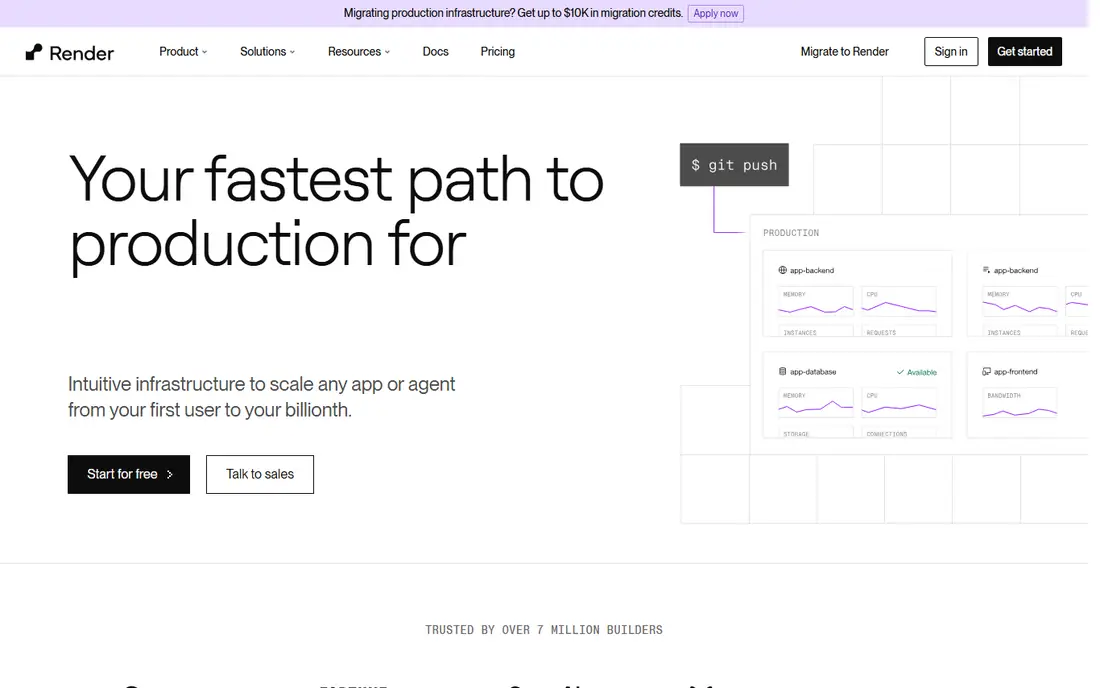
Render is the most direct Heroku replacement for most developers. Push from git, and Render builds and deploys web services, background workers, cron jobs, and static sites, with managed Postgres and Redis as add-ons. The dashboard feels familiar to Heroku users, and the free tier covers web services and small databases for hobby projects.
Free web services sleep after inactivity, which adds a cold-start delay to the first request, and build times can be slow on larger apps. Render suits Heroku migrants who want the same workflow with modern pricing, and hobby developers who accept sleep in exchange for free hosting.
What we like- Closest Heroku workflow
- Managed Postgres and Redis
- Free web services
Watch out for- Free services sleep after inactivity
- Build times can be slow
- Fewer regions than Fly.io

#2Railway
Best for: Developer experience4.7/5 on
G2 (66 reviews, checked Oct 2026)
Visit railway.com
Starting priceSee website
Free planFree trial
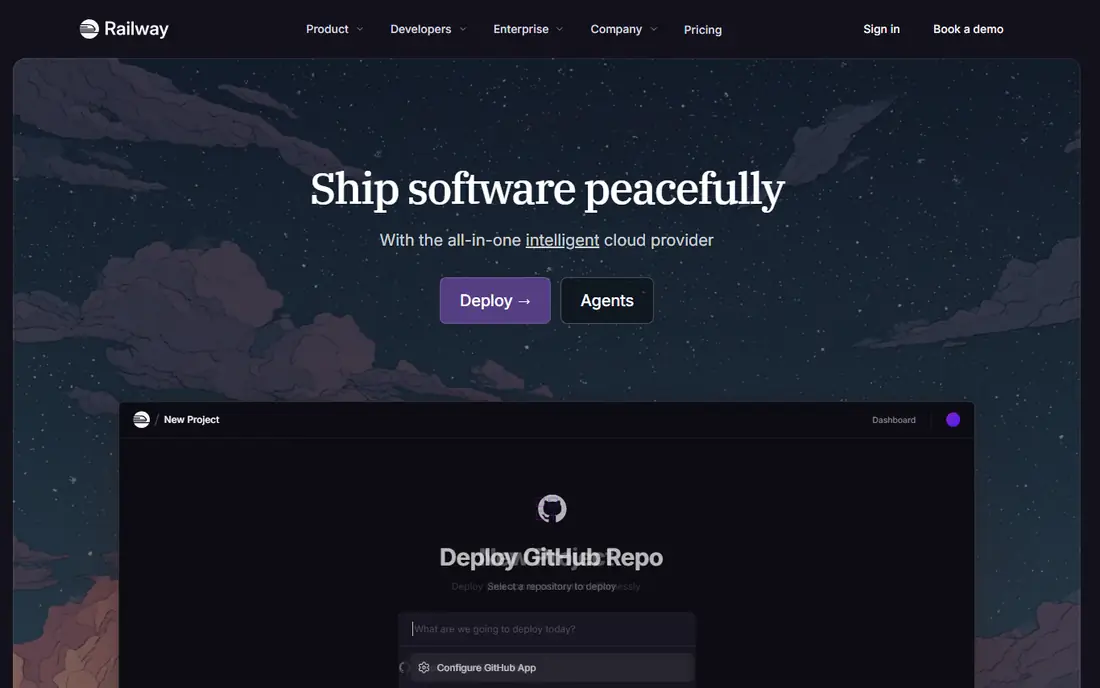
Railway built its name on developer experience: connect a repo, and Railway detects the stack, provisions services, and deploys in minutes, with templates for popular frameworks and databases. Usage-based pricing means small projects cost little, and the interface makes environment variables, logs, and service graphs easy to follow.
Trial credits expire, and usage-based pricing can surprise users whose apps consume more resources than expected, so monitoring matters. Railway suits developers who value speed and polish, and small teams that want modern deploys without Heroku's price structure.
What we like- Fast deploys
- Great templates
- Usage-based pricing
- Good database support
Watch out for- Trial credits expire
- Pricing is usage-based and can surprise
- Smaller community
Starting priceSee website
Free planFree plan
Fly.io runs applications on machines close to users in many regions, using a single config file to define services, volumes, and scaling. Docker support is strong, and the free allowance covers small apps with modest usage, which makes it popular for hobby projects and side businesses with global users.
Configuration is more hands-on than Render or Railway, database choices need care, and support leans on community channels. Fly.io suits developers comfortable with config files who want global deployment and Docker flexibility at low cost.
What we like- Runs apps close to users worldwide
- Good Docker support
- Generous free allowance
Watch out for- Config is more hands-on
- Database options need care
- Support is community-heavy

#4DigitalOcean App Platform
Best for: Predictable pricing4.6/5 on
G2 (757 reviews, checked Oct 2026)
Visit digitalocean.com
Starting priceSee website
Free planFree plan
DigitalOcean App Platform offers flat, predictable pricing for apps, with managed databases and a clear path into the wider DigitalOcean ecosystem of droplets, spaces storage, and managed Kubernetes. That predictability appeals to small businesses that dislike usage-based surprises.
Framework conveniences trail Render and Railway, scaling is less automatic, and the free tier is limited to static sites. DigitalOcean App Platform suits teams already on DigitalOcean, and businesses that want predictable bills plus room to grow into raw infrastructure.
What we like- Predictable flat pricing
- Managed databases
- Wider DigitalOcean ecosystem
Watch out for- Fewer framework conveniences
- Scaling is less automatic
- Free tier is limited

#5Vercel
Best for: Frontend hosting4.7/5 on
G2 (87 reviews, checked Oct 2026)
Visit vercel.com
Starting priceFree plan
Free planFree plan
Vercel is the best host for Next.js and frontend frameworks, with instant deploys, a global edge network, and preview URLs for every pull request. The free Hobby tier covers personal projects generously, and the workflow from git to live site is among the fastest in the industry.
Backend hosting is limited compared with Render or Railway: serverless functions cover light backend work, but persistent servers, workers, and large databases need another platform. Vercel suits frontend developers and teams whose backend lives elsewhere, such as on Render or Railway for APIs and databases.
What we like- Best Next.js hosting
- Fast global edge
- Preview deploys for every pull request
Watch out for- Backend hosting is limited
- Costs grow with traffic
- Not a Heroku backend replacement

#6Netlify
Best for: Static and frontend4.5/5 on
G2 (83 reviews, checked Oct 2026)
Visit netlify.com
Starting priceFree plan
Free planFree plan
Netlify pioneered modern static hosting with git-based deploys, built-in forms, serverless functions, and preview deploys for every change. The free Starter tier covers personal sites and small projects well, and the platform is famously easy for frontend developers.
Backend work is serverless only, so persistent servers and workers need another home, and large sites can hit build minute limits. Netlify suits static sites, marketing pages, and frontend apps, especially those built with React, Vue, or static generators. Its free tier covers most personal projects comfortably.
What we like- Great static hosting
- Forms and functions built in
- Preview deploys
Watch out for- Backend is serverless only
- Large sites hit build limits
- Advanced features cost more
Starting pricePay for resources
Free planFree tier
AWS Elastic Beanstalk deploys web apps onto AWS infrastructure without a platform fee: you pay only for the underlying EC2, RDS, and load balancing resources used. That gives full access to the AWS ecosystem, from S3 storage to managed databases, with room to scale from a hobby app to a large service.
The learning curve is steeper than Render or Railway, AWS complexity shows through in configuration, and the free tier covers eligible resources only for a limited time. Elastic Beanstalk suits teams already on AWS, and developers who want platform convenience with full AWS access underneath.
What we like- Full AWS ecosystem access
- No platform fee
- Scales far
Watch out for- Steeper learning curve
- AWS complexity
- Free tier covers resources only
Starting priceFree
Free planFree
Coolify is the self-hosted alternative: an open-source platform you install on your own VPS, giving Heroku-like deploys, databases, and previews without platform fees. The software is free, and you control data, region, and configuration completely.
You manage the server, including updates, security, backups, and scaling, and databases run on your server rather than as managed services. Coolify suits developers with a cheap VPS who want full control and zero platform fees, and who accept server maintenance as the trade-off. Start with a small server, enable automatic security updates, and keep off-server backups from day one.
What we like- Free and open source
- Runs on your own server
- Supports many stacks
Watch out for- You manage the server
- Updates and security are yours
- No managed databases
Is your product missing or out of date?
We review this list regularly. Vendors can request a listing, send updated pricing or ask about featured placement.

Shihab Mia · Founder, Rankite
Shihab has 5+ years in B2B and SaaS SEO. He writes Rankite's software buying guides from pricing pages, documentation and public user reviews. More about Shihab.
 Fly.io
 AWS Elastic Beanstalk
 Coolify