How we make this list: we compare pricing pages, product documentation and public user reviews. Ratings come from G2, Capterra or Trustpilot, with the date we checked them.
Key takeaways
- Profound is the enterprise benchmark for AI search visibility, listed here with its correct domain, tryprofound.com, and quote based pricing.
- Peec AI and Otterly cover the mid market and small team ends, with published plans from about 89 euros and 29 dollars a month respectively.
- AthenaHQ, Evertune, and Brandlight round out a young category where every vendor measures AI answers differently, so cross tool numbers never agree exactly.
- Set expectations honestly: these tools monitor how AI engines talk about your brand; none of them can guarantee placement in an answer.
Quick comparison
| Tool | Best for | Starting price | Free plan |
|---|
 Profound | Enterprise AI visibility platform | See website | No |
 Peec AI | Mid market AI search analytics | €89 per month | No |
 Otterly.AI | Affordable AI brand monitoring | $29 per month | No |
 AthenaHQ | GEO for marketing teams | See website | No |
 Evertune | Consumer brand AI insights | See website | No |
 Brandlight | Enterprise brand control in AI | See website | No |
 Goodie AI | AEO content and monitoring | See website | No |
Is your product missing or out of date?
We review this list regularly. Vendors can request a listing, send updated pricing or ask about featured placement.
The best Bluefish AI alternatives
#1Profound
Best for: Enterprise AI visibility platform4.6/5 on
G2 (640 reviews, checked Oct 2026)
Visit tryprofound.com
Starting priceSee website
Free planNo
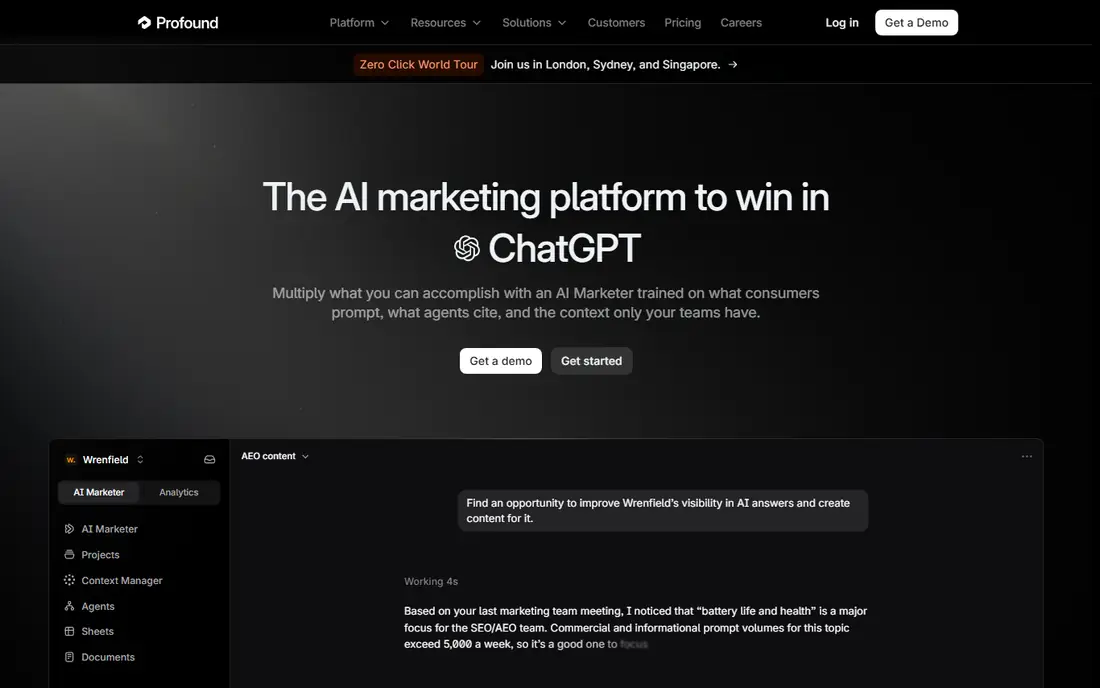
What we like- Profound is the name enterprise teams benchmark against: tracking of brand mentions and citations across the major AI engines, prompt level analysis, agent and crawler analytics showing how AI bots read your site, and reporting built for large organizations. Its customer list of household brands and its funding scale have made it the category's reference point. Brands leaving Bluefish over scale, engine coverage, or reporting depth most often land here, and its content workflow tooling connects insight to action better than monitoring only rivals.
Watch out for- Pricing is enterprise and unpublished
- Smaller teams will not get a number without a sales process, and the platform's weight exceeds a startup's needs. Like every entry here, its visibility scores are a model of AI behaviour, not a measurement the engines endorse. The category's youth means features and engine coverage change between quarters.
#2Peec AI
Best for: Mid market AI search analytics4.7/5 on
G2 (21 reviews, checked Oct 2026)
Visit peec.ai
Starting price€89 per month
Free planNo
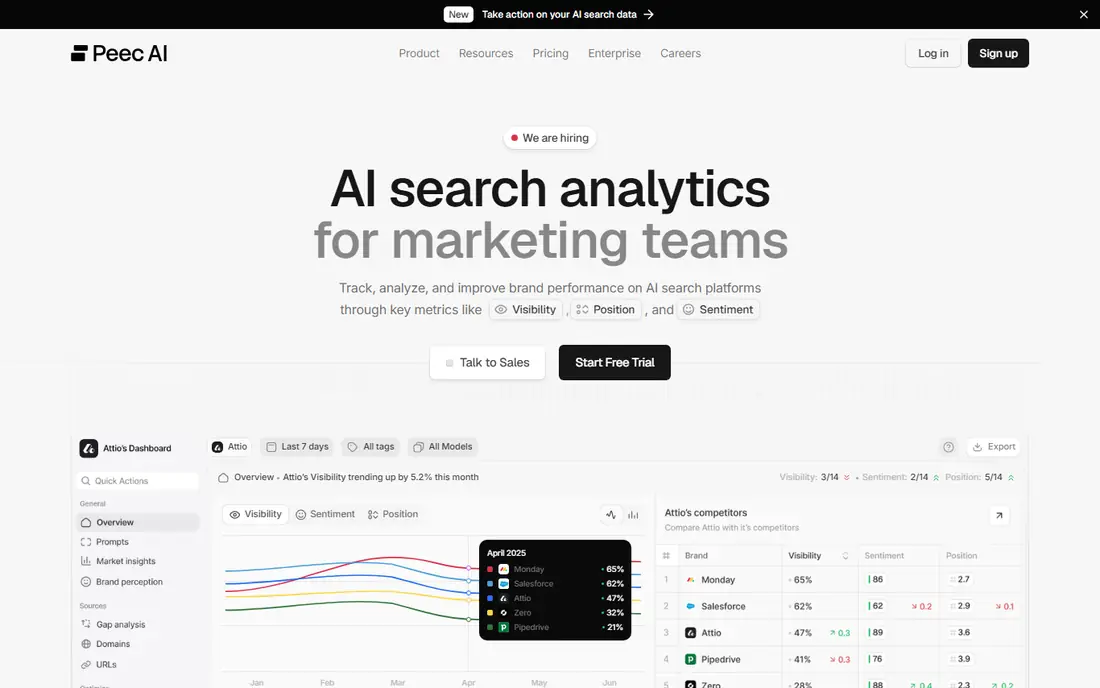
What we like- Peec AI, a Berlin based platform that grew quickly through 2025 and 2026, offers visibility, position, and sentiment tracking across ChatGPT, Perplexity, Gemini, and other engines with published pricing from 89 euros a month, which makes it the budgetable choice for mid market brands and agencies. Its interface emphasizes clarity over platform sprawl, and multi country and multi language tracking suits European and global brands. Agencies use it to report AI visibility beside SEO in the same client conversation.
Watch out for- Enterprise machinery, crawler log analytics, custom governance, is thinner than Profound's. Pricing scales by prompts and brands, so larger tracking sets move the bill up the tiers. As a young company in a young category, its roadmap pace is a strength and a stability question in the same breath.
#3Otterly.AI
Best for: Affordable AI brand monitoring4.7/5 on
G2 (54 reviews, checked Oct 2026)
Visit otterly.ai
Starting price$29 per month
Free planNo
What we like- Otterly is the small team entry: brand monitoring across AI search engines, link citation tracking, and scheduled reports from 29 dollars a month, with a setup measured in minutes. Solo marketers and small agencies use it to answer the basic question, are the AI engines mentioning and citing us, without an enterprise contract. Its reports are client friendly, and its pricing page is a model of the plainness this category needs more of.
Watch out for- Depth is the trade: prompt research, content workflow, and crawler analytics are limited beside the platforms above it. Engine coverage and prompt volumes on entry tiers are capped. A brand whose AI visibility becomes a board level metric will graduate off Otterly, which is a fine outcome rather than a flaw.
Starting priceSee website
Free planNo
What we like- AthenaHQ positions itself as the generative engine optimization workspace for marketing teams: monitoring across engines, citation and source analysis showing which pages AI trusts, and recommendations connecting gaps to content actions. It suits teams that want monitoring and a worklist in one place rather than a dashboard to admire. Its positioning toward hands on marketers rather than data teams distinguishes it from the analytics led rivals.
Watch out for- Pricing is sales led and unpublished at the time of checking, so budget holders start with a demo call. The company and category are young, with the reference base still building. Recommendation quality, as everywhere here, depends on how well its model of the engines matches the engines this month.
Starting priceSee website
Free planNo
What we like- Evertune comes at AI visibility from consumer brand research: it samples large volumes of real consumer style prompts to show how AI recommends products in a category, which brands get named, and what attributes drive the answer. Consumer packaged goods and retail brands use it to understand AI as a new shelf where their product either appears or does not. That research depth, category level rather than only brand level, is its difference from the tracking led tools.
Watch out for- It is a research and insights purchase, priced for consumer brand budgets and sold through conversations, not a self serve marketer's tool. B2B and niche categories gain less from its consumer prompt panels. Action tooling, content workflows, sits lighter than in AthenaHQ or Profound.
Starting priceSee website
Free planNo
What we like- Brandlight targets the enterprise brand governance angle: monitoring how AI engines describe the brand, flagging inaccuracies and off message claims, and giving large organizations a control layer over their AI presence across markets and languages. Global brands with brand safety obligations find its framing, accuracy and consistency rather than raw visibility, closest to how their risk registers read. It competes for the same enterprise conversations as Bluefish itself.
Watch out for- Enterprise positioning means enterprise pricing opacity and sales cycles. Smaller brands will find its governance machinery more than their problem requires. Public detail on plans and self serve evaluation is limited, so due diligence runs through the vendor's process.
Starting priceSee website
Free planNo
What we like- Goodie AI, which publishes under its higoodie.com domain, combines answer engine monitoring with content creation workflows aimed at improving the pages AI engines cite, serving brands that want one vendor for the measure and fix loop. Its writing and optimization features distinguish it from the pure monitoring entries. Teams without a separate content operation find the pairing practical.
Watch out for- Published pricing has been inconsistent across its materials, so the honest figure is see website and a direct confirmation. Bundled content generation quality varies like all such tooling and needs editorial review before publication. The company is young even by this category's standards, and buyers should weigh continuity as they would with any early vendor.
How we chose
We compared AI visibility platforms on engine coverage, citation and source analysis, workflow features beyond monitoring, pricing transparency, and company maturity, since this category formed barely two years ago and vendor selection carries continuity risk. We included the enterprise benchmarks and the published price challengers, and marked every unverifiable price as see website rather than repeating launch era figures that vendors have since replaced.
How to choose the right Bluefish AI alternative
Decide what decision the data feeds. If the board wants a visibility number tracked quarterly, Otterly or Peec deliver it at a sane price. If marketing will act weekly on citation gaps, AthenaHQ or Goodie pair monitoring with the worklist. If the concern is brand accuracy and governance at global scale, Profound and Brandlight are the enterprise conversation, and Evertune joins it when category level consumer insight is the question.
Pilot with shared prompts before signing anything. Give each finalist the same twenty prompts that matter to your buyers, run them in the same week, and compare not the scores, which will differ by methodology, but whether the underlying answers and citations each tool surfaces match reality when you spot check them in the engines yourself. A platform whose raw evidence you trust beats a platform whose index flatters you. Finally, keep the category's limits in the plan: AI visibility work improves the odds of being cited by being accurate, well structured, and present in the sources engines already trust. It is reputation work with new instruments, not a ranking lever, and budgets should be set in that spirit.
Frequently asked questions
What do AI visibility tools actually measure?
They run sets of prompts through AI engines, ChatGPT, Gemini, Perplexity, AI Overviews and others, and record whether your brand is mentioned, how it is described, and which sources get cited. Aggregated over prompts and time, that becomes visibility and share of voice reporting. It is sampling, not census: results vary by prompt set, geography, and the engines' own changes, which is why vendors' numbers differ.
Can these tools get my brand into ChatGPT answers?
No tool can place you in an answer directly. What they can do is show which sources the engines cite for your category, where your own content is missing or inaccurate, and whether your presence improves as you publish and correct material. Influence is indirect and earned through the underlying content ecosystem, the same discipline as SEO with a less predictable referee.
Why is so much pricing unpublished in this category?
The market is new, vendors are still finding their pricing models, and enterprise deals dominate the revenue, which pushes everyone toward sales led quotes. Peec and Otterly publish entry prices, which this guide shows; the rest require a conversation. Expect published pricing to spread as the category matures and self serve buyers multiply.
How is this different from SEO rank tracking?
Rank tracking measures a deterministic list for a query; AI visibility measures generated prose that varies by user, moment, and model version. The unit of work shifts from keywords to prompts and from positions to mentions and citations. Many brands now run both, with the SEO programme feeding the content quality the AI programme measures.
Is Bluefish AI itself a safe enterprise choice?
Bluefish is a real company in this category with enterprise positioning, and this article exists because buyers comparison shop, not because the target is deficient. The due diligence for any vendor here is the same: funding and customer references, data methodology explained plainly, security review, and contract terms that let you leave with your historical data if the category consolidates, as young categories do.
Sources we checked (0)
Is your product missing or out of date?
We review this list regularly. Vendors can request a listing, send updated pricing or ask about featured placement.

Shihab Mia · Founder, Rankite
Shihab has 5+ years in B2B and SaaS SEO. He writes Rankite's software buying guides from pricing pages, documentation and public user reviews. More about Shihab.