How we make this list: we compare pricing pages, product documentation and public user reviews. Ratings come from G2, Capterra or Trustpilot, with the date we checked them.
Key takeaways
- RV LIFE Pro is the most complete single purchase: RV safe GPS routing by your rig's height and weight, a trip planner and campground data for about 65 dollars a year.
- The Dyrt and Campendium are the campground finders: The Dyrt for the biggest review pool and public land layers, Campendium for free boondocking research and cell signal reports.
- Harvest Hosts is not a finder but a membership: unique overnight stays at wineries, farms and museums instead of car parks.
- Download offline maps and listings before you leave coverage; the best RV apps earn their money where there is no signal.
Quick comparison
| Tool | Best for | Starting price | Free plan |
|---|
 RV LIFE | RV safe routing and trip planning | $65 per year | No |
 The Dyrt | Campground reviews and public land | $59.99 per year | Yes |
 Campendium | Free camping and cell coverage data | Free | Yes |
 Roadtrippers | Road trip discovery along a route | Free | Yes |
 Harvest Hosts | Unique overnight stays | See website | No |
 iOverlander | Overland and off grid travel worldwide | Free | Yes |
 AllStays | Roadside utility data, dumps and clearances | See website | No |
 Campground Reviews | Reading park reviews before you book | Free | Yes |
Is your product missing or out of date?
We review this list regularly. Vendors can request a listing, send updated pricing or ask about featured placement.
The best RV apps
Starting price$65 per year
Free planNo
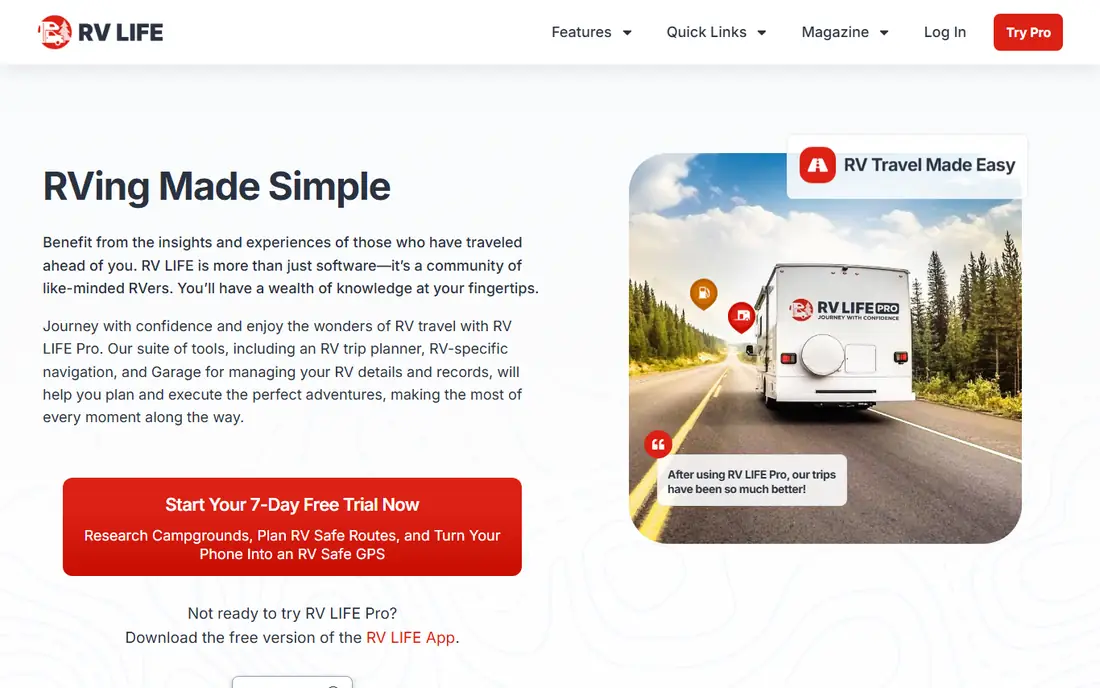
RV LIFE Pro is the default recommendation for a travelling couple or full timer who wants one subscription. Route safety is the feature no free app replaces: a 13 foot rig and a 12 foot bridge settle arguments that reviews cannot.
Build the trip in Trip Wizard, drive it in the GPS, and the planning and the driving finally agree with each other. That agreement is what the 65 dollars buys.
What we like- RV LIFE Pro bundles the tools RVers otherwise buy separately: Trip Wizard for planning routes with campgrounds, fuel and stops placed by driving time, an RV safe GPS app that routes around low bridges, weight limits and steep grades using your rig's dimensions, and a large campground database with reviews. The GPS works offline once maps are downloaded, which is when it matters most. The same subscription covers the planning website and the mobile apps, and owners of related products such as Campendium tie into the same family. A free trial lets you test a real trip before paying.
Watch out for- The GPS is good rather than flawless
- Routing oddities are a standing topic in owner forums, so keep a second map for unfamiliar mountain roads. The bundle price is the highest of the finder apps here. Drivers who only need campground search pay for routing they may not use. The ecosystem of sister products and memberships can confuse a first time buyer about which subscription includes what.
Starting price$59.99 per year
Free planYes
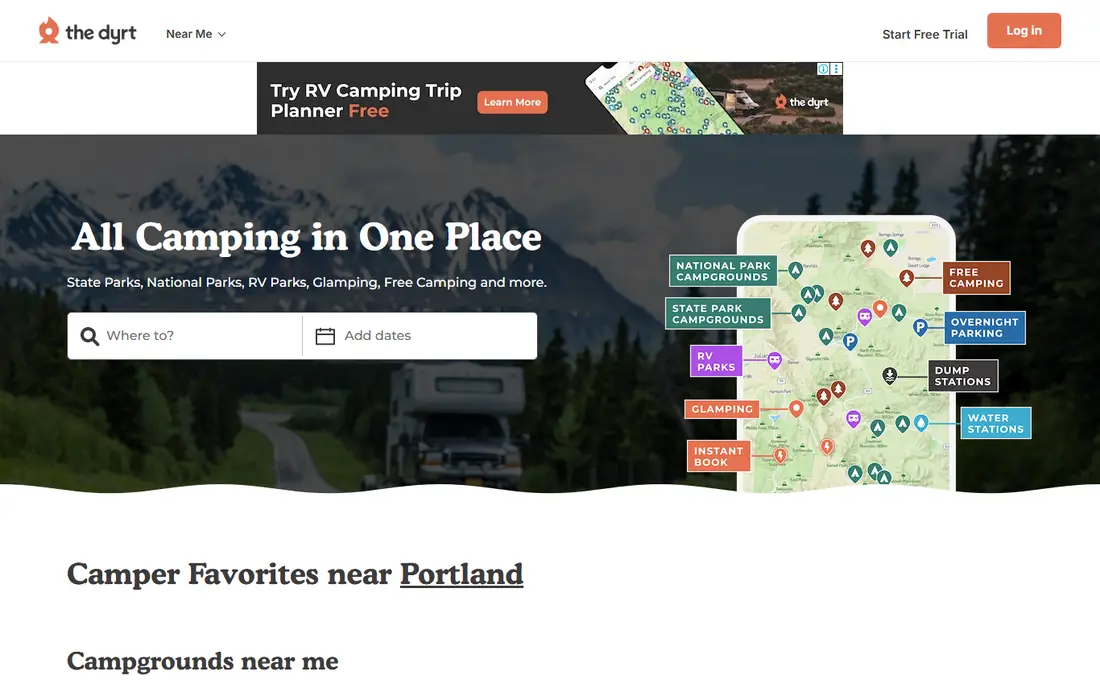
The Dyrt is the research tool. Before paying for a park or committing to a free site, its review volume and photos give the clearest picture of what a place is actually like this season.
The public land overlays are the PRO feature that justifies itself in one use: dispersed camping is legal on much BLM and national forest land and illegal a few hundred yards away, and the map is how you know which side of that line your wheels are on.
What we like- The Dyrt carries the largest pool of campground listings and camper reviews in this list, covering private parks, public campgrounds and free sites, with photos that come from campers rather than park marketing. The free tier handles established campground search well. PRO, at 59.99 dollars a year on current pricing, adds the features boondockers pay for: a filter for free sites, map overlays showing BLM and Forest Service boundaries so you can confirm you are legally on public land, offline maps, a trip planner and campground discounts.
Watch out for- Prices have climbed from the mid 30s a few years ago to about 60 dollars, and older articles still quote the old figure. Booking often hands you off to outside reservation systems rather than completing in the app. Coverage is US centred
- International travellers get little. Offline maps carry listings without the photos, so judging a site visually needs coverage.
Starting priceFree
Free planYes
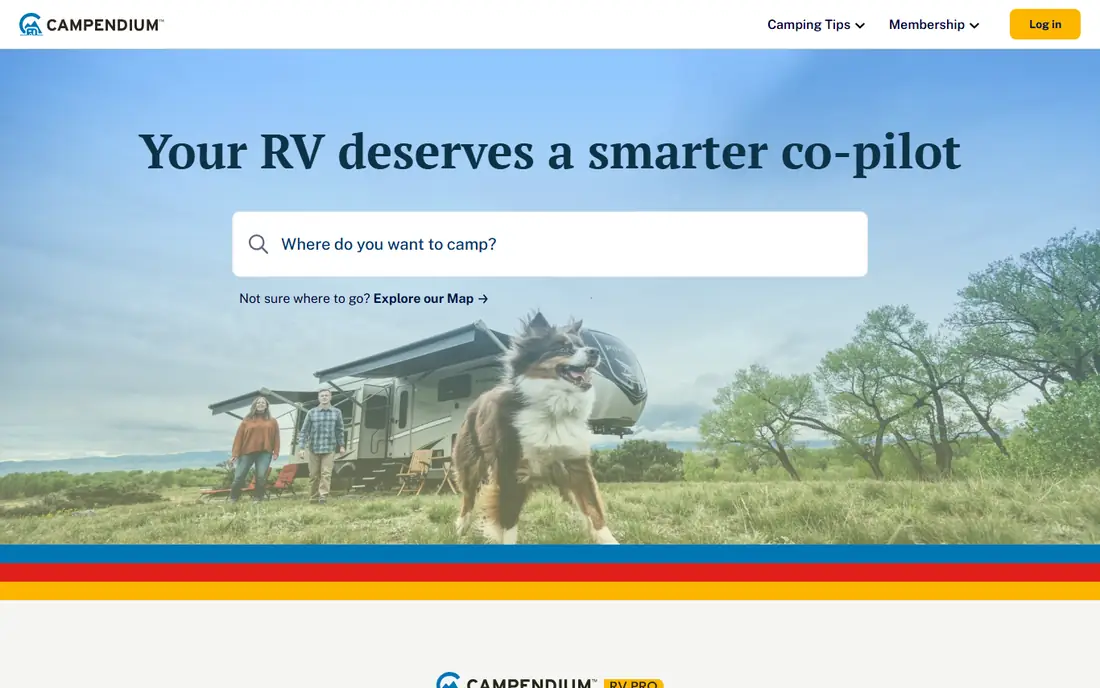
Campendium is where a free camping search starts. The cell coverage data alone separates it: for anyone working from the road, a beautiful site with no signal is a day off, not a campsite, and Campendium's camper reported speeds tell you before you drive in.
Pair it with The Dyrt for review volume and you have covered most finding needs without a second subscription.
What we like- Campendium is free to search and has built its reputation on the details remote workers and boondockers need: tens of thousands of listings across paid parks, public land and free sites, camper reviews and photos, dump station locations, and, unusually, reported cell coverage and speed test results by carrier for many sites. Filters cover hookups, rig length and site type. The site works well on desktop for planning, and paid supporter and bundle options add navigation and alerts for those who want them.
Watch out for- The free experience carries adverts, and the product family has been folded into the same ownership as RV LIFE, so bundles and names shift
- Check which subscription you are actually buying. Booking is not its job
- You research here and reserve elsewhere. Review depth, while strong for popular regions, thins in remote areas. Offline use is weaker than The Dyrt PRO or RV LIFE.
Starting priceFree
Free planYes
Roadtrippers earns its place on the trips where the overnight stop matters less than the day. Vacation travellers crossing states with time to wander get more from it than from any park database.
Use it to plan, use RV LIFE or your truck GPS to drive, and the two tools stop competing and start complementing.
What we like- Roadtrippers plans by the route rather than the destination: set a drive and it surfaces the stops that make a trip, diners, odd roadside attractions, scenic points, fuel and places to stay, within the distance off route you choose. The free plan covers basic trip building, and the paid tier, reported around 59.99 dollars a year, extends trip lengths, stop counts and offline access. It now sits in the same family as Campendium and RV LIFE, so campground data feeds the same trips. For travellers whose trip is the point, nothing else here plans a day's wandering as well.
Watch out for- It is a discovery and planning tool, not an RV safe navigator: it will happily route a tall rig down a road the RV LIFE GPS would refuse, so drive with a proper navigation app. Campground depth comes from partners rather than its own reviews. Pricing and plan names have changed with the corporate reshuffles, so confirm the current tier. Serious boondockers will find its free site data shallow next to Campendium.
Starting priceSee website
Free planNo
Harvest Hosts is the lifestyle purchase on this list. Travellers who use it six nights a year have paid for the membership in avoided park fees and gained six evenings they will talk about for years.
Travellers whose routes are fixed interstates and deadlines will use it twice and resent the fee. Count your likely nights honestly before joining.
What we like- Harvest Hosts is a membership, not a directory: your annual fee buys overnight parking at thousands of wineries, farms, breweries, museums and other attractions across North America, where you park free for a night in exchange for supporting the host's business, traditionally spending around 30 dollars. The stays are the memorable nights of a trip, a vineyard row instead of a rest stop. The company also owns related camping memberships, and member offers often bundle discounts on tools such as RV LIFE Pro. Hosts are reviewed by members inside the app.
Watch out for- Membership pricing changes with promotions and plan bundling, so confirm the current annual figure on the site. Rules matter: rigs must be self contained, there are no hookups or dump facilities, stays are usually one night, and arrival etiquette is real. Popular hosts near big routes book out. It does not replace campground apps
- It supplements them, and a membership only pays back if your routes pass its locations several times a year.
Starting priceFree
Free planYes
iOverlander serves the traveller the other apps forget: the one heading beyond the campground system, into public land, small towns and other countries. Its pins come from people who slept there, which no commercial database can fake.
Even US only RVers keep it for the free camping layer and the mechanic and water points that RV apps do not track.
What we like- IOverlander is the community database of the world's overland travellers: wild camps, campsites, water points, fuel, mechanics, border notes and warnings, reported by people driving everywhere from Alaska to Patagonia and across Africa. In North America it is a strong free camping source
- Internationally nothing else here comes close. The app is free with adverts, downloading places by region for offline use, with paid tiers, 59.99 dollars a year for Pro on current plan pages, widening offline downloads and features. Data works where there is no signal, which is the point of it.
Watch out for- Community data ages: a listed water point may be dry and a wild camp may now be signed off, so read entry dates and recent comments before trusting a pin. The interface is functional rather than polished. Free downloads are rationed by area. In the US, its park and hookup information is thinner than the RV specific tools above, because its travellers live differently.
Starting priceSee website
Free planNo
AllStays is the glovebox reference. You do not plan a holiday in it; you consult it at 4 pm when you need a dump station, a propane fill and a bridge your roof clears, within twenty miles.
That utility data is unglamorous and irreplaceable, and it is why AllStays survives every redesign cycle of prettier rivals.
What we like- AllStays is the roadside reference: beyond campgrounds and RV parks it maps the things a big rig hunts for, dump stations, propane, truck stops, rest areas, big box stores that allow overnight parking, and low clearance bridges, the data that prevents the worst day in RVing. Its Camp and RV app has been used by truckers and RVers for years, and filters are practical rather than pretty. The website offers much of the data free for planning, with the app and pro services by subscription.
Watch out for- Pricing and plan structure have changed over the years and differ between the app stores and the site, so check the current offer rather than an old review's figure. The design is dated, and community reviews are thinner than The Dyrt's. It is a data tool, not a planner: no trip building to rival RV LIFE. Some listings depend on user corrections, so verify a critical clearance against the posted sign, always.
Starting priceFree
Free planYes
Use Campground Reviews at the decision point: you have a park in mind for next week, and you want twenty strangers to tell you whether the wifi works and the sites fit a 40 foot rig. That is a specific, valuable moment, and this site owns it.
Paired with a finder app for discovery, it closes the loop between finding a place and trusting it.
What we like- Campground Reviews, the long running site formerly known as RV Park Reviews, does one job with depth: tens of thousands of camper written reviews of RV parks and campgrounds across North America, with ratings broken into the things RVers ask about, site size, hookups, cleanliness, wifi and value. It is free to read and search, with park details, photos and maps. Because reviewing is the whole product, the reviews tend to be detailed and specific rather than star only. It belongs to the same RV LIFE family, so accounts and data connect across the group.
Watch out for- It is a research site, not a navigator or a planner, and its app experience is secondary to the website. Free camping and dispersed sites are not its focus
- The Dyrt and Campendium cover that ground. Review counts skew to popular parks, leaving small parks with few opinions. Booking happens elsewhere.
How we chose
We picked apps an RVer can download and use in October 2026 across the four jobs of RV travel: safe routing, finding sites, judging them and buying access to unusual ones. Every app is actively maintained, and subscription figures come from current app store and vendor plan pages, with the category's recent price rises reflected rather than the stale figures older roundups repeat. No app was hands on tested for this guide; judgements rest on vendor documentation and current traveller reporting. None of these apps replaces your own judgement about weather, road signs and where it is legal to park overnight.
How to pick your RV app stack
Start with the driving problem. If your rig is tall or heavy, RV safe routing is not optional, and RV LIFE Pro is the subscription that solves it. Car style navigation will eventually offer you a bridge you cannot pass.
Then pick one finder. Boondockers and public land travellers get most from The Dyrt PRO's land overlays with Campendium's free data beside it. Park to park travellers can live on Campendium and Campground Reviews alone, both free.
Add memberships last, and only with a route in mind. Harvest Hosts pays when your map crosses its hosts. Buy the stack in that order and you will own two subscriptions, not six.
Frequently asked questions
Which RV app is best for avoiding low bridges?
RV LIFE's GPS, because it routes using your rig's height, weight and length and warns on restrictions along the way. AllStays' clearance data is the reference to cross check a doubtful road. No app is a substitute for reading the posted sign, since databases lag behind new restrictions and construction.
What is the best free RV app?
Campendium for finding sites, with cell coverage reports no rival matches, and iOverlander for free camping and overland data worldwide. The Dyrt's free tier is also strong for established campgrounds. Free apps ration offline data, so a paid tier usually earns its place on the first trip beyond coverage.
Is The Dyrt PRO worth the price rise?
At about 60 dollars a year, the value sits in the public land boundary overlays and the free site filter. If you boondock on BLM or national forest land, one legal, well chosen free night a month covers the fee. If you book commercial parks, the free tier plus Campground Reviews will serve you as well.
Do these apps work without cell signal?
The good ones do, if you prepare them. RV LIFE, The Dyrt PRO and iOverlander all download maps and data for offline use. Download your whole route region on wifi before you leave, including the way back; discovering at a dead zone that only the outbound half saved is a rite of passage best skipped.
Is Harvest Hosts worth joining?
If your travel style is unhurried and your routes cross wine country, farm regions or small towns, yes: a handful of stays repays the membership, and the nights are better than car parks. If you travel on deadlines between booked parks, the membership will sit unused. There are no hookups, so your rig must be self contained either way.
Sources we checked (0)
Is your product missing or out of date?
We review this list regularly. Vendors can request a listing, send updated pricing or ask about featured placement.

Shihab Mia · Founder, Rankite
Shihab has 5+ years in B2B and SaaS SEO. He writes Rankite's software buying guides from pricing pages, documentation and public user reviews. More about Shihab.