How we make this list: we compare pricing pages, product documentation and public user reviews. Ratings come from G2, Capterra or Trustpilot, with the date we checked them.
Key takeaways
- Pricing splits two ways: per-unit pricing (AppFolio from $1.49 per unit per month) suits large portfolios, while flat-rate apps (RentRedi at $12 per month, billed annually) protect small landlords from runaway costs.
- Three of the eight tools offer genuinely free plans: Innago is completely free, TurboTenant's core features cost nothing, and Stessa's Essentials plan is free.
- Most tools gate their best features by tier: expect to pay extra for full accounting, owner portals, and API access.
- Mobile apps matter here more than in most categories; every tool on this list ships an iOS and Android app for rent collection and maintenance on the go.
- Free trials run short in this category: 14 days is standard, so plan your test drive around real tasks like running a screening or collecting a month of rent.
Quick comparison
| Tool | Best for | Starting price | Free plan |
|---|
 AppFolio AppFolio | large portfolios with complex accounting needs | From $1.49 per unit/month (Core, $298 monthly minimum) | No |
 DoorLoop DoorLoop | growing firms that want everything in one place | $69/month (billed annually, first 10 units) | Free trial |
 Buildium Buildium | property managers adding owner-client reporting | $62/month (Essential, billed annually) | Free trial (14 days) |
 RentRedi RentRedi | DIY landlords who want one flat rate | $12/month (billed annually) | Free trial |
 Stessa Stessa | investors focused on bookkeeping and taxes | Free plan available (paid plans from vendor pricing page) | Yes |
 TenantCloud TenantCloud | landlords who want portals for every role | $25/month (Starter) | Free trial (14 days) |
 Innago Innago | small landlords who want it all for free | Free | Yes |
 TurboTenant TurboTenant | independent landlords starting with leasing | Free plan available (Premium Essentials $149/year for 1-10 units) | Yes |
Is your product missing or out of date?
We review this list regularly. Vendors can request a listing, send updated pricing or ask about featured placement.
The best rental property management app
It is 11:40 p.m. on the first of the month. Your phone buzzes: one tenant finally paid, one sent a partial payment with no note, and a third just reported a leaking water heater. Your spreadsheet is open on a laptop you left at the office. That gap between the money moving and your ability to track it is exactly what a good rental property management app closes.
The list below covers the platforms landlords and property managers actually use in 2026, from free DIY apps to per-unit enterprise systems. Pick your lane based on portfolio size and how much accounting you want done for you.
Starting priceFrom $1.49 per unit/month (Core, $298 monthly minimum)
Free planNo
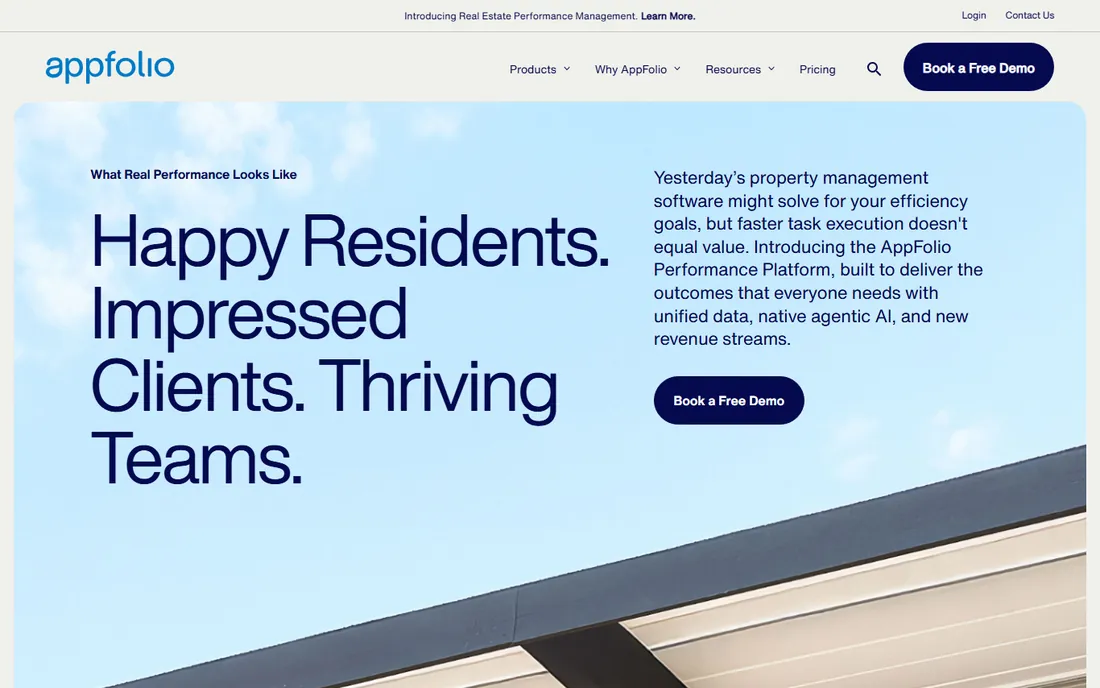
The property manager who outgrows spreadsheets at 50 units and hits a wall again at 500 usually ends up looking at AppFolio. It handles the full lifecycle, from marketing a vacancy to screening, e-signing a lease, collecting rent, coordinating maintenance, and running owner statements, all inside one system. The 2026 platform leans hard into AI: a leasing assistant that replies to leads around the clock, automated workflows for renewals and notices, and analytics that surface delinquencies before they become problems.
The catch is the price structure. At $1.49 per unit per month on Core with a $298 monthly minimum, a landlord with 20 units pays the minimum regardless, which makes it a poor value below about 50 units. Onboarding fees can run from hundreds to thousands of dollars, and payment processing fees (for example eCheck charges) sit outside the headline price. If your portfolio is big enough to clear the minimums comfortably, the automation pays for itself. If not, the apps further down this list do more for your money.
What we like- Deep AI-native platform with built-in leasing assistant and automation
- Unified property and investment management data
- Open API on the Max plan for custom integrations
Watch out for- Monthly minimums price out small landlords
- Implementation and onboarding fees add up
- Several pricing details sit behind a sales conversation
Starting price$69/month (billed annually, first 10 units)
Free planFree trial
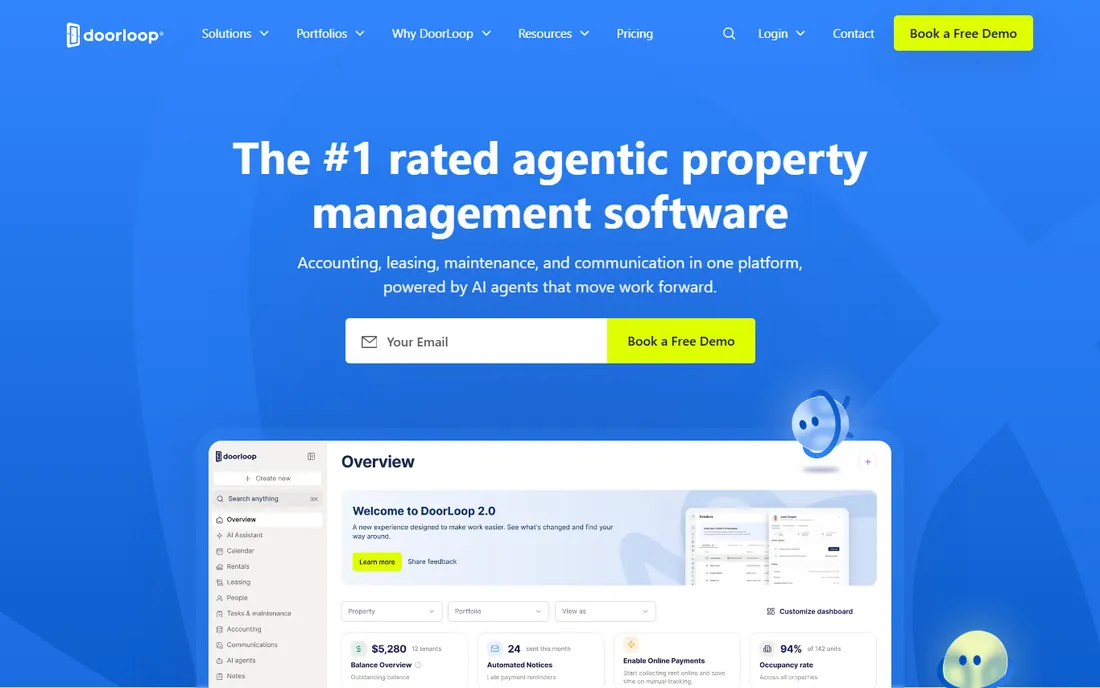
DoorLoop built its reputation on being the approachable all-in-one: rent collection by card, debit, ACH, cash or check, automated late-fee reminders, maintenance work orders, tenant screening, and accounting that updates the moment money lands. In 2026 the product leans into AI agents that triage incoming maintenance requests and answer common tenant questions without staff lifting a finger, which is where the real time savings come from for a busy office.
Pricing starts at $69 per month billed annually for the first 10 units and steps up through Pro at $149 and Premium at $209, with costs rising as you add units. The honest catch is the same as most growing-platform pricing: the entry tier covers the basics well, but the features that make DoorLoop distinctive (AI inspections, open API, free incoming ACH) sit higher up. Still, for a management company in the 10 to 300 unit range that wants one login instead of five subscriptions, it is one of the cleanest fits available.
What we like- All-in-one platform covering accounting, leasing, maintenance and communication
- AI assistant that auto-handles a large share of tenant requests
- Strong listing syndication and e-signature built in
Watch out for- Pricing scales with unit count and can climb fast
- Free trial window is short
- Advanced features like open API require the top tier
Starting price$62/month (Essential, billed annually)
Free planFree trial (14 days)
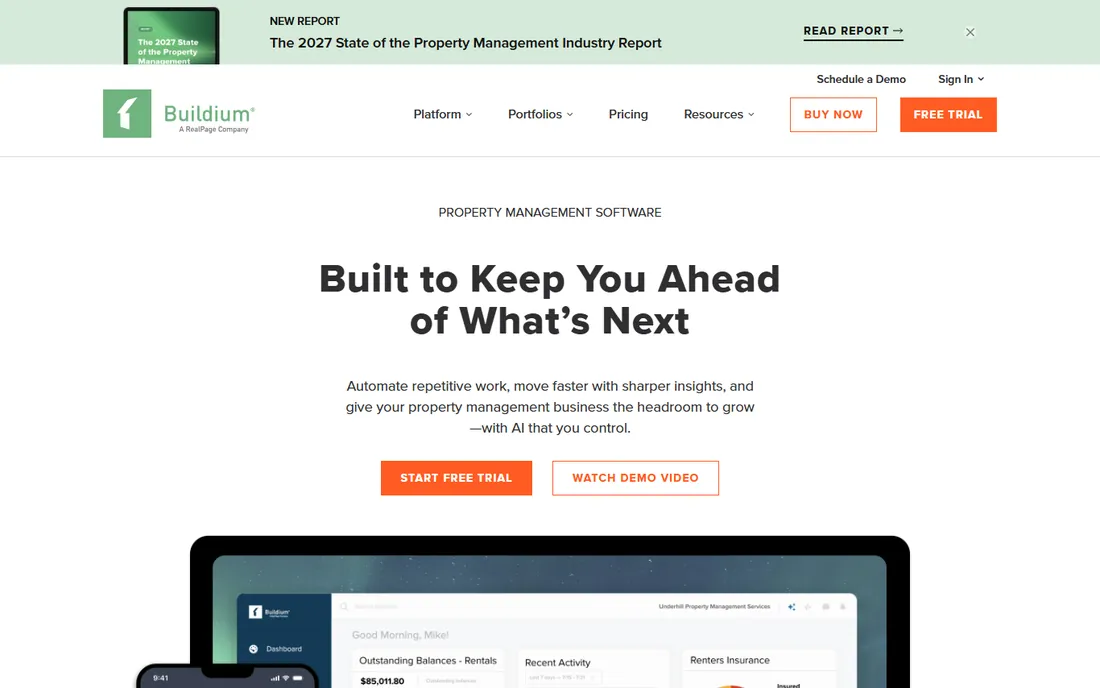
Buildium has been around since 2004 and it shows in the accounting. The platform runs a proper general ledger, handles budgets, tracks expenses against properties, and e-files 1099s, which is the feature that keeps tax season from becoming a fire drill. On top of that you get rental listings, tenant screening, lease management, online rent collection, maintenance requests, and portals for both residents and owners, so a third-party manager can give clients live visibility without extra meetings.
The Essential plan starts at $62 per month, Growth at $192, and Premium at $400. The 14-day free trial comes loaded with sample data and no credit card required, which is genuinely useful for a test drive. Where Buildium stumbles is the jump between tiers: the Open API and the most serious customization live only on Premium, and the mobile app is serviceable rather than great. For management companies that need trustworthy books and owner reporting above all else, it remains one of the safest picks.
What we like- Purpose-built accounting with general ledger and 1099 e-filing
- Resident and owner portals that reduce back-and-forth
- Open API and marketplace integrations on higher tiers
Watch out for- Per-tier pricing means advanced features cost significantly more
- Mobile app lags the desktop experience
- Setup takes real effort for larger portfolios
Starting price$12/month (billed annually)
Free planFree trial
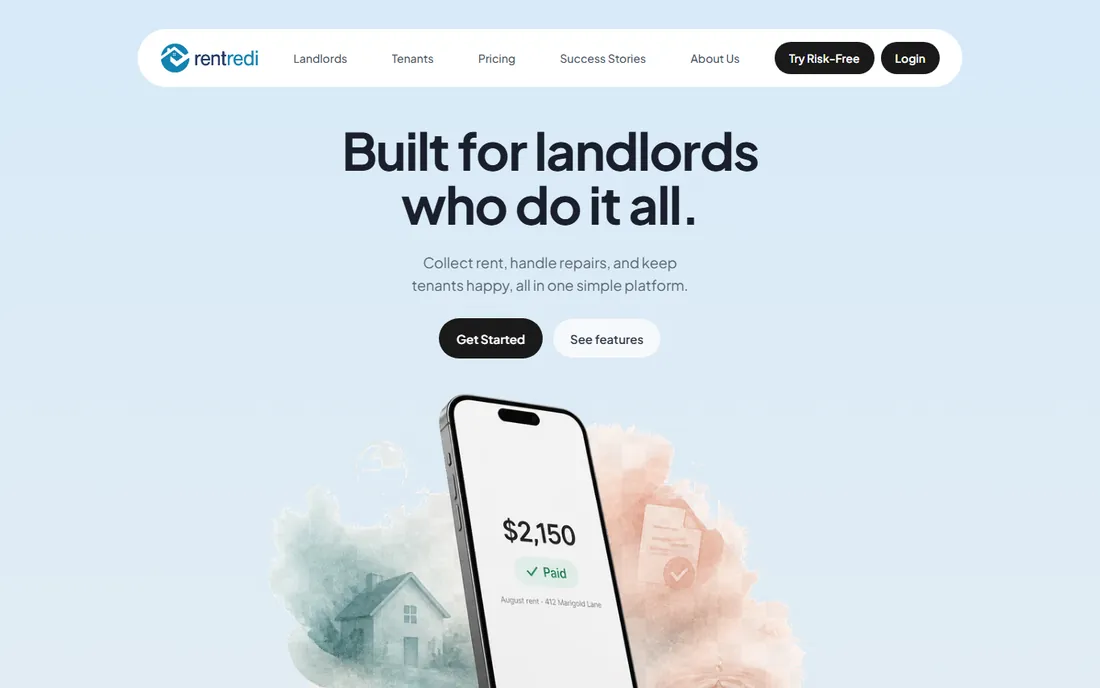
Ask landlords what they hate about software pricing and most will mention the per-unit meter that punishes growth. RentRedi answers that directly: one flat rate, unlimited everything. Every subscription includes the full feature set, so there is no upsell ladder. You get rent collection with autopay and reminders, tenant screening, listings, lease signing, maintenance coordination, accounting, and messaging, plus rent reporting to all three credit bureaus to encourage on-time payments.
The pricing is refreshingly simple: $29.95 per month billed monthly, $20 per month on the 6-month term, or $12 per month billed annually, all backed by a 30-day money-back guarantee. The honest catch is the absence of a free tier and a thinner integration bench than older competitors; QuickBooks Online and Latchel are covered, but niche tools may not be. For the self-managing landlord who wants predictable costs while adding doors, the annual plan is one of the best values on this list.
What we like- Single flat rate with unlimited properties, tenants and teammates
- Full feature set on every plan with no tiered gates
- Strong mobile app built for on-the-go landlords
Watch out for- No free plan, only paid subscriptions
- Newer company with a smaller integration ecosystem
- Annual billing required for the best price
Starting priceFree plan available (paid plans from vendor pricing page)
Free planYes
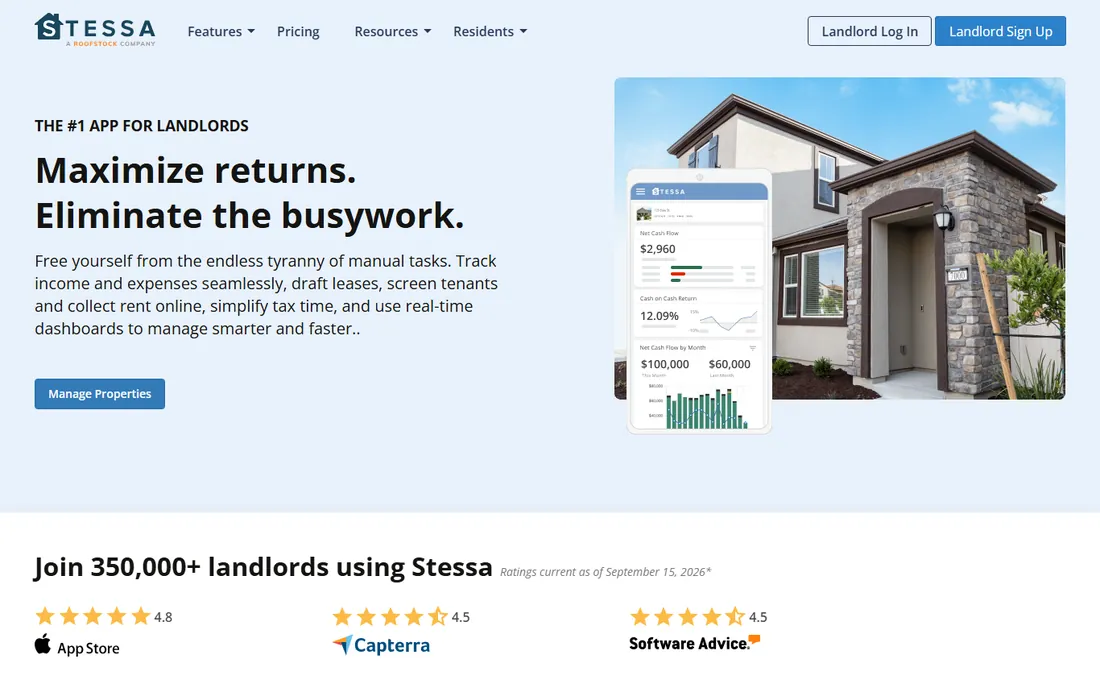
Stessa starts from the money and works outward. Connect your bank accounts and it auto-imports and categorizes transactions, producing an income statement, net cash flow report, and tenant ledger that are genuinely useful instead of generic. The tax package reports and receipt scanning are the features landlords praise most, and paid tiers add tenant screening, online rent collection, e-signable leases, and maintenance tracking.
The Essentials plan is free, which makes Stessa a zero-risk starting point. Manage and Pro are the paid subscription tiers with higher-yield landlord banking (Pro subscribers earn up to 3.49 percent APY) and the full management feature set. The honest catch: if you already run your books in QuickBooks or Xero, there is no direct integration to bridge them, and the deeper management tools require the paid plans. For investors whose biggest pain is bookkeeping and tax time rather than tenant churn, it is hard to beat.
What we like- Automated income and expense tracking with bank connections
- Tax-ready reports including Schedule E that CPAs like
- Landlord banking with high-yield accounts
Watch out for- Full property management features sit behind paid tiers
- No direct QuickBooks or Xero integration
- Banking features are US-only
Starting price$25/month (Starter)
Free planFree trial (14 days)
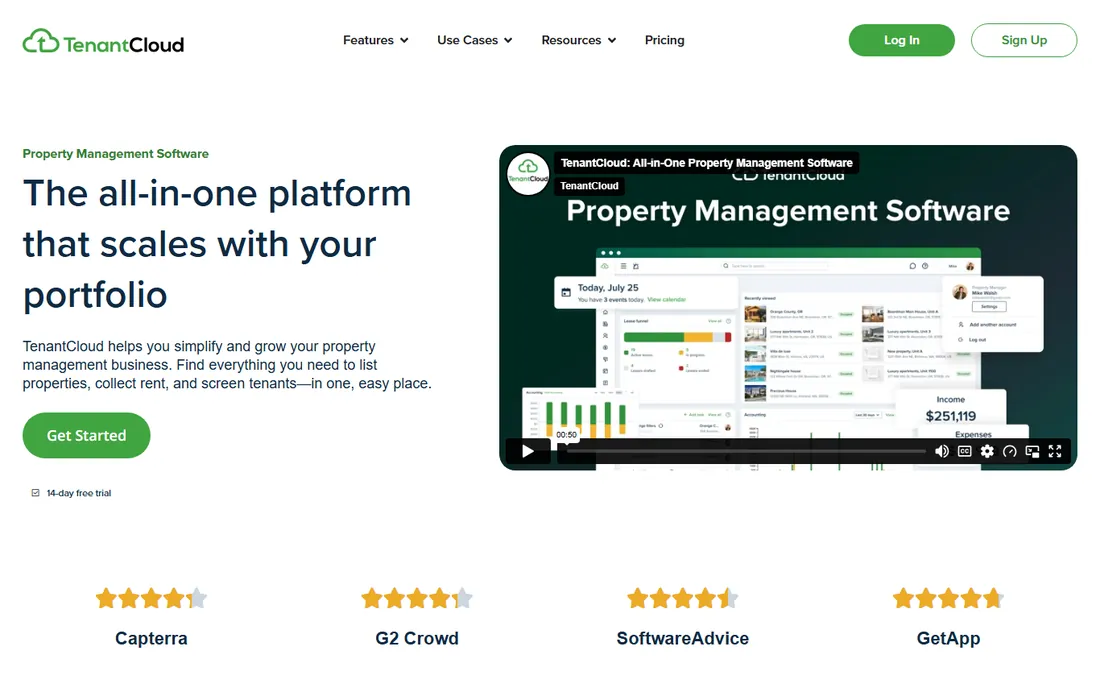
Nobody else in this price range gives every participant their own front door. TenantCloud builds distinct portals for landlords, tenants, property owners, and service professionals, which keeps communication organized when a vendor, a tenant, and an owner are all involved in one repair. The feature list is wide: online rent collection across card, debit, ACH, cash, and check; tenant screening; maintenance requests; accounting with bank reconciliation; custom reports including 1099s; and listing syndication.
The Starter plan runs $25 per month, Growth $35, and Pro $60, with a 14-day free trial. The honest catch is that TenantCloud trimmed its formerly generous free tier, so expect to pay for meaningful use, and the interface packs so much in that new users need a few days to settle. For landlords and small managers who want roommate management, credit reporting options, and a listing website without buying extra tools, it is one of the most complete mid-priced options.
What we like- Separate portals for landlords, tenants, owners, and service professionals
- Broad feature set from listings to tax reports on one platform
- Attorney-drafted state-specific lease forms
Watch out for- Free tier has been scaled back, pushing users toward paid plans
- Interface can feel crowded until you learn it
- Some users report inconsistent payment processing times
Starting priceFree
Free planYes
Innago's pitch is the simplest on this list: the software is 100 percent free for landlords. You get online rent collection by ACH or card, tenant screening, property listings, applications, lease signing, work orders, financial organization, and tenant communication without paying a subscription. It targets landlords with small to midsize portfolios who want the core rental workflow handled without another monthly bill.
The honest catch is the business model question every free product raises. Innago makes money on adjacent services, so check the fees on screening reports and payment processing before committing your portfolio. It also lacks the advanced automation, open API, and owner-portal depth of the paid platforms above. But for a landlord with a handful of doors who just needs rent in, repairs tracked, and leases signed, the value is undeniable: this is the only full-featured option here that costs nothing.
What we like- Completely free for landlords and property owners with no tiered pricing
- Covers rent collection, screening, leases, maintenance, and accounting
- Simple setup that small portfolios can learn in an afternoon
Watch out for- Monetization comes through payment and screening add-ons worth reviewing
- Fewer enterprise-grade features for large operations
- Smaller company with a narrower integration list
Starting priceFree plan available (Premium Essentials $149/year for 1-10 units)
Free planYes
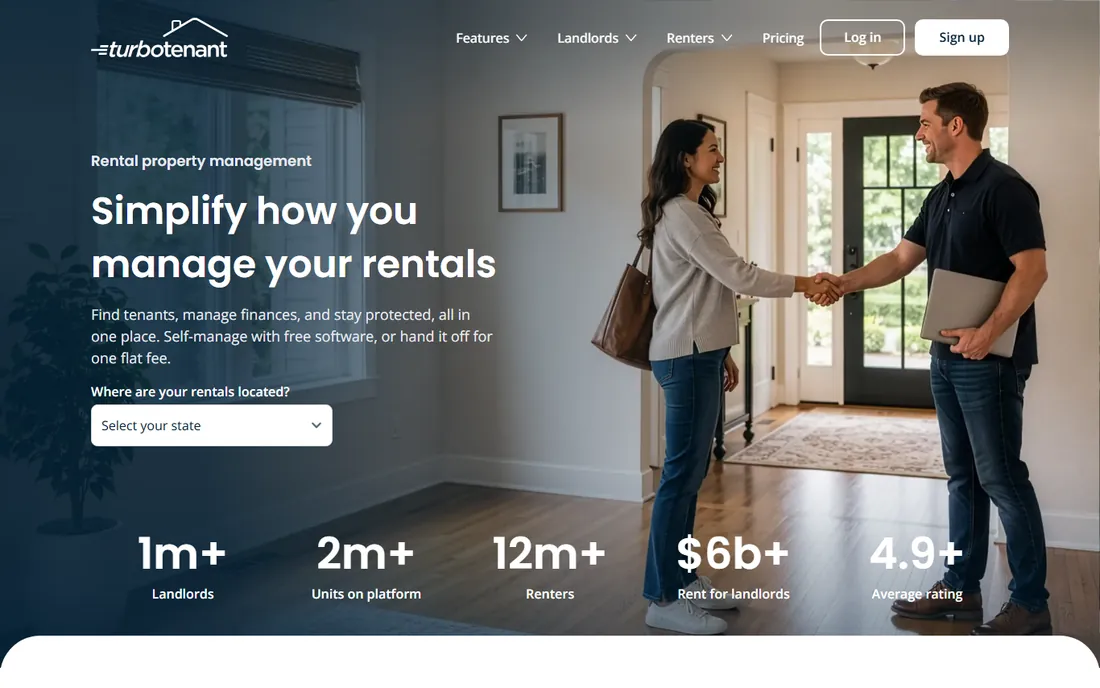
TurboTenant is built for the independent landlord's most stressful moment: finding and placing a tenant. The free plan covers the whole leasing flow, from advertising across dozens of listing sites to applications, screening, and online rent collection, plus expense tracking, maintenance requests, and messaging. That is a remarkable amount of software for zero dollars, and it explains why the platform counts its landlord base in the hundreds of thousands.
When you outgrow the free tier, Premium stays cheap: Essentials starts at $149 per year for 1-10 units and Pro at $199, adding phone support, state-specific leases, digital signatures, and deeper accounting. The honest catch is that the free plan charges extra for state-specific leases ($59 per lease) and forms packs, so heavy lease users should do the math on upgrading. TurboTenant also offers full-service management for a flat fee if you ever want to hand the whole thing off. For a landlord's first 1-10 doors, start here.
What we like- Generous free core covering marketing, screening, and rent collection
- Listings syndicate to more than 25 sites
- Premium tiers are inexpensive flat annual fees
Watch out for- Accounting tools and unlimited bank connections require the Pro tier
- Lease agreements and forms cost extra on the free plan
- Premium pricing rises with portfolio size
Finding the right rental property management app for your portfolio
Match the pricing model to your size before anything else. Per-unit pricing like AppFolio's rewards scale but punishes small portfolios with monthly minimums; flat-rate tools like RentRedi protect small landlords but can become expensive if your portfolio triples. Count your doors first, then shortlist.
Check the payment processing fine print
The subscription price is rarely the whole bill. Screening reports, ACH fees, credit card processing, and rent-payment transaction fees vary widely between tools. Ask each vendor exactly what a tenant-paid screening costs and who absorbs the ACH fee, because these numbers decide the real monthly cost.
Test with real money movement
A 14-day trial only tells you something if you run real tasks through it. During the trial, invite one tenant to pay rent, log a maintenance request, and run one screening. That single loop exposes payment delays, confusing tenant portals, and support quality better than any demo video.
Think about who else needs access
If you self-manage, a simple landlord app may be enough. If owners, vendors, or team members need visibility, you need portals and permissions, which points toward Buildium, TenantCloud, or DoorLoop. Map your people to the tool before you pay.
How we chose
We reviewed vendor pricing pages, product documentation, and public user reviews on G2, Capterra, and Reddit to build this list. We compared plans feature by feature, checked what sits behind each paywall, and noted where vendor pricing is confirmed versus where only third-party sources publish numbers. We considered portfolio-size fit, accounting depth, mobile app quality, and the real cost of payment processing. We did not test any of these products hands-on.
The free vs. paid question, answered honestly
Three tools here cost nothing at meaningful tiers, and for many landlords that is the whole decision. Innago's entirely free platform, TurboTenant's free core, and Stessa's free Essentials plan cover the essentials of collecting rent, tracking money, and placing tenants. The paid platforms earn their keep when your needs get complicated: multiple owners needing statements, hundreds of units, or accounting your CPA will accept without rework.
The trap is paying for complexity you do not have yet. Start with the free tier that fits your current portfolio, and upgrade only when a specific missing feature costs you real time or money. Almost every paid plan here costs more per year than one month of a property manager's fee, so the math favors software the moment it saves you a few hours a month.
Frequently asked questions
Is there really a good free rental property management app?
Yes. Innago is completely free for landlords with no subscription tiers, TurboTenant's core features (listings, screening, rent collection) cost nothing, and Stessa's Essentials plan is free. Free plans typically exclude advanced accounting, premium support, and some add-ons like lease templates, but they handle the core landlord workflow well.
How much should a landlord expect to pay for property management software?
For a small portfolio, $12 to $60 per month covers most flat-rate tools. AppFolio-style per-unit pricing starts around $1.49 per unit per month but comes with monthly minimums, so small landlords pay the minimum. Always add payment processing and screening fees to the headline price before comparing.
Do I need property management software for just a few units?
If you have one or two units and simple finances, a free option like Innago or TurboTenant's free plan handles rent collection, leases, and expense tracking without adding a bill. The paid tools start making sense when you add doors, bring in owners or vendors, or spend real hours on bookkeeping each month.
What is the difference between per-unit and flat-rate pricing?
Per-unit pricing charges you for every door you manage, which scales costs with growth but can include high monthly minimums. Flat-rate pricing charges one price no matter how many units you manage, which protects small landlords and rewards growth but may cost more than per-unit at very large scales.
Can tenants pay rent through these apps?
Yes, all eight tools support online rent collection. Tenants typically pay by ACH, debit, or credit card, and some tools also handle cash and check tracking. Check who pays the processing fee: some tools charge the landlord, others pass it to the tenant.
Should I pick an app focused on accounting or on leasing?
Pick based on your biggest pain. If tax season and bookkeeping eat your weekends, start with an accounting-first tool like Stessa or Buildium. If filling vacancies and screening tenants is the struggle, start with a leasing-first tool like TurboTenant. Most landlords eventually want both, which is why the all-in-one platforms exist.
Sources we checked (13)
- https://appfolio.com
- https://www.itqlick.com/appfolio-property-manager/pricing
- https://costbench.com/software/property-management/appfolio/
- https://www.doorloop.com
- https://buildium.com/
- https://rentredi.com/
- https://stessa.com/
- https://www.stessa.com/blog/stessa-vs-turbotenant/
- https://tenantcloud.com/
- https://www.g2.com/products/tenantcloud/pricing
- https://innago.com/
- https://turbotenant.com/
- https://support.turbotenant.com/en/articles/4003980-is-there-a-cost-to-sign-up-for-turbotenant
Is your product missing or out of date?
We review this list regularly. Vendors can request a listing, send updated pricing or ask about featured placement.

Shihab Mia · Founder, Rankite
Shihab has 5+ years in B2B and SaaS SEO. He writes Rankite's software buying guides from pricing pages, documentation and public user reviews. More about Shihab.