How we make this list: we compare pricing pages, product documentation and public user reviews. Ratings come from G2, Capterra or Trustpilot, with the date we checked them.
Key takeaways
- ReadTheory is the free specialist: adaptive passages with questions that adjust to each reader, built for classrooms and home practice.
- Raz-Kids is the classroom standard, with more than 800 leveled books, a comprehension quiz on every book, and recording tools, at $132 a year per classroom.
- CommonLit and ReadWorks give teachers free, curriculum grade passages and question sets, including Spanish and accessibility supports.
- Reading Eggs is the structured home programme for ages 2 to 13, with its Eggspress section aimed squarely at comprehension for ages 7 to 13.
- An honest note for parents: these apps support reading practice. They do not diagnose reading difficulties. If a child struggles persistently, a teacher, reading specialist, or clinician assessment matters more than any app.
Quick comparison
| Tool | Best for | Starting price | Free plan |
|---|
 ReadTheory | Adaptive comprehension practice | Free | Yes |
 Raz-Kids | Leveled books with quizzes for classrooms | $132 per year | No |
 CommonLit | Free passages and units for grades 3 to 12 | Free | Yes |
 Reading Eggs | Structured home reading for ages 2 to 13 | See website | No |
 Khan Academy Kids | Free early reading foundations, ages 2 to 8 | Free | Yes |
 ReadWorks | Free teacher passages with question sets | Free | Yes |
 Dreamscape | Game based comprehension for grades 3 to 8 | Free | Yes |
 Readability | Reading aloud with real time feedback | $19.99 per month | No |
Is your product missing or out of date?
We review this list regularly. Vendors can request a listing, send updated pricing or ask about featured placement.
The best reading comprehension apps
Starting priceFree
Free planYes
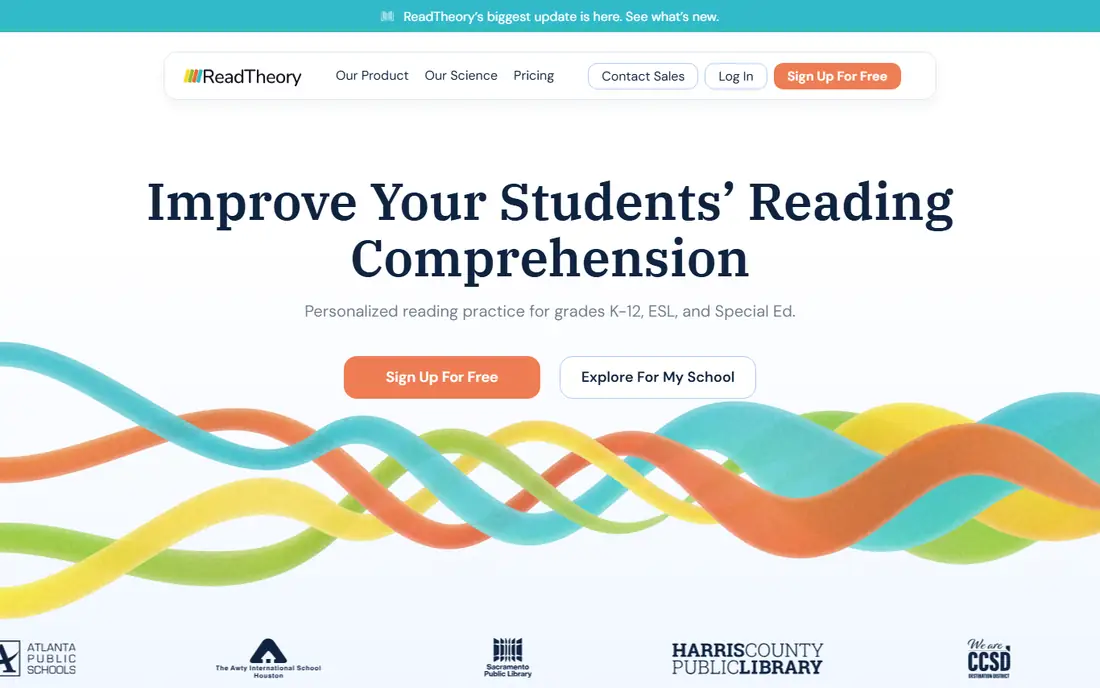
ReadTheory does one thing with focus: it serves a passage at a child's measured level, asks questions about meaning, inference, and vocabulary, then adjusts the next passage based on the answers. Teachers use it for differentiated practice in class, and parents use the same free accounts at home.
The trade off is sparkle. There are no characters to collect or worlds to explore, so motivation comes from progress itself. ReadTheory fits grades roughly 1 to 12, classrooms needing measurable comprehension practice, and families who want the school style exercise without a subscription.
What we like- Passages and questions adapt to each student's level automatically
- Pre and post assessments place readers and track growth
- Free for teachers and students, including home use
- Printable worksheets and class reports included
Watch out for- Presentation is plain compared with game based rivals
- Passages skew toward practice sets rather than rich books
- Younger children need a parent or teacher to set up and steer
Starting price$132 per year
Free planNo
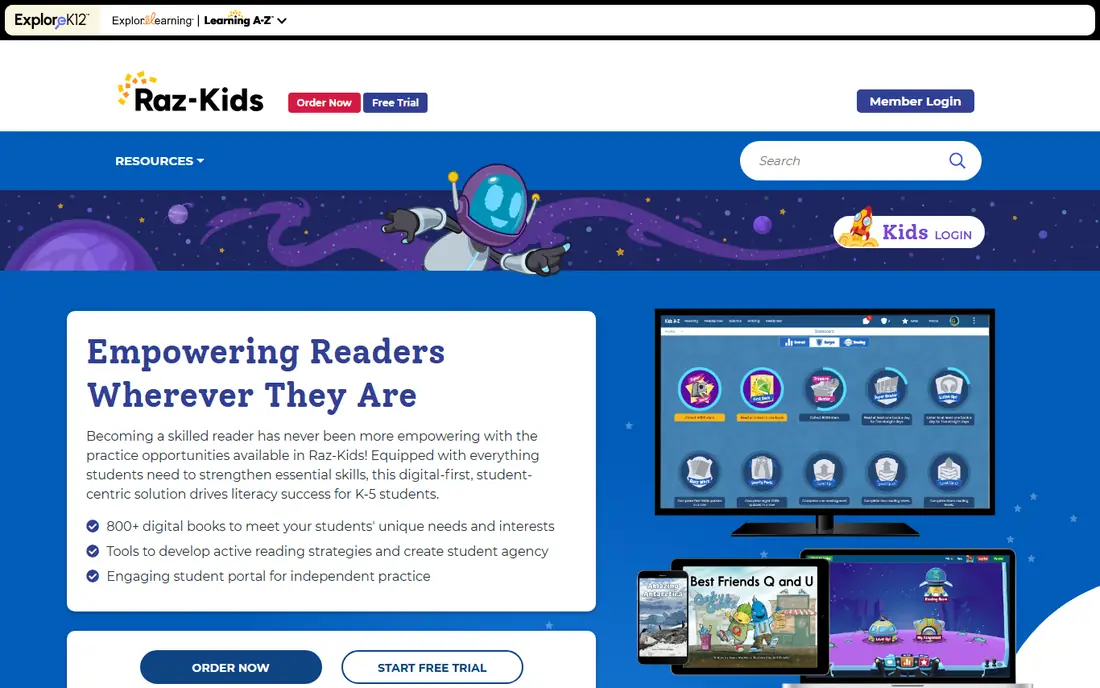
Raz-Kids is the leveled library classrooms standardise on. A child listens to a book, reads it, records their own reading, and answers a quiz before moving up a level. That loop, repeated daily, is how comprehension grows at elementary age, and the teacher dashboard makes it manageable at class scale.
The trade off is audience. It is sold to schools and teachers, and a single family pays classroom money for a classroom tool. Raz-Kids fits elementary teachers and homeschoolers running several children at once, who want structured levels rather than an open library.
What we like- More than 800 leveled ebooks across 29 reading levels
- Every book carries a comprehension quiz
- Listen, read, and record modes let children hear themselves read
- Teacher reports track level progress across a class of up to 36 students
Watch out for- Priced for classrooms, $132 a year, so costly for one child at home
- The levelling system takes teacher setup to use well
- Less adaptive question practice than ReadTheory
Starting priceFree
Free planYes
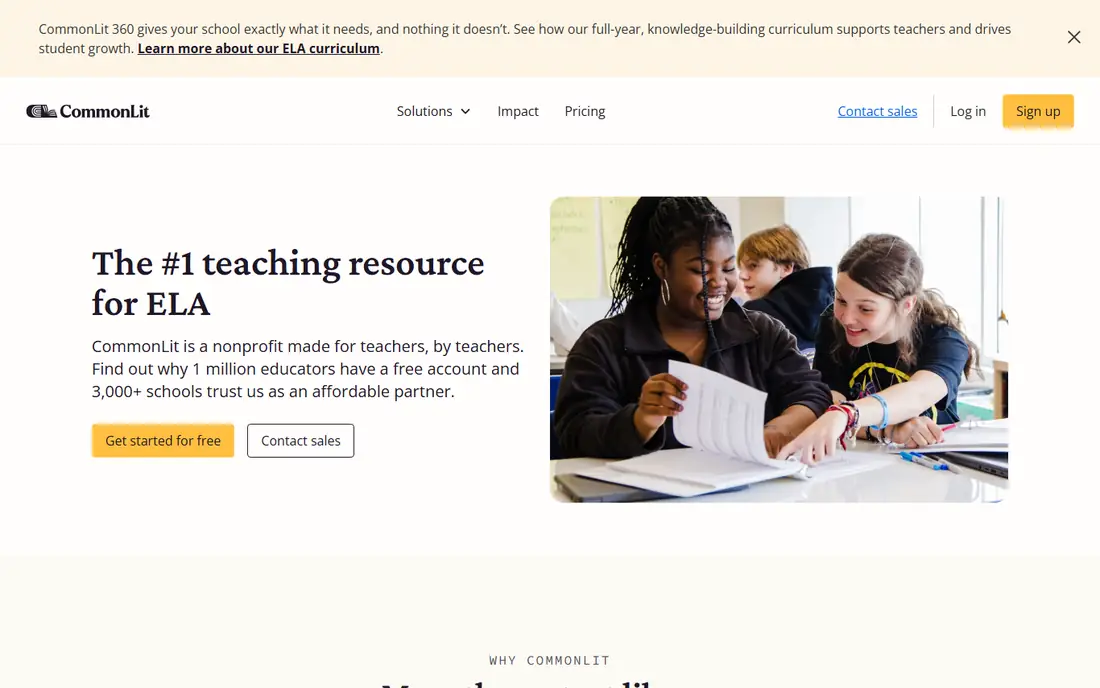
CommonLit is the teacher's free library of record. Its passages come with discussion questions, vocabulary, and assessments that ask students to cite evidence and reason about a text, which is comprehension in its school form. Schools can buy added data tools, but the core library that made it standard is free.
The trade off is direction. A child alone with CommonLit has a worksheet, not a guide; it shines when a teacher or parent assigns and discusses. CommonLit fits grades 3 to 12 classrooms, tutors, and parents of older children who want serious texts with serious questions at no cost.
What we like- Large free library of passages, poems, and news texts with question sets
- Texts include Spanish versions and accessibility supports such as guided reading mode
- Full units and assessments for teachers on the free tier core
- Written for real curriculum standards
Watch out for- Built for classroom assignment more than self guided home use
- No app, it runs in the browser
- Younger readers below grade 3 are not its audience
Starting priceSee website
Free planNo
Reading Eggs is the home programme parents buy when they want a path, not a pile of books. Lessons sequence skills, games practise them, and the Eggspress area shifts older children toward comprehension passages, vocabulary, and spelling. Parent dashboards report progress in plain terms.
The trade off is pricing clarity and age fit. Sources list monthly and annual figures that differ by bundle and billing period, so we mark the price as See website rather than guess. Reading Eggs fits families with children roughly 4 to 10 who will follow a structured programme at home, especially where a parent reviews the reports weekly.
What we like- A structured, sequenced programme rather than a loose library
- Reading Eggspress section targets comprehension, vocabulary, and grammar for ages 7 to 13
- Parent reports show speed and accuracy progress
- Covers ages 2 to 13 across its junior and main programmes
Watch out for- Published prices conflict between sources and plan bundles, so check the site before buying
- The game layer can distract some children from the reading itself
- Less effective for middle schoolers than for its core younger audience
#5
Khan Academy Kids
Best for: Free early reading foundations, ages 2 to 8
Visit khankids.org
Starting priceFree
Free planYes
Khan Academy Kids is the free option with no catch: no ads, no in-app purchases, no trial clock. Its reading path builds from letters and sounds into stories with questions, inside a calm app young children can navigate. For building the foundations comprehension stands on, it is the easiest recommendation in this guide.
The trade off is ceiling. It is a beginnings app, and a fluent eight year old needs ReadTheory or CommonLit next. Khan Academy Kids fits parents of children aged 2 to 8 who want quality early reading practice without paying or being sold to.
What we like- Completely free, with no adverts and no subscriptions, from a nonprofit
- Reading, phonics, and comprehension woven into stories and activities
- Designed with early learning researchers
- Gentle pacing suited to preschool and early elementary children
Watch out for- Aimed at ages 2 to 8, so older children outgrow it
- Comprehension depth is early stage, stories and simple questions
- No classroom management or reporting layer
Starting priceFree
Free planYes
ReadWorks is the quiet workhorse behind many classroom reading lessons. Teachers assign a passage, students read and answer text dependent questions, and the same article exists at several levels so a whole class reads together. Its research informed design shows in the question quality, which pushes past simple recall.
The trade off is adaptivity. Nothing adjusts automatically; the differentiation is built into the materials and the teacher's choices. ReadWorks fits K to 12 teachers and homeschool parents who want strong free passages and questions and are happy to steer the learning themselves.
What we like- Free for teachers, students, and families, funded as a nonprofit
- Thousands of passages with question sets, vocabulary, and paired texts
- StepReads versions offer the same text at lower reading levels
- Article a day and comprehension units ready to assign
Watch out for- A resource library rather than an adaptive app, so levelling is the teacher's job
- Interface is functional rather than child friendly
- No game layer to pull reluctant readers in
Starting priceFree
Free planYes
Dreamscape wraps comprehension practice inside a game where correct answers earn the resources to build and defend a base. For the reluctant reader in grades 3 to 8, that wrapper is the point: the questions get answered because the game makes them worth answering. Teachers assign topics and watch completion data.
The trade off is the wrapper itself. Parents should check that a child is reading the passages rather than guessing through them, as with any reward game. Dreamscape fits classrooms and homes with game motivated readers who resist conventional practice apps.
What we like- Reading passages and comprehension questions power a base building game students ask to play
- Free for teachers and students
- Questions cover inference, main idea, and context clues
- Teacher dashboards assign passages by topic and level
Watch out for- The game reward loop can pull focus from the reading for some students
- Passage depth is practice level, not rich literature
- School features matter more than home use
Starting price$19.99 per month
Free planNo
Readability takes a different route: the child reads aloud to the app, which listens, helps with hard words, and then asks questions about the story. It is the closest thing here to sitting with a patient reading partner, and its reports track fluency alongside comprehension.
The trade off is price and conditions. At $19.99 per month it costs more than several rivals combined, and it needs a quiet room and a clear voice to work well. Readability fits families who want daily read aloud practice with feedback when a parent cannot always be the listener.
What we like- Listens as a child reads aloud and gives instant, gentle corrections
- Comprehension questions follow each story
- Interactive prompts keep a child engaged without a parent beside them
- Progress reports cover fluency and understanding together
Watch out for- The most expensive option here at $19.99 per month
- Speech recognition can stumble on accents and noisy rooms
- Aimed at elementary ages, so the library is young
How we chose
We required each app to work on comprehension directly, through passages with questions, leveled books with quizzes, or read aloud feedback, rather than phonics alone. Prices and age ranges come from vendor pages and dated October 2026 comparisons; where published figures conflicted between bundles, we wrote See website. We favoured tools with free access for teachers and families, and we noted plainly that practice apps support learning but do not diagnose reading difficulties. We did not claim hands on testing.
How to choose the right app for your child or class
Match the app to the reading stage first. Children still learning to decode need foundations, Khan Academy Kids or the early levels of Reading Eggs. Children who decode fine but do not retain or infer need passage and question practice: ReadTheory for adaptation, CommonLit and ReadWorks for teacher led work, Dreamscape when motivation is the battle. Children who rush or guess benefit from reading aloud to Readability or recording themselves in Raz-Kids.
Then set the routine, because apps do not read for anyone. Fifteen to thirty minutes of focused practice most days beats a weekend binge, and an adult asking one question about the story afterwards doubles the value of any app here. Review progress monthly, and if a child is falling behind peers despite steady practice, raise it with their teacher and ask about a proper reading assessment. That conversation, not a different subscription, is the right next step.
Frequently asked questions
Can an app diagnose why my child struggles with reading?
No. Apps can show where answers break down, inference, vocabulary, or recall, and their reports are useful to share with a teacher. Diagnosis of dyslexia or other reading difficulties requires a qualified assessment by a specialist or clinician. Treat app data as a prompt for that conversation, never as the conclusion.
What is the best free reading comprehension app?
ReadTheory, for adaptive passages and questions at no cost across most school ages. Teachers often pair it with free libraries: CommonLit for grades 3 to 12 texts and units, ReadWorks for passages with question sets at several levels, and Khan Academy Kids for the youngest readers. A household can build a complete free stack from those four.
How much time should a child spend on these apps each day?
Guidance in current comparisons suggests 15 to 30 minutes of focused reading practice is effective without screen fatigue. The quality of the session matters more than the minutes: a finished passage with questions answered carefully teaches more than an hour of skimming. Stop and talk about the story if attention fades; discussion is comprehension practice too.
Are classroom tools like Raz-Kids worth it for one child at home?
Usually not at full price. Raz-Kids at $132 a year is priced for a classroom of up to 36 students, and its levelling tools assume a teacher. A single child is better served by ReadTheory free, plus a library habit. Homeschoolers teaching several children at different levels are the exception, where the per child maths flips.
What ages do these apps cover?
The list spans ages 2 to about 13, and into high school for CommonLit and ReadWorks. Khan Academy Kids covers 2 to 8, Reading Eggs 2 to 13 with comprehension focused work from 7, Raz-Kids and Readability centre on elementary years, and Dreamscape targets grades 3 to 8. Check the age band before subscribing, because a mismatched level bores or overwhelms quickly.
Sources we checked (0)
Is your product missing or out of date?
We review this list regularly. Vendors can request a listing, send updated pricing or ask about featured placement.

Shihab Mia · Founder, Rankite
Shihab has 5+ years in B2B and SaaS SEO. He writes Rankite's software buying guides from pricing pages, documentation and public user reviews. More about Shihab.