How we make this list: we compare pricing pages, product documentation and public user reviews. Ratings come from G2, Capterra or Trustpilot, with the date we checked them.
Key takeaways
- JOOLA and Selkirk lead for competitive players, with tour level lines, wide model ranges and strong pro visibility.
- Paddletek and Engage suit control players best, with softer feel, long histories and models built for the kitchen line.
- CRBN and Six Zero appeal to players who want raw carbon spin and modern foam core designs at premium prices.
- Gearbox stands apart with a solid carbon build instead of a honeycomb core, which gives a distinct feel and durability story.
- Vatic Pro and the value lines from Selkirk give new players a strong start under $100, without a paddle that must be replaced in months.
Quick comparison
| Tool | Best for | Starting price | Free plan |
|---|
 JOOLA | Tour level power and spin | See website | No |
 Selkirk | Widest range for all levels | See website | No |
 Paddletek | Control and soft game | See website | No |
 CRBN | Raw carbon spin | See website | No |
 Engage | Touch and consistency | See website | No |
 Gearbox | Solid carbon durability | See website | No |
 Six Zero | Modern all-court control | See website | No |
 Vatic Pro | Value under $100 | See website | No |
Is your product missing or out of date?
We review this list regularly. Vendors can request a listing, send updated pricing or ask about featured placement.
The best pickleball paddle companies
Starting priceSee website
Free planNo
JOOLA came to pickleball from table tennis, and that background shows in how it talks about surfaces. Listings name features such as a carbon abrasion surface and a vibration layer, rather than hiding behind generic carbon claims, and signature lines such as the Hyperion and Perseus models give advanced players a clear ladder from control to power. For a 4.0 plus player who wants tour level spin and pop, JOOLA is often the first brand to test.
Entry models keep the brand reachable for new players, though the premium lines carry premium prices, with flagship models listed near $295 in 2026 guides. A firm feel suits aggressive all-court play and can feel less forgiving on dinks and resets for a touch player. Try a 16mm model first when control matters, and a thinner or more powerful model only when serve and drive speed are the main goal.
What we like- Strong pro roster and tour visibility
- Carbon surface and vibration layers named on listings
- Wide range from entry to premium
Watch out for- Premium models cost well over $200
- Some models feel firm for soft game players
Starting priceSee website
Free planNo
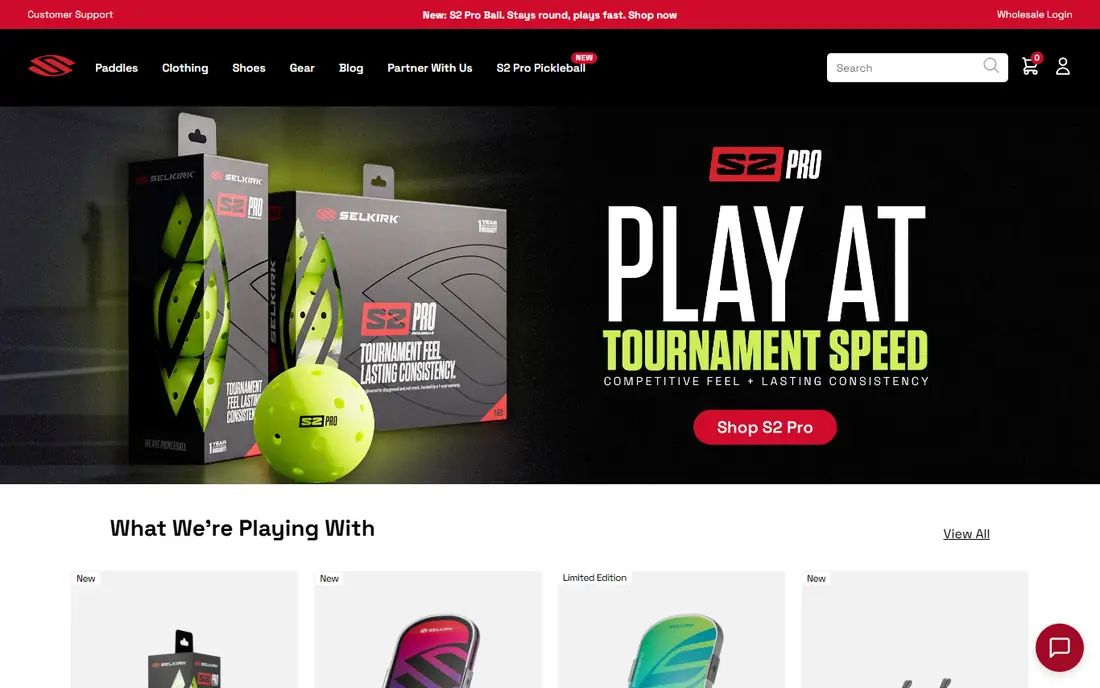
Selkirk is the best known dedicated American pickleball brand, and its range covers more player levels than most rivals. The SLK line puts a known name on a paddle a club player can buy without a premium price, with models such as the SLK Halo Control noted in 2026 guides as a forgiving option under $100. At the top, LUXX Control Air suits soft game players, while Vanguard Power Air and Labs Boomstik suit power players who want pace from the baseline.
That breadth is both a strength and a problem. A new buyer faces many shapes, cores and surfaces, and two Selkirk paddles can feel very different despite a similar price. The brand helps with warranty support and a long track record, which matters when a premium paddle needs a replacement. Start with skill level and shape, then narrow to one Selkirk line, rather than comparing every model at once.
What we like- SLK line for beginners at lower prices
- LUXX and Vanguard lines for advanced play
- Strong warranty and support history
Watch out for- Large catalog can confuse new buyers
- Premium lines cost as much as rivals
Starting priceSee website
Free planNo
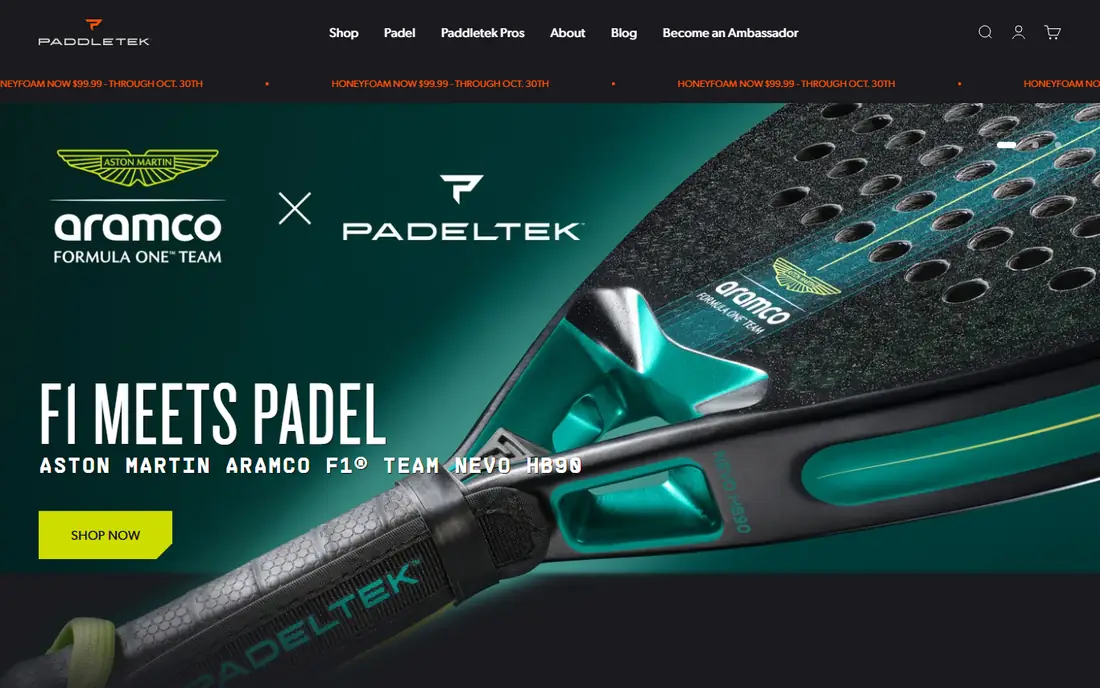
Paddletek has made paddles since well before the recent boom, and that history shows in a control first approach. The long running Bantam line includes models that favor resets, dinks and third shot drops, and newer multi-foam cores under raw carbon add spin without losing that soft feel. For a player who wins points at the kitchen line rather than from the baseline, Paddletek deserves a test session.
The brand does not chase every new carbon trend as loudly as newer rivals, so a power hungry player may find more pop elsewhere. Availability and model naming can also feel less clear than JOOLA or Selkirk, especially when comparing older and newer Bantam models. Paddletek fits a control player who values consistency over maximum power, and it fits less well for a player who wants the hardest hitting paddle on the market.
What we like- Long history in American pickleball
- Bantam line with proven control models
- New multi-foam cores under raw carbon
Watch out for- Less flashy than newer carbon brands
- Power models lag some rivals
Starting priceSee website
Free planNo
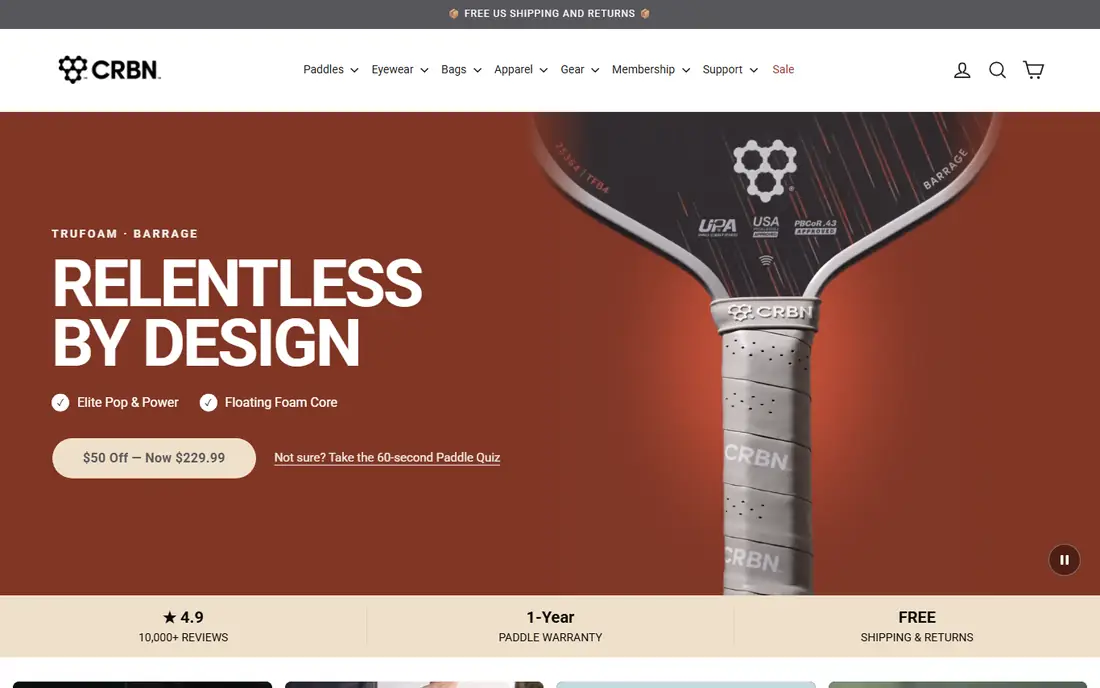
CRBN built its name on raw carbon faces, and players who prioritize spin often test CRBN early. The TruFoam Genesis line and the 3X series sit at the premium end, with foam cores designed to give a consistent feel and strong spin from the first weeks of play. For an intermediate to advanced player moving from a fiberglass entry paddle, the jump in spin and dwell time is easy to feel in a rally.
Premium pricing puts CRBN in the same bracket as JOOLA and Selkirk flagships, so value buyers should compare a CRBN model with Vatic Pro or an SLK model before committing. Feel also varies by core and thickness, and some players need a short adjustment period to trust the softer response on blocks. CRBN fits a spin first player who already controls the ball well, and it fits less well for a beginner who still needs maximum forgiveness.
What we like- Raw carbon faces with strong spin
- Foam core models at the premium end
- Pickleball only focus
Watch out for- Premium pricing
- Break-in and feel vary by model
Starting priceSee website
Free planNo
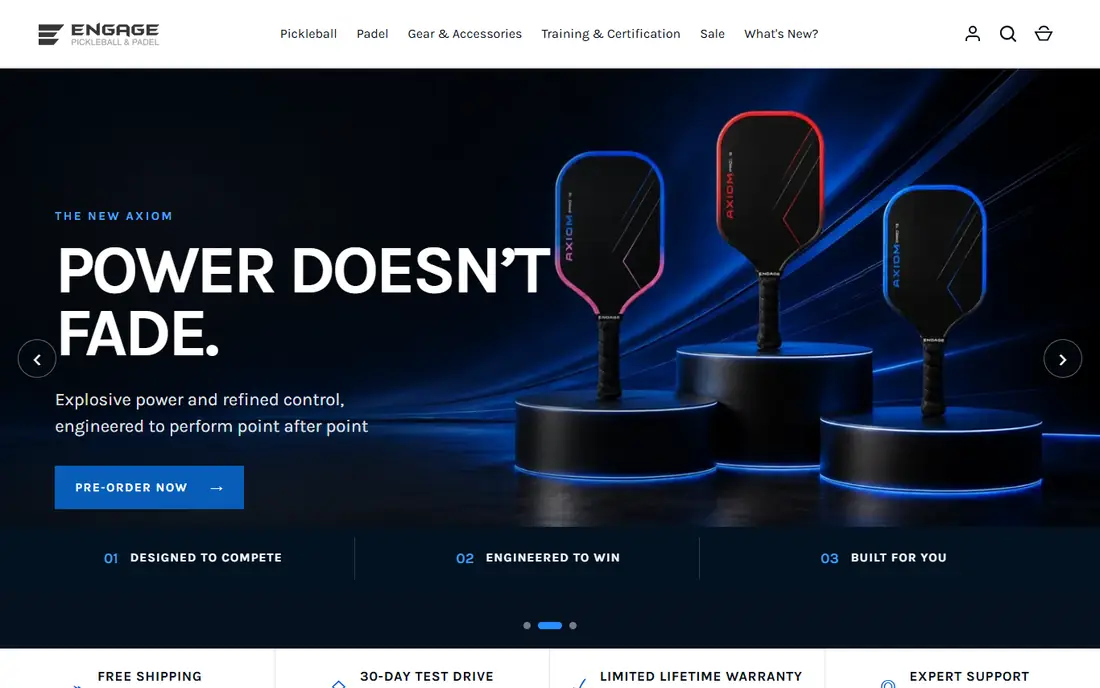
Engage has been in pickleball since before the boom, and its listings tend to be specific about core and edge construction. The Pursuit line, including Pursuit Pro models, suits players who value touch, placement and a predictable response on soft shots. A player who dinks well and wants a paddle that rewards placement over raw pace will find Engage a comfortable match.
Pro visibility is lower than JOOLA, and some Engage models feel more traditional next to newer foam core designs from CRBN or Six Zero. That traditional feel is not a flaw for a control player, but a power player may want more pop. Engage fits club players, doubles specialists and older players who protect their arm with a softer, more controlled paddle, and it fits less well for a young power player chasing maximum serve speed.
What we like- Long time maker with clear core and edge details
- Pursuit line for touch at the kitchen
- Good range of shapes
Watch out for- Less pro visibility than JOOLA
- Some models feel dated next to foam core rivals
Starting priceSee website
Free planNo
Gearbox takes a different structural path from almost every other brand here. Instead of a polymer honeycomb core, Gearbox builds around a solid carbon construction, which gives a distinct feel, a different sound and a durability story that appeals to players who crack or wear out honeycomb paddles. The CX14 line, including elongated models, suits singles players who cover more court and hit more drives.
That distinct feel divides players. Some love the direct response and power, while others miss the softer honeycomb feel on dinks and resets. Entry level choice is also thinner than Selkirk or JOOLA, so a beginner may need to spend more to try Gearbox. Test a Gearbox paddle for a full session, not just a few hits, since the solid build feels different after the first rally and that difference decides whether it suits your game.
What we like- Solid carbon construction instead of honeycomb
- Distinct feel and durability
- CX14 models for singles players
Watch out for- Feel divides players
- Fewer entry level options
Starting priceSee website
Free planNo
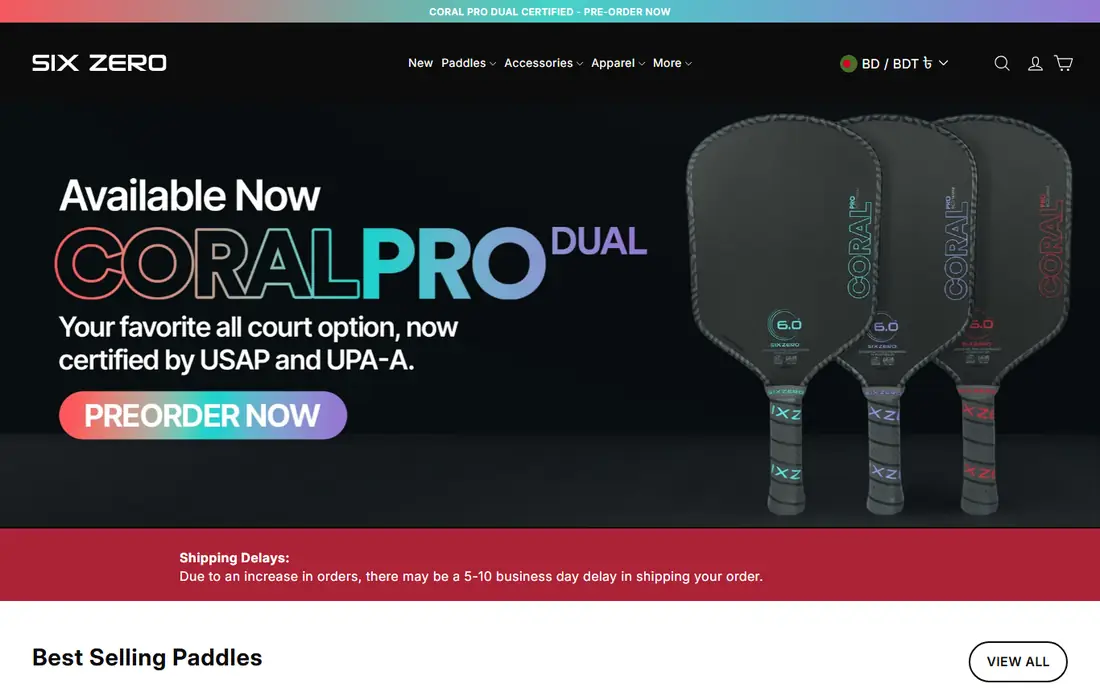
Six Zero grew from a smaller brand into a name that competitive club players mention in the same breath as JOOLA and Selkirk. The Double Black Diamond suits 4.0 plus players who want power with control, while Black Opal suits all-court players who want a balanced response across drives, dinks and resets. That modern, control leaning design appeals to players who want spin without giving up touch.
Premium pricing and occasional limited availability are the main limits. A buyer may wait for a restock on a popular model, and a new player may not need the precision that justifies the price. Six Zero fits an improving player who already knows their shape and thickness preferences, and it fits less well as a first paddle bought on brand name alone.
What we like- Double Black Diamond for 4.0 plus play
- Black Opal for all-court control
- Strong reputation among competitive club players
Watch out for- Premium pricing
- Availability can be limited
Starting priceSee website
Free planNo

Vatic Pro built a following by offering carbon feel at a price that undercuts most premium brands. The Prism Flash, listed at $99 in 2026 guides, gives new and intermediate players a large sweet spot, solid spin and a build that can grow with skill, rather than a paddle that feels cheap after a month. That value makes Vatic Pro a smart first serious paddle for a player moving up from a starter set.
The trade-off is scale. Tour visibility, retail presence and support infrastructure are thinner than JOOLA or Selkirk, and some players prefer a larger brand for warranty peace of mind. Vatic Pro also suits fewer extreme power or control niches, since its range is smaller. For a budget conscious player who wants real carbon performance without a premium price, Vatic Pro is hard to beat, and it remains useful as a backup paddle even after an upgrade.
What we like- Prism Flash listed at $99 in 2026 guides
- Strong spin and feel for the price
- Good bridge from beginner to intermediate
Watch out for- Less tour visibility
- Warranty and support are thinner than large brands
How we chose
We reviewed vendor listings, retailer guides and public reviews on Reddit and review sites, and we compared core type, face material, shape, thickness, price tier and player level fit. We favored brands that exist now, publish current models, and appear in USA Pickleball approved listings, and we marked prices as See website when a brand sells many models at many prices. We did not rank brands on a single paddle, since one model rarely represents a whole company.
Buying by skill level and style
Match the paddle to your rating and your most common shot, not to a pro endorsement. A beginner needs forgiveness and a large sweet spot, an intermediate needs a balance of spin and control, and an advanced player can trade forgiveness for power or precision. Shape matters too, since an elongated paddle adds reach and power while a widebody paddle adds forgiveness at the kitchen line.
Core thickness and weight
A 16mm core usually gives more control, a softer feel and a larger sweet spot, while a 13mm or 14mm core usually gives more power and pop. Weight affects arm comfort and hand speed, so a player with elbow or shoulder concerns should test a lighter model and a softer core before buying a heavy power paddle. Grip size also matters, since a grip that is too large or too small changes wrist action and control.
When to spend more
Spend more when you play three or more times a week, when you compete, or when a cheaper paddle already limits your spin or control. Spend less when you play casually, when you are still learning basic shots, or when you need a paddle for guests and beginners. A $99 paddle that fits your game beats a $250 paddle that fights your swing, and a premium paddle only pays off when the player can use its spin and precision consistently.
Frequently asked questions
Which pickleball paddle company is best for beginners?
Selkirk SLK and Vatic Pro suit beginners best, because both offer forgiving models under $100 with a large sweet spot. JOOLA entry models also work, but beginners should avoid premium power models until basic dinks, serves and third shots are consistent. A widebody shape usually helps a new player more than an elongated power shape.
How much should a good pickleball paddle cost?
A good first serious paddle costs about $99 in 2026 guides, while premium competitive paddles often cost $200 to $300. Price alone does not decide quality, since core, face and shape matter more than brand. Buy the cheapest paddle that gives the control and spin you need, and upgrade only when your game outgrows it.
What is the difference between raw carbon and fiberglass faces?
Raw carbon faces usually give more spin and a softer, more controlled feel, while fiberglass faces usually give more power and a livelier response at a lower price. Beginners often start with fiberglass for power and forgiveness, then move to carbon for spin and control as their touch improves. Test both faces if possible, since feel varies by core and thickness too.
Do I need a thermoformed paddle?
Thermoformed edges usually add durability, a larger sweet spot and more consistent spin, and most premium paddles now use that construction. A casual player does not need it on day one, but a frequent player will notice the difference in edge durability and feel. Check the listing for thermoformed construction rather than assuming every carbon paddle includes it.
How long does a pickleball paddle last?
A paddle used several times a week can last a year or more, though spin texture, edge wear and core feel degrade with heavy play and outdoor use. Replace a paddle when spin drops clearly, when the face feels dead, or when edge damage affects play. Keep paddles out of extreme heat in a car, since heat can damage cores and surfaces faster than normal play.
Should I buy the paddle a pro uses?
Not necessarily. A pro paddle suits a pro swing, training volume and skill level, and the same model can feel too firm, too heavy or too powerful for a club player. Use pro models as a starting list, then test shape, thickness and weight at your level. The best paddle is the one that fits your game, not the one with the most famous name on it.
Sources we checked (4)
- https://popaddle.com/guides/pickleball-paddle-brands-ranked
- https://thereviewstore.com/best-pickleball-paddles-2026
- https://bestpicklepad.com/best-pickleball-paddles/
- https://11six24.com/blogs/pickleball/best-pickleball-paddle-brands
Is your product missing or out of date?
We review this list regularly. Vendors can request a listing, send updated pricing or ask about featured placement.

Shihab Mia · Founder, Rankite
Shihab has 5+ years in B2B and SaaS SEO. He writes Rankite's software buying guides from pricing pages, documentation and public user reviews. More about Shihab.