How we make this list: we compare pricing pages, product documentation and public user reviews. Ratings come from G2, Capterra or Trustpilot, with the date we checked them.
Key takeaways
- On page SEO tools analyze a page against top ranking competitors, showing gaps in keywords, structure, headings, and length.
- Surfer and Clearscope lead on content scoring, while MarketMuse and Frase lead on topic depth and briefs.
- Scores guide edits, but they do not replace good writing, since chasing a perfect score can produce stiff, keyword stuffed pages.
- Use audits to find technical on page issues, such as missing titles, thin content, and slow pages, beside content scores.
- Measure rankings and traffic after edits, since a higher score means little if the page does not move.
Quick comparison
| Tool | Best for | Starting price | Free plan |
|---|
 Surfer SEO | Content Editor scores | See website | Free trial |
 Clearscope | Content grading | See website | Free trial |
 Frase | Briefs and optimization | See website | Free trial |
 MarketMuse | Topic authority | See website | Free trial |
 PageOptimizer Pro | On page audits | See website | Free trial |
 Yoast SEO | WordPress on page checks | See website | Free |
 Rank Math | WordPress SEO plugin | See website | Free |
 SE Ranking | All in one SEO audits | See website | Free trial |
Is your product missing or out of date?
We review this list regularly. Vendors can request a listing, send updated pricing or ask about featured placement.
The best on-page seo analysis tools
#1Surfer SEO
Best for: Content Editor scores4.8/5 on
G2 (546 reviews, checked Oct 2026)
Visit surferseo.com
Starting priceSee website
Free planFree trial

Surfer SEO Content Editor scores a draft against top ranking pages for a keyword, with guidance on word count, headings, keywords, and structure. The audit tool reviews existing pages and lists on page fixes by priority, while SERP analysis shows what competitors cover. Writers get a clear target, which helps teams optimize consistently.
Scores can mislead when writers chase numbers over readability, since a high score does not guarantee a good page. Pricing follows credits and seats. For a team that wants clear, actionable on page scores, Surfer offers the most popular editor.
What we like- Clear content scores
- SERP based guidance
- Audit tools
Watch out for- Scores can mislead
- Pricing per credits
Starting priceSee website
Free planFree trial
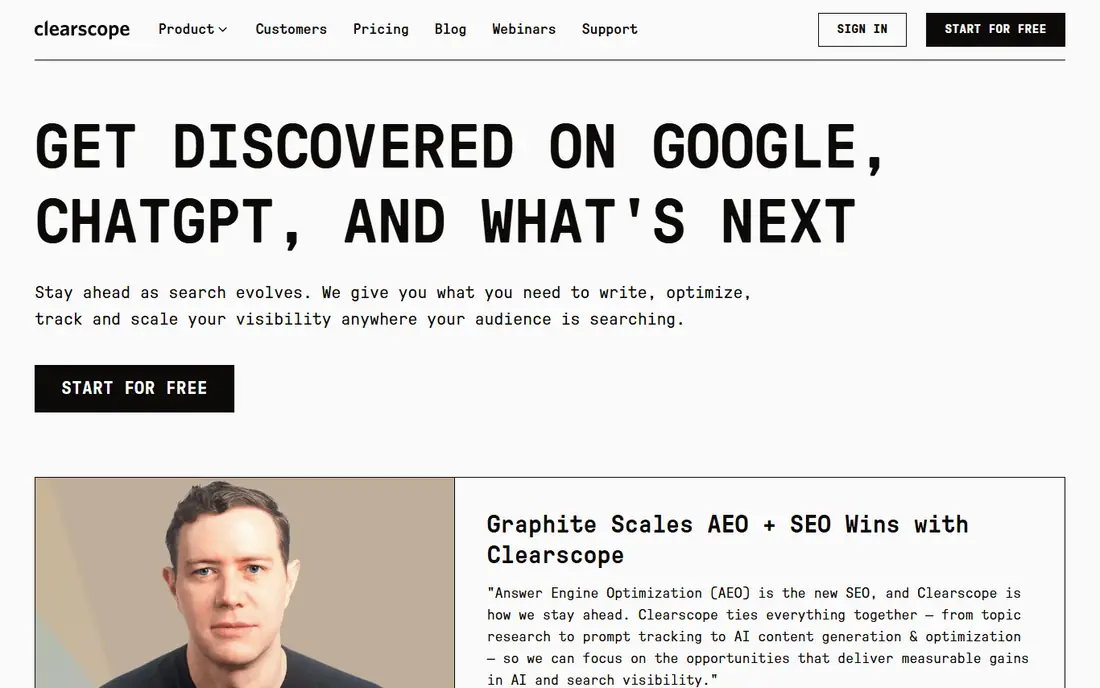
Clearscope grades content from A++ to F based on keyword coverage and relevance to top ranking pages, with reports that list terms to include and competitor outlines. Google Docs integration lets writers optimize inside their draft, and the simple grade helps non SEO writers understand targets. The interface stays focused, without the clutter of all in one suites.
Prices run higher than some rivals, and technical audit features are thinner, so Clearscope suits content teams more than technical SEOs. For a content team that wants a simple, trusted grade, Clearscope leads on clarity.
What we like- Simple grading
- Keyword reports
- Google Docs integration
Watch out for- Higher prices
- Fewer technical audit features
#3Frase
Best for: Briefs and optimization4.8/5 on
G2 (311 reviews, checked Oct 2026)
Visit frase.io
Starting priceSee website
Free planFree trial
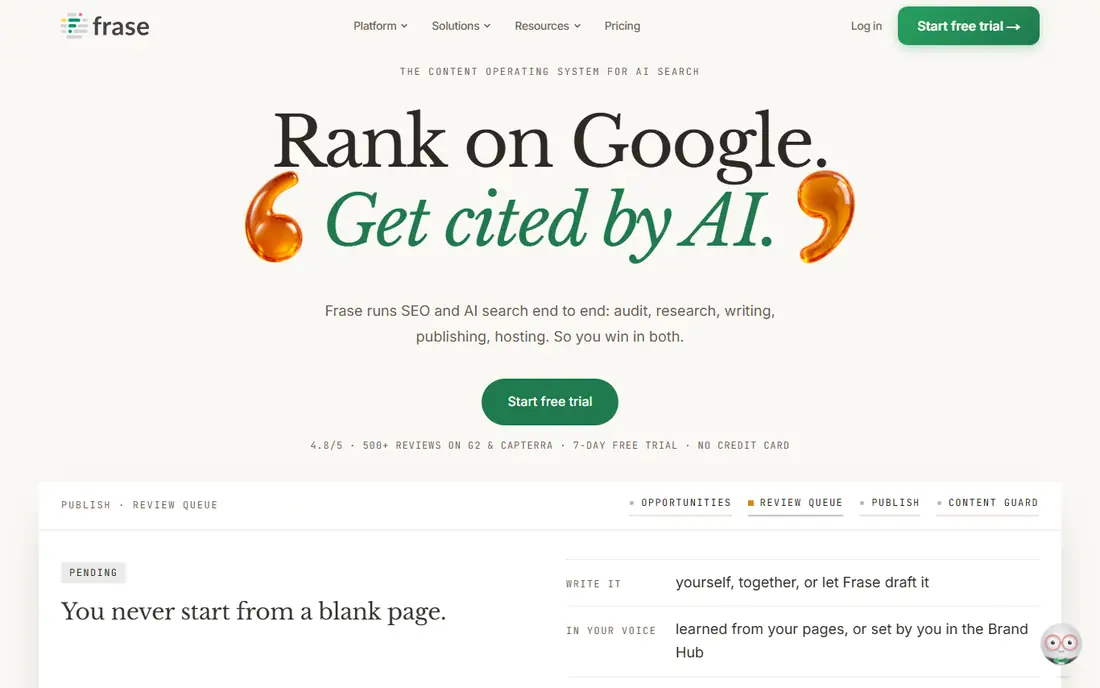
Frase builds briefs from search results, showing competitor headings, questions, and topics, then scores drafts as writers optimize. The brief workflow helps teams plan pages before writing, which prevents thin or off topic drafts. AI writing assists where a section needs expansion, while optimization scores guide final edits.
Scores are simpler than Surfer, and bulk features are thinner, so Frase suits quality focused teams more than high volume programs. For a team that plans with briefs and optimizes in one tool, Frase offers a smooth workflow.
What we like- Briefs from SERP
- Optimization scores
- AI writing
Watch out for- Scores are simpler
- Bulk features are thinner
Starting priceSee website
Free planFree trial
MarketMuse models topic authority, showing which topics a site covers well, where gaps exist, and how a page should expand to build authority. Content inventory tools audit existing pages for depth and freshness, while briefs guide new pages toward comprehensive coverage. The approach suits sites competing on expertise, not only single keywords.
Enterprise pricing and a learning curve put MarketMuse beyond small teams, though trials let teams test topic models. For a site that wants to build topic authority systematically, MarketMuse offers the deepest analysis.
What we like- Topic modeling
- Content inventory
- Authority scores
Watch out for- Enterprise pricing
- Learning curve
Starting priceSee website
Free planFree trial
PageOptimizer Pro, known as POP, runs detailed on page audits that compare a page against competitors on dozens of factors, from headings and keywords to schema and internal links. Action lists rank fixes by impact, which helps SEOs prioritize edits. The tool suits technical SEOs who want depth over simplicity.
The interface is dense for beginners, and the brand is smaller than Surfer or Clearscope, though practitioner feedback is strong. For a technical SEO who wants a thorough on page audit, PageOptimizer Pro gives detailed, prioritized guidance.
What we like- Detailed on page audits
- Competitor comparison
- Action lists
Watch out for- Interface is dense
- Smaller brand
#6Yoast SEO
Best for: WordPress on page checks4.5/5 on
G2 (187 reviews, checked Oct 2026)
Visit yoast.com
Starting priceSee website
Free planFree
Yoast SEO, the standard WordPress SEO plugin, checks titles, meta descriptions, readability, and keyword use inside the WordPress editor, with schema output for search engines. The free tier covers basic on page checks, while premium adds internal link suggestions, redirect management, and AI features. Millions of WordPress sites rely on Yoast for baseline on page hygiene.
WordPress only limits use for other platforms, and premium features sit behind a subscription. For a WordPress site that needs reliable on page checks in the editor, Yoast remains the default choice.
What we like- WordPress standard
- Readability checks
- Schema output
Watch out for- WordPress only
- Premium features are paid
#7Rank Math
Best for: WordPress SEO plugin4.7/5 on
G2 (117 reviews, checked Oct 2026)
Visit rankmath.com
Starting priceSee website
Free planFree
Rank Math offers a rich free tier for WordPress, with on page checks, schema tools, redirect management, and Search Console integration, often at lower cost than Yoast premium. The setup wizard configures basics quickly, and the interface shows optimization scores inside the editor. Many WordPress users switch to Rank Math for its free depth.
WordPress only limits use elsewhere, and the many options can overwhelm beginners. For a WordPress site that wants a powerful free SEO plugin, Rank Math offers the best value.
What we like- Rich free tier
- Schema tools
- Analytics links
Watch out for- WordPress only
- Setup has many options
#8SE Ranking
Best for: All in one SEO audits4.7/5 on
G2 (1,606 reviews, checked Oct 2026)
Visit seranking.com
Starting priceSee website
Free planFree trial
SE Ranking combines on page audits, rank tracking, backlink checks, and keyword research in one affordable suite. On page audits list technical issues, missing tags, and content gaps, while rank tracking shows whether fixes move rankings. The breadth suits small teams that want one SEO tool for several jobs.
Content scoring is lighter than Surfer or Clearscope, so teams needing deep content optimization pair SE Ranking with a dedicated editor. For a small team that wants audits, tracking, and research in one affordable tool, SE Ranking offers strong value.
What we like- On page audits
- Rank tracking
- Backlink checks
Watch out for- Content scoring is lighter
- Interface is broad
How we chose
We compared content scoring quality, audit depth, keyword guidance, ease of use, platform support, pricing, and public SEO practitioner feedback. We favored tools that give actionable, prioritized fixes and show SERP based evidence, rather than tools that only report a vague score. No hands on testing is claimed, and prices are shown as Free where a free tier exists, or See website where pricing varies.
Using on page scores without ruining good writing
Treat a content score as a checklist, not a target to max out, since natural writing that answers the query beats a stiff page stuffed with every suggested term. Cover the topics and questions competitors cover, but add your own experience, examples, and data, since original value separates ranking pages from copycat pages. Edit for readability after optimization, reading the page aloud to catch awkward keyword insertions.
Audits, structure, and measurement
Run a technical audit monthly, fixing missing titles, duplicate meta descriptions, broken links, and thin pages before chasing content scores. Structure pages with clear headings that match search intent, since headings guide both readers and search engines through the content. After edits, wait several weeks, then check rankings and traffic, since on page changes take time to register. A page that rises after a modest edit teaches more than a page that scores perfectly but never moves.
When scores disagree and what to trust
Different tools score the same page differently, since each uses its own model and competitor set, so do not chase agreement across tools. Pick one primary tool for consistency, use a second tool only for spot checks, and trust user behavior, such as time on page and conversions, over any score. If readers stay, scroll, and convert, the page works, whatever a tool says. Scores serve the page, not the other way around.
Before you decide
Check titles and meta descriptions by hand after any tool audit, since tools flag missing tags but cannot judge whether a title actually earns a click. Fix duplicate titles across your site before you optimize single pages, because duplicates confuse search engines about which page should rank for a query. Add internal links from high authority pages to pages you optimize, since a well optimized page with no internal links often stays buried and unvisited. Review the top three ranking pages for your keyword before you edit, noting what they cover that your page misses, instead of trusting a tool score alone. Keep a simple log of on page changes and ranking shifts, so you learn which edits help and stop repeating edits that never move results. Revisit optimized pages after three months, since competitors update their pages and a score that was strong at launch fades as the SERP changes. A quarterly refresh keeps strong pages strong.
Frequently asked questions
What is the best on page SEO tool for beginners?
Surfer SEO offers the clearest editor for beginners, with scores and guidance that are easy to follow, while Yoast or Rank Math suit WordPress beginners inside the editor. Start with one tool and learn its guidance before adding a second. A simple tool used well beats a complex tool used poorly.
Do content scores guarantee rankings?
No, since scores measure similarity to top pages, not quality, authority, or user satisfaction, which also drive rankings. A high score page with thin value may still lose to a lower score page with original insight. Use scores to find gaps, then add value that competitors lack.
How often should I audit on page SEO?
Audit technical on page issues monthly, and review content scores when a page drops in rankings or when competitors publish stronger pages. New pages deserve a pre publish check for titles, headings, and meta descriptions. Regular small audits beat rare massive overhauls.
Can I use two on page tools at once?
Yes, but pick one primary tool to avoid conflicting guidance, and use the second only for spot checks or audits. Chasing two different scores at once produces confused, over optimized pages. Consistency matters more than covering every tool opinion.
Is Yoast or Rank Math better for WordPress?
Both cover WordPress on page basics well, with Yoast offering the longer track record and Rank Math offering a richer free tier. Try the free tier of each on a test post, and pick the interface your team prefers. Either plugin handles titles, meta, readability, and schema reliably.
Sources we checked (8)
- https://surferseo.com
- https://www.clearscope.io
- https://www.frase.io
- https://www.marketmuse.com
- https://pageoptimizer.pro
- https://yoast.com
- https://rankmath.com
- https://seranking.com
Is your product missing or out of date?
We review this list regularly. Vendors can request a listing, send updated pricing or ask about featured placement.

Shihab Mia · Founder, Rankite
Shihab has 5+ years in B2B and SaaS SEO. He writes Rankite's software buying guides from pricing pages, documentation and public user reviews. More about Shihab.