How we make this list: we compare pricing pages, product documentation and public user reviews. Ratings come from G2, Capterra or Trustpilot, with the date we checked them.
Key takeaways
- This guide covers email services for personal and business use, since "mail service" in software lists means email providers, not postal delivery.
- Google Workspace starts at 7 dollars per user per month with 30 GB pooled storage, and Microsoft 365 Business Basic starts near 6 to 7 dollars with a 50 GB mailbox plus 1 TB OneDrive.
- Zoho Mail starts at 1 dollar per user per month, the cheapest credible custom domain email, with a free tier for small teams.
- Proton Mail and Tuta offer end to end encryption by default, while Gmail and Outlook do not encrypt mail end to end for ordinary accounts.
- Transactional sending services such as Postmark and AWS SES are not inbox email, so they are excluded here despite appearing in some business lists.
Quick comparison
| Tool | Best for | Starting price | Free plan |
|---|
 Gmail | Best overall email | Free | Yes |
 Outlook | Corporate productivity | Free | Yes |
 Proton Mail | Maximum security and privacy | Free | Yes |
 Zoho Mail | Budget conscious small business | $1 per user per month | Yes |
 Fastmail | Ad free speed and efficiency | $5 per user per month | No |
 Yahoo Mail | Massive free storage | Free | Yes |
 iCloud Mail | Apple ecosystem users | Free | Yes |
 Tuta Mail | Open source encrypted email | Free | Yes |
Is your product missing or out of date?
We review this list regularly. Vendors can request a listing, send updated pricing or ask about featured placement.
The best mail service
Starting priceFree
Free planYes
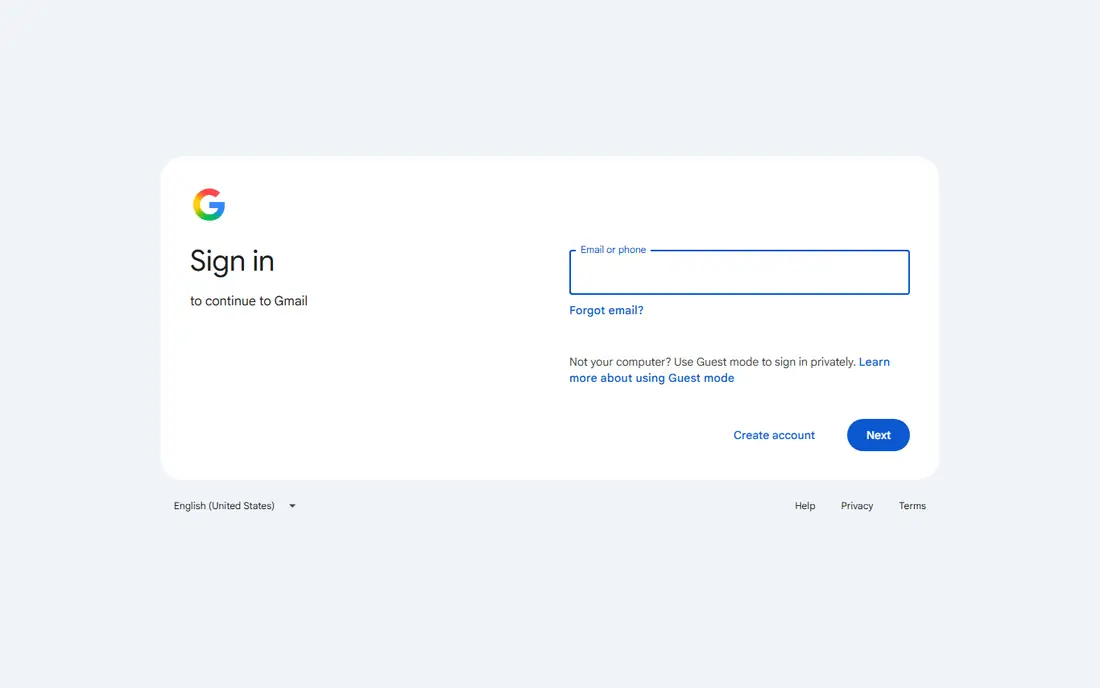
What we like- Gmail offers 15 GB of free storage shared with Drive and Photos, the best search and spam filtering in the category, and excellent mobile apps. Google Workspace Business Starter adds Gmail on a custom domain with Docs, Drive, and Meet for 7 dollars per user per month with 30 GB pooled storage. The interface is familiar to most users, and integrations span the whole Google ecosystem.
Watch out for- Gmail does not offer end to end encryption for ordinary accounts, with S/MIME only on Enterprise plans. Storage is shared across Gmail, Drive, and Photos, so heavy file users hit the 15 GB free limit fast. Privacy minded users object to Google's ad and data model, even though paid Workspace accounts carry no ads.
#2Outlook
Best for: Corporate productivity4.5/5 on
G2 (3,546 reviews, checked Oct 2026)
Visit outlook.com
Starting priceFree
Free planYes
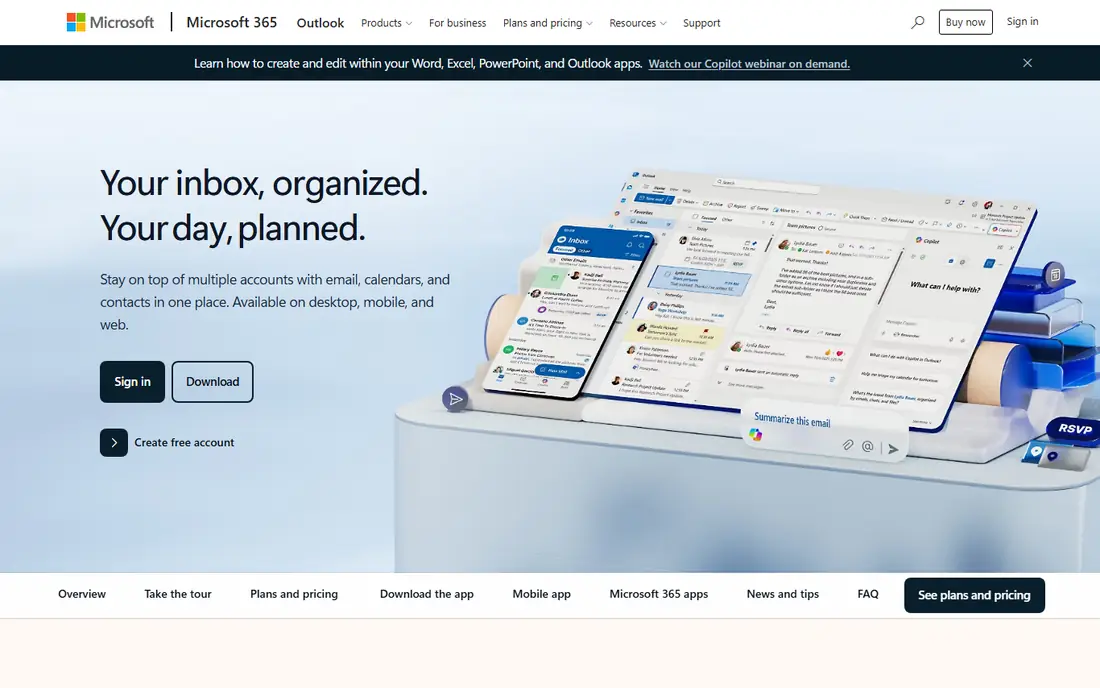
What we like- Outlook pairs a 15 GB free mailbox plus 5 GB cloud storage with advanced calendar and task organization, and Microsoft 365 Business Basic adds a 50 GB mailbox plus 1 TB OneDrive for near 6 to 7 dollars per user per month. Exchange calendaring is unmatched for business scheduling, and desktop Outlook plus Teams suit Office centric workplaces. Compliance tools are stronger than Gmail for regulated teams.
Watch out for- Outlook does not offer end to end encryption for ordinary accounts, with Purview protection only on premium plans. The admin center has a steeper learning curve than Google Workspace, and Outlook itself feels heavy next to Gmail or Fastmail. Plan structure is genuinely confusing, with many tiers and add-ons.
Starting priceFree
Free planYes
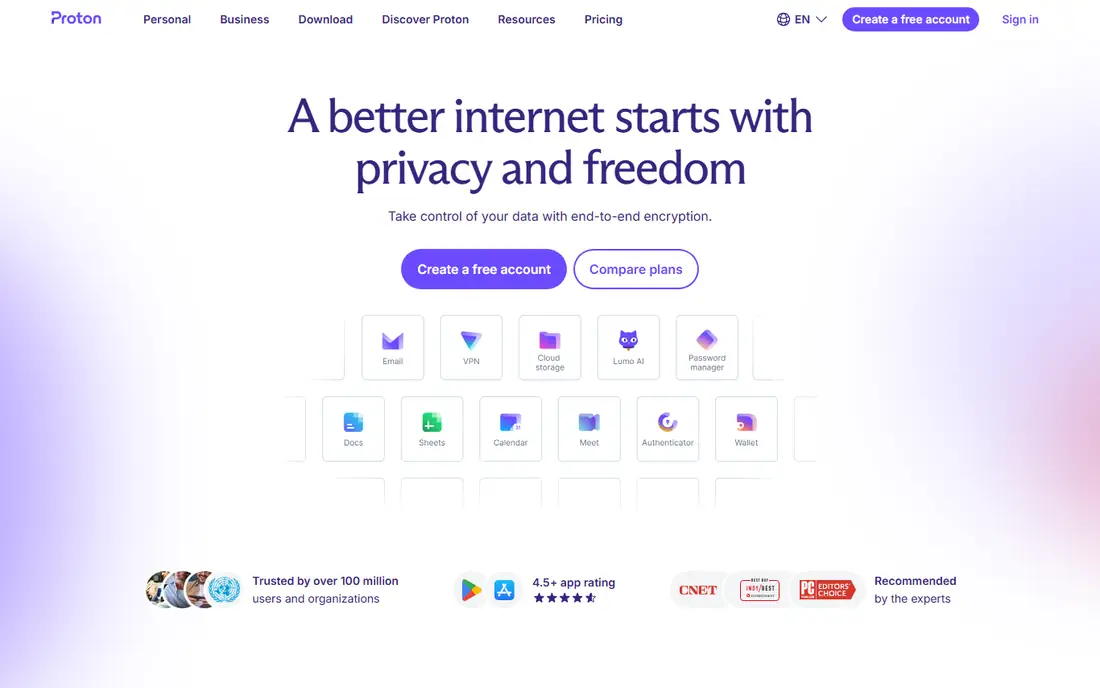
What we like- Proton Mail offers Swiss zero access end to end encryption by default, with anonymous signup and a free tier of 500 MB up to 1 GB. Paid Mail Plus starts near 3.99 to 4.99 dollars per month with 15 GB storage and custom domain support, and business plans run 6.99 to 10.99 dollars per user per month. Swiss data residency suits privacy first users and regulated work.
Watch out for- Desktop clients need the Bridge app for some mail clients, which adds setup friction. Storage on the free tier is small, and the ecosystem of calendar, drive, and VPN costs extra beyond mail. Search is limited by encryption, since the server cannot read message contents to index them fully.
Starting price$1 per user per month
Free planYes
What we like- Zoho Mail offers the cheapest credible custom domain email, with Mail Lite at 1 dollar per user per month for 5 GB, premium plans at 1 to 4 dollars, and a free tier for up to 5 users with 5 GB each on a single domain in select regions. It supports S/MIME and PGP encryption, custom domains including on the free plan, and integration with Zoho CRM and office tools. It is the obvious answer for a startup that needs professional addresses without a per seat bill.
Watch out for- The ecosystem is smaller than Google or Microsoft, with fewer native collaboration features. The interface feels dated next to Gmail, and support is thinner than the big two. Free tier availability varies by region, so confirm eligibility before depending on it.
Starting price$5 per user per month
Free planNo
What we like- Fastmail offers a clean, ad free, privacy minded inbox with lightning fast archive search, 1Password sync, and JMAP native performance, starting near 5 dollars per user per month on Standard with 30 GB storage. It suits email focused teams who hate upsells, since there is no office suite or ad model pushing other products. The interface is opinionated and fast, and masked email aliases protect the real address.
Watch out for- There is no free plan, so evaluation requires a trial. There is no full office suite, so teams needing Docs or Office integration must pair it with another vendor. Storage tops out lower than Google Workspace or Microsoft 365 at comparable prices.
Starting priceFree
Free planYes
What we like- Yahoo Mail offers massive free storage, with reports listing 20 GB on the free tier and 1 TB in some comparisons, plus built in coupon and subscription managers. Mail Plus costs near 5 dollars per month for 200 GB storage, no ads, and forwarding. It suits casual users who want a large free mailbox with a classic web portal and news feed.
Watch out for- Yahoo Mail does not support custom domains, and it does not offer end to end encryption. The interface carries ads on the free tier, and the service has suffered large historical data breaches, which still shapes its reputation. Business features lag Gmail, Outlook, and Zoho.
Starting priceFree
Free planYes
What we like- ICloud Mail integrates deeply with Apple devices, with Hide My Email burner addresses, custom email domain support on iCloud Plus plans from 0.99 to 9.99 dollars per month, and storage from 50 GB to 2 TB. It suits all Apple shops, especially small teams under 5 users who already live in the Apple ecosystem. Privacy positioning is stronger than Gmail or Yahoo, with no ad based mail scanning.
Watch out for- Custom domain support is limited compared with Google Workspace or Zoho, and the service suits Apple users far better than Windows or Android users. Business admin tools are thinner than Microsoft 365 or Google Workspace. Storage is shared across iCloud services, so photos and backups compete with mail.
Starting priceFree
Free planYes
What we like- Tuta Mail, formerly Tutanota, offers open source encrypted email with complete metadata and subject line encryption, German GDPR anchored jurisdiction, and a free tier with 1 GB and no ads. Paid plans run near 3 to 3.30 dollars per month for 20 GB with custom domain support, making it the cheapest encrypted option here. Encrypted calendar and contacts come included.
Watch out for- The service is smaller than Proton Mail, with fewer integrations and a smaller ecosystem. Search is limited by encryption, and custom domain support sits on paid plans only. Business features lag Google Workspace and Microsoft 365, so it suits privacy teams more than general business use.
How we chose
We ranked services on storage, spam filtering, search quality, custom domain support, encryption, ecosystem fit, and published pricing. Services earned credit for free tiers, low cost custom domains, end to end encryption, and strong mobile apps. We excluded transactional sending services such as Postmark and AWS SES, since they are not inbox email, and we excluded marketing platforms such as Mailchimp, since they serve a different job. Figures come from published pricing and 2026 comparison reporting, and readers should confirm current terms directly, since storage limits and plan prices change.
How to choose the right mail service
Start with the tools your team already uses daily, not a generic best of list. Teams living in Gmail and Docs should pick Google Workspace, while Outlook and Teams centric shops should pick Microsoft 365, since switching ecosystems costs more than any per seat saving. Next, decide on privacy: if end to end encryption matters, pick Proton Mail or Tuta, and accept the search and ecosystem trade-offs. Then check custom domain needs: Zoho Mail offers the cheapest credible custom domain email, while Yahoo Mail offers none. Check storage honestly, since 15 GB shared across Gmail, Drive, and Photos feels tight for heavy file users, while a 50 GB mailbox plus 1 TB OneDrive at Microsoft suits file heavy teams. Finally, test migration friction before committing, since moving years of mail, filters, and aliases is painful, and confirm DMARC, DKIM, and SPF setup for your domain, since deliverability depends on those records, not just the provider.
Frequently asked questions
What is the best free email service?
Gmail offers the best overall free email, with 15 GB shared storage, top spam filtering, and search. Yahoo Mail offers larger free storage, while Proton Mail and Tuta offer free encrypted tiers with smaller storage.
Which email service is most private?
Proton Mail and Tuta offer end to end encryption by default, with Swiss and German jurisdiction respectively. Gmail and Outlook do not encrypt mail end to end for ordinary accounts, though both offer enterprise message protection options.
Can I use my own domain with these services?
Yes, except Yahoo Mail. Google Workspace, Microsoft 365, Proton Mail paid plans, Zoho Mail including its free tier in select regions, Fastmail, iCloud Plus, and Tuta paid plans all support custom domains.
How much storage do I need for email?
Most users manage on 15 to 30 GB, but heavy file users should pick 50 GB or more, since Gmail shares 15 GB across Drive and Photos. Business plans with 30 GB pooled or 50 GB mailbox plus cloud storage suit file heavy teams better.
What is the difference between inbox email and transactional email?
Inbox email is the mailbox people read, from providers such as Gmail or Zoho Mail. Transactional email sends app notifications and receipts at scale, from services such as Postmark or AWS SES, and those services do not provide a user inbox.
Should a small business pick Google Workspace or Microsoft 365?
Pick the ecosystem your team already uses: Google Workspace suits Docs and Sheets workflows with a simpler admin console, while Microsoft 365 suits Office document workflows with desktop apps and Exchange calendaring. Both start near 6 to 7 dollars per user per month.
Sources we checked (0)
Is your product missing or out of date?
We review this list regularly. Vendors can request a listing, send updated pricing or ask about featured placement.

Shihab Mia · Founder, Rankite
Shihab has 5+ years in B2B and SaaS SEO. He writes Rankite's software buying guides from pricing pages, documentation and public user reviews. More about Shihab.