How we make this list: we compare pricing pages, product documentation and public user reviews. Ratings come from G2, Capterra or Trustpilot, with the date we checked them.
Key takeaways
- Fees are the first comparison that matters, because a platform fee plus processing fees can take 5 percent or more of every gift.
- Tip-based platforms can cost a nonprofit nothing, but donors see a tip prompt at checkout, which some donors dislike.
- Schools need a different tool than nonprofits: Booster and Apex run in-person programs, while the other tools in this guide run online campaigns.
- A donor CRM matters once gifts repeat, because forms alone do not track retention, pledges, and follow-up well.
- The best choice often pairs a low-cost donation form with a separate event tool, rather than forcing one platform to do every job.
Quick comparison
| Tool | Best for | Starting price | Free plan |
|---|
 GoFundMe | Personal and community campaigns | $0 per month | Yes |
 Givebutter | All-in-one nonprofit fundraising | $0 per month | Yes |
 Donorbox | Fast donation forms | $0 per month | Yes |
 Zeffy | Zero-fee nonprofit fundraising | $0 per month | Yes |
 Booster | School fun runs and events | See website | No |
 Apex Leadership Co | School leadership fundraisers | See website | No |
 DonorPerfect | Donor management for growing nonprofits | $119 per month | Free trial |
 OneCause | Auctions and gala events | See website | No |
 Funraise | Online campaigns with donor profiles | See website | Yes |
Is your product missing or out of date?
We review this list regularly. Vendors can request a listing, send updated pricing or ask about featured placement.
The best fundraising companies
#1GoFundMe
Best for: Personal and community campaigns3.1/5 on
G2 (33 reviews, checked Oct 2026)
Visit gofundme.com
Starting price$0 per month
Free planYes
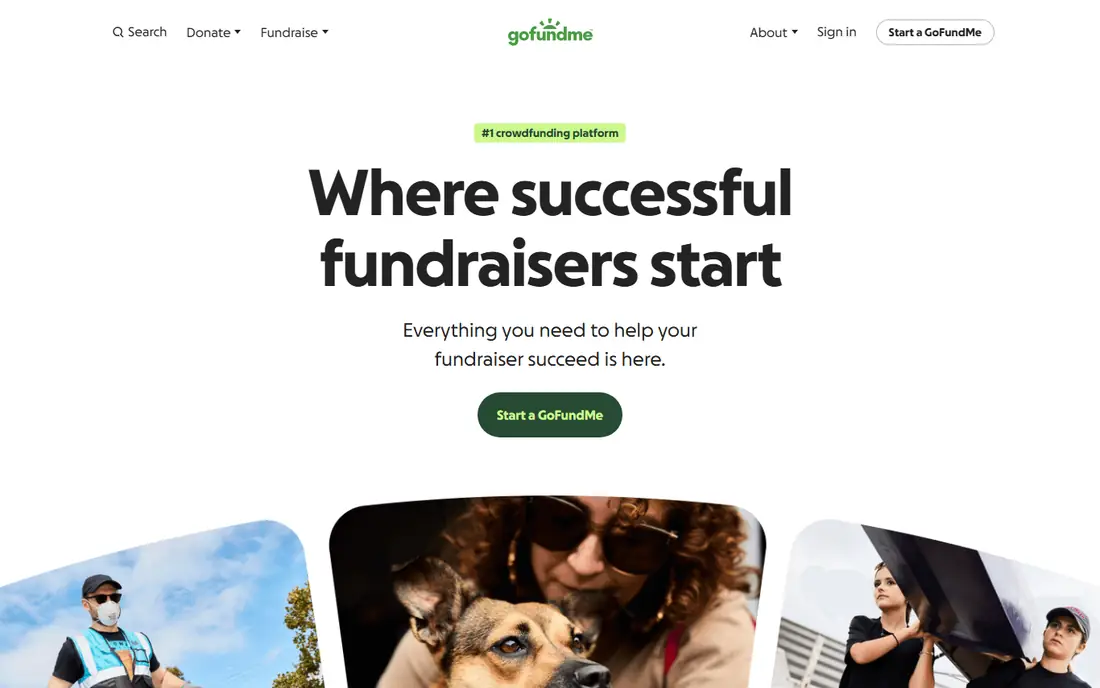
GoFundMe is the easiest place to start when one person, family, or community group needs to raise money fast. There is no fee to start a fundraiser, and most donors already know the name, which lowers friction at the moment of giving. Organizers can set a goal, write a story, share a link, and receive funds to a bank account without building a website or learning a CRM.
The limit shows up for nonprofits that need more than a single campaign page. GoFundMe charges a transaction fee of 2.9 percent plus 30 cents per donation on personal campaigns, with a lower rate for verified charities, and it asks donors for an optional tip. Nonprofits that need donor records, recurring gift management, and event tools will likely need GoFundMe Pro or a separate platform. For a one-time community appeal, though, few tools start faster.
What we like- No fee to start
- Familiar to donors
- Simple campaign setup and sharing tools
Watch out for- Limited donor management for nonprofits
- Processing fees still apply
#2Givebutter
Best for: All-in-one nonprofit fundraising4.7/5 on
G2 (2,256 reviews, checked Oct 2026)
Visit givebutter.com
Starting price$0 per month
Free planYes
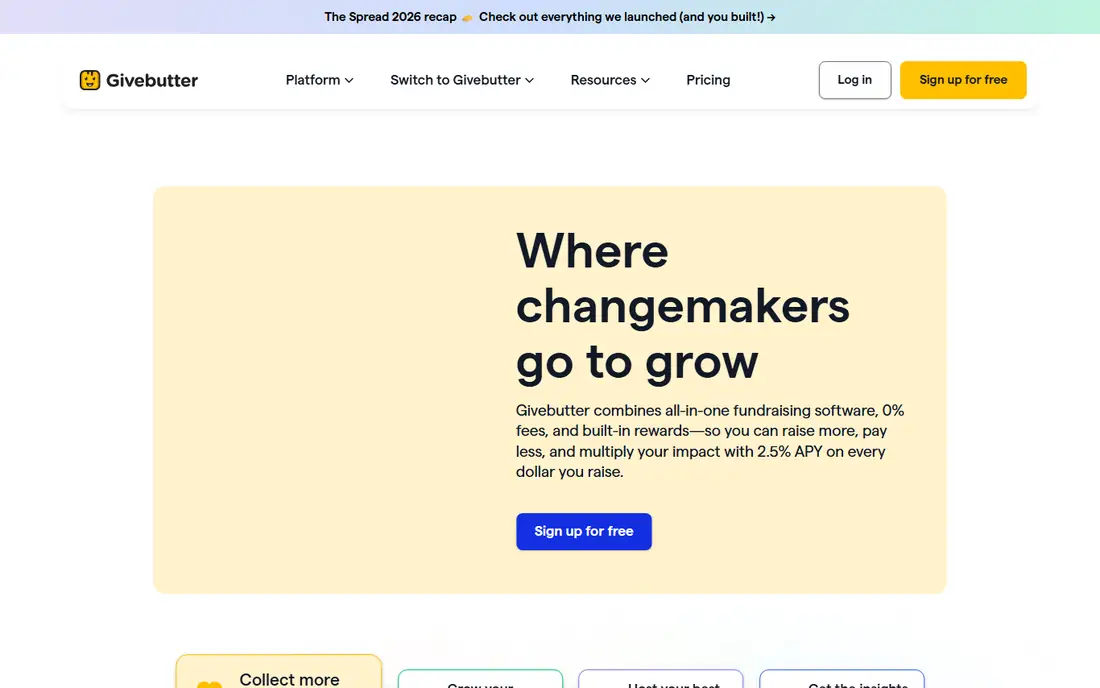
Givebutter has become a popular pick for small and mid-size nonprofits that want many campaign types without a monthly subscription. One account covers donation forms, fundraising pages, events, auctions, and peer-to-peer campaigns, with a built-in CRM for donor records and email and text outreach. With tips turned on, the core tools are free to the nonprofit, since donors are asked to cover costs with an optional tip.
The trade-off is transparency at checkout. If tips are turned off, Givebutter charges a flat 3 percent platform fee plus standard processing of 2.9 percent plus 30 cents for cards. Some donors will gladly add a tip, while others may feel pushed by the prompt. Givebutter Plus, from $29 per month, adds automation, deeper reporting, and advanced marketing tools for teams that outgrow the free plan.
What we like- Donation forms, events, auctions, and pages in one place
- Built-in donor CRM
- Givebutter Plus from $29 per month
Watch out for- Tip prompts can surprise donors
- Advanced marketing tools sit behind Plus
#3Donorbox
Best for: Fast donation forms4.6/5 on
G2 (1,515 reviews, checked Oct 2026)
Visit donorbox.org
Starting price$0 per month
Free planYes
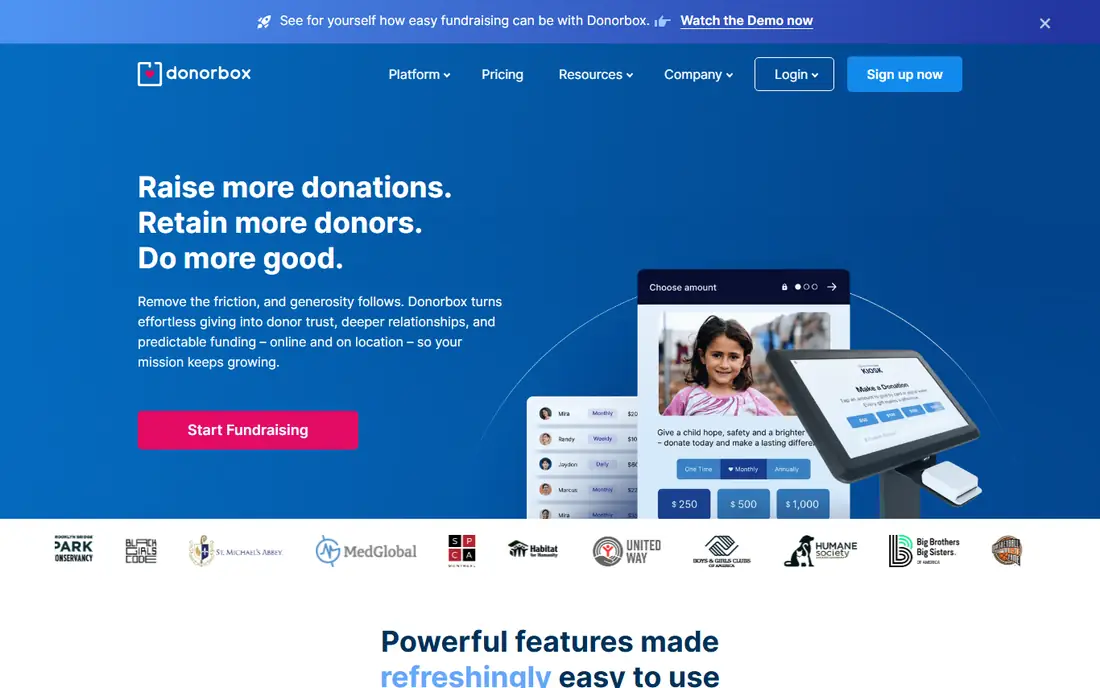
Donorbox is a strong choice when the main job is collecting donations through a clean form. Setup takes minutes, forms can be embedded on a website or hosted by Donorbox, and donors can give once or on a schedule through a personal portal. It accepts cards, PayPal, Venmo, Apple Pay, Google Pay, ACH, and other methods, which helps when donors prefer different ways to pay.
The cost needs a close read. The Standard plan has no monthly fee but charges a 2.95 percent platform fee for most features, plus Stripe or PayPal processing of about 2.2 percent plus 30 cents. The Pro plan costs $150 per month and cuts the platform fee to 1.75 percent. Small nonprofits should model both plans on their real gift volume before assuming that the free plan is the cheapest over a full year.
What we like- Quick setup with hosted pages
- Recurring giving and donor portal
- Many payment methods
Watch out for- Standard platform fee of 2.95 percent
- Lower fees require the $150 per month Pro plan
#4Zeffy
Best for: Zero-fee nonprofit fundraising4.9/5 on
G2 (3,373 reviews, checked Oct 2026)
Visit zeffy.com
Starting price$0 per month
Free planYes
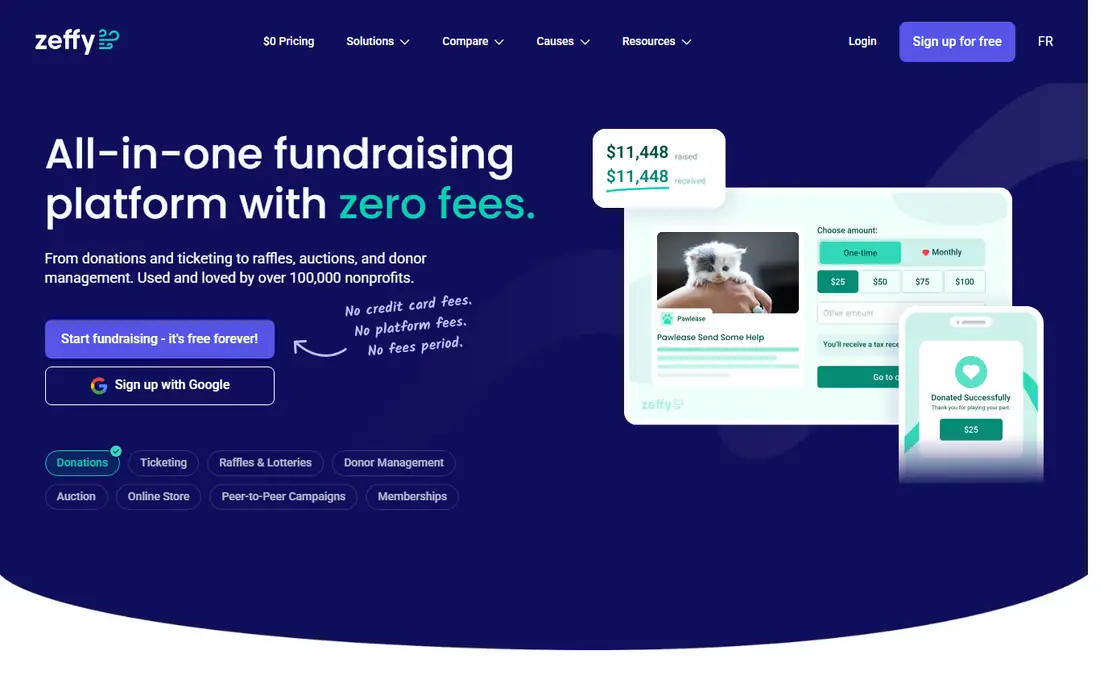
Zeffy stands out because its fee model is simple: nonprofits pay nothing, and donors are offered an optional contribution to Zeffy at checkout. That contribution is voluntary, and Zeffy states that the nonprofit still receives 100 percent of the donation even when a donor declines it. The platform covers donations, ticketing, raffles, auctions, peer-to-peer campaigns, memberships, and an online store, plus donor management and email tools.
The limits are eligibility and scale. Zeffy is built for registered nonprofits in the United States and Canada, so individuals and informal groups cannot use it. It also lacks the dedicated giving day infrastructure that community foundations use for large coordinated events with many participating nonprofits. For a single nonprofit running standard campaigns, however, the zero-fee model is hard to beat on cost alone.
What we like- No platform, monthly, or processing fees for nonprofits
- Donations, events, raffles, and auctions in one place
- Donor management included
Watch out for- Only for registered nonprofits in the United States and Canada
- No dedicated giving day infrastructure for large coordinated events
Starting priceSee website
Free planNo
Booster, known as Boosterthon, is a school fundraising company rather than a software platform. Schools pick a support level from platform-only help up to a full-service team on campus, and students collect pledges online before a Fun Run, Glow Run, Color Run, DanceFit, or Fit Games event. Booster provides marketing materials, announcement scripts, prize management, and an online platform where families share pages and donors give by card, Venmo, or Apple Pay.
The key question for a school is the share it keeps. Booster charges a percentage based on the level of support selected, and states that schools keep about 95 percent of funds on average when donors cover platform fees, with no upfront costs. That figure varies by plan, so a PTA should get the percentage, prize costs, and payment terms in writing before choosing between platform-only help and a full-service team.
What we like- Full-service event support
- Online pledge platform with prize management
- Marketing materials and event day staff at higher tiers
Watch out for- Pricing is a percentage based on support level
- Schools must book a call for a quote
Starting priceSee website
Free planNo
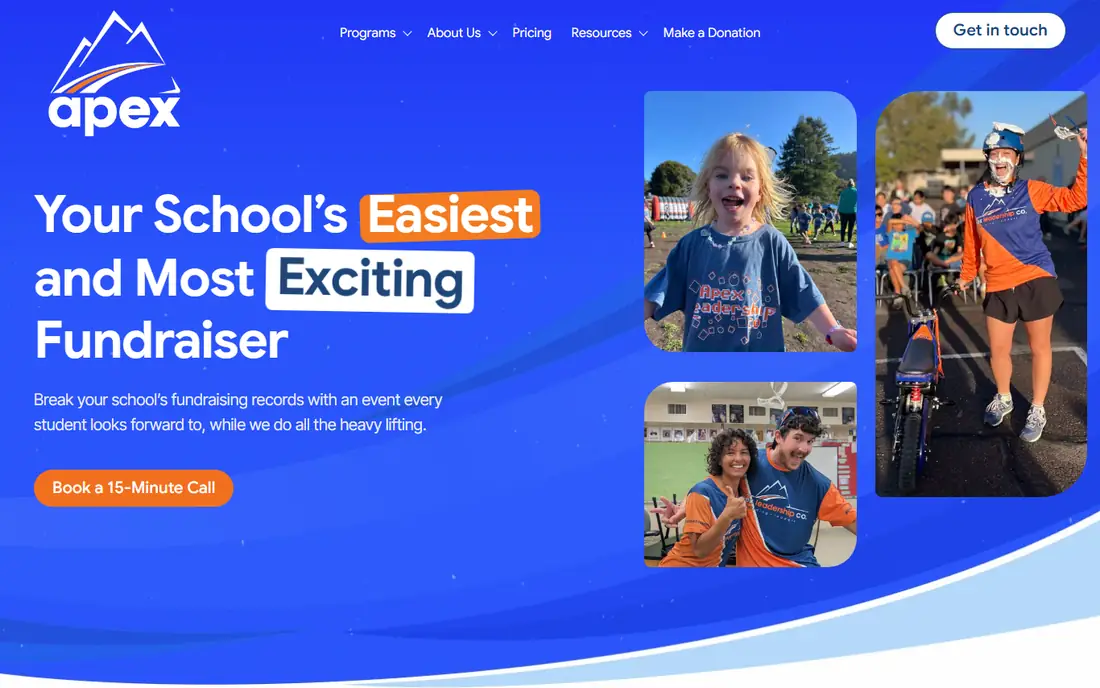
Apex Leadership Co pairs fundraising with a two-week leadership program, which sets it apart from a plain fun run vendor. Local coaches visit classrooms with short daily lessons on habits such as courage and integrity, then close the program with a fitness event such as a Glow Run, Remix, Color Games, or obstacle course. Students share pledge pages digitally, and every student joins the lessons and the final event regardless of how much money that student raises.
The trade-off is fit and coverage. Apex runs through local franchise owners, so availability and team quality can vary by area, and pricing is set by program rather than published as a flat rate. Schools that want a character program as well as a fundraiser may value that extra layer. Schools that only want a simple pledge drive may find a platform-only option cheaper and easier to run with volunteers.
What we like- Two-week leadership program with on-campus coaches
- Inclusive events for all students
- Digital pledge sharing
Watch out for- Pricing is quoted by program
- Availability depends on local franchise coverage
#7DonorPerfect
Best for: Donor management for growing nonprofits4.4/5 on
G2 (566 reviews, checked Oct 2026)
Visit donorperfect.com
Starting price$119 per month
Free planFree trial
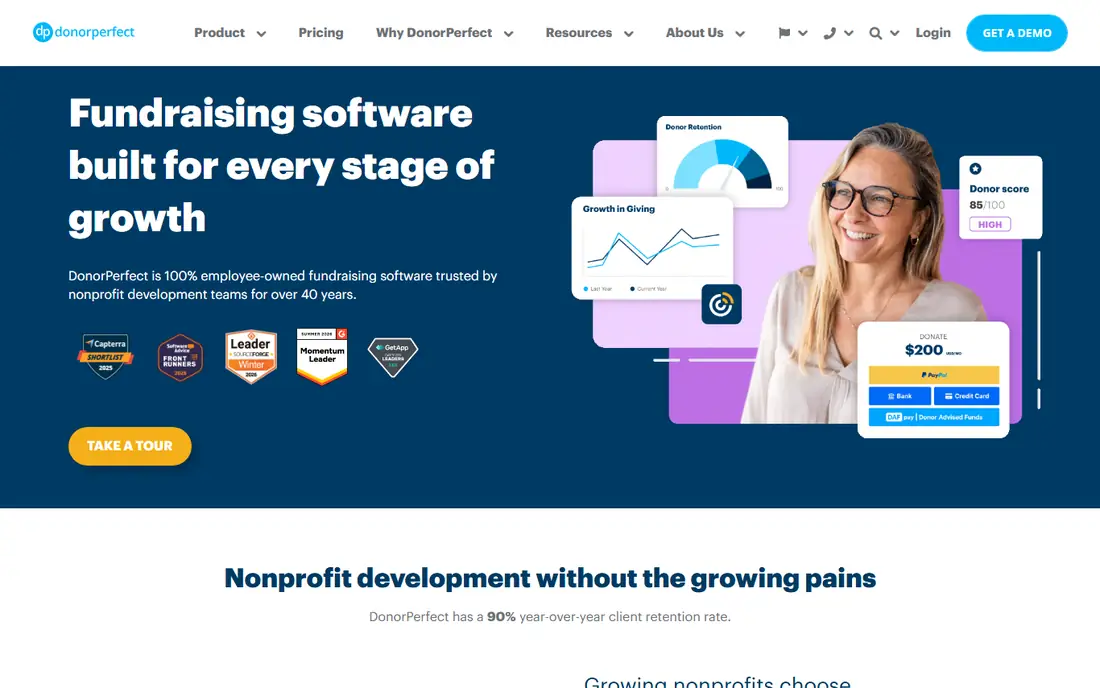
DonorPerfect is a donor CRM first and a fundraising form second, which makes it a better fit for nonprofits that already raise money regularly. Plans start at $119 per month, and the system tracks donor history, segments supporters, automates thank-you messages and tasks, and builds custom reports. Constant Contact email marketing is included in every plan, and online giving tools cover donation forms, events, and donor portals.
The cost is the main barrier. A small nonprofit that only needs a donation form will pay more here than on a free or tip-based platform, and moving donor data into a CRM takes planning. The payoff comes when a team uses the CRM daily: cleaner records, better retention follow-up, and reports that show which campaigns and segments actually bring gifts back. Teams that will not use those features should stay with a simpler tool.
What we like- Mature donor CRM with reporting and automation
- Constant Contact email included
- Donation forms and event tools
Watch out for- Higher starting cost than form-only tools
- Setup and data migration take time
#8OneCause
Best for: Auctions and gala events4.7/5 on
G2 (518 reviews, checked Oct 2026)
Visit onecause.com
Starting priceSee website
Free planNo
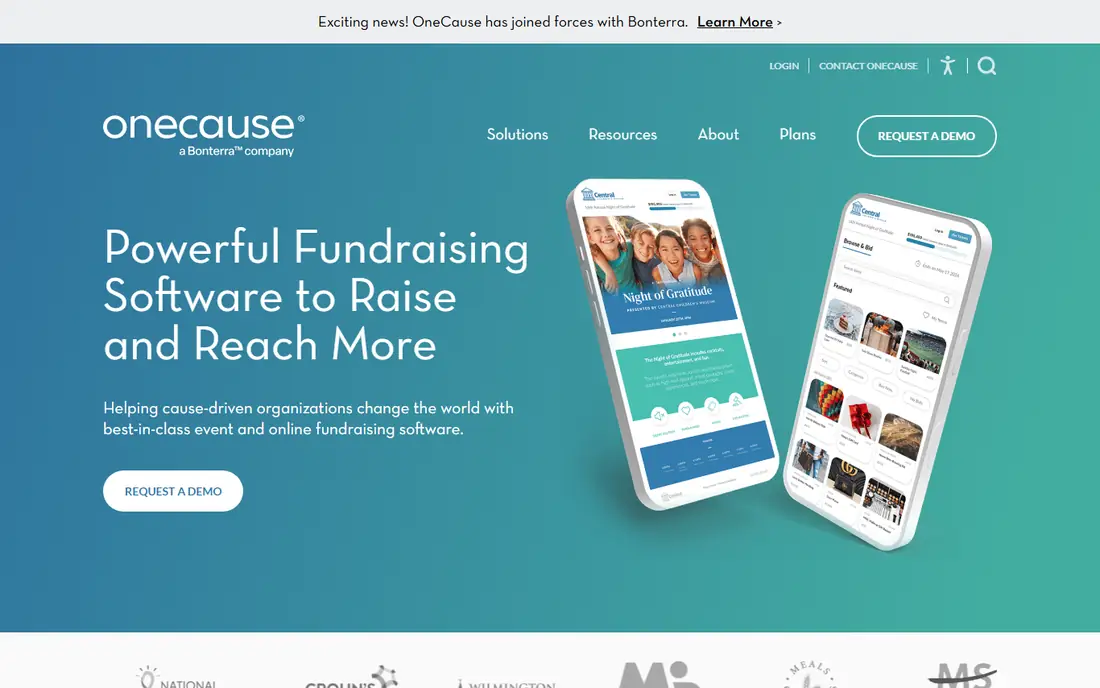
OneCause is built for event fundraising, especially auctions and galas, where the guest experience on the night matters as much as the donation form. Bidders can browse items, place bids from a phone, receive outbid alerts, and check out without long lines at the end of the night. Organizers also get ticketing, table management, guest lists, and reporting for auctions, golf outings, luncheons, and other ticketed events.
The cost structure needs care. OneCause offers a pay-as-you-go option starting at $200 with a 5 percent fee on funds raised, subject to a cap, and annual Professional Auction and Event plans quoted by the vendor. Occasional event organizers may find pay-as-you-go the safer start, while groups that run several events a year should compare the annual plan against the total fees they would pay per event.
What we like- Strong mobile bidding and auction tools
- Gala ticketing and table management
- Peer-to-peer and Text2Give options
Watch out for- No free plan
- Pricing is quote-based for annual plans
#9Funraise
Best for: Online campaigns with donor profiles4.4/5 on
G2 (32 reviews, checked Oct 2026)
Visit funraise.org
Starting priceSee website
Free planYes
Funraise suits nonprofits that want branded campaign pages and a donor system in one product. Its donation forms, fundraising websites, peer-to-peer pages, events, ticketing, and auctions sit alongside donor profiles, automated tasks, and reporting tools. That mix helps a team run an annual campaign, a peer-to-peer event, and recurring giving without stitching three tools together.
The honest catch is total cost. Funraise offers a free Essentials tier with a platform fee, while paid tiers add monthly subscription costs and change the platform fee rate. Teams should model subscription plus platform plus processing fees on their expected volume, and confirm which features, such as CRM depth and integrations, sit behind each tier. For teams that use the full suite, the price can be justified. For teams that only need a form, a simpler tool costs less.
What we like- Custom donation forms and fundraising websites
- Peer-to-peer and recurring giving
- Donor profiles with automated tasks
Watch out for- Paid tiers add subscription costs on top of platform fees
- Pricing details require a quote for higher plans
How we chose
We compared companies on fee structure, campaign types, donor management, school program support, event tools, and ease of setup for small teams. We read vendor pricing pages and homepages, checked public reviews on G2, Capterra, and Reddit, and looked at features such as recurring giving, peer-to-peer pages, mobile bidding, text giving, and CRM integrations. We favored companies with a real fundraising product in use today, and we mixed low-cost platforms with full-service school companies and event specialists so readers can compare an online form, a school program, and a gala tool side by side.
Picking the right model for your cause
Start with who is giving and how they will give. A personal appeal to friends and family needs a simple link and a familiar name. A nonprofit with repeat donors needs a CRM and recurring gifts. A school needs an event that students enjoy and a platform that parents can share. An auction needs mobile bidding that works in a noisy room. The wrong model wastes more money than a slightly higher fee.
Fees in plain terms
Separate three costs: the platform fee, the payment processing fee, and any monthly subscription. A 0 percent platform fee still leaves processing fees unless the vendor covers them, as Zeffy does. A tip model shifts costs to donors, which can mean zero cost to the nonprofit but a larger ask at checkout. Run the math on $10,000 raised: a 2.95 percent platform fee plus 2.2 percent processing is about $515 before per-gift fixed fees, while a $150 monthly plan plus lower fees may cost more or less depending on gift count.
Donor follow-up and retention
A first gift is only the start. Check whether the tool stores donor history, flags lapsed donors, sends thank-you messages automatically, and exports clean data for your CRM or email tool. Peer-to-peer tools should give each fundraiser a personal page, a progress bar, and easy sharing by text and email. Event tools should handle ticket sales, check-in, and checkout in one flow, so volunteers are not reconciling paper lists after the event.
School fundraisers need a separate check
For Booster and Apex, ask what share the school keeps, what prizes and materials are included, who staffs event day, and how donations are collected and paid out. Ask whether every student can join the event regardless of funds raised, and how the program handles students whose families cannot give. A strong school program should be inclusive by design, not only in its marketing.
Frequently asked questions
What is the cheapest way for a nonprofit to collect donations online?
For a registered nonprofit, a zero-fee platform such as Zeffy keeps the full gift, while tip-based platforms such as Givebutter cost nothing to the nonprofit when donors cover costs. Compare the donor experience as well as the fee, since a tip prompt or a higher checkout friction can reduce completion rates.
How much do payment processing fees add?
Card processing commonly runs 2.2 to 2.9 percent plus about 30 cents per gift, depending on the processor and nonprofit rate. That fee sits on top of any platform fee unless the vendor covers it. Some tools let donors cover processing fees with an optional checkbox, which many donors accept.
Should a school use Booster or Apex?
Both run managed school fundraisers, but Booster centers on fun run events with tiered support, while Apex adds a two-week leadership program with daily classroom lessons. Ask each vendor for the school's net share, event day staffing, and prize plan, then pick the program that fits your volunteers, calendar, and student age range.
Do I need a CRM if I only run one campaign a year?
Probably not. A simple form or campaign page is enough for a single appeal. A CRM becomes worth its cost when gifts repeat, when you run several campaigns, or when you need to track pledges, lapsed donors, and segmented follow-up across the year.
What makes a good auction platform?
Mobile bidding that is fast on a phone, clear item pages, outbid alerts, simple checkout, and reports that reconcile bids, tickets, and donations. Test the bidder view on a real phone before event night, and confirm how the platform handles payment failures and refunds.
Can donors give by text or at an event kiosk?
Yes on several tools in this guide. Donorbox and OneCause offer text giving, Donorbox offers a kiosk app for in-person gifts, and Givebutter and Zeffy cover event ticketing and in-person sales. Check which payment methods each option accepts, since text and kiosk flows may limit wallet options.
Sources we checked (9)
- https://www.gofundme.com
- https://www.givebutter.com
- https://www.donorbox.org
- https://www.zeffy.com
- https://www.boosterthon.com
- https://www.apexleadershipco.com
- https://www.donorperfect.com
- https://www.onecause.com
- https://www.funraise.org
Is your product missing or out of date?
We review this list regularly. Vendors can request a listing, send updated pricing or ask about featured placement.

Shihab Mia · Founder, Rankite
Shihab has 5+ years in B2B and SaaS SEO. He writes Rankite's software buying guides from pricing pages, documentation and public user reviews. More about Shihab.