How we make this list: we compare pricing pages, product documentation and public user reviews. Rankite is independent; if a vendor ever pays for a featured spot, that listing is clearly labeled Partner.
Key takeaways
- Qualtrics and Medallia lead enterprise feedback analytics with comprehensive VoC platforms.
- SurveyMonkey and Typeform provide accessible survey tools with growing analytics.
- Pendo and Hotjar analyze product feedback and user behavior for digital teams.
- UserVoice and Sprig serve specific feedback collection and analysis needs.
- The best choice depends on feedback volume, analysis depth, and organizational scale.
Feedback is only valuable when analyzed
Organizations collect enormous amounts of customer feedback: surveys, reviews, support tickets, social mentions, and product usage data. But raw feedback is noise; the value comes from analysis that reveals patterns, prioritizes issues, and guides action. Feedback analytics software transforms scattered comments into actionable insights through text analysis, sentiment detection, trend identification, and root cause analysis.
We compared eight feedback analytics platforms on analysis capabilities, data integration, ease of use, scalability, and the insights they deliver.
Quick comparison
| Tool | Best for | Starting price | Free plan |
|---|
 Qualtrics Qualtrics | Enterprise feedback analytics | See website | No |
 Medallia Medallia | VoC analytics | See website | No |
 SurveyMonkey SurveyMonkey | Survey analytics | See website | Yes |
 Typeform Typeform | Conversational surveys | See website | Yes |
 Pendo Pendo | Product feedback analytics | See website | Free trial |
 Hotjar Hotjar | Behavior analytics | See website | Yes |
 UserVoice UserVoice | Feature feedback | See website | Free trial |
 Sprig Sprig | User research | See website | Free trial |
Is your product missing or out of date?
We review this list regularly. Vendors can request a listing, send updated pricing or ask about featured placement.
The best feedback analytics software in 2026
Starting priceSee website
Free planNo
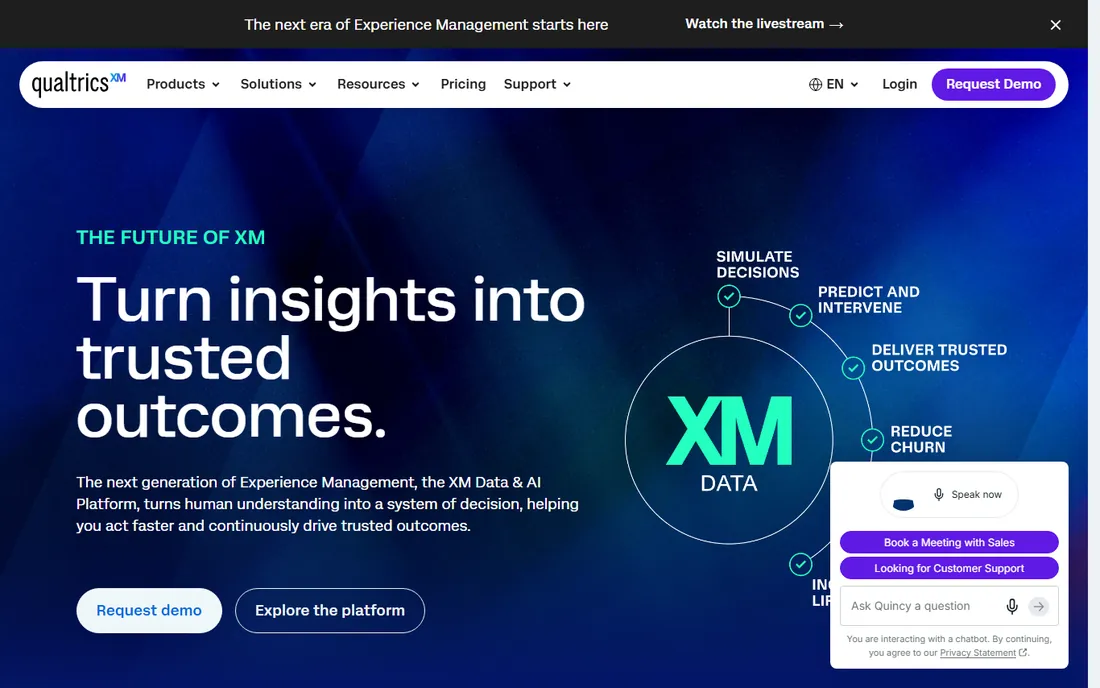
Qualtrics leads enterprise experience management with powerful feedback analytics. The text analysis, sentiment detection, and predictive capabilities turn survey data into strategic insights. Large organizations run company-wide VoC programs on Qualtrics.
The platform demands significant investment and analytical expertise. But the depth of analysis justifies the cost for enterprises serious about customer experience. The AI-powered insights surface patterns humans miss.
For enterprises needing comprehensive feedback analytics, Qualtrics is the standard.
The implementation experience varies by organization size and complexity. Smaller teams can deploy quickly with standard configurations, while enterprises should plan for extended timelines with dedicated project management. Training and change management determine long-term success more than the software features themselves. Ensure the vendor provides adequate support during the critical first 90 days.
What we like- Market leader, Powerful analytics, Comprehensive, Enterprise scale
Watch out for- Expensive, Complex, Needs expertise
Starting priceSee website
Free planNo
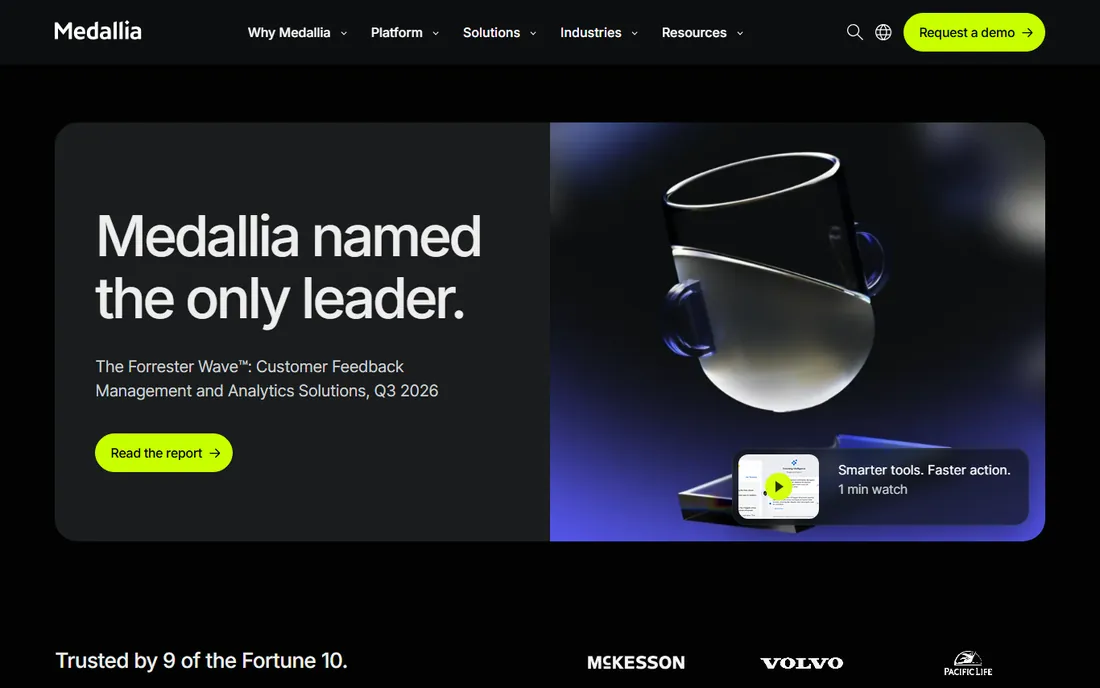
Medallia provides voice-of-customer analytics for enterprises, with strong text analytics and omnichannel feedback collection. The platform analyzes surveys, calls, chats, and reviews together. Customer experience leaders trust Medallia's depth.
Implementation is substantial and costs are enterprise-level. But the unified analysis across channels is powerful. Organizations committed to CX find the insights transformative.
For enterprise VoC analytics, Medallia competes at the top.
The implementation experience varies by organization size and complexity. Smaller teams can deploy quickly with standard configurations, while enterprises should plan for extended timelines with dedicated project management. Training and change management determine long-term success more than the software features themselves. Ensure the vendor provides adequate support during the critical first 90 days.
What we like- Strong VoC, Good text analytics, Enterprise focus, Proven
Watch out for- Expensive, Complex, Implementation heavy
Starting priceSee website
Free planYes
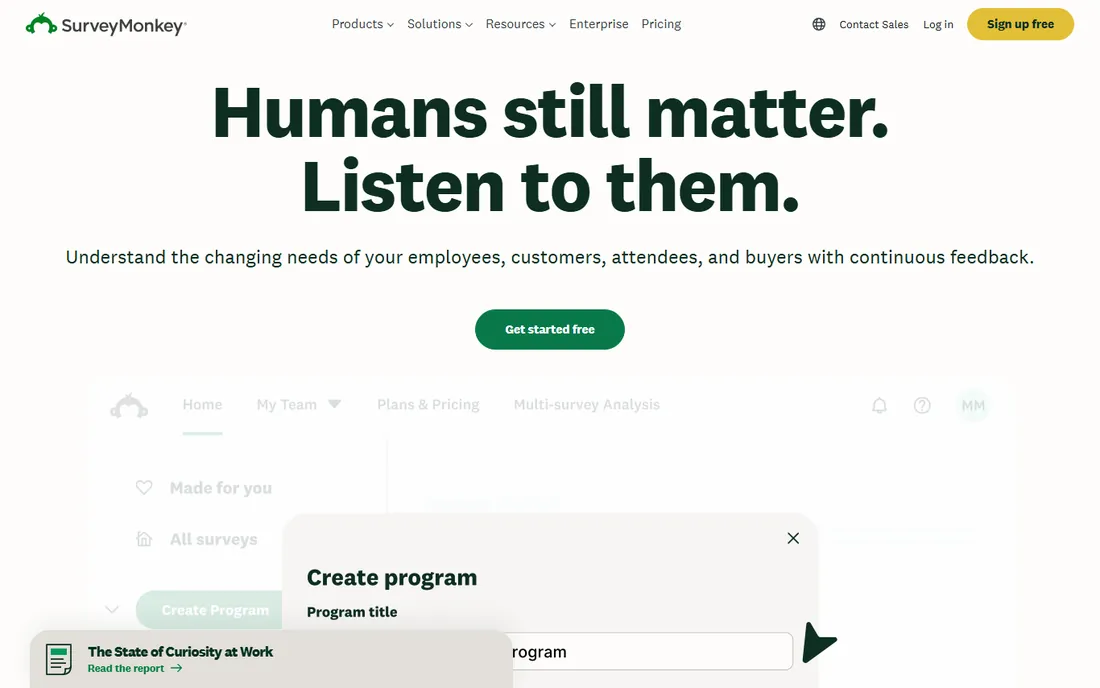
SurveyMonkey offers accessible survey tools with solid analytics for mainstream users. The text analysis and reporting handle common feedback analysis needs. The free tier and familiarity make it the default for many teams.
Advanced analytics trail the enterprise platforms. But most organizations do not need advanced capabilities. SurveyMonkey's accessibility democratizes feedback analysis.
For teams wanting straightforward survey analytics, SurveyMonkey delivers.
The implementation experience varies by organization size and complexity. Smaller teams can deploy quickly with standard configurations, while enterprises should plan for extended timelines with dedicated project management. Training and change management determine long-term success more than the software features themselves. Ensure the vendor provides adequate support during the critical first 90 days.
What we like- Accessible, Widely used, Good analytics, Affordable
Watch out for- Less advanced, Limited text analysis, Basic
Starting priceSee website
Free planYes
Typeform creates conversational surveys that achieve higher response rates through engaging design. The analytics cover essential reporting, though advanced text analysis is limited. The user experience is the differentiator.
For feedback analytics depth, Typeform trails. But higher response rates mean more data to analyze. Teams prioritizing completion rates choose Typeform.
For engaging surveys with solid basic analytics, Typeform works well.
The implementation experience varies by organization size and complexity. Smaller teams can deploy quickly with standard configurations, while enterprises should plan for extended timelines with dedicated project management. Training and change management determine long-term success more than the software features themselves. Ensure the vendor provides adequate support during the critical first 90 days.
What we like- Beautiful surveys, Good response rates, Modern, Easy
Watch out for- Limited analytics, Expensive at scale, Basic analysis
Starting priceSee website
Free planFree trial
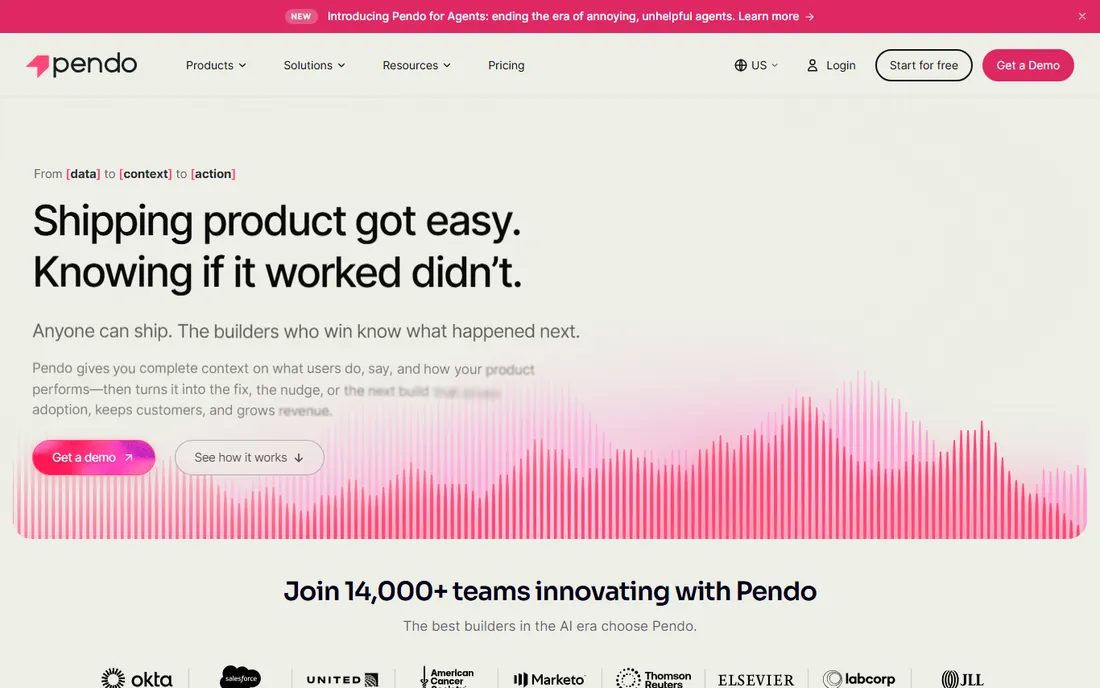
Pendo combines product analytics with in-app feedback collection and analysis. Digital product teams understand user behavior and feedback together. The guides and polls capture context-rich insights.
The product focus limits broader VoC use. But for SaaS companies, the integrated view is invaluable. Pendo's analytics reveal how feedback correlates with usage.
For product teams needing integrated feedback analytics, Pendo leads.
The implementation experience varies by organization size and complexity. Smaller teams can deploy quickly with standard configurations, while enterprises should plan for extended timelines with dedicated project management. Training and change management determine long-term success more than the software features themselves. Ensure the vendor provides adequate support during the critical first 90 days.
What we like- Product analytics, In-app feedback, Good integration, Comprehensive
Watch out for- Product focused, Expensive, Complex
Starting priceSee website
Free planYes
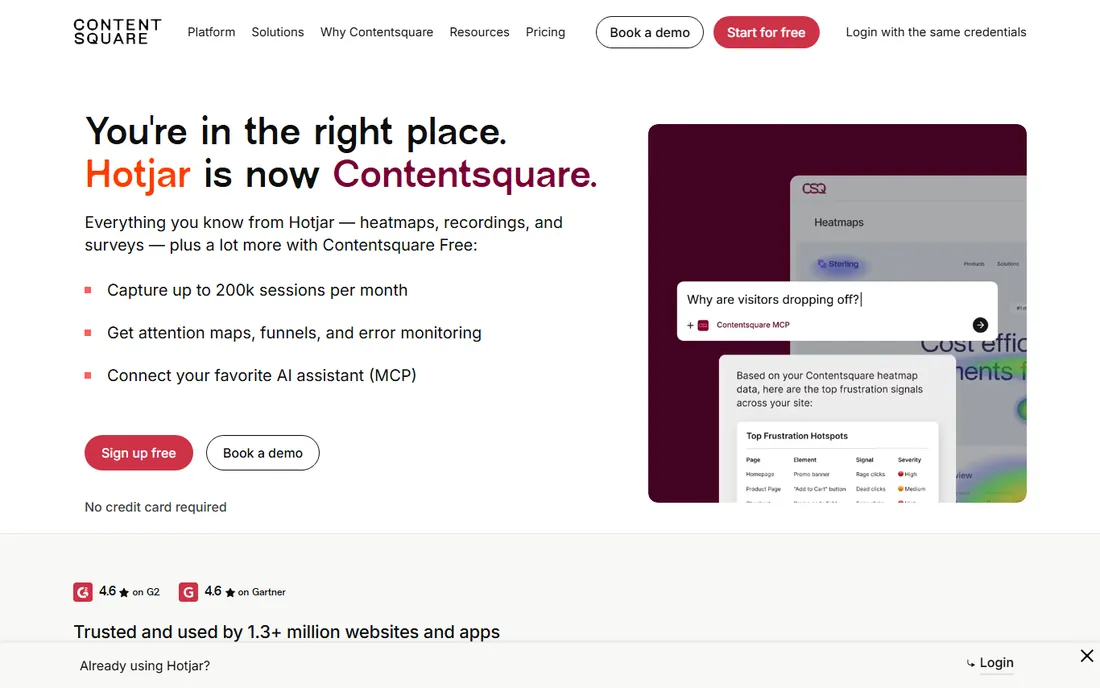
Hotjar, now part of Contentsquare, provides visual feedback through heatmaps, recordings, and on-site surveys. The behavior analytics complement traditional survey analysis. The affordability makes it accessible.
Text analytics depth is limited. But the visual context enriches feedback understanding. Website teams value the combined quantitative and qualitative view.
For website feedback and behavior analysis, Hotjar is excellent.
The implementation experience varies by organization size and complexity. Smaller teams can deploy quickly with standard configurations, while enterprises should plan for extended timelines with dedicated project management. Training and change management determine long-term success more than the software features themselves. Ensure the vendor provides adequate support during the critical first 90 days.
What we like- Visual feedback, Heatmaps, Affordable, Easy
Watch out for- Limited text analysis, Website focused, Basic
Starting priceSee website
Free planFree trial
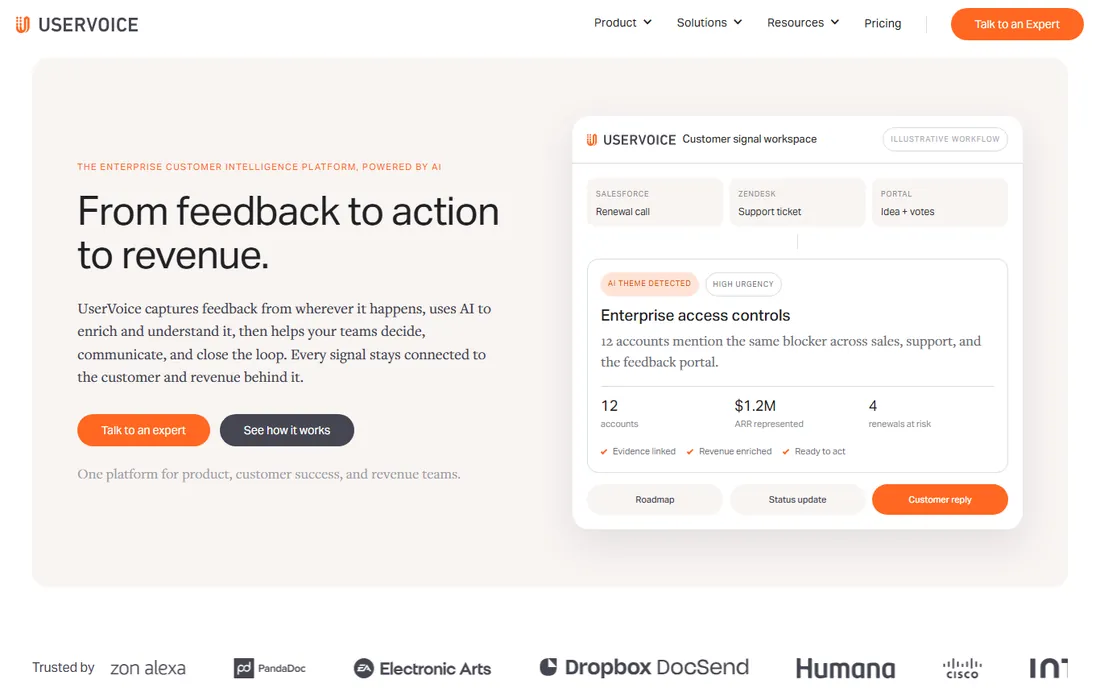
UserVoice specializes in feature feedback with voting and prioritization. Product managers understand what customers want built. The focused approach serves roadmap planning well.
Broader feedback analytics are limited. But the feature request use case is important and UserVoice serves it excellently. The prioritization algorithms help.
For product teams managing feature requests, UserVoice is ideal.
The implementation experience varies by organization size and complexity. Smaller teams can deploy quickly with standard configurations, while enterprises should plan for extended timelines with dedicated project management. Training and change management determine long-term success more than the software features themselves. Ensure the vendor provides adequate support during the critical first 90 days.
What we like- Feature voting, Product focused, Good prioritization, Clear
Watch out for- Narrow focus, Limited analytics, Smaller
Starting priceSee website
Free planFree trial
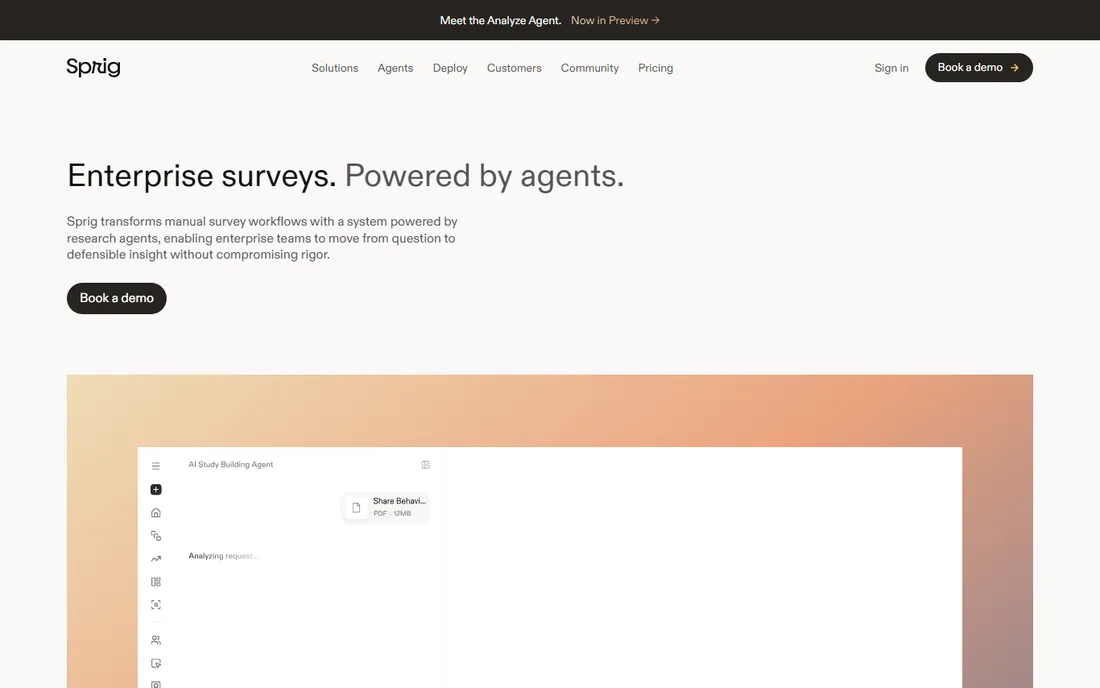
Sprig provides user research tools with AI-powered analysis for UX teams. The in-product surveys and concept testing generate actionable insights. The modern approach appeals to research-driven organizations.
Scale is smaller than enterprise platforms. But the UX research focus is valuable. Sprig's AI analysis accelerates insight generation.
For UX research teams, Sprig's specialized analytics help.
What we like- Research focused, Good for UX, Modern, AI analysis
Watch out for- Narrower, Newer, Limited scale
How we chose
We evaluated analysis capabilities: text analytics, sentiment, trend detection, and the actionability of insights. Data integration breadth mattered. We weighted ease of turning analysis into decisions.
We considered the different user types: enterprise CX teams need different tools than product managers or UX researchers.
Making feedback actionable
Start with clear objectives. Define the decisions feedback should inform before collecting data. Analysis without purpose produces interesting but useless insights.
Then integrate data sources. Feedback scattered across systems cannot be analyzed holistically. Unify surveys, reviews, support, and social for comprehensive understanding.
Finally, close the loop. Share insights with stakeholders, track actions taken, and communicate back to customers. The analytics only matter when they drive change.
Advanced analytics techniques
Modern feedback analytics employs sophisticated techniques beyond basic sentiment scoring. Topic modeling automatically discovers themes in open-ended responses without predefined categories. The algorithms identify emerging issues before they become crises, giving organizations early warning of shifting customer perceptions.
Emotion detection goes deeper than positive/negative sentiment, identifying frustration, confusion, delight, and urgency. This nuance helps prioritize responses; frustrated customers need immediate attention while delighted customers offer testimonial opportunities. The emotional context transforms raw feedback into actionable intelligence.
Predictive analytics forecasts churn risk, lifetime value changes, and emerging trends based on feedback patterns. Organizations move from reactive problem-solving to proactive experience management. The predictive capabilities justify enterprise investments by preventing customer losses before they occur.
Integration architecture
Feedback analytics delivers maximum value when integrated with operational systems. Connect survey platforms to CRM to link feedback with customer history, purchase behavior, and support interactions. The unified view reveals which customer segments are most satisfied or at risk.
Integrate with product analytics to correlate feedback with usage patterns. Understand not just what customers say but what they do. The combination of attitudinal and behavioral data provides complete understanding. Product teams prioritize improvements based on both feedback volume and usage impact.
API access enables custom integrations and data warehousing. Export analyzed feedback to business intelligence tools for executive dashboards. The democratization of insights ensures decisions across the organization reflect customer voice.
Consider the total cost of ownership including implementation, training, and ongoing administration. The cheapest license often proves most expensive when factoring in the internal resources required for successful deployment. Evaluate vendor support quality through reference calls with similar organizations. The best technology fails without adequate support during critical periods.
Frequently asked questions
What is the difference between feedback collection and analytics?
Collection gathers responses; analytics extracts insights through text analysis, sentiment, trends, and correlations. Both matter, but analytics determines value.
How important is AI in feedback analytics?
Increasingly important. AI text analysis handles volumes humans cannot, surfacing themes and sentiment automatically. But human judgment remains essential for interpretation.
Should we centralize feedback analytics?
Generally yes. Centralized analysis reveals cross-channel patterns. But ensure business units can access relevant insights for their decisions.
How do we measure ROI of feedback analytics?
Track actions taken from insights and their business impact: retention improvement, churn reduction, product improvements. The analytics justify themselves through better decisions.
What about privacy in feedback analysis?
Ensure compliance with data regulations. Anonymize where possible, secure the data, and be transparent about analysis practices.
Sources we checked (8)
- https://www.qualtrics.com/
- https://www.medallia.com/
- https://www.surveymonkey.com/
- https://www.typeform.com/
- https://www.pendo.com/
- https://www.contentsquare.com/hotjar/
- https://www.uservoice.com/
- https://www.sprig.com/
Is your product missing or out of date?
We review this list regularly. Vendors can request a listing, send updated pricing or ask about featured placement.

Shihab Mia · Founder, Rankite
Shihab has spent more than a decade helping SaaS and e-commerce brands grow through search. He writes Rankite's software buying guides from pricing pages, documentation and public user reviews. More about Shihab.