How we make this list: we compare pricing pages, product documentation and public user reviews. Ratings come from G2, Capterra or Trustpilot, with the date we checked them.
Key takeaways
- AWS leads on service breadth with 200 or more services, Azure leads on region count at 60 or more, and Google Cloud leads on data and AI workloads.
- Enterprise pricing is workload-dependent, but on-demand compute benchmarks put Oracle and smaller providers well below AWS and Azure per virtual CPU hour.
- Data transfer out is a hidden cost that varies sharply: AWS charges about 0.09 dollars per GB, while Oracle charges 0.0085 dollars and Cloudflare charges nothing for its storage egress.
- Hybrid cloud matters for enterprises with on-premises systems, and Azure Stack, AWS Outposts, and Google Distributed Cloud take different approaches to it.
- Compliance and data residency often decide the choice for regulated industries, ahead of raw compute price.
Quick comparison
Is your product missing or out of date?
We review this list regularly. Vendors can request a listing, send updated pricing or ask about featured placement.
The best enterprise cloud services compared
Starting priceSee website
Free planYes
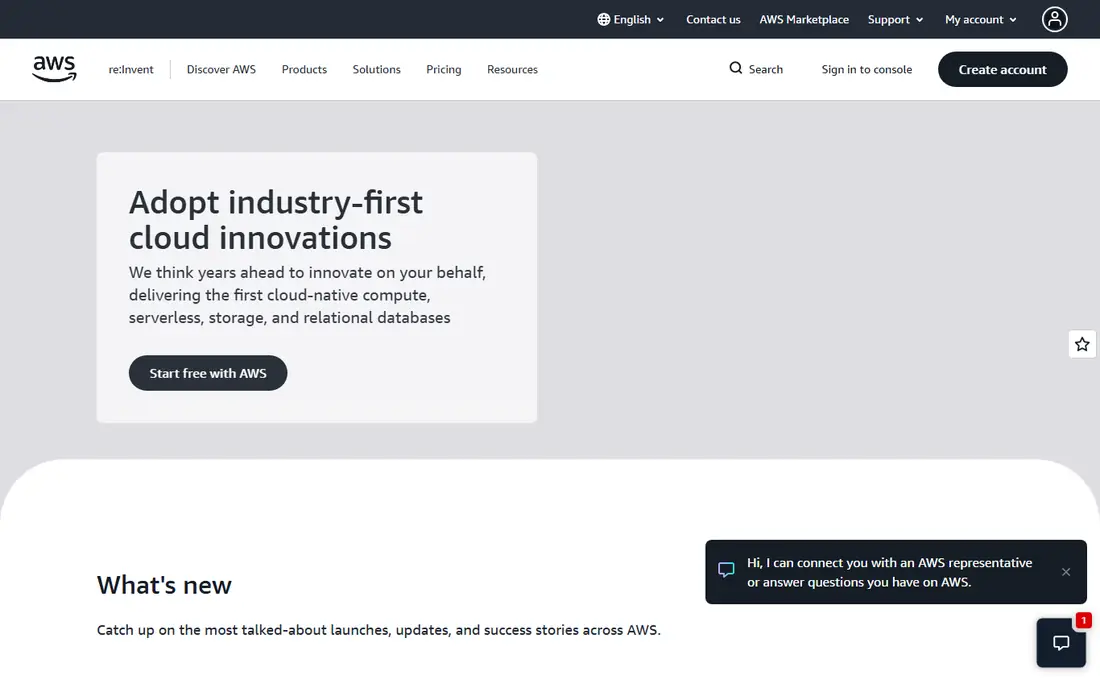
AWS holds the largest cloud infrastructure market share, around 31 to 33 percent, and offers 200 or more services across compute, storage, databases, analytics, machine learning, and security. Its 36 regions and 114 or more availability zones give enterprises broad geographic choice, and its partner ecosystem is the deepest in the industry, which matters when you need specialist help. On-demand compute benchmarks put AWS near 0.0416 dollars per virtual CPU hour, with egress at 0.09 dollars per GB.
The drawbacks are egress cost and pricing complexity. Moving large data volumes out of AWS adds up fast, and the service catalog is so large that cost management needs dedicated tooling. AWS Outposts extends AWS infrastructure to on-premises sites for hybrid needs, at a monthly cost often in the 12,000 to 18,000 dollar range for a rack. AWS suits enterprises that want the widest service range and the largest ecosystem.
What we like- 200 or more services
- 36 regions and 114 or more zones
- Deepest partner ecosystem
Watch out for- Egress at 0.09 dollars per GB
- Complex pricing
- Premium support costs extra
Starting priceSee website
Free planYes
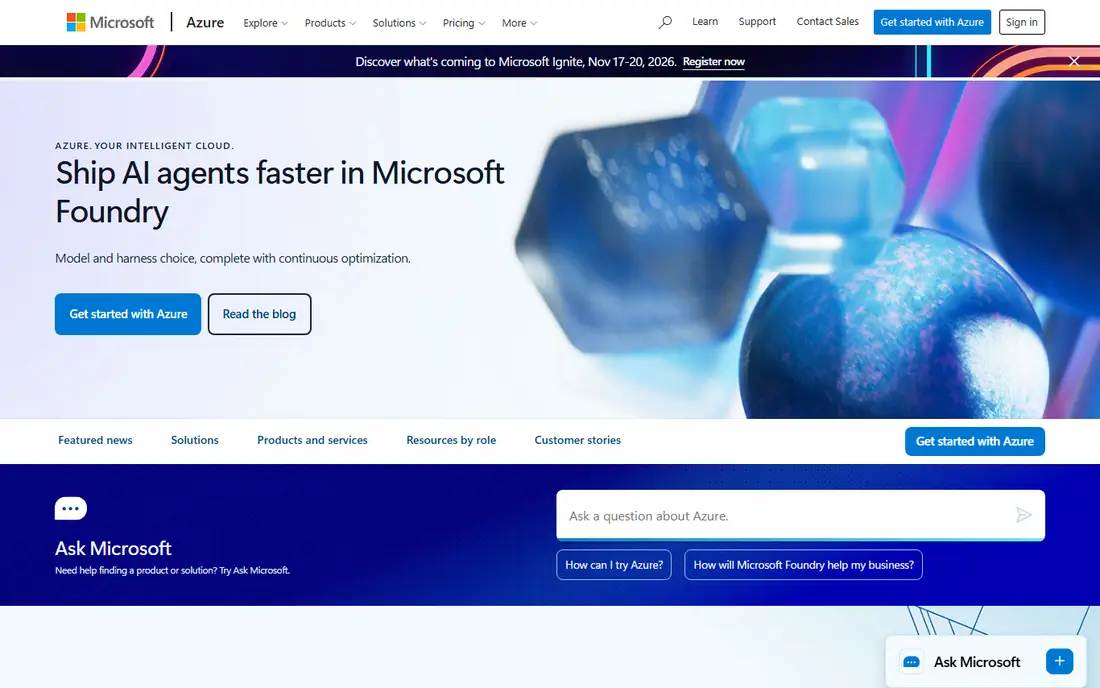
Azure holds about 21 percent market share and offers the most regions of any provider, at 60 or more, which helps enterprises with data residency needs in many countries. Its integration with Microsoft 365, Windows Server, and Active Directory makes it the natural choice for Microsoft-centric enterprises, and Azure OpenAI gives access to current OpenAI models inside enterprise compliance boundaries. Azure Stack HCI extends Azure services to on-premises hardware at a far lower entry cost than AWS Outposts.
The limits are compute price and service availability. On-demand benchmarks put Azure near 0.0496 dollars per virtual CPU hour, slightly above AWS, and not every region offers the full service catalog. Azure suits enterprises already invested in Microsoft software that want broad region coverage and hybrid options.
What we like- 60 or more regions, the most of any provider
- Deep Microsoft 365 and Windows integration
- Azure OpenAI access
Watch out for- Compute benchmark near 0.0496 dollars per virtual CPU hour
- Not all services in every region
- Portal complexity
Starting priceSee website
Free planYes
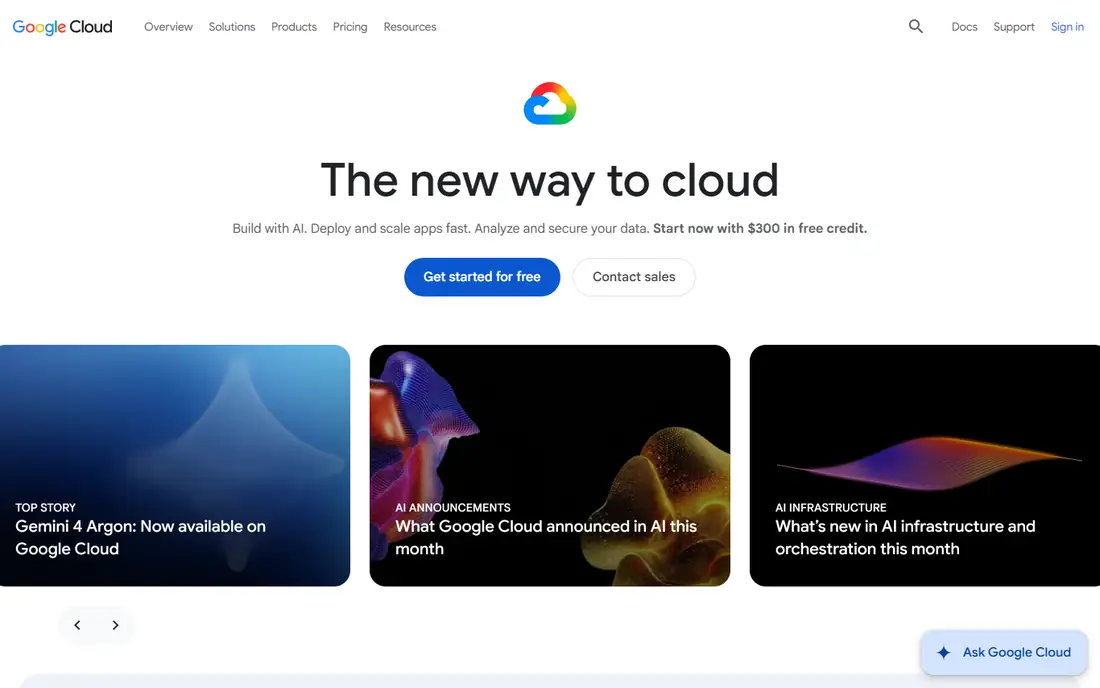
Google Cloud holds about 14 percent market share and leads on data and AI workloads, with BigQuery analytics, Vertex AI, Gemini models, and TPU hardware for machine learning training. Its private global fiber network delivers lower cross-region latency than rivals on many routes, and benchmark pricing puts it 5 to 10 percent cheaper than AWS on comparable workloads, with compute near 0.0475 dollars per virtual CPU hour and egress near 0.085 dollars per GB. Google Distributed Cloud extends its platform to edge and on-premises sites for AI and regulated workloads.
The drawbacks are catalog size and region count. With 150 or more services and 40 or more regions, Google Cloud is smaller than AWS and Azure, though still broad enough for most enterprises. Google Cloud suits data-heavy and AI-focused enterprises that value analytics performance and network quality.
What we like- Strongest data analytics and AI stack
- Private global fiber network
- 5 to 10 percent cheaper than AWS on many workloads
Watch out for- Smaller service catalog than AWS or Azure
- Fewer regions at 40 or more
- Enterprise sales presence smaller
Starting priceSee website
Free planYes
Oracle Cloud Infrastructure stands out on price for database workloads, with on-demand compute benchmarks near 0.025 dollars per virtual CPU hour, roughly 40 percent below AWS, and egress at 0.0085 dollars per GB, about a tenth of AWS pricing. Its Autonomous Database and Exadata services run Oracle workloads faster than general providers, and Oracle Cloud@Customer brings OCI services into enterprise data centers, which helped one telecom provider avoid a projected 18 million dollar migration cost. The always free tier, with no expiry, also beats rivals for testing.
The limits are ecosystem size and maturity. At about 3 percent market share, Oracle has fewer third-party integrations and a smaller partner network than the big three, and its tooling feels less mature in places. Oracle suits enterprises with heavy Oracle Database estates that want lower compute and egress costs.
What we like- Lowest egress among large providers at 0.0085 dollars per GB
- Compute near 0.025 dollars per virtual CPU hour
- Strong Oracle Database performance
Watch out for- Smaller ecosystem at 3 percent share
- Fewer third-party integrations
- 50 regions but less mature tooling

#5
IBM Cloud
Best for: Regulated industries and compliance
Visit ibm.com
Starting priceSee website
Free planYes
IBM Cloud targets regulated industries such as finance, health care, and government, with compliance frameworks, security controls, and audit tooling built for strict requirements. Its watsonx AI platform offers Granite and open models for enterprise AI, and its hybrid cloud approach lets regulated workloads stay on premises while the rest runs in the cloud. IBM holds about 2 percent market share, with 170 or more services, and compute benchmarks near 0.038 dollars per virtual CPU hour.
The drawbacks are price and reach. IBM pricing sits at a premium, region coverage is only 11 to 12 regions, and the developer community is smaller than the big three, so finding examples takes more effort. IBM suits regulated enterprises where compliance and security controls outweigh raw price and region count.
What we like- Strong compliance and security tooling
- Watsonx AI platform
- Hybrid cloud focus for regulated sectors
Watch out for- Premium pricing
- Only 11 to 12 regions
- Smaller developer community
Starting priceSee website
Free planYes
Alibaba Cloud holds about 4 percent global market share and is the strongest choice for enterprises operating in China and across Asia Pacific, with 28 to 30 regions and deep local compliance expertise. Its Tongyi Qianwen AI models and e-commerce-tuned services suit retail and digital businesses in the region, and compute benchmarks near 0.030 dollars per virtual CPU hour keep it competitive on price.
The limits are egress cost and familiarity. At 0.123 dollars per GB, Alibaba egress is the highest on this list, and teams outside APAC may find documentation and support less familiar than AWS or Azure. Alibaba suits enterprises with significant China or APAC operations that need local presence and compliance.
What we like- Strongest coverage in China and APAC
- 28 to 30 regions
- Tongyi Qianwen AI models
Watch out for- Egress at 0.123 dollars per GB, highest on this list
- Less familiar outside APAC
- Compliance varies by region
Starting priceSee website
Free planNo
DigitalOcean is not a full enterprise platform, but it earns a place for simple enterprise side workloads, such as internal tools, staging environments, and departmental apps, where its pricing is dramatically lower: compute benchmarks near 0.009 dollars per virtual CPU hour and egress at 0.01 dollars per GB. Its dashboard and pricing are far simpler than the big three, which speeds up small projects inside large companies.
The limits are scale and AI. With 15 regions, no native enterprise AI stack, and a smaller managed catalog, DigitalOcean cannot replace a primary enterprise cloud for complex workloads. It suits enterprises that want a cheap, simple second cloud for straightforward workloads alongside a main provider.
What we like- Compute near 0.009 dollars per virtual CPU hour
- Egress at 0.01 dollars per GB
- Simple pricing and dashboard
Watch out for- Only 15 regions
- No native enterprise AI stack
- Smaller managed service catalog

#8Cloudflare
Best for: Edge delivery with zero egress fees4.5/5 on
G2 (803 reviews, checked Oct 2026)
Visit cloudflare.com
Starting priceSee website
Free planYes
Cloudflare is an edge platform rather than a general cloud, but it matters in enterprise comparisons because its Workers compute starts at 5 dollars per month and its storage egress costs nothing, which can reshape the economics of content-heavy workloads. Its network spans 330 cities, it absorbs large DDoS attacks, and its R2 storage with zero egress fees lets enterprises serve media and downloads without the transfer bills that AWS and Azure charge.
The limits are scope. Cloudflare does not offer the full managed database, analytics, and enterprise service catalog of the big three, so it works best as a front door and edge layer paired with a primary cloud. Cloudflare suits enterprises with heavy content delivery or egress-sensitive workloads that want to cut transfer costs sharply.
What we like- Edge network in 330 cities
- Zero egress fees on storage
- Workers compute from 5 dollars per month
Watch out for- Not a general enterprise cloud
- Compute catalog narrower
- Enterprise features need higher plans
How we chose
We compared market share, region and zone counts, service breadth, on-demand compute and egress benchmarks, AI capability, and hybrid options, using 2026 benchmark data and vendor pages. We favored providers with clear enterprise strengths rather than generic claims, and we noted where pricing is workload-dependent or negotiated, since list prices rarely match enterprise invoices. We also weighed hidden costs such as egress, idle resources, snapshots, and premium support, which often matter more than headline compute rates.
How to choose the best enterprise cloud service
Start by listing your non-negotiable needs: data residency countries, compliance frameworks, Microsoft or Oracle dependencies, and AI workload types, since these narrow the field fast. Next, model total cost on your real workload, including egress, storage, and support, not just compute, and negotiate committed-use discounts for steady workloads. Then test hybrid options if you keep systems on premises, and check service availability in your target regions before committing. Finally, consider a multi-cloud approach for specific workloads, such as Cloudflare for edge delivery or Oracle for databases, rather than forcing every workload onto one provider.
Frequently asked questions
Which enterprise cloud is cheapest overall?
It depends on workload. Oracle and smaller providers beat AWS and Azure on compute and egress benchmarks, while AWS and Azure win on breadth and ecosystem. Model your own workload, including egress, before deciding.
Should enterprises use one cloud or several?
Most large enterprises use several: a primary cloud for core workloads, plus specialist providers for edge, databases, or regional needs. Multi-cloud adds management overhead, so keep the count low and standardize tooling.
What is the biggest hidden cloud cost?
Data transfer out is often the largest surprise, since moving data to the internet costs money while moving it in is usually free. Idle resources, snapshots, and log volumes are the next most common hidden costs.
How do committed-use discounts work?
Providers discount steady usage when you commit for one or three years through reserved instances, savings plans, or committed-use contracts. You pay even if usage drops, so commit only for workloads you are confident will persist.
Is hybrid cloud still relevant in 2026?
Yes, especially for regulated industries and companies with legacy systems. Azure Stack HCI, AWS Outposts, and Google Distributed Cloud all let enterprises run cloud services on premises, with different price points and use cases.
Does market share matter when choosing a cloud?
Partly. Larger share means a deeper partner ecosystem, more hiring options, and more third-party integrations, but smaller providers can be better for specific workloads such as databases, edge delivery, or regional compliance.
Sources we checked (0)
Is your product missing or out of date?
We review this list regularly. Vendors can request a listing, send updated pricing or ask about featured placement.

Shihab Mia · Founder, Rankite
Shihab has 5+ years in B2B and SaaS SEO. He writes Rankite's software buying guides from pricing pages, documentation and public user reviews. More about Shihab.
 Amazon Web Services
 Microsoft Azure
 Google Cloud
 Oracle Cloud
 Alibaba Cloud
 DigitalOcean