How we make this list: we compare pricing pages, product documentation and public user reviews. Rankite is independent; if a vendor ever pays for a featured spot, that listing is clearly labeled Partner.
Key takeaways
- Stripe and Adyen are the default choices for most platforms, with the deepest feature sets and global coverage.
- Marqeta, Finix, and Moov let SaaS companies become the payment facilitator, owning the economics and the experience.
- Dwolla specializes in bank transfers and ACH for use cases where cards are too expensive.
- Rapyd and Checkout.com suit platforms with cross-border needs, covering local payment methods worldwide.
- The decision hinges on your business model: marketplace payouts, SaaS billing, or card issuing each point to different infrastructure.
The pattern repeats across industries. A SaaS company starts by bolting on a payment processor, then realizes payments are 2.9% of every transaction flowing through its platform. A marketplace discovers that holding funds and paying out sellers is a product, not a feature. A vertical software company learns that owning payments doubles its revenue per customer. Embedded payments is the infrastructure that makes all of this possible without becoming a bank.
The category has matured well beyond "accept credit cards." Modern embedded payments platforms handle onboarding and KYC for sub-merchants, split payments across parties, manage payouts globally, issue cards, and handle the compliance burden of moving money. The best ones make money movement feel like an API call while handling the regulatory reality underneath.
We compared eight platforms, from the giants every developer knows to specialists in bank transfers, card issuing, and emerging markets. The right choice depends less on features and more on your money flow: who pays whom, in which countries, and who owns the customer relationship.
Quick comparison
| Tool | Best for | Starting price | Free plan |
|---|
 Stripe Stripe | General embedded payments | Pay-as-you-go | No |
 Adyen Adyen | Global enterprise platforms | Custom pricing | No |
 Marqeta Marqeta | Card issuing for platforms | Custom pricing | No |
 Moov Moov | Developer-first money movement | Pay-as-you-go | No |
 Dwolla Dwolla | ACH and bank transfers | See website | No |
 Finix Finix | SaaS payments ownership | Custom pricing | No |
 Rapyd Rapyd | Cross-border local payments | Pay-as-you-go | No |
 Checkout.com Checkout.com | Global card processing | Custom pricing | No |
Is your product missing or out of date?
We review this list regularly. Vendors can request a listing, send updated pricing or ask about featured placement.
The best embedded payments software in 2026
Starting pricePay-as-you-go
Free planNo
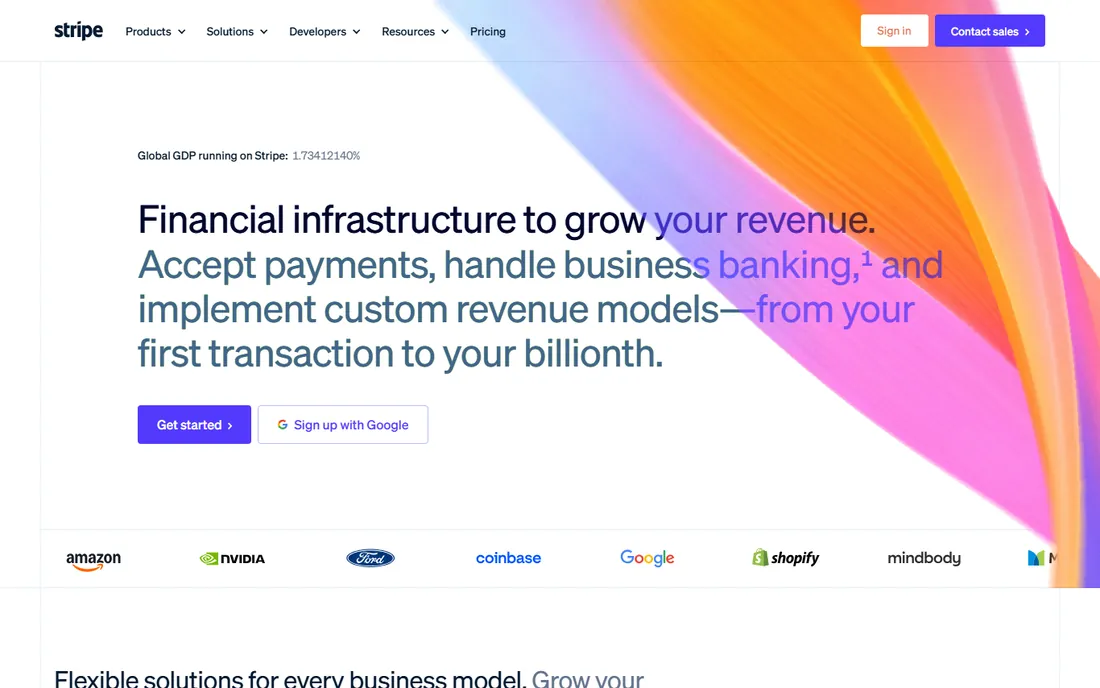
Stripe defined the category and still sets the standard for developer experience. Stripe Connect handles the hard parts of platform payments: onboarding sellers, verifying identity, splitting payments, and paying out across countries. Around it sits an enormous product surface, from billing to invoicing to card issuing to tax, which means most platforms never need a second vendor.
Pricing is transparent pay-as-you-go, which is great until your volume grows enough that the percentage takes a real bite. Large platforms negotiate custom rates or move to alternatives. Support quality is the common complaint. But for getting embedded payments live quickly with minimal payments expertise in-house, Stripe remains the default answer, and defaults exist for a reason.
What we like- Best developer experience, Huge product surface, Stripe Connect for marketplaces, Global coverage
Watch out for- Costs add up at scale, Support can feel thin, Account holds frustrate some users
Starting priceCustom pricing
Free planNo
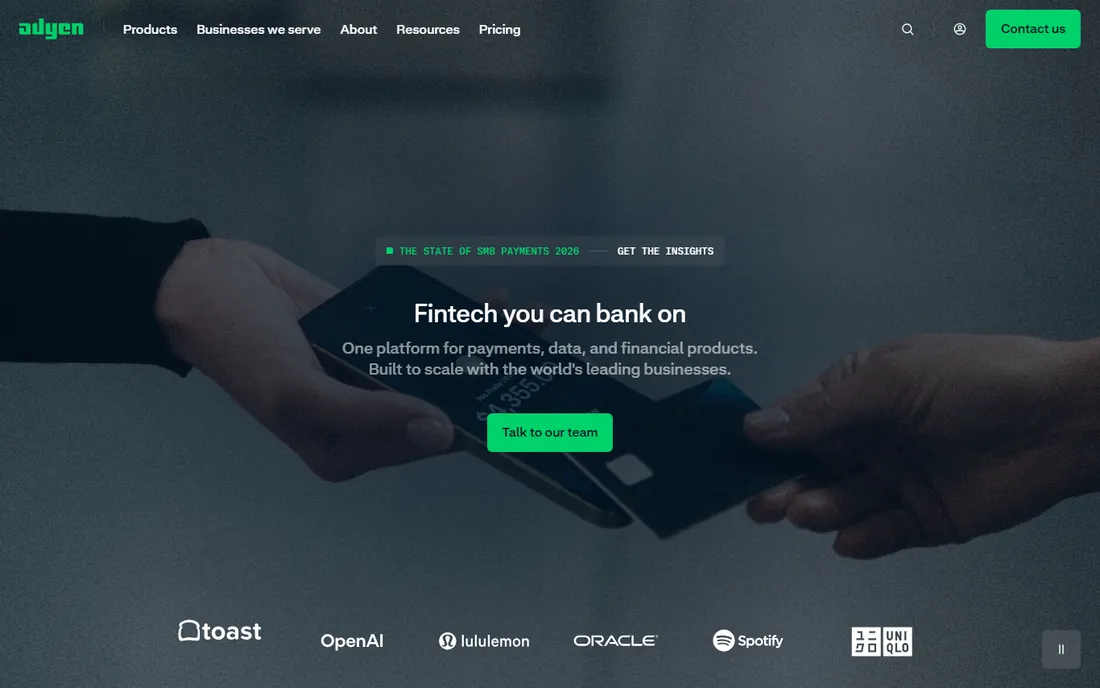
Adyen built its reputation with the world's largest merchants and platforms, offering one contract, one integration, and one reconciliation flow across dozens of countries and payment methods. For platforms operating globally, that consolidation is worth more than any single feature. The data tools for optimizing authorization rates are genuinely best in class.
This is an enterprise sale, not a signup form. Smaller companies will find the process heavy and the minimums real. But if you process significant volume across borders and want a payments partner rather than an API, Adyen's enterprise focus becomes an advantage. The platforms that outgrow Stripe usually land here.
What we like- Single platform for global payments, Excellent enterprise relationships, Strong data and optimization, Issuing and banking products
Watch out for- Enterprise sales process, Less self-serve than Stripe, Minimums for smaller companies
Starting priceCustom pricing
Free planNo

Marqeta pioneered modern card issuing: platforms can issue physical and virtual cards to their users with programmable controls on where, when, and how much can be spent. Expense management, earned wage access, and marketplace seller payouts are the classic use cases. The APIs are clean and the platform has proven itself at serious scale.
Marqeta is not a full payments stack; it does issuing exceptionally well and leaves the rest to partners. Pricing is custom and the engagement assumes you understand payments. If your embedded strategy centers on cards in your users' hands, Marqeta is the specialist. If you need the whole money flow, pair it with a processor or look at Stripe and Adyen.
What we like- Leading modern card issuing, Flexible spend controls, Good developer APIs, Proven at scale
Watch out for- Issuing-focused, less full-stack, Custom pricing, Needs payments expertise
Starting pricePay-as-you-go
Free planNo
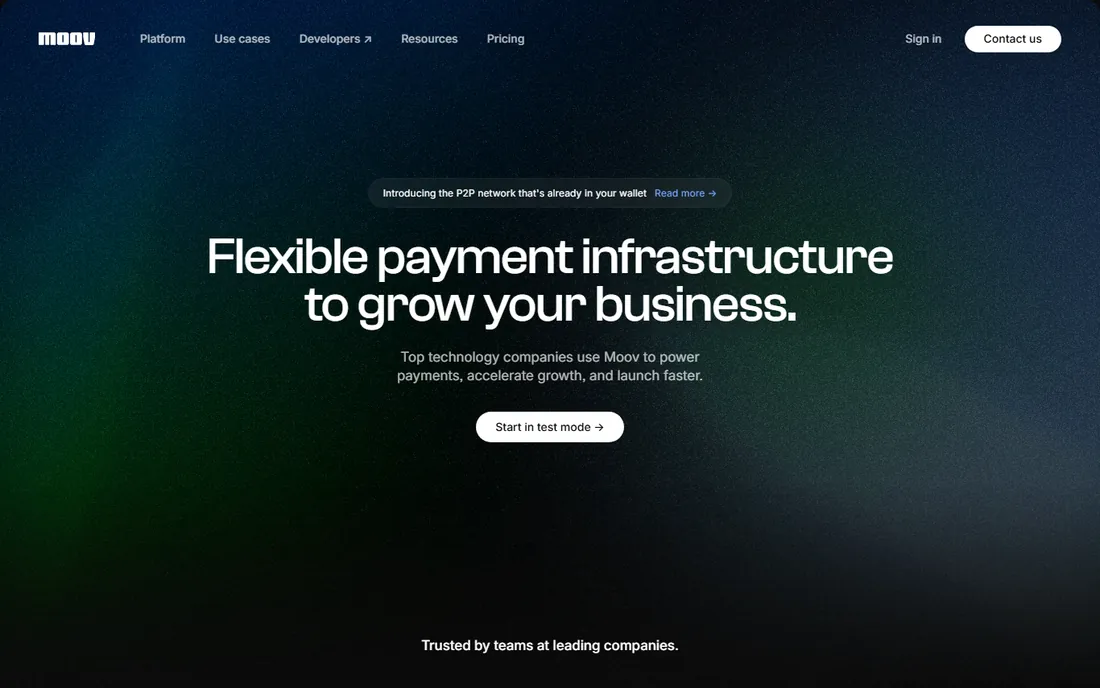
Moov takes the developer-first ethos further than anyone, with open-source SDKs and documentation that treat money movement as a solved engineering problem. Wallets, bank transfers, card payments, and payouts compose into whatever flow your platform needs. The transparent pay-as-you-go pricing appeals to developers tired of sales calls.
The trade-off is breadth. Moov covers fewer payment methods and countries than Stripe or Adyen, and the ecosystem of integrations is thinner. But for US-focused platforms that want clean APIs and honest pricing without enterprise baggage, Moov is the refreshing alternative. Watch this one: the developer love is real.
What we like- Open-source friendly, Clean modern APIs, Wallets, transfers, and payouts, Transparent pricing
Watch out for- Smaller than the giants, Fewer payment methods, Younger ecosystem
Starting priceSee website
Free planNo
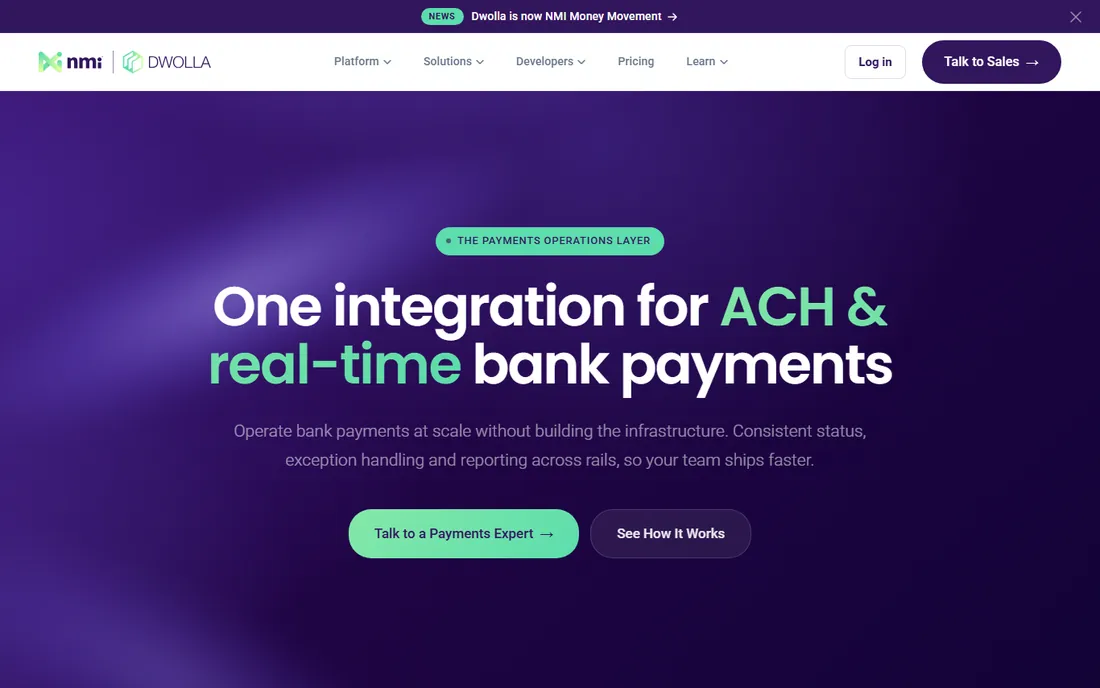
When card fees would eat your margins, Dwolla moves money over bank rails instead. ACH transfers cost cents rather than percent, which transforms the economics for payroll, lending, B2B payments, and any high-volume flow where cards are overkill. The API is built for platforms that need reliable, white-labeled bank transfers.
The limitations are structural: US-focused, no cards, and ACH is not instant. But Dwolla does not pretend to be a full payments stack. It does one thing, moving money between bank accounts programmatically, and does it well. If your unit economics demand it, there is no substitute.
What we like- Bank transfers without card fees, Good for high-volume low-margin flows, Reliable ACH infrastructure, White-label friendly
Watch out for- US-focused, No card processing, Slower than instant methods
Starting priceCustom pricing
Free planNo
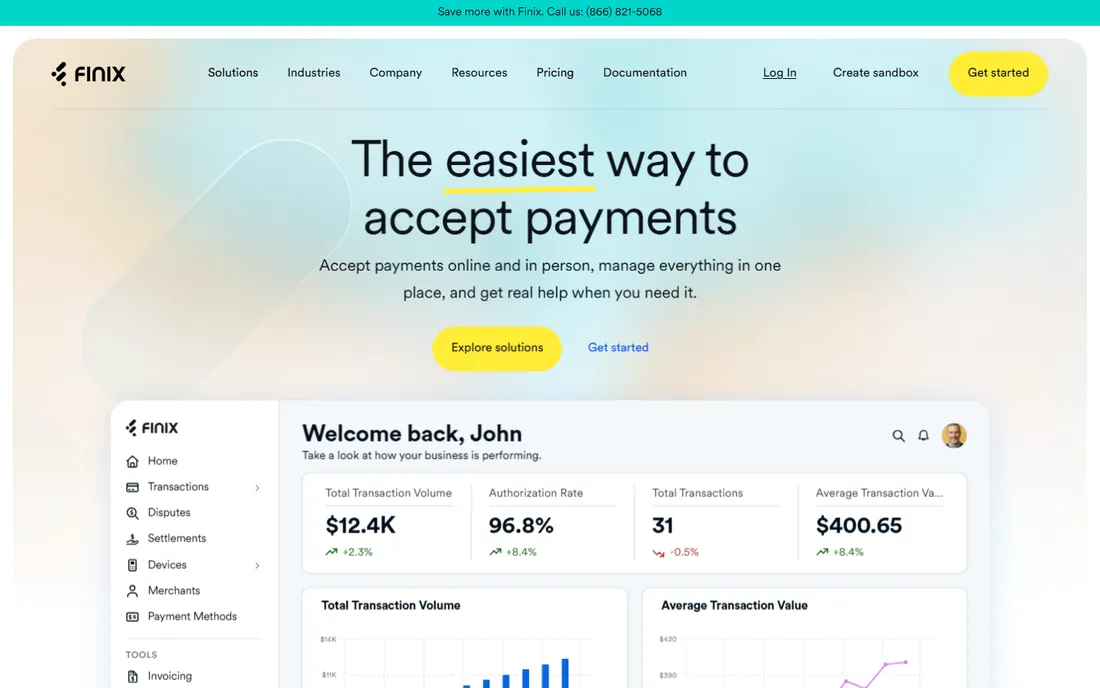
Finix sells SaaS companies on becoming payment facilitators: instead of referring customers to Stripe and watching the margin walk away, you own the payments relationship and economics. The platform handles the compliance, underwriting, and infrastructure of being a PayFac, which is otherwise a daunting undertaking. For vertical SaaS, payments ownership can double revenue per account.
This only makes sense at real volume, and it adds operational responsibility. Finix abstracts the hardest parts but you are still in the payments business. For SaaS companies processing tens of millions annually, the math is compelling. Below that, Stripe Connect is simpler.
What we like- Become your own payment facilitator, Own the payments economics, Good for vertical SaaS, Strong onboarding tools
Watch out for- Custom pricing, Needs volume to justify, Operational complexity
Starting pricePay-as-you-go
Free planNo
Rapyd's superpower is local payment methods: the hundreds of ways people actually pay outside the US and Europe, from mobile money to bank transfers to cash vouchers. For platforms expanding into Latin America, Africa, Southeast Asia, or the Middle East, accepting only cards means leaving most customers behind. Rapyd covers the long tail.
The platform is less polished than Stripe and managing dozens of payment methods adds operational complexity. But that complexity is the business: local payment coverage is a moat. If your growth depends on markets where cards are not the default, Rapyd belongs in the evaluation alongside Adyen.
What we like- Huge local payment method coverage, Good for emerging markets, Wallets and payouts, Flexible APIs
Watch out for- Less polished than Stripe, Complexity of many methods, Support varies by region
Starting priceCustom pricing
Free planNo
Checkout.com competes with Adyen for the enterprise cross-border business, with strong card processing performance and global acquiring. The platform is flexible and the company has invested heavily in data and optimization tools. For large merchants and platforms that want an Adyen alternative with a slightly different approach, Checkout.com is the natural comparison.
Like Adyen, this is an enterprise sale with custom pricing. The developer ecosystem is thinner than Stripe's. But performance-focused enterprises consistently rate the processing quality highly. If authorization rates directly move your revenue, Checkout.com deserves a serious look.
What we like- Strong card processing performance, Good enterprise features, Global acquiring, Flexible platform
Watch out for- Enterprise sales motion, Less ecosystem than Stripe, Pricing opaque
How we chose
We selected platforms that let software companies embed payments as a product, not just accept cards on a checkout page. That meant marketplace payout capabilities, sub-merchant onboarding, card issuing, or bank transfer infrastructure. Simple payment gateways did not make the cut.
We weighted the completeness of the money-movement toolkit, global coverage, developer experience, and the economics for platforms at different scales. A startup embedding its first payments needs different things than an enterprise owning its payments P&L, and the list serves both. Pricing transparency was noted where it exists, which in this category mostly means Stripe, Moov, and Rapyd.
Matching infrastructure to your money flow
Draw your money flow before you shop. Who pays, who gets paid, in which countries, and how fast? A marketplace paying sellers in forty countries needs different infrastructure than a SaaS company billing subscribers or a lender disbursing loans. The vendors above cluster around these flows, and picking from the wrong cluster guarantees pain.
Then decide how much of the payments business you want to own. Using Stripe Connect keeps you out of compliance complexity but leaves margin on the table. Becoming a PayFac with Finix captures the economics but adds responsibility. Issuing cards with Marqeta creates product differentiation but needs payments expertise. There is no free lunch in payments; there is only the trade-off you prefer.
Finally, model the economics at your scale, not today's volume. A pricing structure that works at $1M in volume can be punishing at $100M. Ask each vendor for pricing at three volume tiers and watch how the conversation changes. The right partner grows cheaper as you grow; the wrong one gets more expensive.
Frequently asked questions
What is the difference between embedded payments and a payment gateway?
A payment gateway processes card transactions for your checkout. Embedded payments infrastructure lets your platform move money between parties: onboarding sellers, splitting payments, holding funds, paying out globally, and issuing cards. It is the difference between accepting payments and being in the payments business.
Do I need to become a payment facilitator?
Only if payments are strategic enough to justify the responsibility. Most platforms start with a facilitator model like Stripe Connect, where the provider handles compliance. Becoming a PayFac with Finix or similar makes sense when payment margins materially affect your business and you have the volume and team to manage it.
How do embedded payments make money?
Platforms typically earn a spread on processing fees, plus revenue from value-added services like instant payouts, card issuing interchange, and foreign exchange. For SaaS companies, payments revenue often exceeds subscription revenue per customer, which is why the category keeps growing.
What compliance is involved in embedded payments?
Money transmission licensing, KYC/AML obligations, PCI compliance for card data, and tax reporting vary by country and model. The major platforms abstract most of this, but the responsibility depends on your structure in the end. Get legal advice before holding other people's money.
Can I use multiple embedded payments providers?
Yes, and many platforms do: Stripe for cards, Dwolla for ACH, Marqeta for issuing. The cost is integration and reconciliation complexity. Consolidate where one vendor covers your flows well; split where the economics or coverage demand it.
Sources we checked (8)
- https://stripe.com/
- https://www.adyen.com/
- https://www.marqeta.com/
- https://moov.io/
- https://www.dwolla.com/
- https://finix.com/
- https://www.rapyd.net/
- https://www.checkout.com/
Is your product missing or out of date?
We review this list regularly. Vendors can request a listing, send updated pricing or ask about featured placement.

Shihab Mia · Founder, Rankite
Shihab has spent more than a decade helping SaaS and e-commerce brands grow through search. He writes Rankite's software buying guides from pricing pages, documentation and public user reviews. More about Shihab.