How we make this list: we compare pricing pages, product documentation and public user reviews. Ratings come from G2, Capterra or Trustpilot, with the date we checked them.
Key takeaways
- Bumble still leads on control, with photo and ID verification, tools that blur explicit images automatically and a design built around women setting the terms of contact.
- Hinge has the most balanced membership of the big apps and pushes for real conversations through prompts rather than endless swiping.
- HER is the app built for LGBTQ+ women specifically, with moderation and community features the general apps bolt on afterwards.
- Safety lives in your habits more than in any app: verify, keep chats in the app, meet in public, tell a friend, and never send money. All apps here are 18+ only.
Quick comparison
| Tool | Best for | Starting price | Free plan |
|---|
 Bumble | Control over who can contact you | Free | Yes |
 Hinge | Relationship minded conversations | Free | Yes |
 HER | LGBTQ+ women and community | Free | Yes |
 Coffee Meets Bagel | Fewer, curated daily matches | Free | Yes |
 Feeld | Open minded and non traditional dating | Free | Yes |
 The League | Vetted professional circles | See website | No |
 eharmony | Marriage minded, guided matching | See website | No |
 Plenty of Fish | A large, free, open pool | Free | Yes |
Is your product missing or out of date?
We review this list regularly. Vendors can request a listing, send updated pricing or ask about featured placement.
The best dating apps for women
Starting priceFree
Free planYes
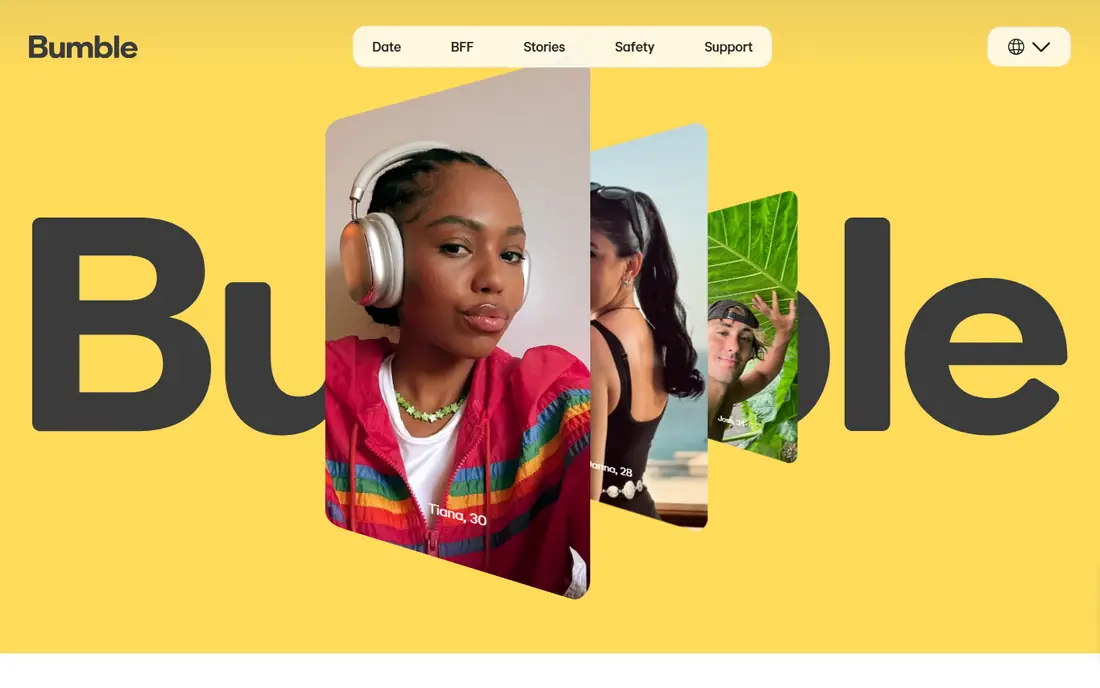
Bumble remains the default answer because its controls stack: verified profiles, filtered first contact, blurred explicit content, and calls inside the app until you choose to move elsewhere. Used with those switches on, it is the calmest inbox of the big apps.
Set it up properly on day one: complete verification, set your filters, and use the in app call before a first meeting. The features only protect the women who turn them on.
What we like- Bumble was built on women sending the first message, and while it has softened that rule in recent updates with opening moves that let either side start within a set window, the design still centres women's control. Verification is the strongest of the general apps: photo verification with a selfie, an optional ID check on top, a Private Detector that automatically detects and blurs explicit images before you open them, and a Deception Detector aimed at scam and fake accounts. In app video and voice calls let you talk before sharing a number. Unmatch and block are instant and total.
Watch out for- The free tier limits daily likes and filters, and Premium pricing varies enough by region and store that you should read your own price screen rather than any article's figure. In smaller cities the pool thins quickly. Scammers and married men exist here as everywhere
- The tools reduce, not remove, the problem. Some women also find the opening move changes diluted the original clarity of the women first rule.
Starting priceFree
Free planYes
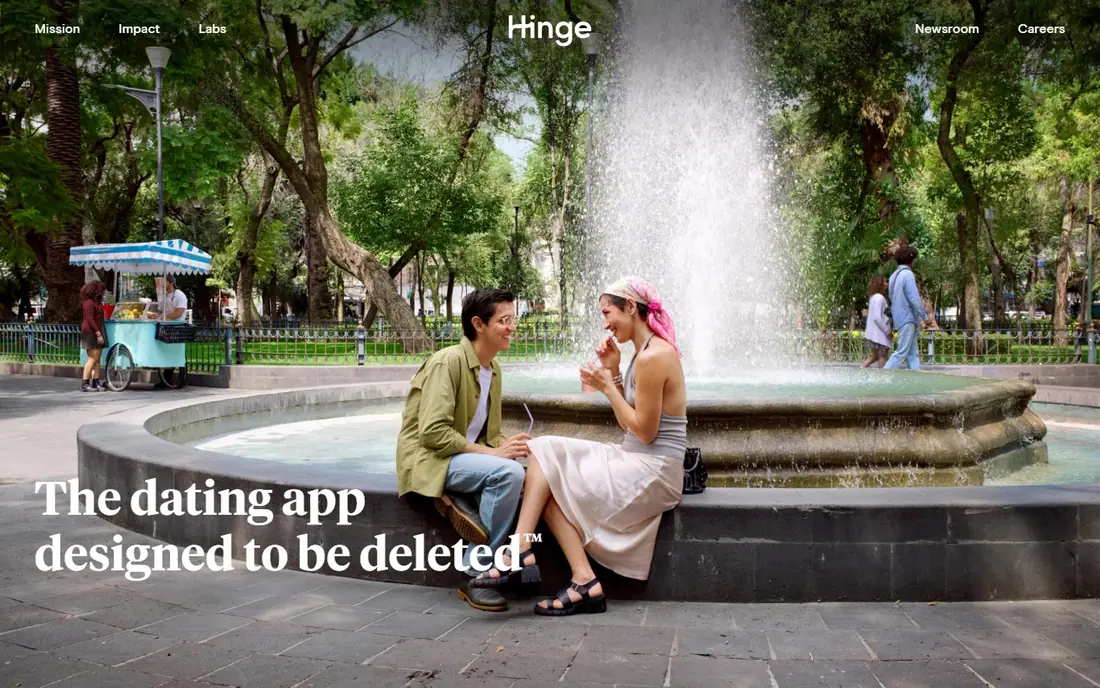
Hinge suits women who would rather have three real conversations than thirty matches. The friction is deliberate: fuller profiles, fewer likes, and a design that asks how the date went.
If your city has the numbers, it is the big app most likely to feel like adults dating rather than a numbers game. Check the local pool on the free tier before paying for anything.
What we like- Hinge profiles are built from prompts and photos you comment on, so first messages start from something real, and the membership skews toward people looking for relationships
- Industry reporting in the UK even found it the only top ten dating service with more women than men. Verification runs through a live face check, with the company publishing a clear biometric deletion policy. Free likes are limited to about eight a day, which slows the swipe habit and raises the quality of each approach. Its We Met feedback loop quietly improves matching and flags bad actors.
Watch out for- The limited free likes push keen users toward paid tiers sooner than rivals, and Hinge's subscriptions sit at the higher end of this list. It has no ID verification layer in most markets, photo only. Smaller towns can be a desert. The prompt format rewards wit, which is not everyone's strength, and quiet profiles get fewer responses whatever their owners are like offline.
Starting priceFree
Free planYes
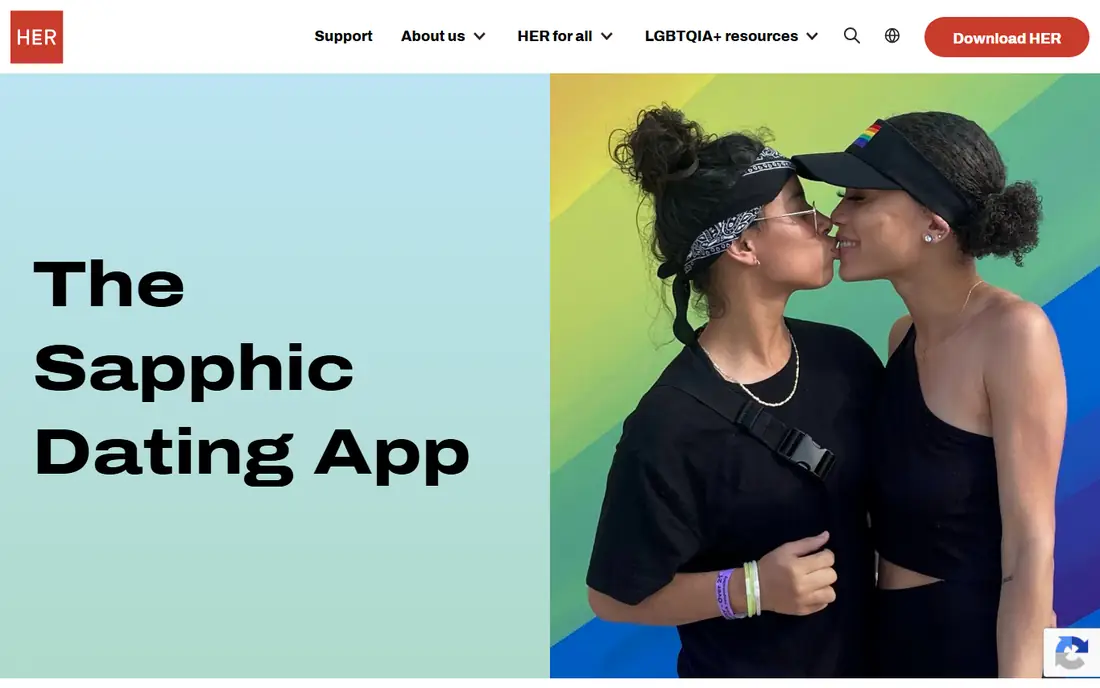
For queer women, HER is the obvious first install. The baseline assumption of the room changes everything: you are not explaining yourself, and the moderation is written by people who know the failure modes.
Combine it with one general app if your area is small. But start where you are the intended user, not the accommodated one.
What we like- HER is built specifically for lesbian, bisexual, queer and trans women and non binary people, rather than being a general app with a settings toggle. Profiles are verified, community moderation is active, and the app mixes dating with community features: interest groups, events and a social feed, which lets women meet people at a lower pressure level than a pure matching queue. Identity and intention filters are granular, and the environment is moderated by people who understand the community's specific risks.
Watch out for- The pool is smaller than the giants and concentrates in cities, so rural users may wait. Premium features sit behind a subscription whose price varies by store and region. As a smaller platform, some polish and some features arrive later than on Bumble or Hinge. Couples and unicorn hunting dynamics exist here too and are moderated rather than eliminated.
Starting priceFree
Free planYes
Coffee Meets Bagel is the anti volume answer. A handful of considered matches a day, a chat window with an end, and a membership that mostly states serious intent.
If your complaint about dating apps is exhaustion rather than danger, this is the design aimed at you. Give it two weeks of daily batches before judging the local pool.
What we like- Coffee Meets Bagel sends a small set of curated matches daily rather than an endless queue, which suits women tired of swiping through hundreds of profiles and the low effort messages volume brings. Matches are chosen using your preferences and profile depth, chats open with icebreaker prompts, and conversations expire after a set period, which forces a decision instead of a pen pal. The membership skews educated and relationship minded. Video dates are built in for a first look before meeting.
Watch out for- The daily drip frustrates people who want to browse freely, and in smaller markets the bagels can run dry. Many useful features sit in the paid tier, priced through the app stores. The curated model means the algorithm's taste matters a lot, and it is not transparent. Match quality varies by city more than on the big networks.
#5
Feeld
Best for: Open minded and non traditional dating
Visit feeld.co
Starting priceFree
Free planYes
Feeld earns its place for women whose dating life does not fit the standard apps and who value stated intentions and consent norms over euphemism. Ambiguity is where most bad experiences breed, and Feeld's culture removes a lot of it.
Go in with your boundaries written in your profile. The app's whole etiquette rewards that clarity.
What we like- Feeld serves people exploring outside conventional dating: solo women, couples, and those interested in ethical non monogamy, kink or open structures, with desire based profiles and the option to pair an account with a partner. Its consent culture is explicit and enforced, incognito mode hides you from people you have not liked, and unsolicited explicit images are blurred by default. Women control visibility carefully here, including hiding from Facebook contacts. The tone of the membership is unusually direct about intentions, which many women find safer than ambiguity.
Watch out for- This is plainly an adults space for adventurous dating, not a route to conventional relationships, and it is not for everyone. The pool is city based. Paid Majestic membership pricing varies and several features, such as seeing who liked you, sit behind it. Directness cuts both ways
- Profiles state desires bluntly, which takes a day to get used to. Moderation is active but the community is self selecting.
Starting priceSee website
Free planNo
The League sells one thing: a pre filtered room. If your dating problem is sifting, the subscription may be worth it. If your problem is meeting enough people, it makes it worse.
Read its membership terms with the same care as its marketing. The waitlist and the price are both part of the product's positioning.
What we like- The League vets its membership: applications are reviewed, many members link LinkedIn and education history, and the pool in each city is curated and small, with a few matches a day rather than a flood. For professional women whose complaint is time and unserious matches, the filter is the product. Identity signals are stronger here than anywhere else on this list because careers and schools are part of the profile. Events in major cities add an in person layer.
Watch out for- Vetting by career and education is exclusion by another name, and plenty of women will find the premise off putting
- It also narrows the pool sharply outside big cities. Membership is expensive by dating app standards and waitlists are common, with prices varied enough that you should take them from the app itself. The small daily batch can feel empty in quieter markets. Curated does not mean kind, and bad behaviour exists here too.
Starting priceSee website
Free planNo
eharmony suits a specific reader: older, marriage focused, and willing to trade money and patience for a filtered, slower process. Many women in exactly that position report it as a relief after the swipe apps.
Everyone else will find better value above. Match the tool to the life stage, not to the advertising.
What we like- Eharmony is the traditional end of the market: a long compatibility questionnaire at sign up, matches delivered rather than browsed, guided communication stages, and a membership that pays for longer plans and states marriage minded intent more than anywhere else here. For women who dislike app culture entirely, the structured, slower process is the appeal. Identity checks and profile review are part of its model, and its member base skews older and more settled than the swipe apps.
Watch out for- It is among the most expensive routes in, sold in multi month plans, so the entry decision is a real commitment
- Take the price from its current plans page. The questionnaire takes time, browsing freely is not the model, and the user experience feels dated beside Hinge. Younger and city dating pools are thinner than its marketing suggests. Cancelling mid plan does not refund the term, which catches people out.
#8
Plenty of Fish
Best for: A large, free, open pool
Visit pof.com
Starting priceFree
Free planYes
POF is the people's option: imperfect, busy and genuinely free, with a pool in places the polished apps ignore. For women in smaller markets, that pool is not a detail; it is the whole decision.
Use its verification, keep conversations in the app until trust is earned, and block freely. The tools are there; this platform simply asks you to drive them yourself.
What we like- Plenty of Fish, usually called POF, is one of the oldest and largest free dating services, with a big membership across age groups and smaller towns where the curated apps have nobody. Core messaging is free, which is rare, and verification uses a video selfie with liveness checks and age assurance. Its sheer size means more choice for women outside big cities and outside the twenty something bracket. Live streaming and interest features add ways to meet people at low pressure.
Watch out for- Free and open means volume in every sense: more messages, more low effort contact, and more fakes to filter than on the paid or curated services, even with verification in place. The experience can feel dated and advert heavy. Paid upgrades exist, but the free tier's openness is both the appeal and the workload. Safety depends heavily on your own filters and blocking habits here.
How we chose
We picked dating apps women in the US can join in October 2026 and assessed them on the things women consistently say decide safety and sanity: who controls first contact, how verification works, how explicit content and scammers are handled, how large and serious the local membership is, and what the free tier really allows. Every app here is 18+ and offers verification or moderation of some form. Pricing for dating apps varies by country, store and promotion to a degree that makes printed figures unreliable, so entries describe tiers rather than quoting them. No app was hands on tested for this guide; judgements rest on vendor documentation, safety feature pages and current reporting.
How to date through an app without the usual risks
Verify and be verified. Turn on photo or ID verification, and prefer matches who have done the same. It does not guarantee character, but it raises the cost of faking, which is what keeps casual scammers moving.
Keep the conversation in the app until you have real reason to trust. Scammers push to move to text or another platform early, because app moderation can no longer see them. Anyone who asks for money, gift cards, crypto or help with a financial emergency is running a script; end the conversation and report the profile.
Meet in daylight, in public, on your own transport, and tell a friend where you are going and when to expect a message. Use the app's in built video call first. These are dull rules, and they are the entire difference between the women who enjoy these apps and the women who delete them.
Frequently asked questions
What is the safest dating app for women?
There is no completely safe app, but Bumble has the deepest stack of controls: verification with an optional ID layer, automatic blurring of explicit images, scam detection and in app calls. HER adds community moderation for LGBTQ+ women. Safety still depends on your habits: verify, stay in the app, meet in public and never send money.
Are dating apps free for women?
Mostly, yes. Bumble, Hinge, HER, Coffee Meets Bagel, Feeld and Plenty of Fish all offer free tiers that allow matching and messaging, with paid upgrades for filters, visibility and extra likes. eharmony and The League are the paid first exceptions here. Beware any service claiming women must pay to reply to messages; that pattern belongs to scam sites, not the apps in this guide.
How do I spot a romance scammer?
The script is consistent: a profile that seems too polished, a quick move to another messaging app, a story involving the military, overseas work or a business emergency, and eventually a request involving money, gift cards or crypto, or a link to invest. Real daters meet on video, meet in public and never need your money. Report and block at the first financial request.
Which app is best for serious relationships?
Hinge and eharmony lead for stated intent, at opposite price points: Hinge for app comfortable daters who want prompt based conversations, eharmony for a slower, questionnaire led process with longer plans. Coffee Meets Bagel sits between them. Intent on a profile is a claim, not a fact, so judge the first three conversations, not the bio.
Can I hide my profile from people I know?
On most of these apps, partly. Feeld offers an incognito mode and hiding from social contacts, Bumble has an incognito option on paid tiers, and several apps let you block specific contacts from your phone book before they ever see you. Set these options before you start swiping, because a profile can be screenshotted the moment it is live.
Sources we checked (0)
Is your product missing or out of date?
We review this list regularly. Vendors can request a listing, send updated pricing or ask about featured placement.

Shihab Mia · Founder, Rankite
Shihab has 5+ years in B2B and SaaS SEO. He writes Rankite's software buying guides from pricing pages, documentation and public user reviews. More about Shihab.