How we make this list: we compare pricing pages, product documentation and public user reviews. Ratings come from G2, Capterra or Trustpilot, with the date we checked them.
Key takeaways
- AccuRanker and Advanced Web Ranking suit agencies and large sites that need fast daily updates across many keywords and locations.
- SE Ranking and Nightwatch suit teams that want rank tracking plus broader SEO tools in one subscription.
- Wincher and SERPWatcher suit smaller sites and freelancers who want simple daily tracking without a large platform.
- ProRankTracker and Sitechecker suit users who want detailed reporting and white-label client dashboards.
- Daily tracking matters most after site changes, algorithm updates, and local ranking shifts, so update frequency should match how fast your rankings move.
Quick comparison
Is your product missing or out of date?
We review this list regularly. Vendors can request a listing, send updated pricing or ask about featured placement.
The best daily rank tracking service

#1AccuRanker
Best for: Fast daily updates at scale4.8/5 on
G2 (233 reviews, checked Oct 2026)
Visit accuranker.com
Starting priceSee website
Free planNo
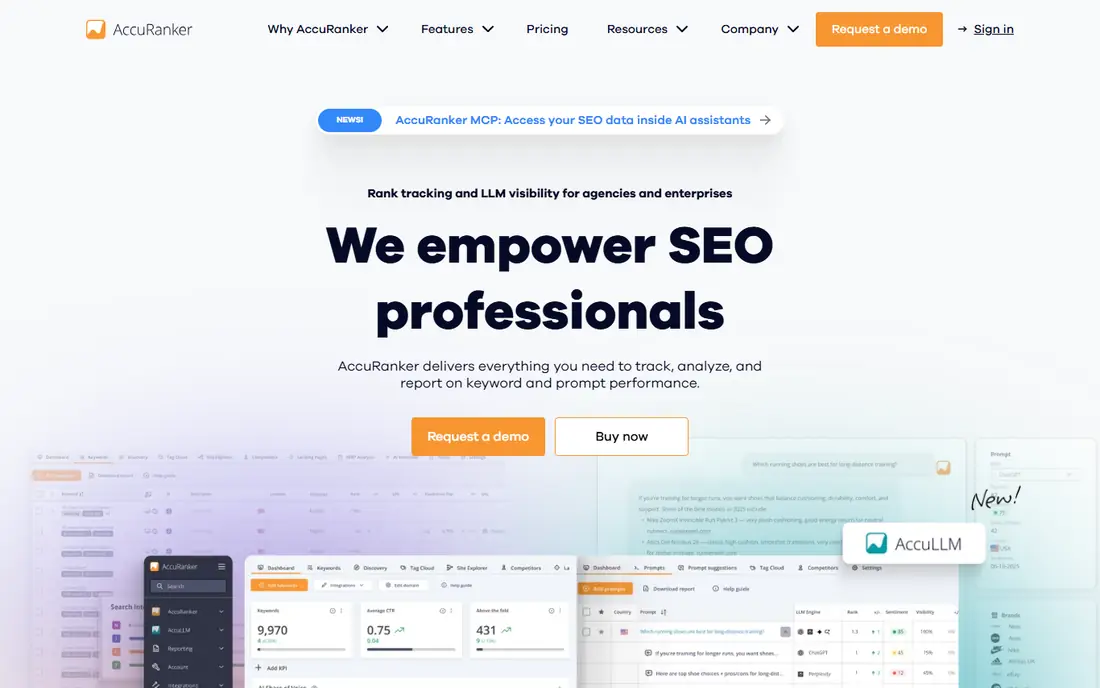
AccuRanker suits agencies and large sites that need daily rankings refreshed quickly and accurately. Its cloud-based engine updates thousands of keywords daily, with local tracking down to city and ZIP level, plus Google and Bing coverage. Integrations with Data Studio, Sheets, and SEO platforms let teams build client reports without manual exports.
Pricing sits at the premium end, and the trial period is short, so teams should test with a real keyword set before committing. AccuRanker works best for users whose decisions depend on fresh daily data, not weekly snapshots. For speed and scale, it leads this list.
What we like- Very fast daily updates
- Accurate local tracking
- Strong integrations
Watch out for- Premium pricing
- Trial is short

#2SE Ranking
Best for: Tracking plus SEO suite4.7/5 on
G2 (1,606 reviews, checked Oct 2026)
Visit seranking.com
Starting priceSee website
Free planNo
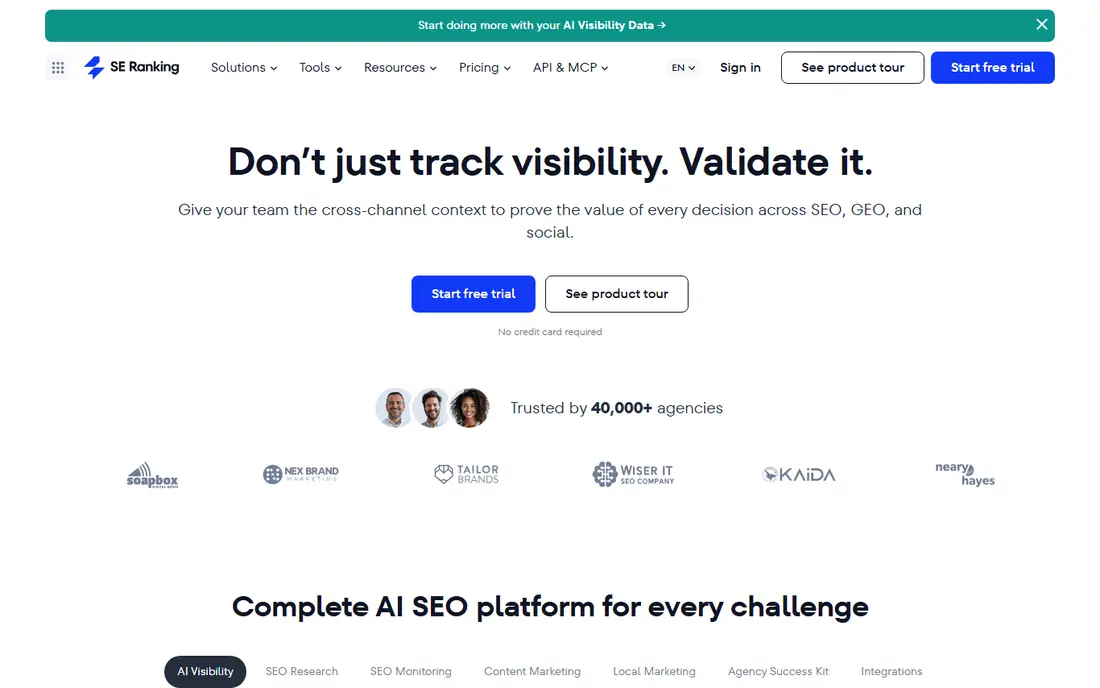
SE Ranking suits teams that want daily rank tracking inside a broader SEO platform. Alongside rankings, it covers site audits, backlink checks, keyword research, and competitor tracking, which reduces the need for several subscriptions. White-label reports help agencies present results under their own brand.
The interface feels dense for beginners, and daily update frequency varies by plan, so check the plan details before buying. SE Ranking works best for small and mid-size teams that want one SEO tool rather than a tracking-only service. For value plus breadth, it is a strong pick.
What we like- Daily tracking plus audits and research
- Good value
- White-label reports
Watch out for- Interface is dense
- Daily updates vary by plan

#3Wincher
Best for: Simple daily tracking4.6/5 on
G2 (458 reviews, checked Oct 2026)
Visit wincher.com
Starting priceSee website
Free planNo
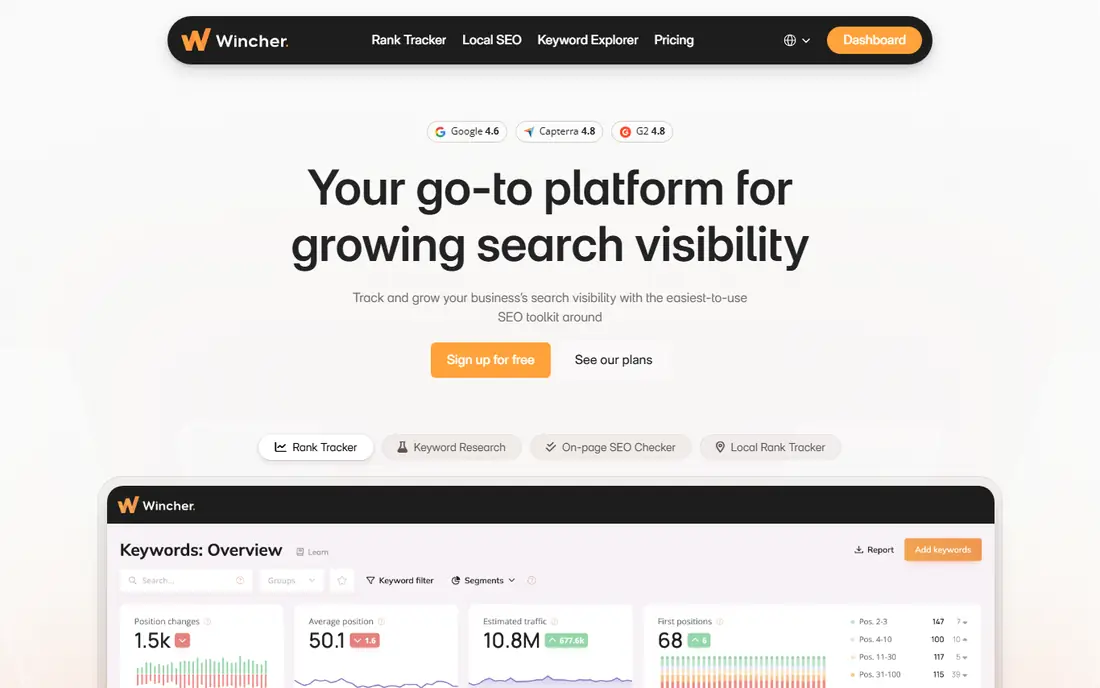
Wincher suits freelancers and small sites that want daily rank tracking without a complex platform. Its interface shows rankings, changes, and competitors plainly, with daily updates and email alerts when positions move. Setup takes minutes, and affordable entry plans suit single-site owners.
Extra SEO tools are thinner than SE Ranking or Nightwatch, and cheap plans limit keyword counts, so large sites need higher tiers. Wincher works best for users who track rankings daily and use other tools for audits and research. For simple daily tracking, it is the easiest option here.
What we like- Simple interface
- Daily updates
- Affordable entry plans
Watch out for- Fewer extra SEO tools
- Smaller keyword limits on cheap plans
Starting priceSee website
Free planNo
SERPWatcher, part of the Mangools suite, suits users who already use Mangools for keyword research and want tracking in the same account. Its daily rank views show position changes, estimated visits, and a performance index that summarizes overall movement. Keyword setup is simple, and the clean design suits beginners.
Daily update frequency depends on the Mangools plan, and local tracking depth lags AccuRanker for hyperlocal needs. SERPWatcher works best for Mangools users and small teams that value simplicity over scale. For Mangools-based workflows, it fits naturally.
What we like- Clean daily rank views
- Part of Mangools suite
- Easy keyword setup
Watch out for- Daily updates depend on plan
- Limited local depth
Starting priceSee website
Free planNo
ProRankTracker suits agencies that need detailed daily reporting for many clients. Its reports cover rankings, search volume, and visibility across search engines, devices, and locations, with white-label dashboards clients can view directly. Mobile and local tracking add depth for local SEO agencies.
The interface feels dated next to Wincher or SE Ranking, and new users face a learning curve before reports look polished. ProRankTracker works best for agencies that prioritize report depth over design. For agency reporting at scale, it remains a proven choice.
What we like- Detailed daily reports
- White-label dashboards
- Mobile and local tracking
Watch out for- Interface feels dated
- Learning curve for new users

#6Nightwatch
Best for: Tracking plus site audits4.7/5 on
G2 (64 reviews, checked Oct 2026)
Visit nightwatch.io
Starting priceSee website
Free planNo
Nightwatch suits teams that want daily tracking plus site audits and clear visualizations in one tool. Its rank graphs show trends plainly, audits flag technical issues, and agency reports present progress to clients without extra tools. That combination suits small agencies and in-house teams alike.
Pricing rises with keyword counts, so large tracking programs cost more, and integrations lag AccuRanker. Nightwatch works best for teams that want tracking plus audits in one subscription. For visual reporting plus audits, it is a balanced pick.
What we like- Daily tracking plus audits
- Good visualizations
- Agency reports
Watch out for- Pricing rises with keywords
- Fewer integrations than AccuRanker

#7Sitechecker
Best for: Tracking plus on-page checks4.6/5 on
G2 (128 reviews, checked Oct 2026)
Visit sitechecker.pro
Starting priceSee website
Free planNo
Sitechecker suits site owners who want rank tracking alongside on-page audits and backlink monitoring. Its audits flag broken links, missing tags, and speed issues, while rank tracking shows daily movement for core keywords. Simple reports suit owners who manage their own SEO without an agency.
Daily update limits on cheap plans mean heavy trackers need higher tiers, and its rank database is smaller than AccuRanker. Sitechecker works best for small sites that want tracking plus health checks in one place. For owner-managed SEO, it is a practical option.
What we like- Rank tracking plus site audits
- Backlink monitoring
- Simple reports
Watch out for- Daily update limits on cheap plans
- Smaller rank database
Starting priceSee website
Free planNo
Advanced Web Ranking suits enterprises and agencies tracking tens of thousands of keywords daily. Its cloud and desktop options handle large programs, with daily updates, local and mobile tracking, and a strong API for custom reporting. That scale suits SEO platforms and large agencies with complex client portfolios.
Setup is complex for beginners, and pricing at scale is custom, which slows comparison. Advanced Web Ranking works best for large operations that need capacity and API access more than simplicity. For large-scale daily tracking, it is the most capable tool on this list.
What we like- Very large keyword capacity
- Daily updates
- Strong reporting and API
Watch out for- Complex setup
- Pricing is custom at scale
How we chose
We compared rank tracking services on update frequency, accuracy, local and mobile coverage, reporting, and price, using vendor pages, trial documentation, and public user experience. The reference buyer was a site owner or agency tracking rankings daily, so true daily updates mattered more than weekly averages. Pricing was treated as plan-dependent where vendors vary updates by tier. Accuracy claims were treated as vendor-reported, since independent testing across all locations and devices is rarely published. That caution applies to speed and accuracy claims across all tools on this list, so run your own trial before committing. Trial length matters, since two weeks reveal patterns that two days hide. Device coverage was checked, since mobile and desktop rankings differ sharply. API access was noted for teams building custom reports. Support responsiveness was compared for agency users. Historical data retention was checked for trend analysis. Alert quality was compared for ranking drops. White-label options were checked for client reporting.
How to pick the right service
Confirm daily means daily on your plan
Some tools update daily only on higher plans, so confirm update frequency for your exact tier and keyword count before buying. A weekly tool mislabeled as daily wastes money for fast-moving sites. Ask sales to confirm update frequency in writing, since plan pages sometimes describe maximum frequency rather than guaranteed frequency. Test the first week of updates against that promise before paying for a full year. Keep the written confirmation with your subscription records. Escalate quickly if updates fall short of the promise. Document shortfalls with dates for support tickets. Request credits when updates fail repeatedly. Consider switching vendors after repeated failures. Compare backup tools before switching. Document switching costs before committing.
Match keyword capacity to your real list
Count keywords across locations and devices, since each combination often counts separately. A tool that fits 500 keywords on paper may fit only 150 tracked combinations in practice. Build your count from real campaigns, including every city and device variant you actually track. Add a growth buffer of twenty percent, since keyword lists grow as sites add pages and locations. Revisit the count quarterly as campaigns expand. Prune dead keywords yearly to keep counts honest. Archive pruned keywords in case they regain relevance. Share counts with clients for transparent billing. Review counts before annual renewals. Document count changes for audit trails.
Test accuracy on your own keywords
Run a two-week trial on keywords you already know, and compare reported positions against manual checks. Accuracy varies by location, device, and search engine, so your own test beats marketing claims. Include local keywords in the trial, since local accuracy differs most between tools. Record mismatches daily, so patterns become visible rather than single-day noise. Share trial results with your SEO team before purchasing. Archive trial data for future vendor comparisons. Re-run trials yearly as tools update methods. Compare trial results across search engines separately. Test competitor tracking accuracy during trials. Document trial setup for repeatability. Share trial findings with clients when relevant. A documented trial also helps justify the purchase to finance teams later. Keep trial keywords stable across vendors, and run trials in the same week, so seasonal ranking shifts do not skew comparisons. Record device type for each check, since mobile and desktop results differ. Note location settings used, since local pack results change by city and zip code.
Frequently asked questions
How often should I track rankings?
Daily tracking suits sites with frequent changes, algorithm sensitivity, or local competition, while weekly tracking suits stable sites. Daily data also reveals short-term drops faster, which helps diagnose problems early.
Is daily rank tracking accurate?
Daily tracking is generally accurate within normal search variation, though positions fluctuate by location, device, and personalization. Compare trends over weeks rather than single-day jumps for reliable decisions.
Do I need a separate rank tracker if I use an SEO suite?
SEO suites like SE Ranking and Nightwatch include tracking, so separate trackers suit only users who need faster updates, larger capacity, or deeper local data. Most small sites do fine with suite tracking.
What is the difference between daily and on-demand updates?
Daily updates run automatically each day, while on-demand updates refresh only when you request them. Daily suits monitoring, while on-demand suits occasional checks and saves update credits.
Which tool is best for agencies?
AccuRanker suits agencies needing speed and scale, ProRankTracker suits detailed client reporting, and SE Ranking suits agencies wanting a full SEO suite. Pick by client count, report needs, and budget.
Sources we checked (8)
- https://www.accuranker.com
- https://seranking.com
- https://www.wincher.com
- https://mangools.com
- https://www.proranktracker.com
- https://nightwatch.io
- https://sitechecker.pro
- https://www.advancedwebranking.com
Is your product missing or out of date?
We review this list regularly. Vendors can request a listing, send updated pricing or ask about featured placement.

Shihab Mia · Founder, Rankite
Shihab has 5+ years in B2B and SaaS SEO. He writes Rankite's software buying guides from pricing pages, documentation and public user reviews. More about Shihab.
 SERPWatcher
 ProRankTracker
 Advanced Web Ranking