How we make this list: we compare pricing pages, product documentation and public user reviews. Ratings come from G2, Capterra or Trustpilot, with the date we checked them.
Key takeaways
- Nexudus at $150 per month is the most customizable platform for growing and multi-location operators that need CRM, automation, and reporting depth.
- Optix at $197 per month is the design-forward pick for boutique spaces where the member app experience defines the brand.
- Cobot at $81 per month for up to 10 members is the simplest reliable option for small spaces that want bookings and billing without complexity.
- Spacebring at $165 per month bundles everything including a branded member app, with AI features currently free in beta.
- OfficeRnD Flex, Yardi Kube, and essensys serve enterprise and multi-location operators, but all price by quote.
Quick comparison
| Tool | Best for | Starting price | Free plan |
|---|
 Nexudus Nexudus | Growing and multi-location operators | $150/month (Professional) | Free trial |
 Optix Optix | Boutique spaces, premium member app | $197/month (Essentials) | Free trial |
 Cobot Cobot | Small spaces wanting simplicity | $81/month (up to 10 members) | Free trial |
 OfficeRnD Flex OfficeRnD Flex | Enterprise-grade flex operations | See website | No |
 Spacebring Spacebring | Branded member app and community | $165/month | Free trial |
 Yardi Kube Yardi Kube | Real estate portfolios with flex space | See website | No |
 essensys essensys | Enterprise flex workspace platform | See website | No |
 Archie Archie | Teams-native booking experience | See website | Free trial |
 Deskworks Deskworks | Simple check-in and billing | See website | Free trial |
Is your product missing or out of date?
We review this list regularly. Vendors can request a listing, send updated pricing or ask about featured placement.
The best best coworking software
How much of your team's week goes to billing disputes, booking conflicts, and door access issues? That is the question coworking software answers. The right platform automates memberships, invoicing, room bookings, and member communication, leaving your team to build community instead of chasing paperwork.
The second question is what kind of operator you are. A single boutique space needs a beautiful member app and simple billing. A multi-location operator needs consolidated reporting, CRM, and automation across sites. A landlord adding flex space to a commercial portfolio needs real estate-grade financials. The tools below cover that range, from $81 a month to enterprise contracts.
Pricing models vary: per active user, per member, per location, or flat monthly. Model your actual member count and location count before comparing, because the cheapest headline price is rarely the cheapest at your scale.
Starting price$150/month (Professional)
Free planFree trial
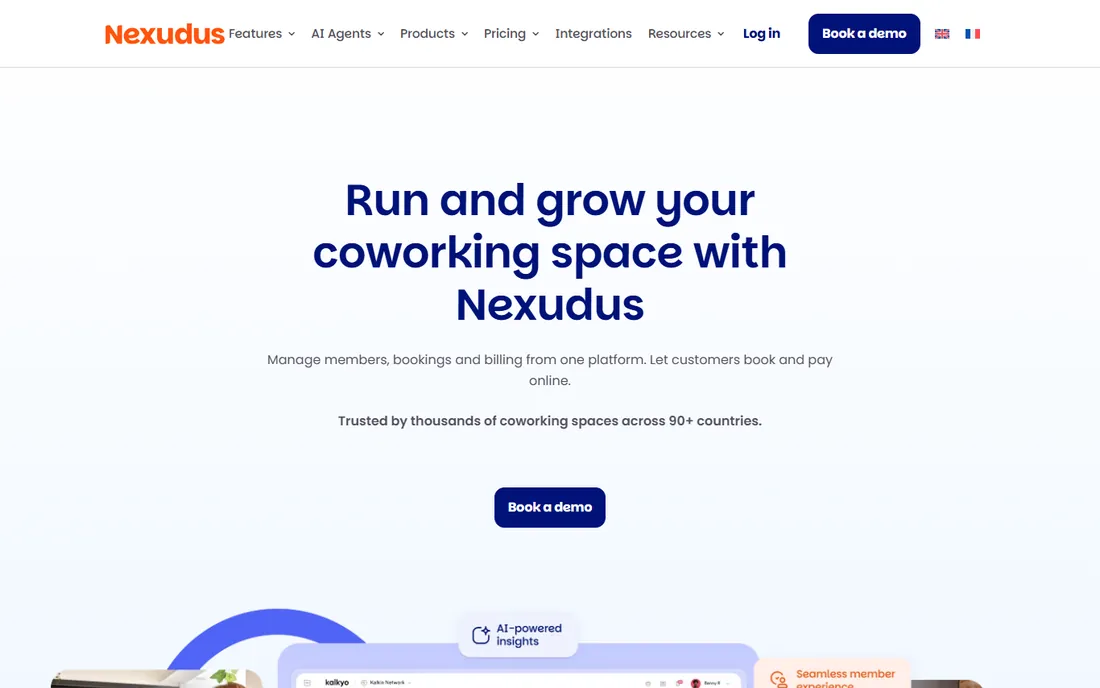
Nexudus is the most established coworking platform for operators that need control. It combines member management, bookings, billing, CRM, and marketing automation with code-level customization that lets technical teams tailor workflows precisely. Multi-location operators get consolidated reporting and shared member databases across sites.
The Professional plan starts at $150 per month, with pricing scaling by active user count and an Enterprise tier for custom packages. A free Coworking Lite tier and a 21-day trial let operators evaluate before committing. The built-in CRM means leads flow from website to tour to membership without a separate system.
The honest trade-off is complexity. Nexudus is powerful but not simple; implementation and ongoing management reward operators with technical confidence or dedicated staff. Single-location spaces with straightforward needs often find it heavier than necessary. For growing operators that will use the depth, it is the most capable platform under enterprise pricing.
What we like- Deepest customization in the category
- Built-in CRM
- Strong automation and reporting
Watch out for- Steep learning curve
- Setup takes real time
- Pricing scales with active users
Starting price$197/month (Essentials)
Free planFree trial
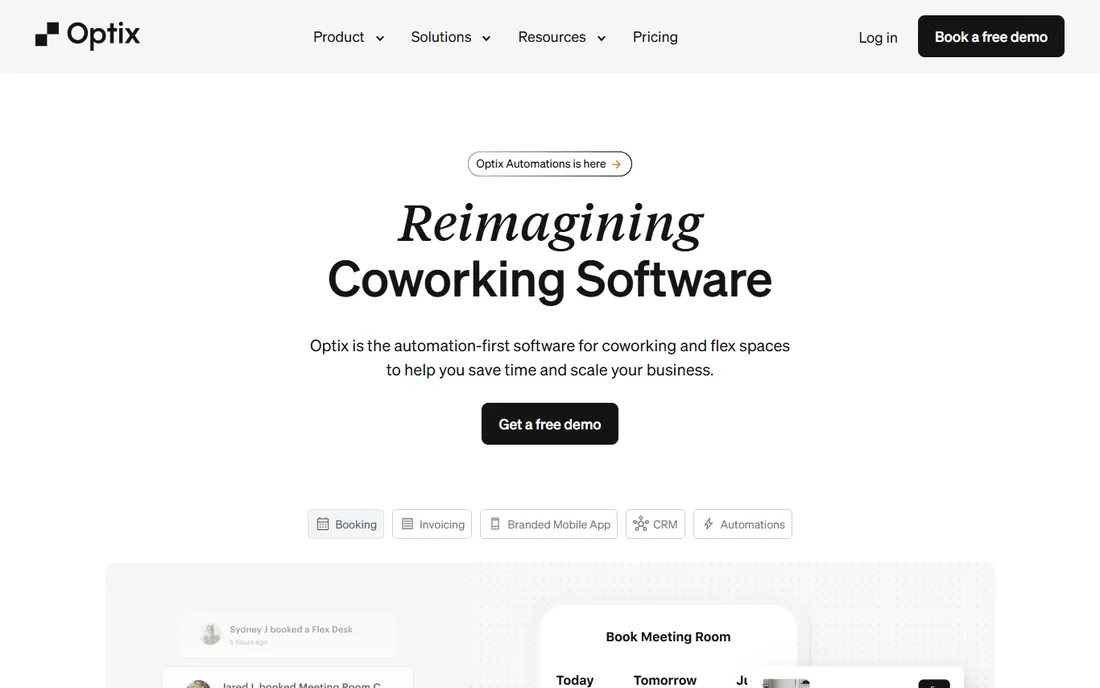
Optix is the design-forward coworking platform. Its mobile-first member app lets members book desks and rooms, manage their accounts, and communicate with the community through an interface that looks like a consumer product rather than business software. Boutique and premium spaces choose it because the app experience carries the brand.
Pricing runs $197 per month for Essentials, $299 for Pro, and $498 for Grow, with a custom Scale tier for large operators. Add-ons cover multi-location management, white-labeled apps, and visitor management. A free trial lets operators test the member experience directly.
The honest limitations are operational depth. Admin tools are desktop-only, operators pay per automation or notification which adds up at scale, and the enterprise reporting does not match Nexudus or OfficeRnD. Optix wins when member experience is the priority; operations-heavy multi-location groups should compare carefully.
What we like- Polished mobile-first member app
- Quick onboarding
- Strong brand presentation
Watch out for- Admin tools are desktop-only
- Per-automation costs add up
- Fewer enterprise reporting features
Starting price$81/month (up to 10 members)
Free planFree trial
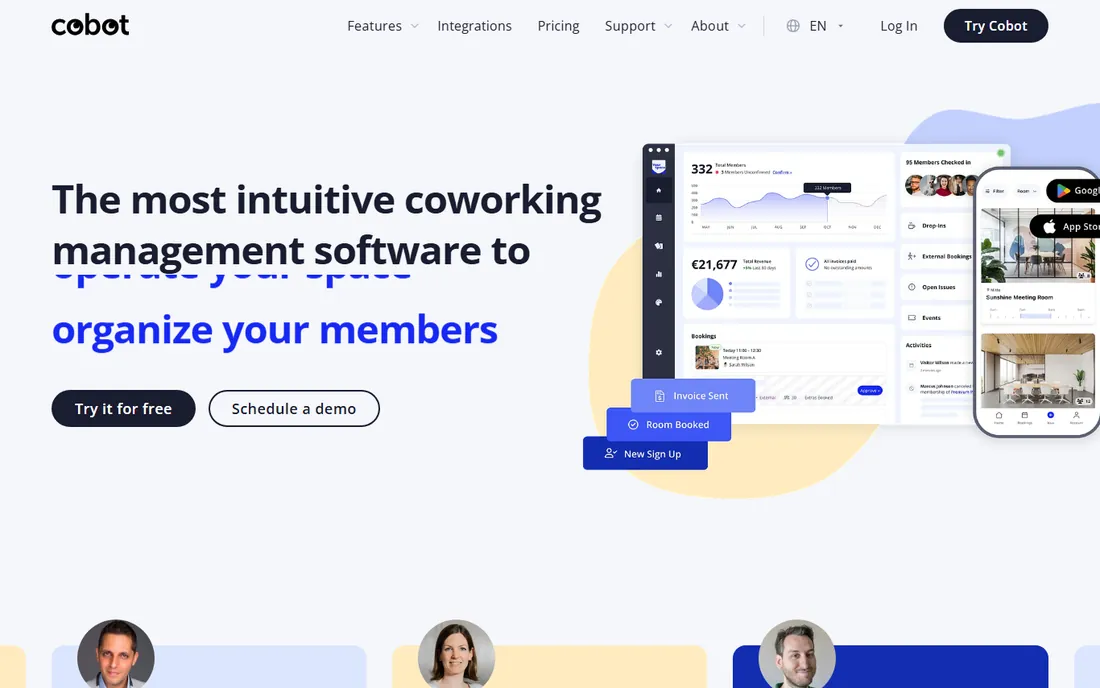
Cobot is the straightforward choice for small to mid-size coworking spaces. Bookings, recurring billing, member management, and payment processing work reliably without the configuration burden of the bigger platforms. The German-built product has a reputation for doing the basics exceptionally well.
Pricing is transparent and member-based: around $81 per month for up to 10 members, scaling in bands to $439 for 100 members, with custom pricing beyond. A 30-day unrestricted free trial requires no credit card. The integration marketplace covers access control systems like Kisi, accounting tools, and communication apps.
The honest trade-offs are growth-related. There is no built-in CRM, so growing brands add and pay for a separate system, and costs climb noticeably past 50 members. Customization is limited compared to Nexudus. For spaces under 50 members that want software working this week, Cobot is the pragmatic pick.
What we like- Transparent member-based pricing
- Simple reliable core features
- Strong integration marketplace
Watch out for- No built-in CRM
- Costs climb past 50 members
- Limited customization
Starting priceSee website
Free planNo
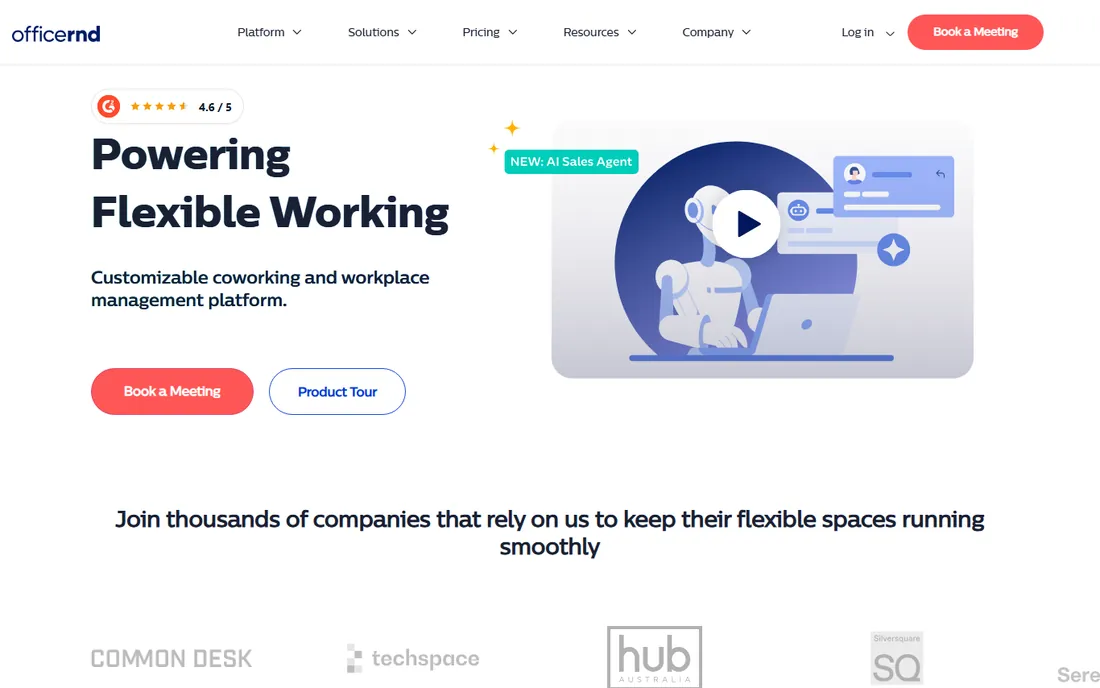
OfficeRnD Flex is the enterprise end of coworking software. It unifies memberships, billing, contracts, and a member portal with financial reporting built for real estate lease accounting, which suits landlords and large flex operators managing portfolios rather than single communities.
The platform's strength is structured financial visibility: revenue performance across locations, enterprise reporting, and accounting integrations that satisfy corporate finance teams. Guided onboarding, data migration, and dedicated customer success for multi-location accounts come with the territory.
The honest fit is narrow. Pricing is quote-only and enterprise-grade, the product leans toward real estate operations over community management, and smaller spaces find the feature set excessive. It earns its place for operators where financial reporting rigor matters more than community tooling.
What we like- Enterprise financial reporting
- Unified billing, contracts and member portal
- Strong multi-location support
Watch out for- Quote-only pricing
- Built for real estate accounting more than community
- Heavier than small spaces need
Starting price$165/month
Free planFree trial
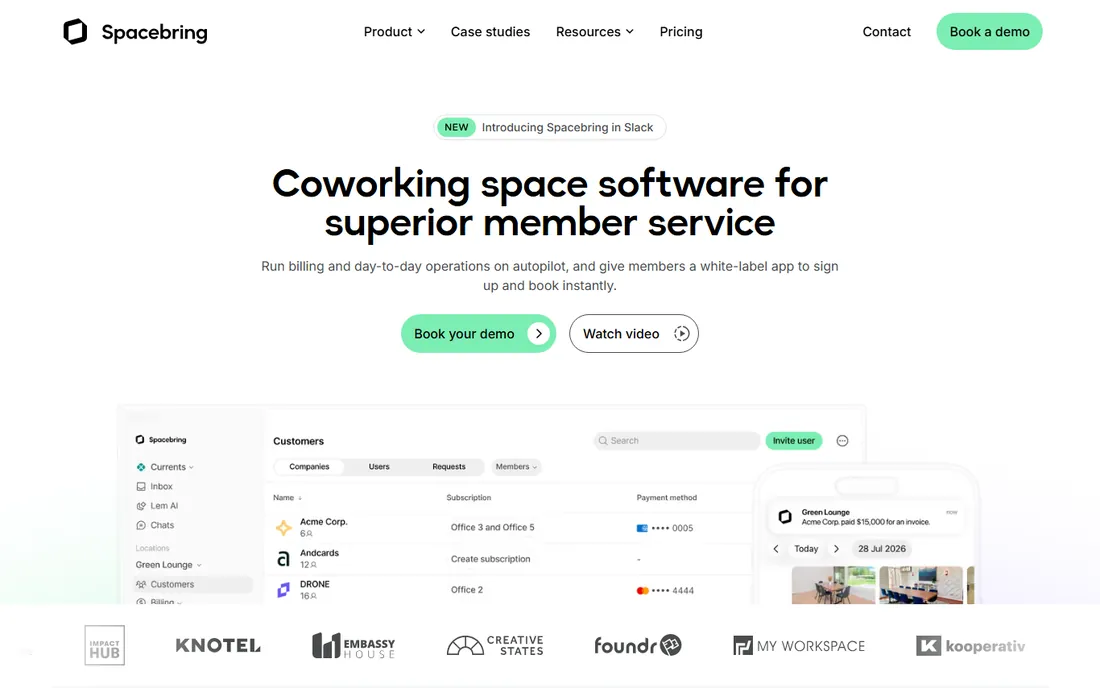
Spacebring positions itself as the all-inclusive coworking platform. One price covers member management, automated billing, bookings, and a branded member app, with a native admin app for staff. The AI agent, currently free while in beta, assists with member service automation.
At $165 per month to start, the pricing undercuts the bigger platforms while including features they sell as add-ons. That bundling appeals to operators tired of pricing calculators and per-feature upsells. A free trial lets teams validate the full stack.
The honest caveats are maturity and scale. Spacebring is smaller than the category leaders, with fewer public reviews and a thinner enterprise feature set. Operators running complex multi-location businesses should verify the reporting and automation depth against their requirements. For single and few-location operators, the value is compelling.
What we like- Everything included in one price
- Native admin app
- AI agent free while in beta
Watch out for- Smaller vendor than Nexudus or OfficeRnD
- Fewer public reviews
- Enterprise features thinner
#6
Yardi Kube
Best for: Real estate portfolios with flex space
Visit yardi.com
Starting priceSee website
Free planNo
Yardi Kube is coworking software for real estate companies. Built inside the Yardi ecosystem, it manages flex and coworking space with billing tightly integrated into property management workflows, which suits landlords operating coworking alongside traditional office portfolios.
The integration story is the entire pitch. If the portfolio already runs on Yardi for leasing, accounting, and asset management, Kube extends that system to flex space rather than introducing a parallel stack. Financial workflows follow real estate conventions that independent coworking tools do not.
The honest limitation is flexibility. Independent coworking operators prioritizing community, adaptive pricing, and member experience will find Kube rigid compared to Nexudus or Optix. It is the right tool for landlords; it is the wrong tool for community-first brands.
What we like- Native to Yardi property management
- Strong for landlords
- Integrated financial workflows
Watch out for- Quote-only enterprise pricing
- Less flexible for independent operators
- Community features thinner
Starting priceSee website
Free planNo
essensys is the enterprise software and technology platform for the flex workspace industry. It combines workspace management software with the digital infrastructure large operators need: member management, billing, and integrations across portfolios, built for operators running significant square footage.
The platform's credibility comes from scale. Large flex brands run on essensys precisely because it handles the operational and technical complexity that breaks smaller tools: multi-entity billing, complex access control, and portfolio-wide reporting.
Everything about buying essensys is enterprise: quote-only pricing, a consultative sales process, and implementation scoped like an IT project. Independent spaces and small operators should not be here. Enterprise flex operators evaluating platforms should include it alongside OfficeRnD and Yardi Kube.
What we like- Enterprise-grade platform with deep integrations
- Strong for large flex operators
- Proven at scale
Watch out for- Quote-only pricing
- Enterprise sales process
- Overkill for independent spaces
Starting priceSee website
Free planFree trial
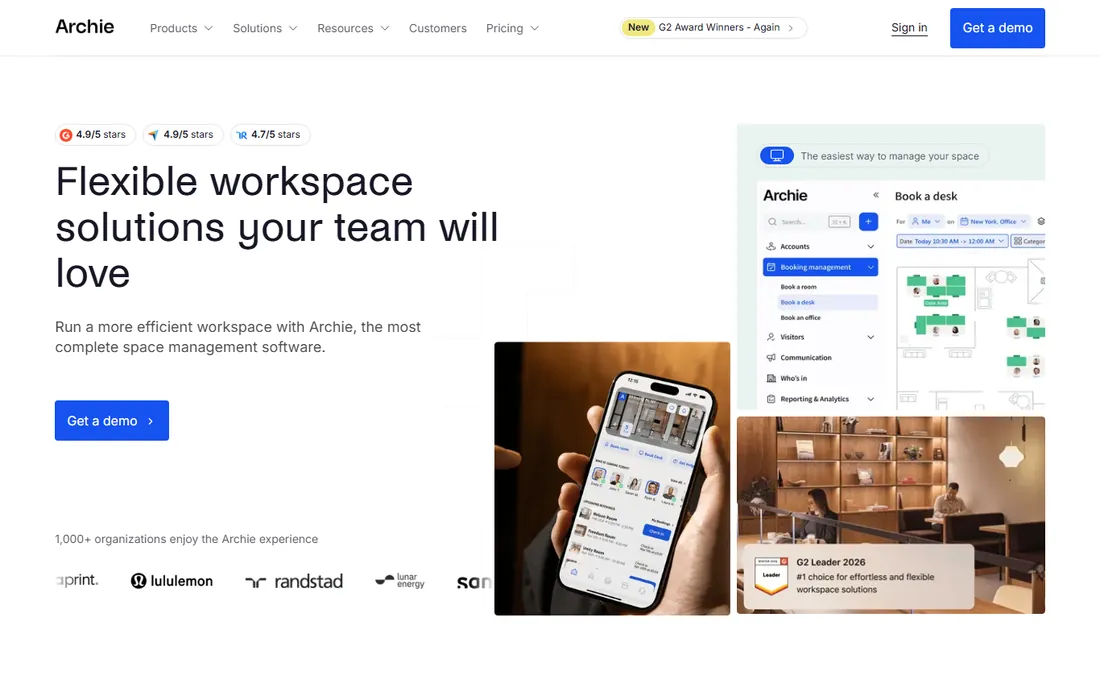
Archie differentiates through Microsoft integration. Members book desks and rooms natively inside Microsoft Teams and Outlook, which suits corporate flex spaces and enterprise satellite offices where employees live in the Microsoft ecosystem. The booking experience meets users where they already work.
That Teams-native approach reduces training to near zero for Microsoft-centric organizations. The member experience is simple and focused on the booking job rather than community features.
The honest trade-offs are breadth and transparency. Pricing is not published, the mobile app carries fewer features than Optix or Spacebring, and the vendor is smaller than the category leaders. It fits corporate flex spaces integrated with Microsoft 365; community-driven coworking brands need more.
What we like- Native Microsoft Teams and Outlook booking
- Good for corporate flex spaces
- Simple member experience
Watch out for- Pricing not published
- Mobile app less featured than competitors
- Smaller vendor
Starting priceSee website
Free planFree trial
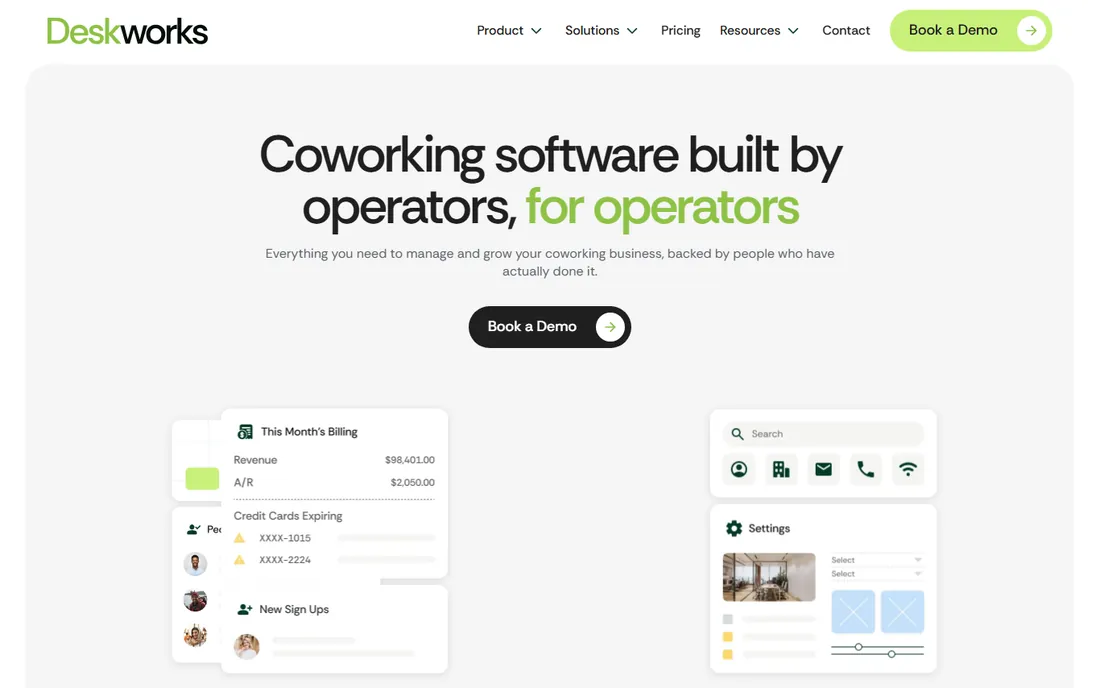
Deskworks is the lightweight option for spaces that need the essentials without the platform weight. Member check-in, billing, and room bookings work from a simple interface that staff learn in an afternoon. Deployment is quick, and the product stays out of the way.
The appeal is operational simplicity. Small spaces, makerspaces, and niche communities that find Nexudus overwhelming and Cobot still more than they need can run on Deskworks without a software project. A free trial covers the evaluation.
The honest limitation is depth. Reporting, automation, and integrations lag the category leaders, and pricing is not published transparently. It is the right choice when simplicity is the requirement; operators that expect to need depth later should start with a platform that grows.
What we like- Simple and affordable
- Quick to deploy
- Covers check-in, billing and bookings
Watch out for- Pricing not published clearly
- Feature depth below leaders
- Smaller ecosystem
How coworking pricing models actually work
Coworking software charges in four ways, and the model changes the bill at your scale. Per-member pricing, like Cobot's bands, is predictable for stable membership but climbs as you grow. Per-active-user pricing, like Optix's tiers, charges for everyone using the system. Per-location pricing suits multi-site operators. Flat monthly pricing, like Spacebring's, is simplest to budget.
Before comparing, count three numbers: paying members, total active users including staff and day-pass users, and locations. A 60-member space pays very differently under member-based versus user-based pricing, and vendors define "active" differently. Get the definition in writing.
Watch the add-ons. White-labeled mobile apps, multi-location management, advanced automations, and visitor management are frequently sold separately, and the headline price rarely includes them. Price the configuration you will actually run, not the entry tier.
Questions to ask on the demo
Ask who does the billing work today and map it to the platform. Run your actual membership types, discount structures, and invoicing cycle through the demo, not the vendor's sample data. Billing edge cases, prorations, credits, and failed payments, are where implementations succeed or fail.
Ask about door access integration specifically. Members expect their app or credential to open doors, and the integration between the software and your access control hardware is a common pain point. Confirm the exact hardware you use is supported and ask for a reference operator running the same combination.
Ask about the member app experience from a member's perspective. Have the vendor demo the member app, not just the admin console, because member adoption determines whether the software reduces your team's workload or adds a support burden. A beautiful admin panel with a clumsy member app is a bad trade.
How we compared these nine
We started with the platforms that dominate coworking operator shortlists: Nexudus, OfficeRnD Flex, Optix, and Cobot, plus the newer and specialist options operators discuss, including Spacebring, Yardi Kube, essensys, Archie, and Deskworks. We reviewed current pricing pages, product documentation, and public review summaries on G2, Capterra, and coworking industry publications.
Prices come from vendor-published or consistently reported figures; vendors that sell by quote are marked as See website. We did not run trial deployments; this guide reflects documentation, published pricing, and aggregated user feedback. Model your member count, user count, and locations against each pricing model before purchasing.
Frequently asked questions
What is coworking software?
Coworking software manages the operations of flexible workspaces: memberships, desk and room bookings, billing and invoicing, member communication, and door access. It replaces the spreadsheets and disconnected tools that break down as a space grows, and usually includes a member-facing app or portal.
How much does coworking software cost?
Entry-level plans run $81 to $197 per month for small spaces, mid-market platforms $150 to $500 per month depending on members and locations, and enterprise platforms are quote-only. Pricing models vary by member, user, or location, so compare at your actual scale rather than on headline rates.
Do I need coworking software or just a booking tool?
A booking tool handles desks and rooms; coworking software adds memberships, recurring billing, CRM, and member community features. Spaces under 20 members can sometimes manage with bookings plus accounting software. Past that, the billing and membership administration justify a dedicated platform.
Can coworking software handle multiple locations?
The mid-market and enterprise platforms handle multi-location operations with consolidated billing, shared member databases, and location-level reporting. Entry-level tools often charge per location or lack consolidated views. If expansion is in the plan, verify multi-location pricing now rather than migrating later.
What integrations matter most for coworking spaces?
Door access control is the critical one, since members expect app-based entry. Accounting sync with QuickBooks or Xero keeps finances clean. Payment processing, WiFi management, and communication tools round out the stack. Verify your exact hardware and software versions against the vendor's integration list.
How long does implementation take?
Simple platforms deploy in days to a couple of weeks for a single location. Complex platforms with data migration, custom workflows, and multi-location setup take one to three months. Plan the billing cycle cutover carefully, since mid-cycle migrations cause the most disruption.
Sources we checked (10)
- https://www.nexudus.com/nexudus-coworking/pricing/
- https://www.optixapp.com/pricing/
- https://www.cobot.me/pricing/
- https://www.officernd.com/pricing/
- https://www.spacebring.com/pricing/
- https://www.yardi.com/products/kube/
- https://essensys.tech/
- https://www.archieapp.co/pricing/
- https://www.deskworksapp.com/pricing/
- https://www.spacebring.com/blog/choose-best-coworking-software-guide
Is your product missing or out of date?
We review this list regularly. Vendors can request a listing, send updated pricing or ask about featured placement.

Shihab Mia · Founder, Rankite
Shihab has 5+ years in B2B and SaaS SEO. He writes Rankite's software buying guides from pricing pages, documentation and public user reviews. More about Shihab.