How we make this list: we compare pricing pages, product documentation and public user reviews. Ratings come from G2, Capterra or Trustpilot, with the date we checked them.
Key takeaways
- If you are launching a DeFi protocol or token, a manual audit from a firm like Trail of Bits, OpenZeppelin or Quantstamp is the expected standard, and pricing is quoted per engagement, not per seat.
- Continuous protection matters after launch: CertiK Skynet and Immunefi bug bounties catch what a one-time audit misses.
- OpenZeppelin doubles as a developer toolkit with its Contracts library and Defender platform, so teams that want audited building blocks and monitoring in one place should start there.
- No audit guarantees safety. Budget for at least two independent reviews plus a live bug bounty if real money will touch your contracts.
Quick comparison
| Tool | Best for | Starting price | Free plan |
|---|
 CertiK CertiK | Large protocols wanting audits plus always-on monitoring | See website | No |
 OpenZeppelin OpenZeppelin | Teams building on audited Solidity libraries | See website | No |
 Trail of Bits Trail of Bits | High-assurance audits for complex systems | See website | No |
 Quantstamp Quantstamp | DeFi and L1/L2 audits with insurance options | See website | No |
 Hacken Hacken | Audits bundled with pen testing and compliance | See website | No |
 Halborn Halborn | End-to-end assessments for enterprises and exchanges | See website | No |
 SlowMist SlowMist | AML tooling plus threat intelligence | See website | No |
 Immunefi Immunefi | Continuous bug bounties after launch | See website | No |
Is your product missing or out of date?
We review this list regularly. Vendors can request a listing, send updated pricing or ask about featured placement.
The best blockchain security software
A smart contract bug does not file a support ticket. It drains a treasury in eleven seconds and leaves a post-mortem nobody wants to write. The security market for blockchains is mostly expert firms rather than off-the-shelf software, so "buying" here means commissioning audits, running monitoring, and paying whitehats to find holes before attackers do. Eight providers worth knowing, from the formal-verification specialists to the bounty platforms.
#1
CertiK
Best for: Large protocols wanting audits plus always-on monitoring
Visit certik.com
Starting priceSee website
Free planNo
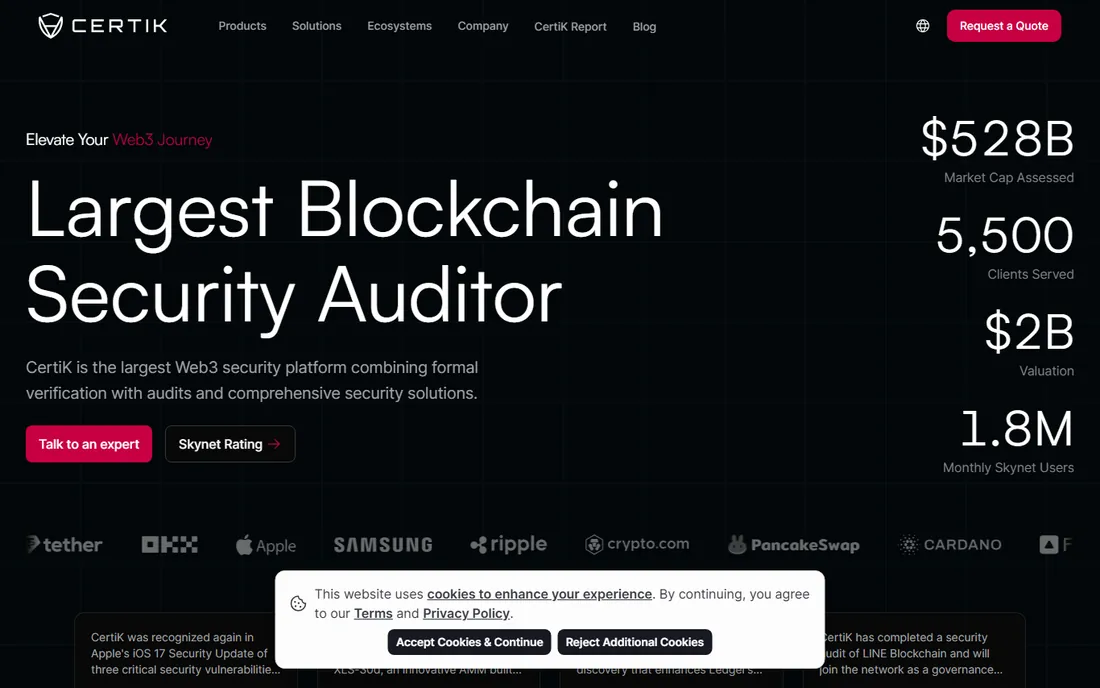
CertiK is the biggest name in Web3 security and the default choice for teams that want one vendor covering audits, monitoring and compliance. Its Skynet platform scores thousands of projects in real time, which doubles as due diligence for investors and as a marketing asset for protocols. The firm pairs manual review with formal verification, a mathematical approach that proves code behaves as specified.
The honest catch is price opacity. Everything is quoted per engagement, and costs scale with code complexity. For early-stage teams the monitoring products may matter more than the audit brand: Skynet watchlists and SkyInsights transaction monitoring keep watching after the auditors leave. CertiK suits well-funded launches that need a recognizable name on their security page.
What we like- Formal verification combined with manual audits
- Skynet provides public security scores and continuous monitoring
- KYC and compliance tooling under one roof
Watch out for- Quote-based pricing means small teams cannot see costs upfront
- The brand is so widely used that an audit badge alone no longer differentiates a project
Starting priceSee website
Free planNo
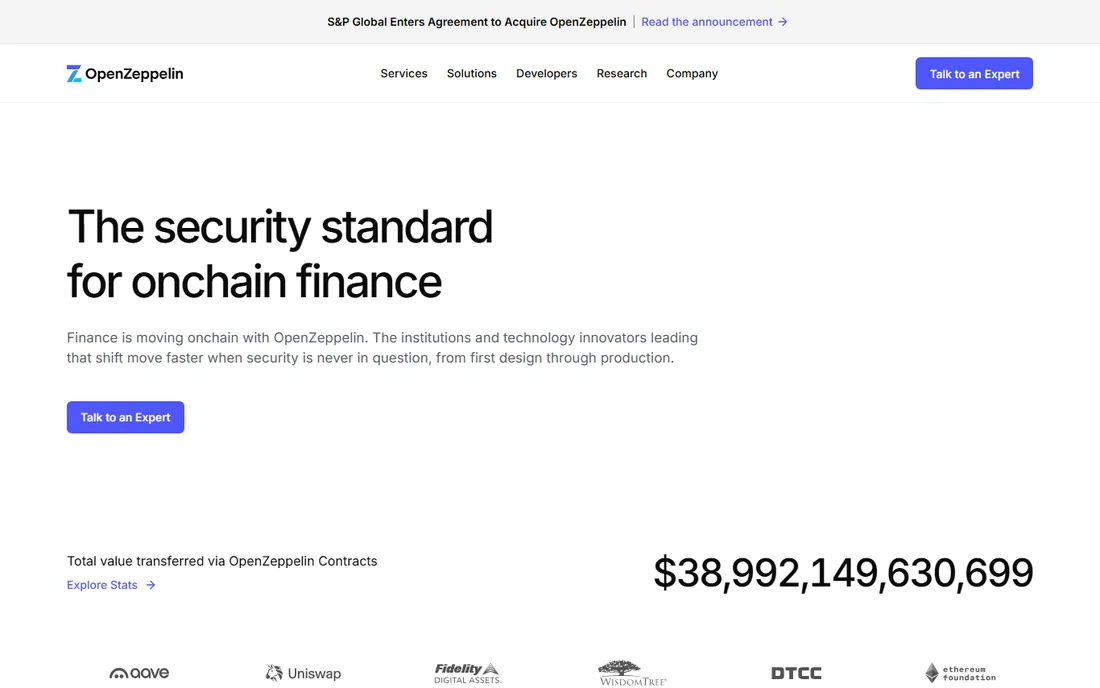
OpenZeppelin sits at the foundation of Ethereum development. Its open-source Contracts library is the code most Solidity developers start from, which means less custom code to audit in the first place. The Defender platform then covers secure deployment, transaction automation and monitoring, and the firm runs one of the most respected audit practices in the space.
The trade-off is availability and scope. Audit slots are limited and waitlists grow when markets run hot, so book months ahead of launch. Defender is genuinely useful but priced as an ongoing platform, not a one-time purchase. OpenZeppelin fits teams deep in the Ethereum ecosystem that want building blocks, audits and operations from one shop.
What we like- Industry-standard Contracts library reduces the code you need audited
- Defender platform handles deployment, monitoring and incident response
- Hundreds of past security engagements
Watch out for- The audit calendar books out during bull markets
- Defender adds ongoing cost on top of audit fees
Starting priceSee website
Free planNo
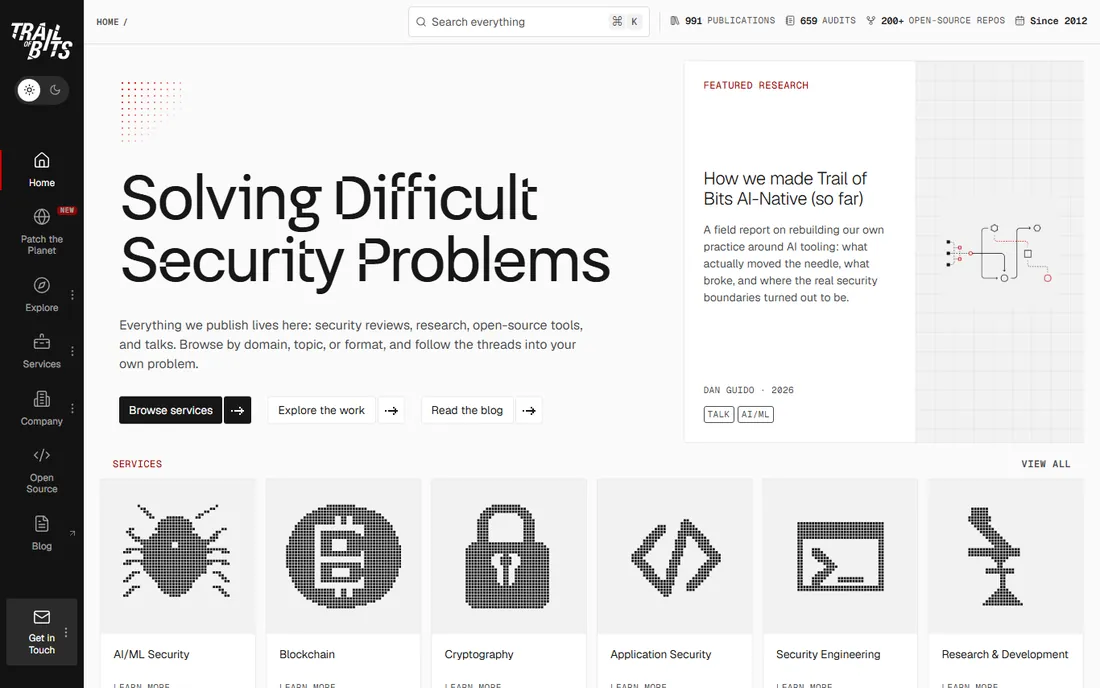
Trail of Bits is the firm other security researchers cite. Its team works on the hardest problems in the space, from cryptographic reviews to blockchain client audits, and its open-source tooling (Slither for static analysis, Echidna for fuzzing) is used across the industry. When a protocol needs the strongest possible assurance, this is the name that comes up.
That rigor costs money and time. Trail of Bits is not the firm for a quick review of a standard token; it is for protocols, bridges, wallets and infrastructure where a bug would be catastrophic. Expect a thorough, slow, expensive process and a report that your engineers will learn from. Choose it when the stakes justify the premium.
What we like- Deep cryptography and protocol-level expertise
- Publishes respected open-source tools like Slither and Echidna
- Research-first culture attracts top auditors
Watch out for- Engagements are expensive and highly selective
- Better suited to complex systems than simple token contracts
Starting priceSee website
Free planNo

Quantstamp has been auditing since 2017 and covers the full spread: DeFi protocols, NFT projects, exchanges and blockchain clients. Beyond audits, its Chainproof product offers insurance against smart contract hacks, which is rare in this market and useful for treasuries that want financial backstop alongside technical review. Managed security services keep coverage running after deployment.
The catch is that pricing is entirely custom and the insurance arm is selective about which protocols qualify. Still, for DeFi teams that want audit plus an insurance conversation in one relationship, Quantstamp is the natural shortlist entry. Ask early whether your protocol qualifies for Chainproof, since that changes the value equation.
What we like- Long track record across DeFi, NFTs and layer-1 chains
- Chainproof insurance product covers smart contract hacks
- Automated scanning complements manual review
Watch out for- Quote-only pricing with no public rate card
- Insurance product has eligibility limits that exclude many new projects
#5
Hacken
Best for: Audits bundled with pen testing and compliance
Visit hacken.io
Starting priceSee website
Free planNo
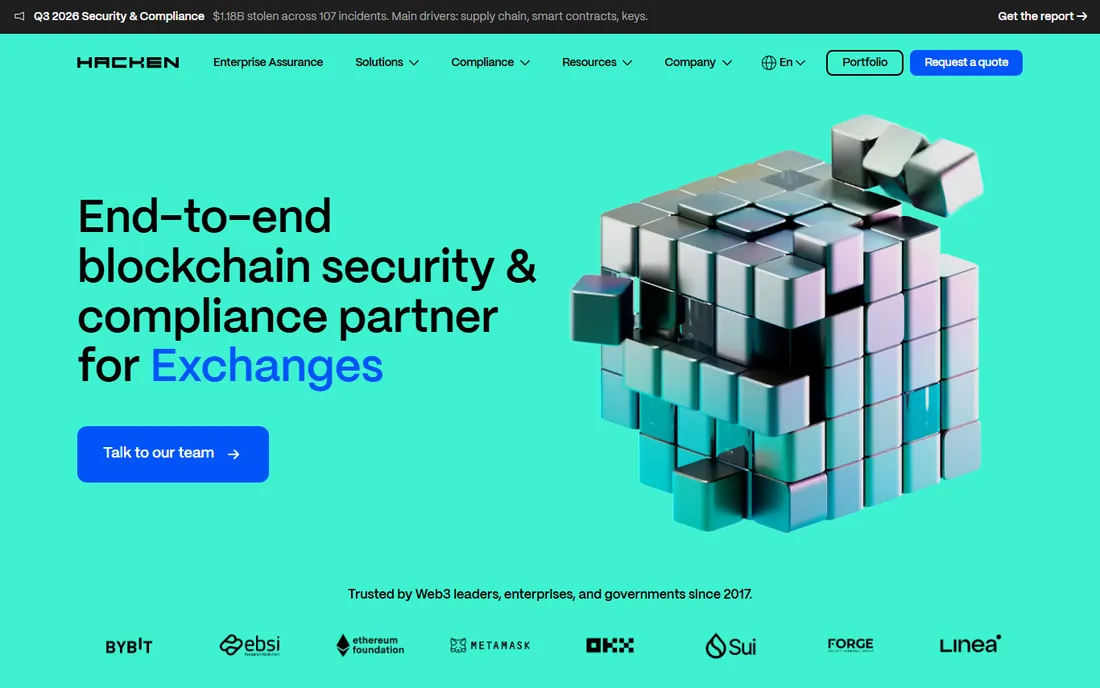
Hacken covers more ground than a pure audit shop. Alongside smart contract reviews it offers penetration testing, crypto exchange security assessments, tokenomics design review and compliance services aimed at regulations like DORA and MiCA. Its HackenProof platform runs bug bounties, and the CER.live exchange ratings are referenced by industry publications.
That breadth is both the pitch and the warning. If you need audits plus pen testing plus a compliance narrative for regulators, one vendor simplifies procurement. If you only need a focused contract review, a specialist firm may go deeper. Hacken fits exchanges, custodians and larger projects with compliance obligations, not just code to check.
What we like- Wide service range from smart contract audits to DORA compliance
- HackenProof bug bounty platform extends coverage
- Strong exchange-security practice
Watch out for- Broad portfolio means depth varies by service line
- Compliance offerings add complexity for teams that only need an audit
#6
Halborn
Best for: End-to-end assessments for enterprises and exchanges
Visit halborn.com
Starting priceSee website
Free planNo
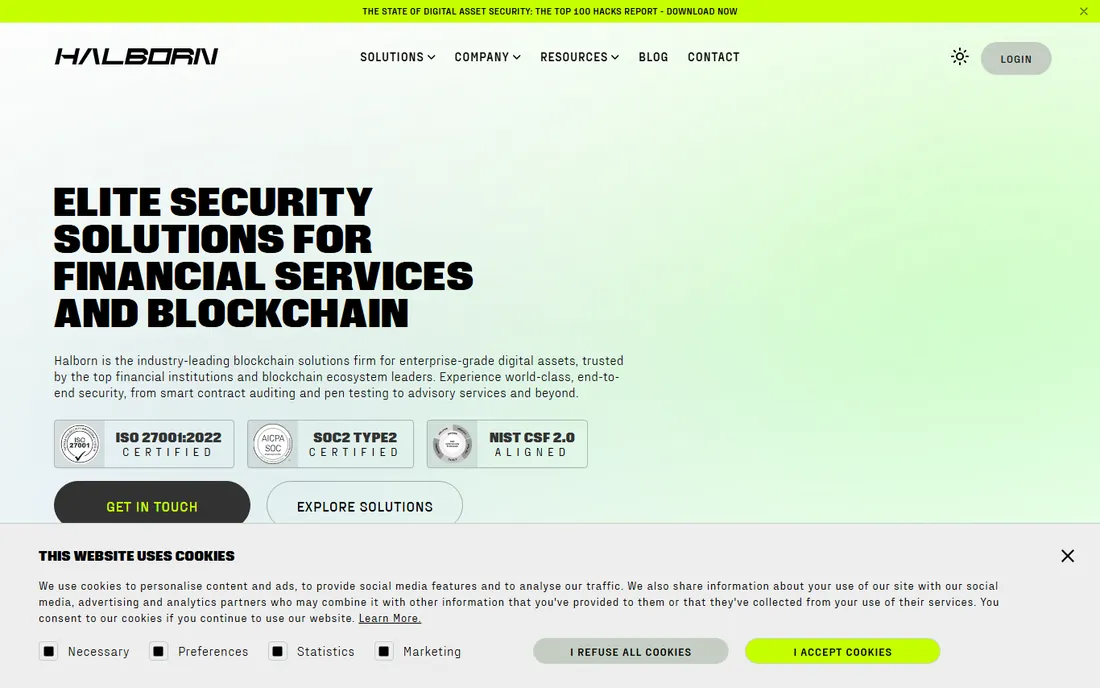
Halborn positions itself as the security partner for institutions entering digital assets. Its work spans smart contract assessments, penetration testing, red team simulations, custody reviews and compliance readiness for emerging regulations. The client list leans toward exchanges, banks and large ecosystem players rather than indie developers.
For a startup shipping its first contract, Halborn is overkill. For an enterprise, custodian or exchange that needs advisory work, technical due diligence and staff training alongside audits, the breadth makes sense. Expect a consultative sales process and pricing to match. Bring Halborn in when the engagement looks more like a security program than a single audit.
What we like- Full-stack coverage from architecture review to red team exercises
- Trusted by major exchanges and financial institutions
- Compliance readiness for MiCA, DORA and VARA
Watch out for- Enterprise orientation makes it a poor fit for small open-source projects
- Pricing is quote-only and reflects the white-glove positioning
Starting priceSee website
Free planNo

SlowMist combines audit services with some of the best threat intelligence in the business. Its public hack reports are a standard reference after major incidents, and its MistTrack platform traces stolen funds while its AML tooling helps exchanges screen risky deposits. The audit practice covers smart contracts, exchanges and wallets.
The honest limitation is fit. Western enterprises sometimes hesitate over jurisdiction, and the product suite assumes a technically strong user. For teams that value threat intelligence and fund-tracing alongside audits, SlowMist is strong. For a simple pre-launch review with lots of guidance, look elsewhere.
What we like- MistTrack crypto tracing and AML platform is genuinely useful
- Publishes detailed hack analyses the industry reads
- Covers exchanges, wallets and bridges
Watch out for- China-based team can complicate procurement for some Western enterprises
- Product documentation skews technical with less hand-holding
Starting priceSee website
Free planNo
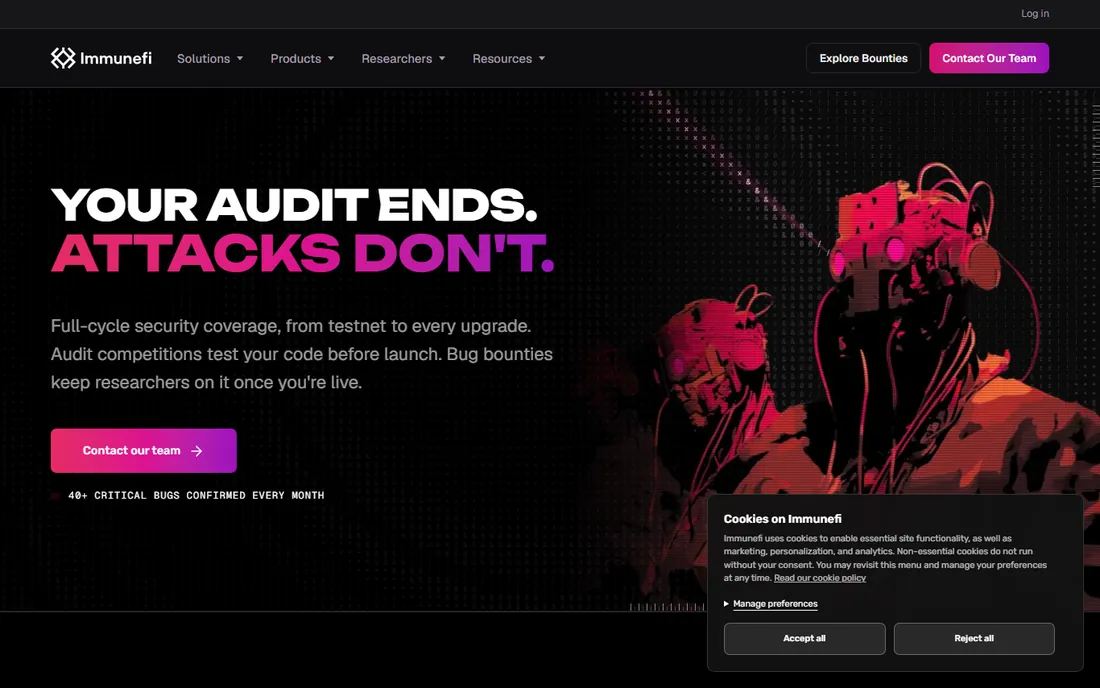
Immunefi is where protocols go after the audit, to pay hackers for finding what reviewers missed. It hosts the largest bounties in software history, including a $10 million payout for a Wormhole vulnerability, and guards a large share of DeFi's total value locked. The platform matches vetted researchers to programs and handles the disclosure workflow.
The mistake to avoid is treating a bounty as a substitute for an audit. Bounties work best on audited, live code where the reward justifies a researcher's time. Small projects with tiny pools attract little attention. Use Immunefi as the always-on layer on top of formal audits, sized to the value your contracts hold.
What we like- Largest Web3 bounty marketplace with the biggest payouts in the industry
- Invite-only programs match top researchers to your code
- Vaults system streamlines bounty payments
Watch out for- Bounties complement audits but do not replace them
- Meaningful programs require serious reward pools, which prices out small projects
How we chose
We picked providers with established audit practices, public track records and verifiable client work, drawing on vendor documentation, published audit reports and industry references. Every tool here exists today and serves real blockchain projects. Prices are quote-based across this category, so we list them as See website rather than repeating unverified figures. We did not run test audits or commission engagements; the write-ups reflect each provider's stated services, focus areas and honest limitations for different buyer types.
What to check before you hire an auditor
Scope the engagement in writing. A quote for "an audit" means little until you know which contracts, which chains and how many review rounds are included. Ask for a sample report: good firms show methodology, severity ratings and remediation re-checks. Check auditor availability against your launch date, since top firms book out months ahead.
Match the firm to the risk. A standard token fork needs a competent review, not a cryptography team. A novel bridge, lending protocol or wallet needs the deepest review you can afford. Ask whether the quote includes a re-audit after you fix findings; without it, you pay twice. Finally, plan what happens after launch: monitoring and a bug bounty are not optional extras when user funds are at stake.
Common mistakes teams make
The classic error is auditing too late. Bringing auditors in a week before launch guarantees a rushed review and a delayed launch when findings land. Start the conversation when the code is feature-complete, not when marketing has announced a date.
Another mistake is shopping on price alone. The cheapest audit is the one that misses the bug that costs you the protocol. That said, expensive does not automatically mean thorough: read past reports, talk to former clients and check whether findings were substantive. And never treat any single audit as the finish line. Audits reduce risk; monitoring, bounties and upgradeable design manage what remains.
Frequently asked questions
How much does a blockchain security audit cost?
Costs are quoted per engagement and vary widely with code size and complexity. Simple token contracts sit at the low end, while novel DeFi protocols, bridges and layer-1 clients cost far more. Expect a formal scoping call before any firm gives you a number.
Is one audit enough before launch?
Usually not. The industry standard for anything holding real value is at least one full manual audit, a remediation re-check, and a live bug bounty. High-value protocols often commission two independent audits from different firms.
What is the difference between an audit and a bug bounty?
An audit is a time-boxed expert review before or around launch. A bug bounty is an open invitation for researchers to probe your live code for rewards, running indefinitely. Audits find the known-unknowns; bounties catch what audits miss.
Do I need an audit for a simple token contract?
If the token will hold meaningful value or be listed on exchanges, yes. Standard token code still gets forked with subtle, dangerous modifications. A focused review of even simple contracts is cheap insurance.
What is formal verification?
It is a mathematical method of proving that code behaves exactly as specified under all conditions. Firms like CertiK use it alongside manual review. It is powerful but applies to specific properties of the code, so it complements rather than replaces human auditors.
Can a small team afford blockchain security?
Yes, but prioritize. Use audited open-source libraries like OpenZeppelin Contracts to shrink your custom code, get a focused audit of what remains, and run a modest bug bounty. Skipping security entirely is the most expensive option.
Sources we checked (10)
- https://certik.com/
- https://www.openzeppelin.com/
- https://trailofbits.com/
- https://quantstamp.com/
- https://hacken.io/
- https://www.halborn.com/
- https://slowmist.com
- https://immunefi.com/
- https://coinroop.com/best-openzeppelin-rivals-for-web3-contract-auditing/
- https://github.com/ishandutta2007/awesome-smart-contract-security
Is your product missing or out of date?
We review this list regularly. Vendors can request a listing, send updated pricing or ask about featured placement.

Shihab Mia · Founder, Rankite
Shihab has 5+ years in B2B and SaaS SEO. He writes Rankite's software buying guides from pricing pages, documentation and public user reviews. More about Shihab.