How we make this list: we compare pricing pages, product documentation and public user reviews. Ratings come from G2, Capterra or Trustpilot, with the date we checked them.
Key takeaways
- Britannica is the most trusted general alternative, with expert-written entries and strong editorial oversight, but full access needs a subscription.
- Encyclopedia.com is the best free general alternative, pulling entries from multiple reference publications for comparison.
- Scholarpedia suits advanced readers, with peer-reviewed articles written by scholars in mathematics and sciences.
- Stanford Encyclopedia of Philosophy is the standard for philosophy research, with in-depth entries that are free and open access.
- Citizendium offers a wiki model with expert oversight, though its article count is far smaller than Wikipedia.
- Wikipedia itself remains free under a CC BY-SA license, with general coverage that no single alternative matches in breadth.
Quick comparison
Is your product missing or out of date?
We review this list regularly. Vendors can request a listing, send updated pricing or ask about featured placement.
The best alternatives to Wikipedia
Starting priceSee website
Free planLimited
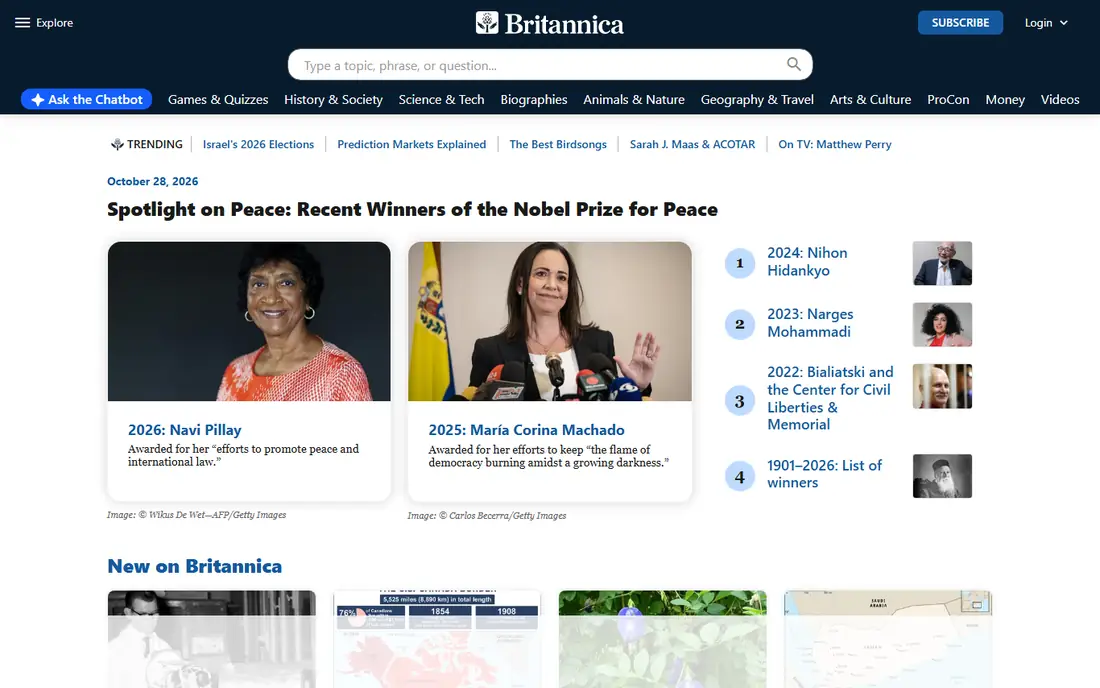
Britannica stands out for rigorous editorial oversight, expert-written entries, and a consistent neutral tone. Its articles are concise, carefully sourced, and supported by multimedia that adds helpful context, and the service maintains high credibility for academic and professional use. Students, educators, and professionals who need trustworthy summaries and stable references for research or teaching will find Britannica the strongest general alternative.
Access is limited free, with fuller access behind a subscription, so casual readers may hit paywalls on longer entries. Article count is far smaller than Wikipedia, and there is no community editing, which means coverage of niche topics is thinner. For background reading across subjects where accuracy matters more than breadth, Britannica is the first alternative to check.
What we like- Expert-written entries
- Rigorous editorial oversight
- Stable citations
- Classroom and library friendly
- Strong multimedia
Watch out for- Limited free access
- Full access needs subscription
- Fewer articles than Wikipedia
- No community editing
Starting priceFree
Free planYes
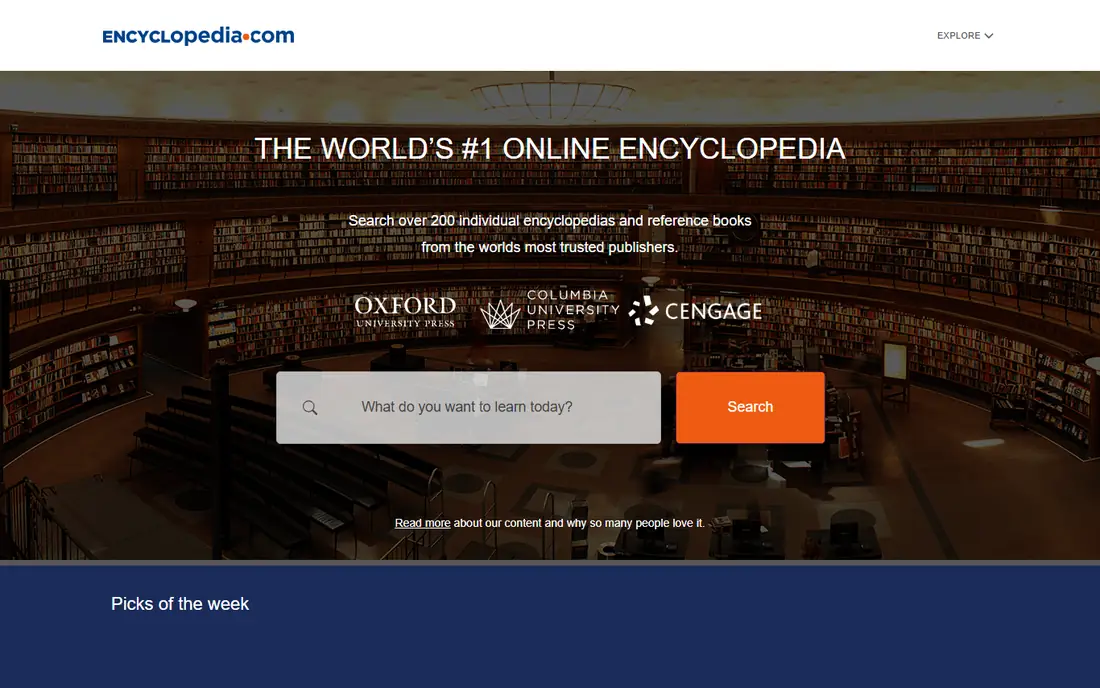
Encyclopedia.com is the best free general alternative, pulling entries from multiple reference publications into one searchable site. That structure suits readers who want to compare how different reference works explain the same topic, since each entry carries its source publication. General coverage is broad, and access is free without an account.
Entry depth varies by source publication, and there is no single editorial voice, so quality is less uniform than Britannica. Breaking topics update more slowly than Wikipedia, and advertising appears on pages. Readers who want free general reference with multiple viewpoints should start with Encyclopedia.com.
What we like- Free online access
- Entries from multiple reference publications
- Good for comparing explanations
- Broad general coverage
Watch out for- No single editorial voice
- Entry depth varies by source
- Advertising
- Less current than Wikipedia on breaking topics
Starting priceFree
Free planYes
Scholarpedia suits advanced readers who need accuracy over breadth. Articles are written by scholars and peer-reviewed for accuracy, with a focus on mathematics, physics, neuroscience, and related sciences. Access is free and open, and content carries a CC BY NC SA license that permits reuse with attribution for non-commercial purposes.
Subject range is narrow compared with general encyclopedias, and the reading level is technical, so general readers may find entries hard to follow. Article count is small and updates are slow, since peer review takes time. Researchers and advanced students in science and mathematics should check Scholarpedia before Wikipedia for specialist topics.
What we like- Articles written by scholars
- Peer-reviewed for accuracy
- Free open access
- Strong in mathematics and sciences
Watch out for- Narrow subject range
- Fewer articles than general encyclopedias
- Technical reading level
- Slow update pace
Starting priceFree
Free planYes
Stanford Encyclopedia of Philosophy is the standard reference for philosophy research, with in-depth entries written by experts and reviewed by editors. Entries cover thinkers, concepts, and debates in detail, with bibliographies that support further reading, and access is free and open. University philosophy courses commonly assign it as a primary reference.
Coverage is philosophy only, so it cannot replace a general encyclopedia, and entries are long, which suits researchers rather than readers seeking a quick answer. For philosophical topics, it is more reliable and deeper than Wikipedia, and it should be the first stop for academic philosophy work.
What we like- In-depth philosophical entries
- Written by experts
- Free open access
- Standard academic reference
- Regular updates
Watch out for- Philosophy only
- Long entries suit researchers, not quick answers
- No general coverage
Starting priceFree
Free planYes
Citizendium offers a wiki model with expert oversight, combining open editing with approved articles guided by subject experts. Access is free and copyleft under a CC BY NC SA license, and general interest coverage includes science, history, and culture. Approved articles carry a stability that Wikipedia entries, which change constantly, do not.
Article count is far smaller than Wikipedia, growth is slow, and the community is smaller, so many topics are missing or outdated. Readers who want a wiki with expert guidance should check Citizendium for topics it covers, while keeping Wikipedia or Britannica as a backup for broader coverage.
What we like- Wiki model with expert oversight
- Free copyleft access
- General interest coverage
- Stable approved articles
Watch out for- Much smaller article count than Wikipedia
- Slower growth
- Community smaller
- Some topics outdated
Starting priceFree
Free planYes
World History Encyclopedia suits readers seeking historical background and topic exploration. Articles are free, with maps, timelines, and images that support classroom use, and an optional membership adds extras without gating core content. History teachers and students will find its topic pages more focused than a general encyclopedia entry.
Coverage is history only, so it cannot replace a general reference, and membership extras cost extra for users who want them. For historical topics, it offers deeper context and better visuals than a general encyclopedia, and it pairs well with Britannica for other subjects.
What we like- Free articles
- Strong historical background
- Maps and timelines
- Optional membership for extras
Watch out for- History only
- No general coverage
- Membership extras cost
- Less current on non-history topics
Starting priceSee website
Free planNo
World Book Online suits school research at different levels, with general knowledge articles written for students from early grades through high school. The content is curated for education, with reading levels that match classroom use, and the brand is trusted by schools and libraries. Teachers can assign it knowing the language and sourcing suit student work.
Access requires a subscription, though school or library access may be available, and there is no free tier for home users. Scope is smaller than Wikipedia, and breaking topics update more slowly. Families and schools with library access should use World Book Online for student research, while home users without access should prefer Britannica Kids or Encyclopedia.com.
What we like- General knowledge at different reading levels
- School and library friendly
- Curated for students
- Trusted brand
Watch out for- Subscription required
- School or library access may be needed
- Smaller scope than Wikipedia
- No free tier
Starting priceFree
Free planYes
The Canadian Encyclopedia suits readers seeking Canadian history, geography, and social studies. Access is free, content is bilingual in English and French, and entries are written by experts with a national focus that global encyclopedias cannot match. Canadian classrooms and researchers use it as a standard reference for national topics.
Coverage is Canadian topics only, so it cannot replace a general encyclopedia for world subjects, and scope is smaller than global references. Readers researching Canada should start here, while readers researching other countries should use Britannica or Encyclopedia.com alongside it.
What we like- Free access
- Strong Canadian history and social studies coverage
- Bilingual content
- Trusted national reference
Watch out for- Canadian topics only
- No general world coverage
- Smaller scope than global encyclopedias
How we chose
We compared Wikipedia alternatives on editorial model, subject breadth, access cost, citation quality, and update pace. Wikipedia itself is free under a CC BY-SA license with general coverage that no single alternative matches in breadth, so we weighted alternatives that add something Wikipedia lacks: expert oversight, peer review, or specialist depth. We excluded defunct encyclopedias such as Nupedia and Interpedia, and we excluded Everipedia, which is now read-only and archived rather than actively maintained. Prices come from vendor pages and published encyclopedia lists from 2026, and they change often, so confirm access terms before relying on a subscription.
How to choose the right Wikipedia alternative
Start with your subject. General readers should test Britannica for trusted summaries and Encyclopedia.com for free comparison, while researchers should test Scholarpedia for science and Stanford Encyclopedia of Philosophy for philosophy. History readers should test World History Encyclopedia, and Canadian researchers should test The Canadian Encyclopedia.
Next, check access and citation needs: Britannica and World Book Online need subscriptions for full access, while the other tools here are free, and Britannica and Stanford Encyclopedia entries carry stable citations that suit academic work better than constantly changing wiki pages. Finally, match reading level to the reader: World Book Online and Britannica Kids suit younger readers, while Scholarpedia and Stanford Encyclopedia suit advanced readers. A practical habit is to cross-check any surprising claim across two of these sources before citing it, since even expert-written entries can age, and a second source catches errors that a single reference would miss. For school assignments, note the publication or update date alongside the citation, because teachers value a dated, stable reference over an undated web page that may change after submission. That small step turns a quick lookup into a source you can defend.
Frequently asked questions
What is the best free alternative to Wikipedia?
Encyclopedia.com is the best free general alternative, with entries from multiple reference publications. Scholarpedia, Stanford Encyclopedia of Philosophy, Citizendium, and The Canadian Encyclopedia are also free for their specialist subjects.
Is Britannica better than Wikipedia?
Britannica offers stronger editorial oversight and expert-written entries, which suits academic and professional use. Wikipedia offers far broader coverage and faster updates on breaking topics, so the best choice depends on whether accuracy or breadth matters more.
Is Scholarpedia peer-reviewed?
Yes, Scholarpedia articles are written by scholars and peer-reviewed for accuracy, with a focus on mathematics and sciences. Access is free and open.
What happened to Everipedia?
Everipedia is now read-only and archived rather than actively maintained, according to published encyclopedia lists. It is not a good choice for current reference, so we excluded it from this list.
Can I use these encyclopedias for school research?
Yes, Britannica, World Book Online, Stanford Encyclopedia of Philosophy, and The Canadian Encyclopedia are commonly used in schools and universities. Check your school or library access for Britannica and World Book Online subscriptions.
Does Wikipedia still have the most articles?
Yes, Wikipedia has far more articles than any single alternative here, with general coverage across languages and subjects. Alternatives win on editorial oversight or specialist depth, not on breadth.
Sources we checked (0)
Is your product missing or out of date?
We review this list regularly. Vendors can request a listing, send updated pricing or ask about featured placement.

Shihab Mia · Founder, Rankite
Shihab has 5+ years in B2B and SaaS SEO. He writes Rankite's software buying guides from pricing pages, documentation and public user reviews. More about Shihab.
 Encyclopaedia Britannica
 Encyclopedia.com
 Scholarpedia
 Stanford Encyclopedia of Philosophy
 Citizendium
 World History Encyclopedia
 World Book Online
 The Canadian Encyclopedia